Artwork
Frederick V, Elizabeth, and Prince Frederick Frederick Henry
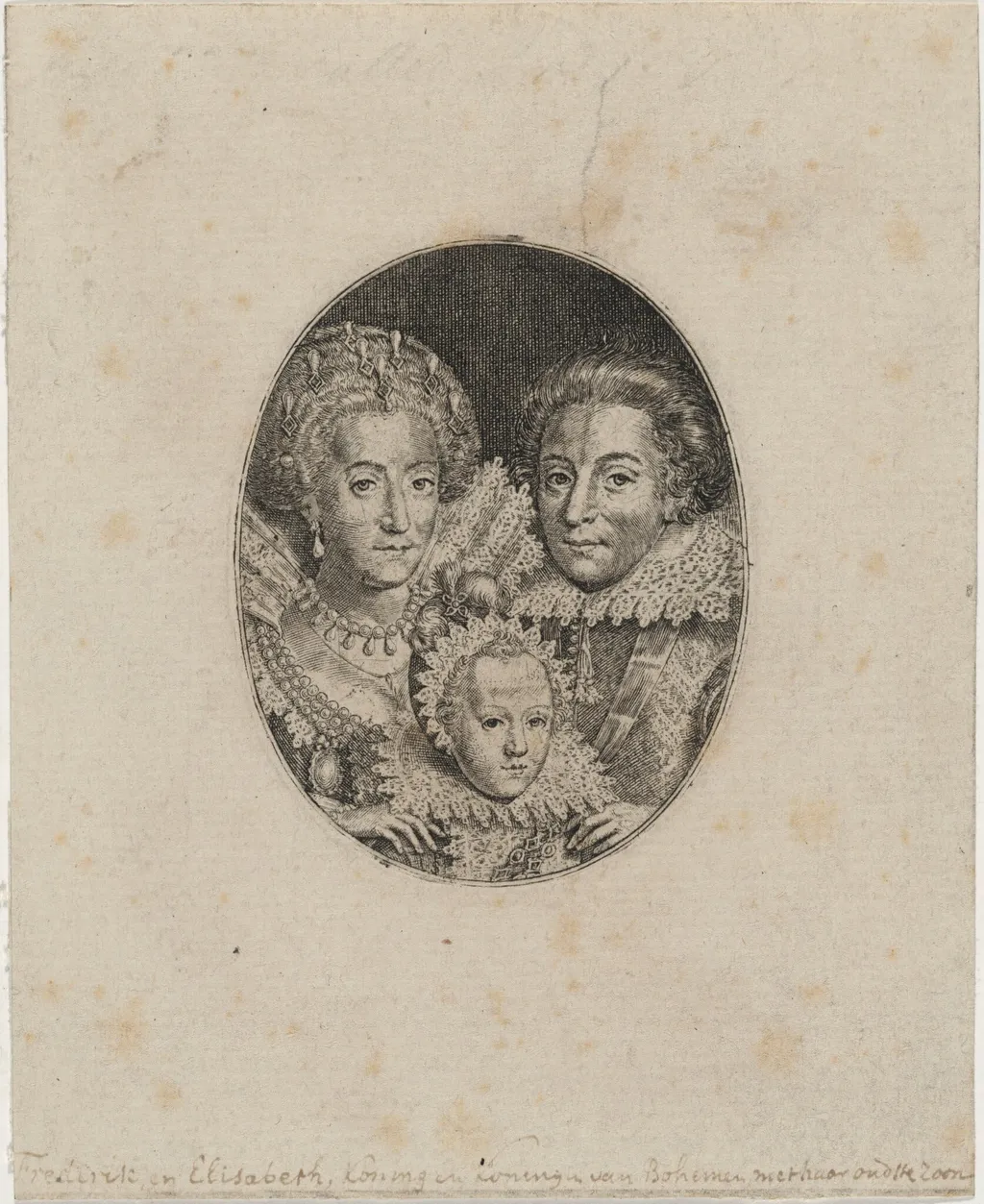
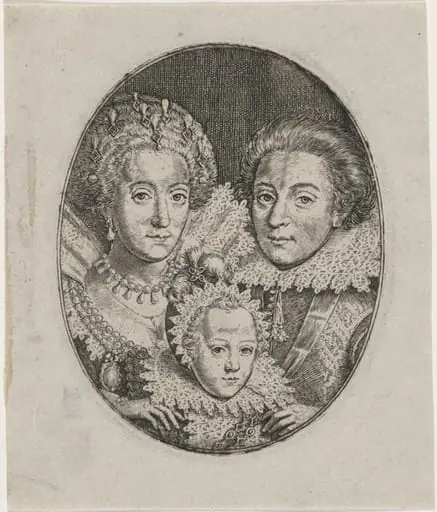
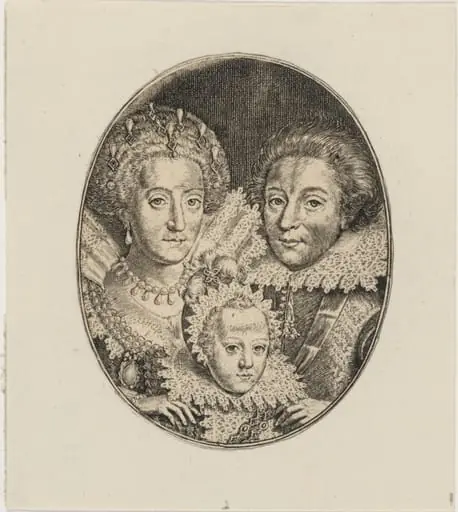
Frederick V, Elizabeth, and Prince Frederick Frederick Henry is an ink print by the Renaissance artist Simon van de Passe. It dates from 1621 and is held in the collection of the National Gallery of Art.
About this work
Overview
Simon van de Passe’s 1621 engraving presents Frederick V, his wife Elizabeth, and their son Frederick Henry in a tightly composed grouping.
Simon van de Passe’s 1621 engraving presents Frederick V, his wife Elizabeth, and their son Frederick Henry in a tightly composed grouping. Rendered from a silver medal, the image isolates the trio against an unadorned backdrop, emphasizing the intricate details of their attire and facial expressions. The work functions as a portrait of the ruling family, intended to convey their status and lineage.
Subject & Meaning
The three figures represent the Elector of the Palatinate, his consort, and their heir, underscoring dynastic continuity. Elizabeth’s protective hold of the child highlights maternal care, while the side‑by‑side stance of the adults suggests partnership in governance. The composition thus serves both a genealogical record and a visual affirmation of the family’s legitimacy.
Technique & Style
Van de Passe employed fine line engraving on a metal plate, translating the relief of a silver medal into a printable image. Delicate cross‑hatching renders the lace collars and elaborate wigs with a near‑three‑dimensional quality, while subtle shading models the faces. This meticulous approach reflects the Renaissance emphasis on realism and the display of wealth through sartorial detail.
History & Provenance
Originally cut from a commemorative silver medal, the engraving was reproduced as a print to disseminate the portrait more widely. The work entered collections of European courts and later appeared in print archives documenting the early‑seventeenth‑century German nobility. Its survival in several museum holdings attests to its historical value as a documentary image.
Context
Created during the early reign of Frederick V, the portrait coincides with a period of political tension in the Holy Roman Empire. The depiction of the family in regal attire aligns with contemporary practices of using portraiture to assert authority and foster loyalty among subjects and allies.
Artist & collection