Artwork
Sir Francis Bacon
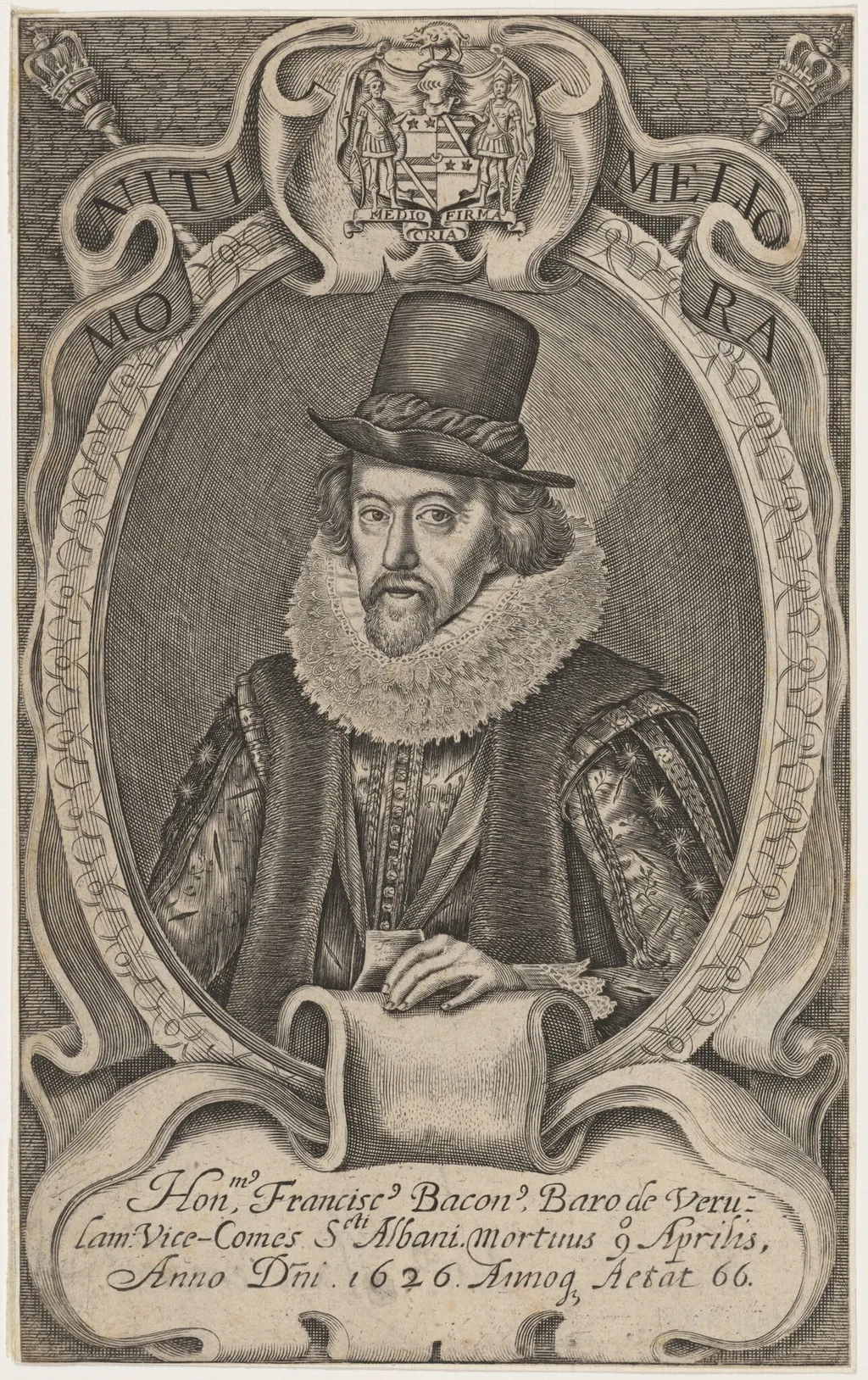
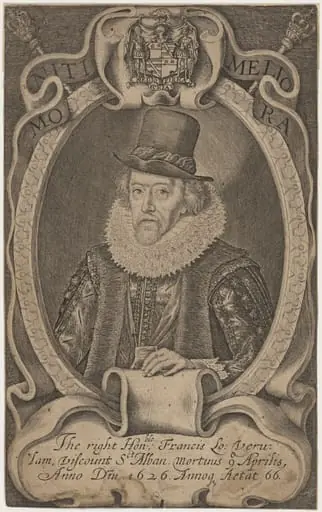
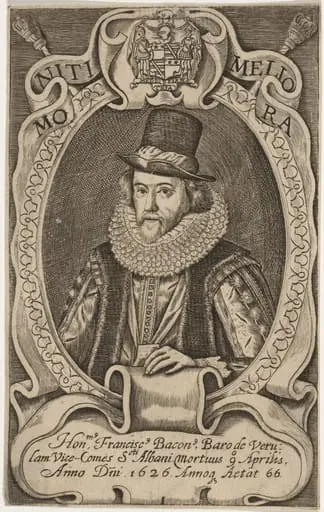
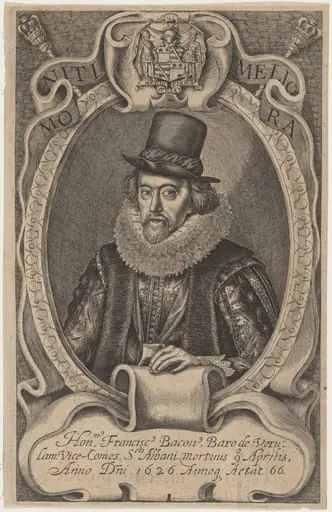
Sir Francis Bacon is an ink print by the Renaissance artist Simon van de Passe. It dates from 1621 and is held in the collection of the National Gallery of Art.
About this work
Overview
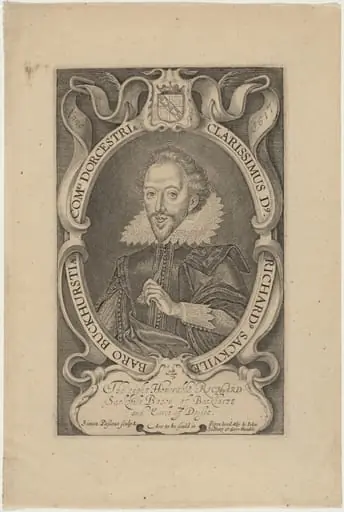
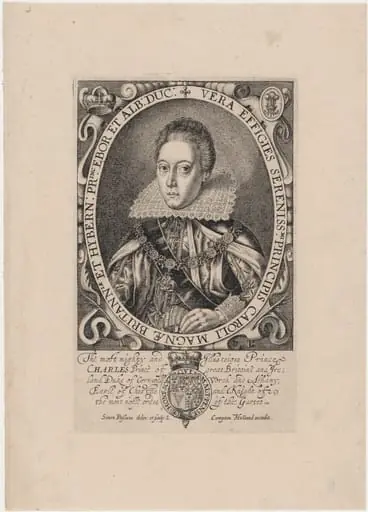
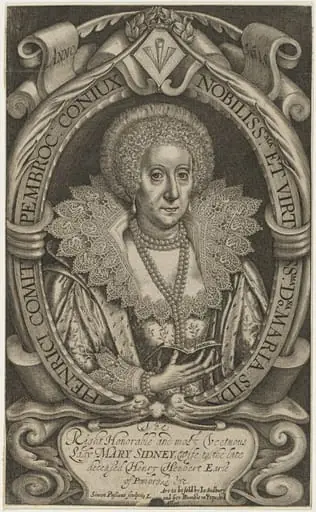
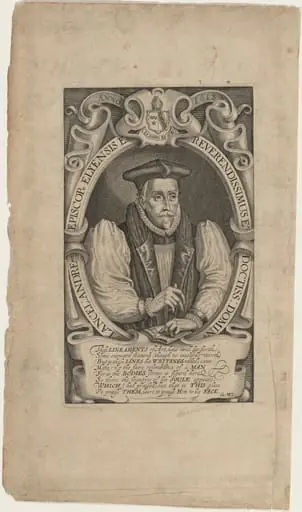
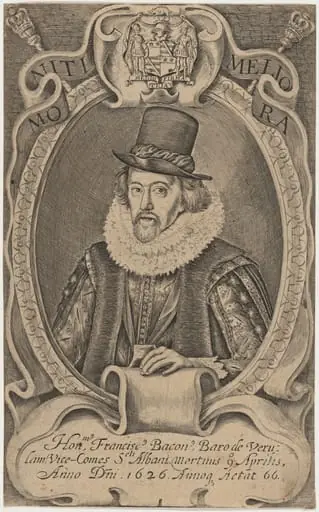
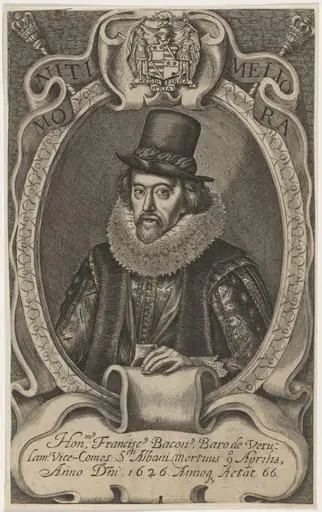
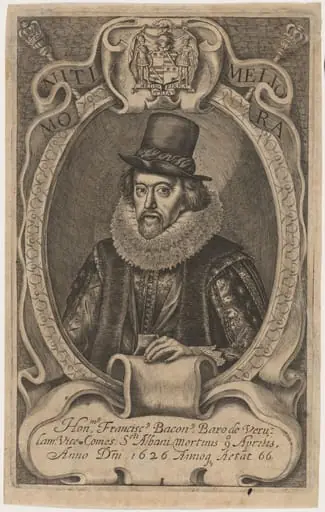
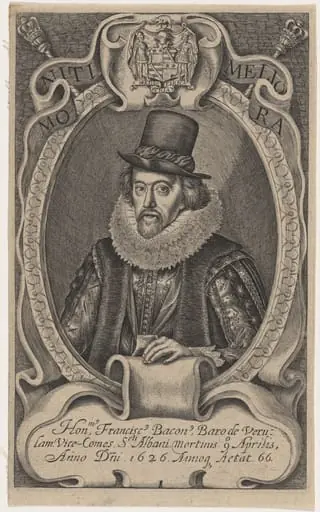
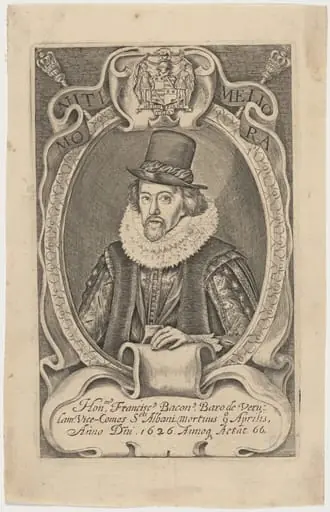
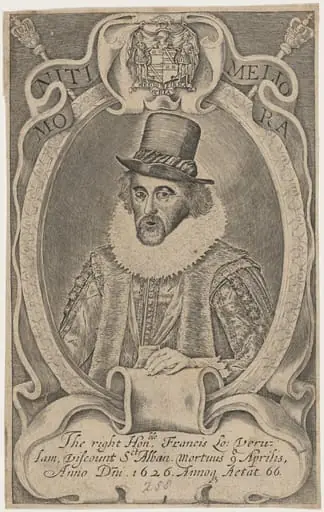
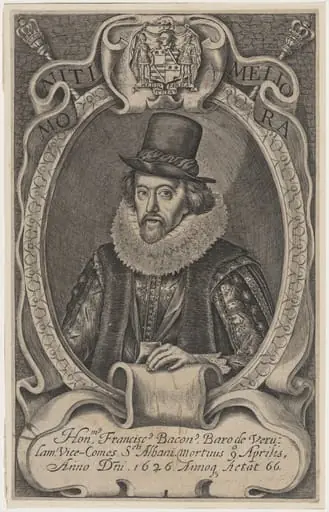
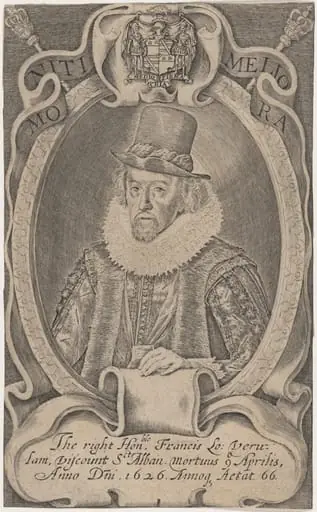
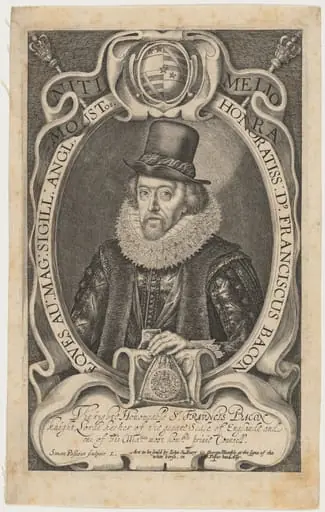
Simon van de Passe’s 1621 engraving presents a dignified likeness of Sir Francis Bacon. Rendered in stark black‑and‑white, the image captures the philosopher‑statesman in a formal pose, his beard and ruff collar emphasizing his status. The composition is framed by ornamental swirls and a heraldic shield above his head, underscoring the work’s commemorative purpose.
Subject & Meaning
The portrait depicts Bacon as a learned figure, his solemn expression and the small object he grasps—often interpreted as a symbol of scholarly pursuit—reinforcing his reputation as a thinker and jurist. The inclusion of his coat of arms and the inscription “Honor Francis Bacon” signals a tribute to his public service and intellectual contributions.
Technique & Style
Executed in copperplate engraving, the work relies on fine, intersecting lines to model flesh, fabric, and decorative elements. Van de Passe’s precise hatching creates texture in the heavy coat and hat, while the swirling borders and heraldic motifs reflect the intricate linework typical of early‑17th‑century printmaking.
History & Provenance
Created in 1621, the print emerged shortly after Bacon’s death in 1626, aligning with contemporary practices of memorializing notable figures through prints. Copies circulated among collectors and institutions, eventually entering museum collections that document the early modern portrait tradition.
Context
The engraving belongs to a broader European tradition of commemorative portrait prints, where artists like van de Passe rendered prominent intellectuals for a growing literate audience. Such images served both as visual records and as means of disseminating the subject’s reputation across social and geographic boundaries.
Artist & collection