Artwork
Charles I, Prince of Great Britain and Ireland, Duc of Cornwall and Yorck
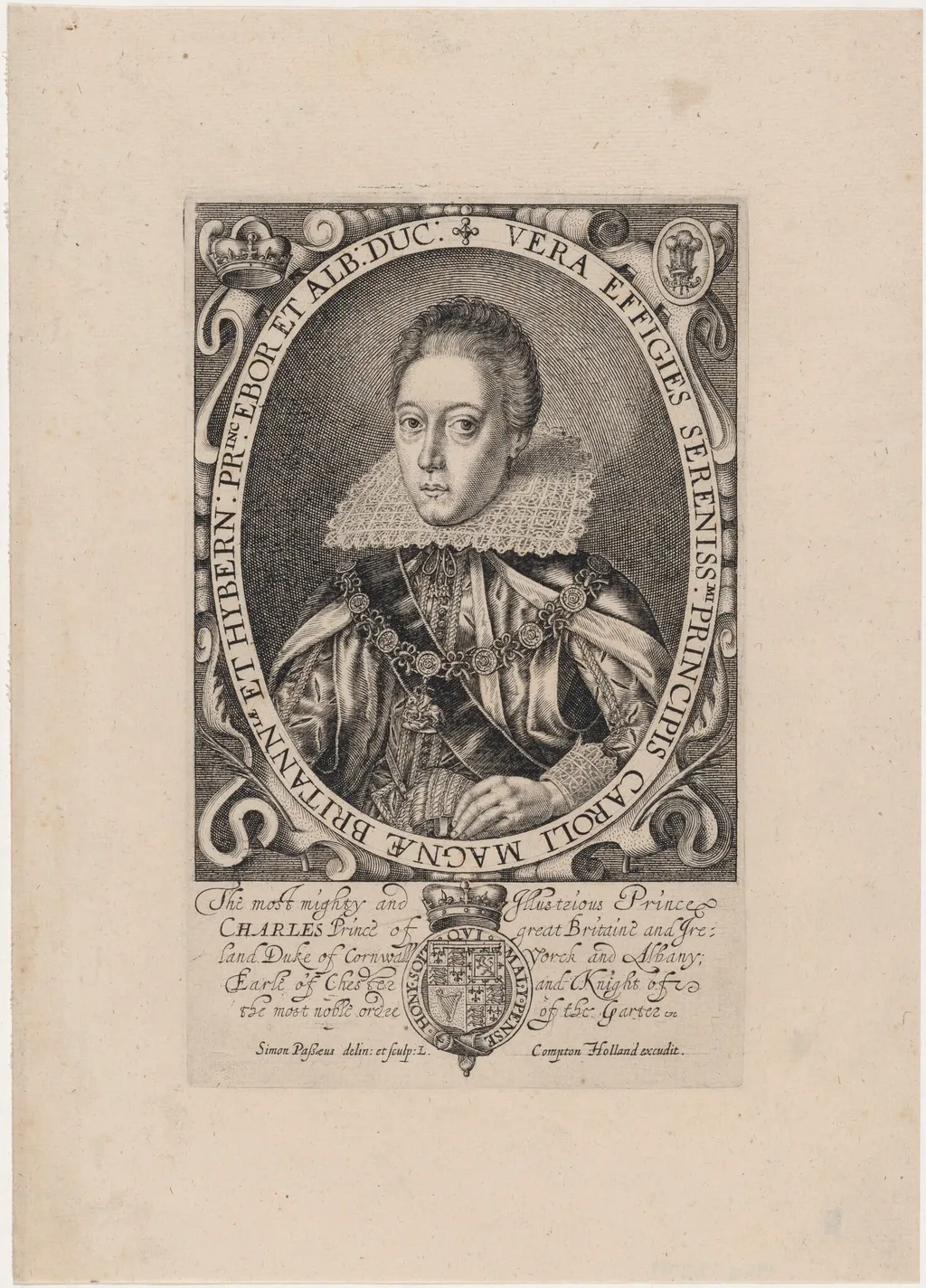
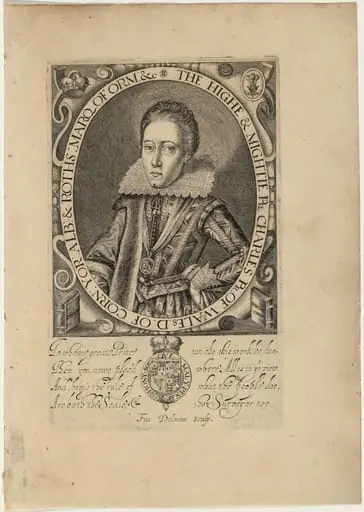
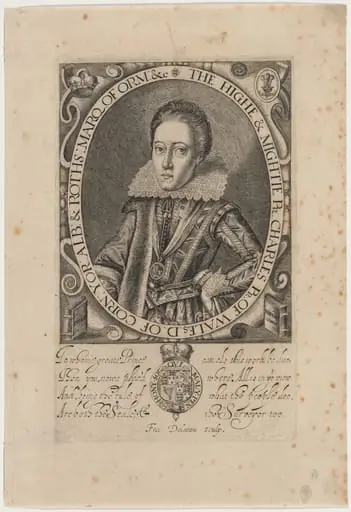
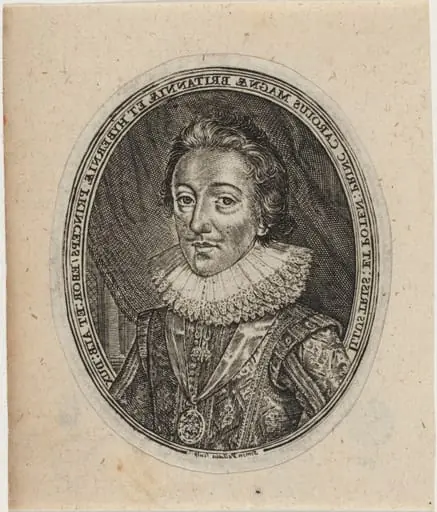
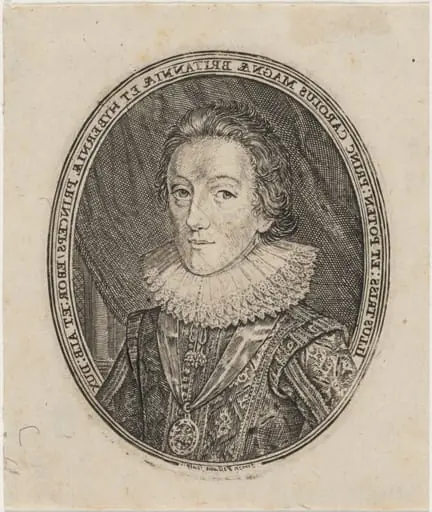
Charles I, Prince of Great Britain and Ireland, Duc of Cornwall and Yorck is an ink print by the Renaissance artist Simon van de Passe. It dates from 1621 and is held in the collection of the National Gallery of Art.
About this work
Overview
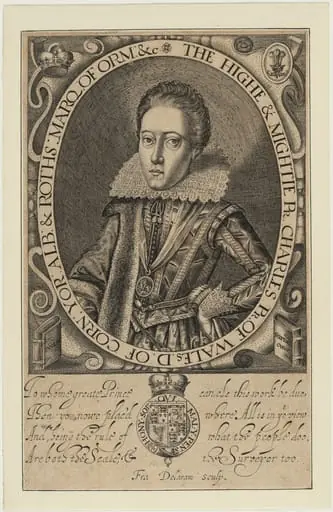
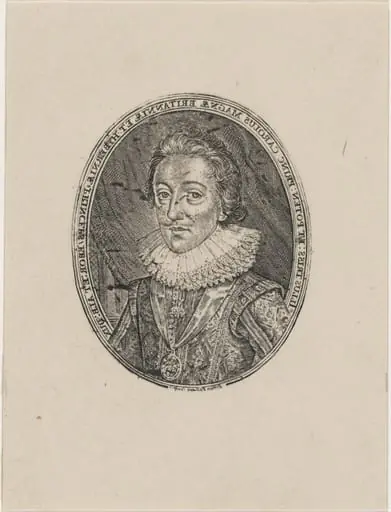
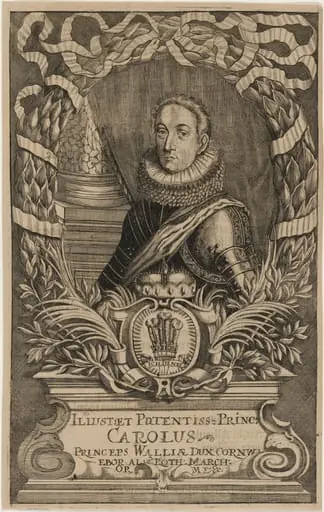
Simon van de Passe’s 1621 engraving presents the young Charles, then Prince of England, Scotland, and Ireland, holding the titles Duke of Cornwall and York. Rendered in monochrome, the portrait captures the heir apparent in elaborate court attire, framed by a Latin inscription and heraldic symbols that affirm his royal status.
Subject & Meaning
The image serves as a formal visual record of Charles’s position in the early Stuart succession. By emphasizing his regal garments, jeweled chain, and solemn gaze, the print underscores the legitimacy and continuity of the monarchy, projecting an image of stability and authority to contemporary audiences.
Technique & Style
Executed in copperplate engraving, van de Passe employed fine line work to render intricate details such as the ruffled collar, ornate coat, and delicate curls. The contrast of black ink against white paper creates a clear, crisp representation, characteristic of early‑17th‑century portrait prints that prioritized precision over tonal shading.
History & Provenance
Created shortly after Charles’s investiture as Prince of Wales, the print was likely circulated among court officials and foreign dignitaries as an official likeness. Copies of the engraving have been preserved in several European collections, reflecting its role as a diplomatic and genealogical document.
Context
The portrait emerges amid the political tensions of James I’s reign, a period marked by efforts to solidify the succession. Portraits such as this were instrumental in reinforcing the heir’s visibility across the kingdom and abroad, aligning visual culture with dynastic propaganda.
Legacy
Van de Passe’s portrait contributed to the visual canon of Charles I, influencing later depictions of the monarch both before and after his accession. The engraving remains a valuable source for scholars studying early Stuart iconography and the development of portrait printmaking in the Netherlands and England.
Artist & collection