Artwork
Natură statică
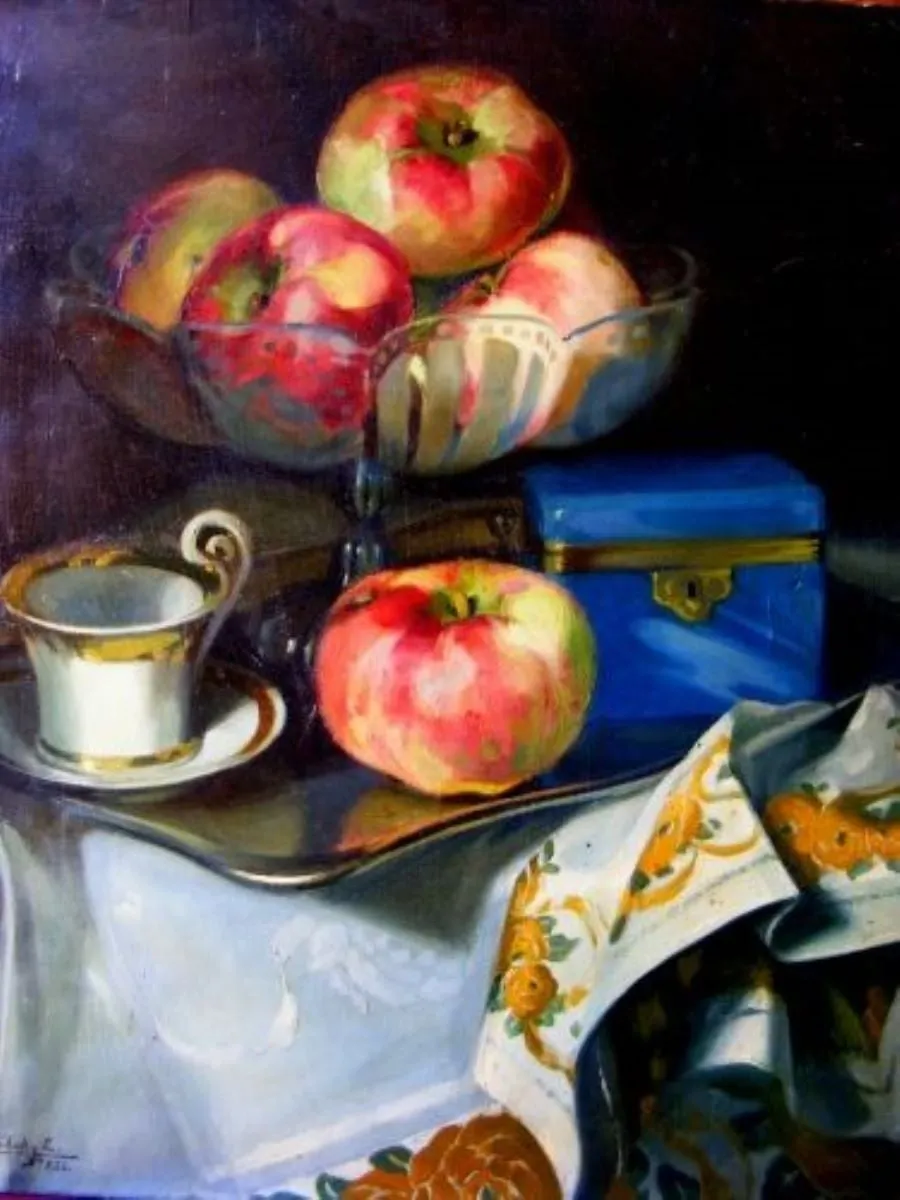
Natură statică is an unspecified painting by Etelka Pataky. It dates from 1926 and is held in the collection of the Székely National Museum.
About this work
Overview
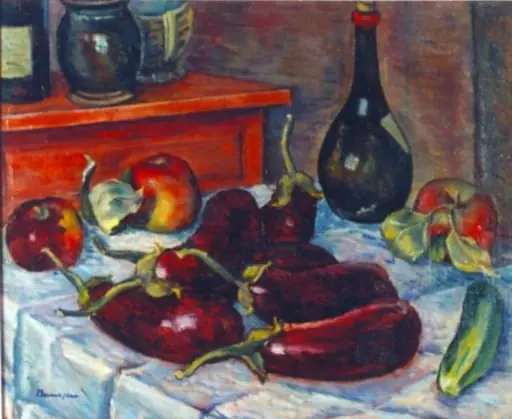
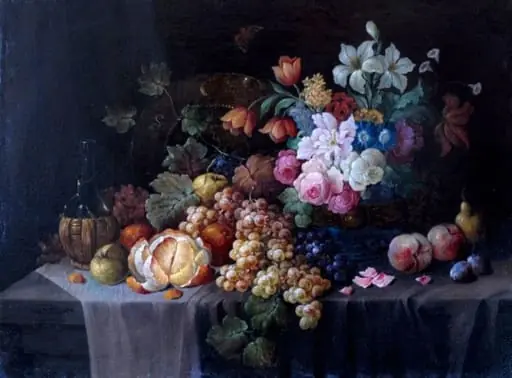
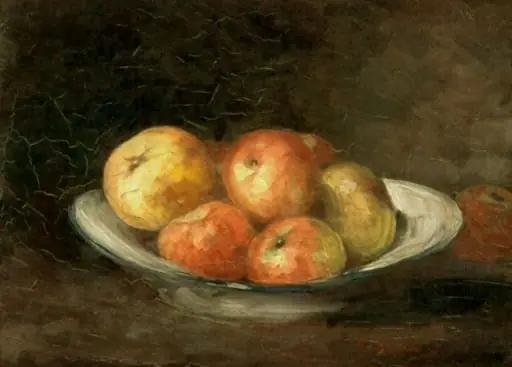
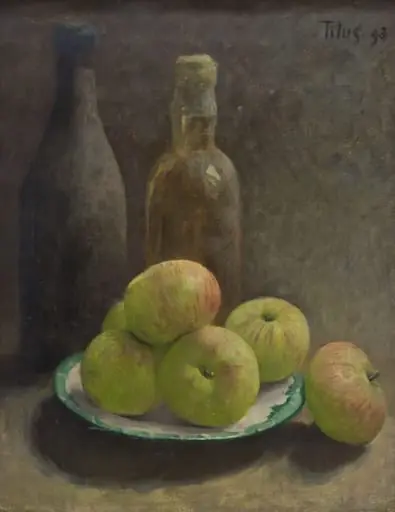
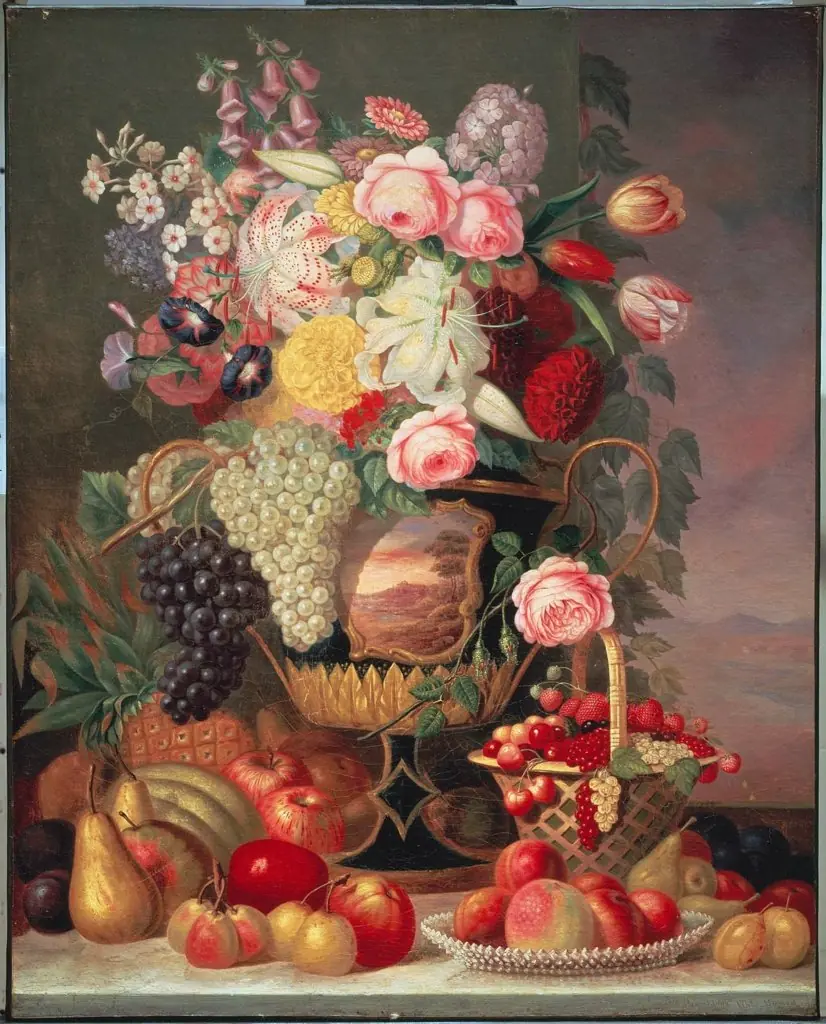
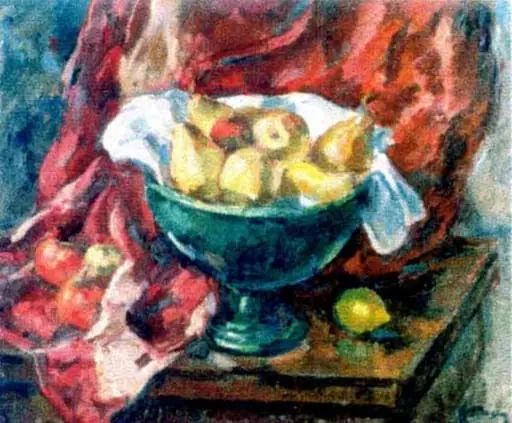
Natură statică, painted in 1926 by Etelka Pataky, is a still life composition featuring everyday domestic objects arranged on a table.
Natură statică, painted in 1926 by Etelka Pataky, is a still life composition featuring everyday domestic objects arranged on a table. The work is part of the collection at the Museum of Ethnography. Its quiet arrangement—apples, a metal cup, a patterned cloth—reflects a deliberate focus on ordinary items, rendered with careful attention to texture and light. The painting avoids theatricality, instead inviting quiet observation.
Subject & Meaning
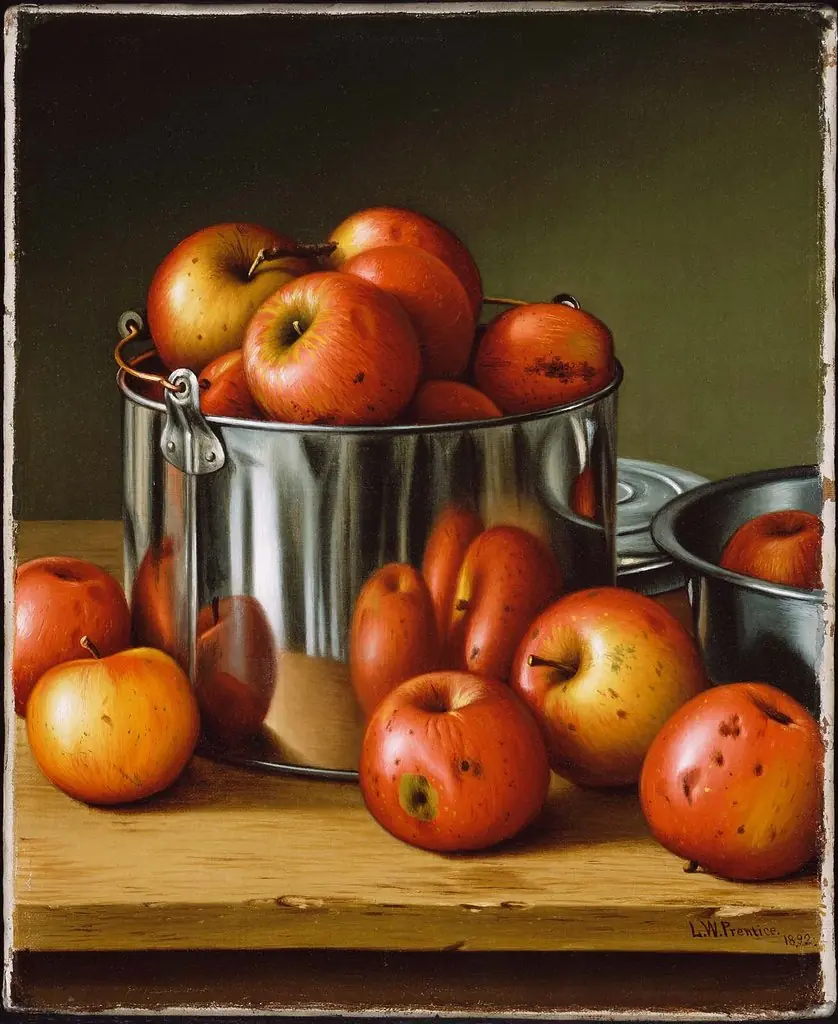
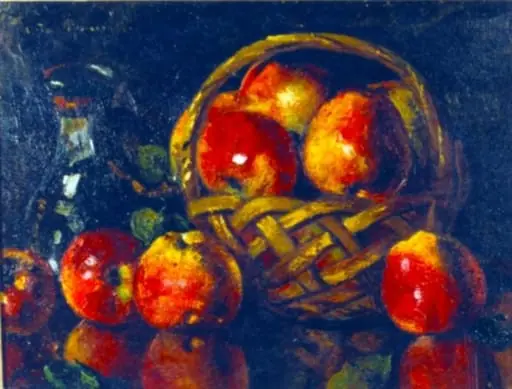
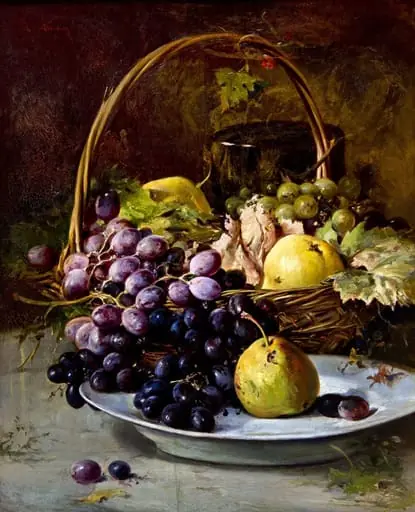
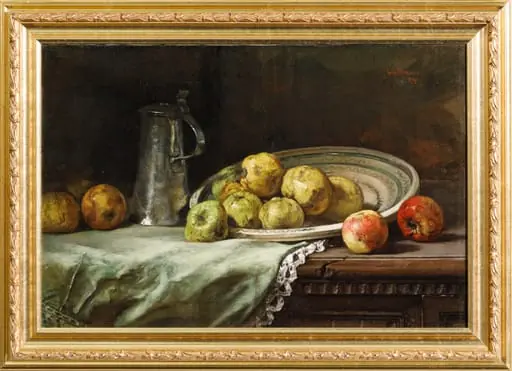
The scene presents a modest table setting with a glass bowl of red apples, some halved, a metal cup and saucer, and a single peach resting nearby. A blue floral cloth anchors the composition, grounding the objects in a sense of domestic routine. The inclusion of fruit, partially consumed or prepared, suggests transience and the quiet rhythms of daily life, without overt symbolism or narrative.
Technique & Style
Pataky employs precise brushwork to capture the sheen of fruit skin, the reflective surface of metal, and the weave of the cloth. Light falls selectively, enhancing the plumpness of the apples and casting soft shadows that define form. The dark background intensifies the vibrancy of the objects, a subtle use of chiaroscuro that emphasizes volume and materiality without dramatic contrast.
History & Provenance
Created in 1926, the painting entered the collection of the Museum of Ethnography shortly after its completion. Its provenance remains largely undocumented beyond its acquisition by the institution. It has not been widely exhibited outside the museum, and little is known about its reception during the artist’s lifetime, suggesting a private or regional context of creation and ownership.
Context
In interwar Romania, still life painting often served as a quiet counterpoint to political upheaval, focusing on domestic harmony and material simplicity. Pataky’s work aligns with this trend, reflecting a broader European interest in the aesthetic value of everyday objects. Her approach, unembellished and observational, resonates with regional traditions of realism rather than avant-garde experimentation.
Legacy
Natură statică remains a modest but enduring example of early 20th-century Romanian still life. It contributes to the understanding of how local artists engaged with universal themes of texture, light, and domesticity. While not widely known beyond institutional circles, it holds value as a quiet testament to the dignity found in ordinary things, preserved through careful observation.
Artist & collection
Artist