Artwork
Untitled
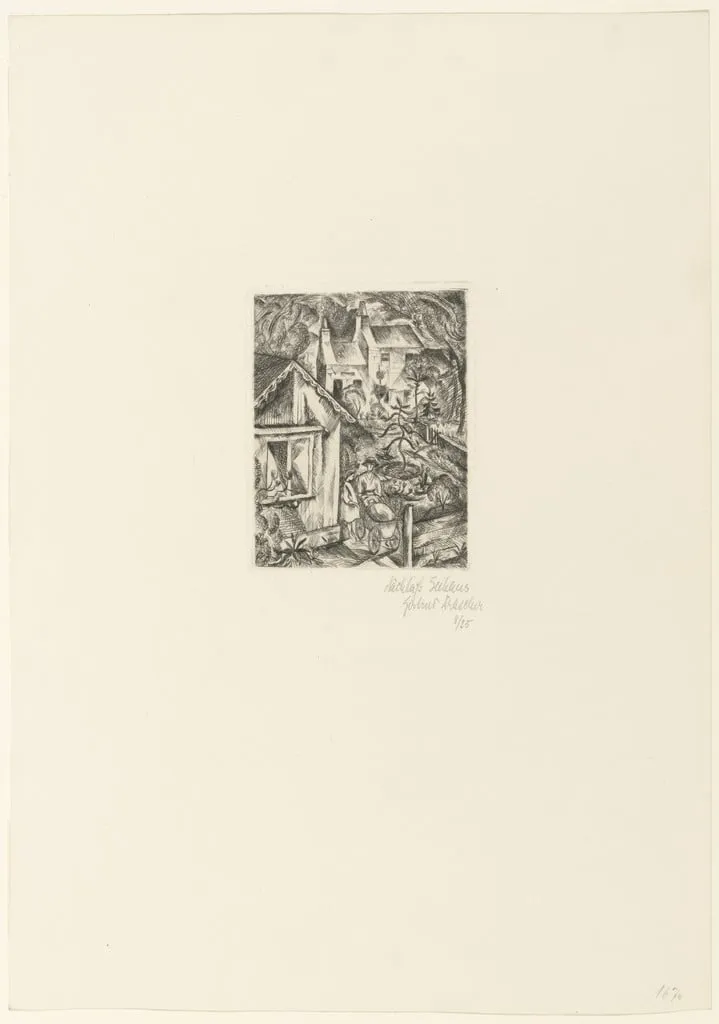
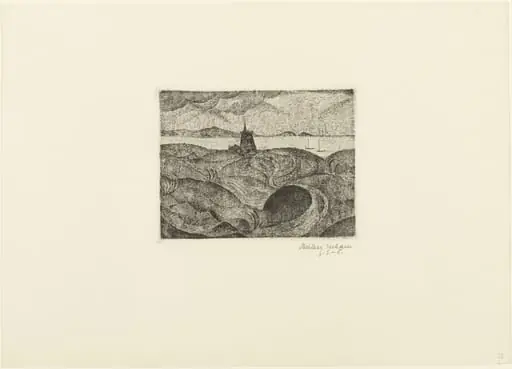
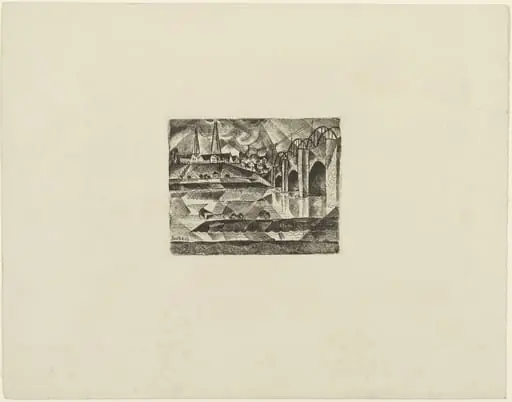
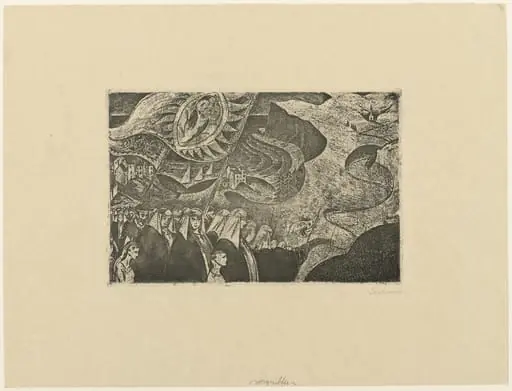
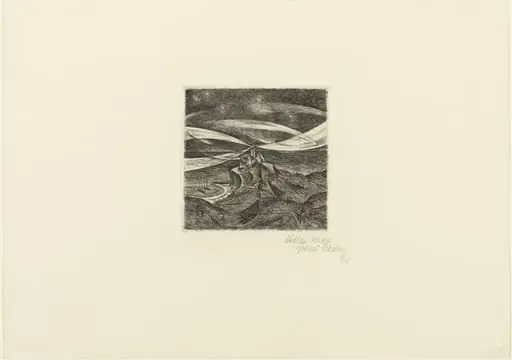
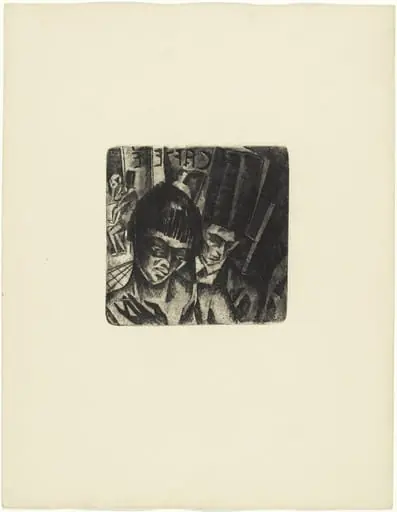
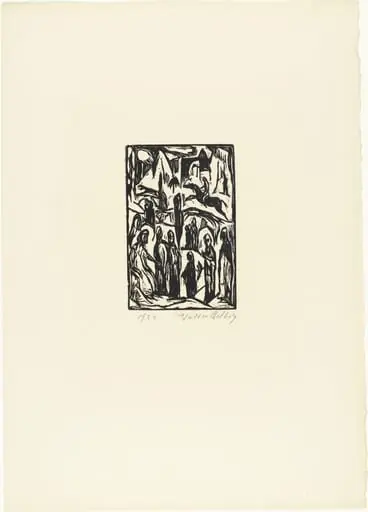
Untitled is an ink print by Paul Adolf Seehaus. It dates from 1915 and is held in the collection of the Museum of Modern Art.
About this work
Overview
The work captures a moment of stillness in a village setting, with attention to atmospheric conditions and subtle human presence.
Created in 1915 by Paul Adolf Seehaus, this small print combines etching and drypoint techniques to render a quiet rural scene. It is part of the collection at The Museum of Modern Art. The work captures a moment of stillness in a village setting, with attention to atmospheric conditions and subtle human presence. Its intimate scale and tactile surface distinguish it as a quiet but deliberate study in monochrome tone and line.
Subject & Meaning
The scene depicts a modest cluster of dwellings nestled beneath dense, twisting trees. Figures are sparse—some near homes, others moving along paths—suggesting ordinary daily life. The heavy sky and damp ground evoke a somber, overcast day. There is no narrative climax; instead, the image conveys a sense of solitude and quiet endurance, reflecting the subdued mood of rural existence during a time of broader upheaval.
Technique & Style
Seehaus employed drypoint for its scratchy, richly textured lines and etching for finer details, creating a surface that feels incised rather than drawn. The trees’ branches are rendered with dense, interwoven strokes, giving them a gnarled, almost organic weight. Deep shadows and uneven ink distribution enhance the sense of dampness and gloom. The paper’s texture is palpable, as if the image were carved directly into its surface.
History & Provenance
The print was made in 1915, during Seehaus’s active period as a printmaker. It entered The Museum of Modern Art’s collection through established acquisition channels, likely as part of early 20th-century efforts to document European graphic art. No record of prior ownership or exhibition history is widely documented, but its preservation in a major institution underscores its significance within the artist’s oeuvre.
Context
Created during the first year of the First World War, the print’s quiet, inward focus contrasts with the era’s violent turbulence. While many artists responded directly to conflict, Seehaus turned to the familiar rhythms of village life. This retreat into the domestic and natural may reflect a personal or cultural desire for stability, or simply an artistic preference for introspective subjects amid chaos.
Legacy
Though not widely reproduced or studied, the work exemplifies early 20th-century German printmaking’s emphasis on texture and emotional tone over grandeur. It aligns with contemporaries who valued the intimate potential of etching and drypoint. Its presence in MoMA’s collection ensures its continued visibility within discussions of modern graphic art, particularly as a quiet counterpoint to more dramatic wartime imagery.
Artist & collection