Artwork
Still-life with apples
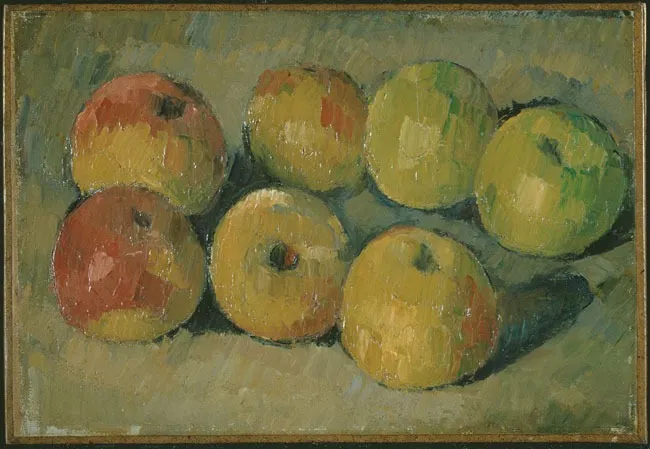
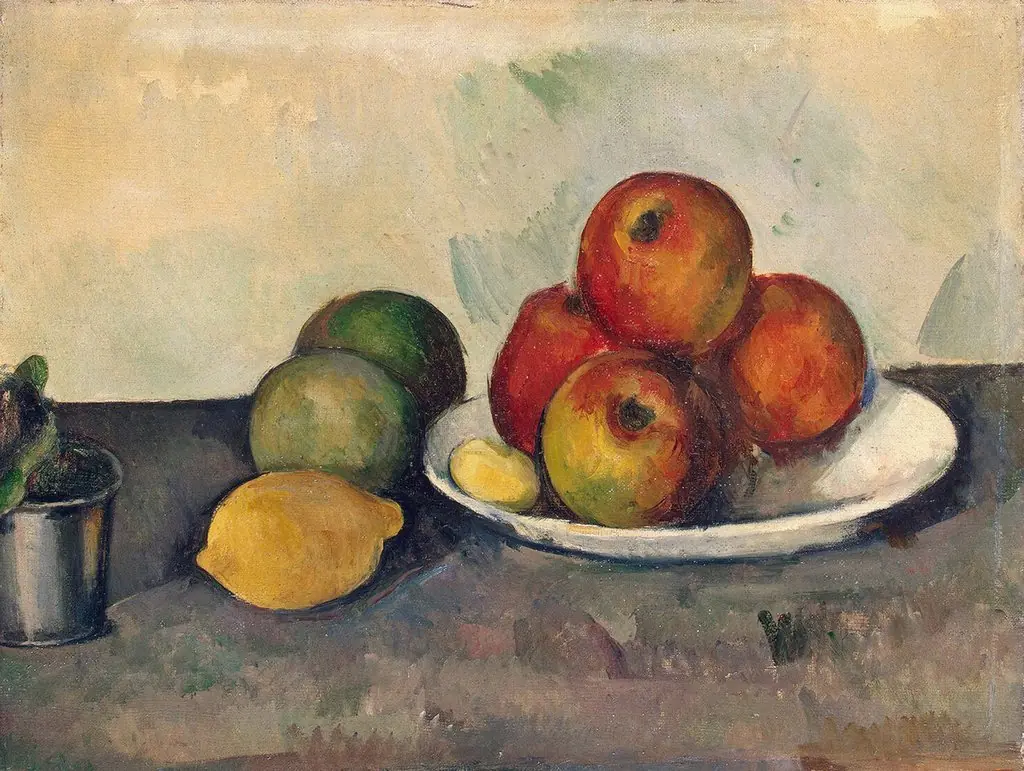
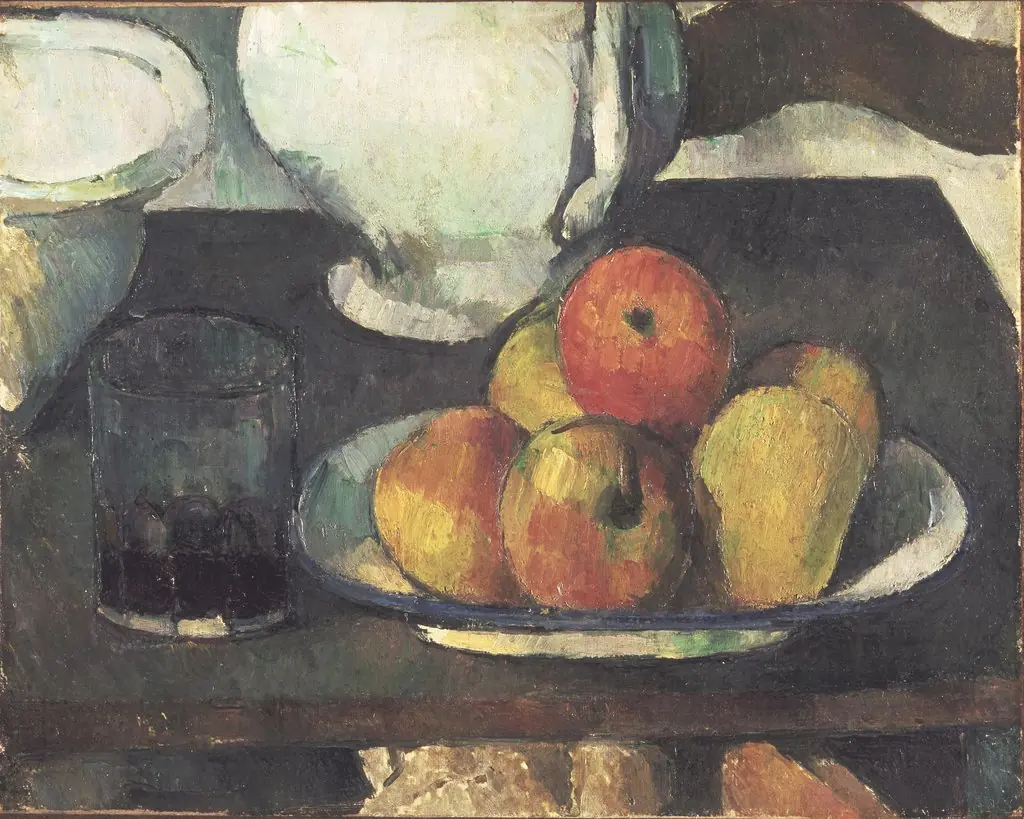
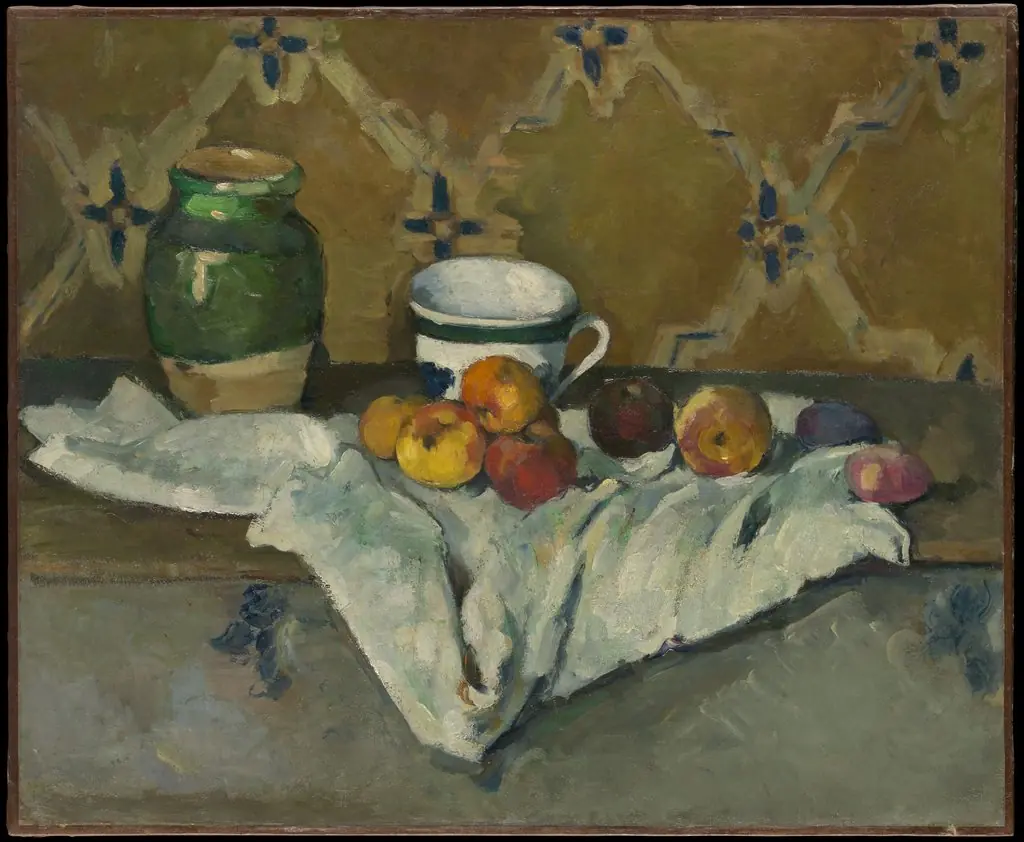
Still-life with apples is an oil painting by the Post-Impressionist artist Paul Cezanne. It dates from 1890 and is held in the collection of the Fitzwilliam Museum. Painted in 1890, this oil-on-canvas still life by Paul Cézanne presents a simple arrangement of apples on a tabletop.
About this work
Overview
Painted in 1890, this oil-on-canvas still life by Paul Cézanne presents a simple arrangement of apples on a tabletop.
Painted in 1890, this oil-on-canvas still life by Paul Cézanne presents a simple arrangement of apples on a tabletop. It reflects his sustained interest in ordinary objects, treated not as decorative elements but as vehicles for exploring spatial relationships and structural form. The work belongs to the Fitzwilliam Museum’s collection, where it contributes to the understanding of his transitional role between 19th-century painting and modern abstraction.
Subject & Meaning
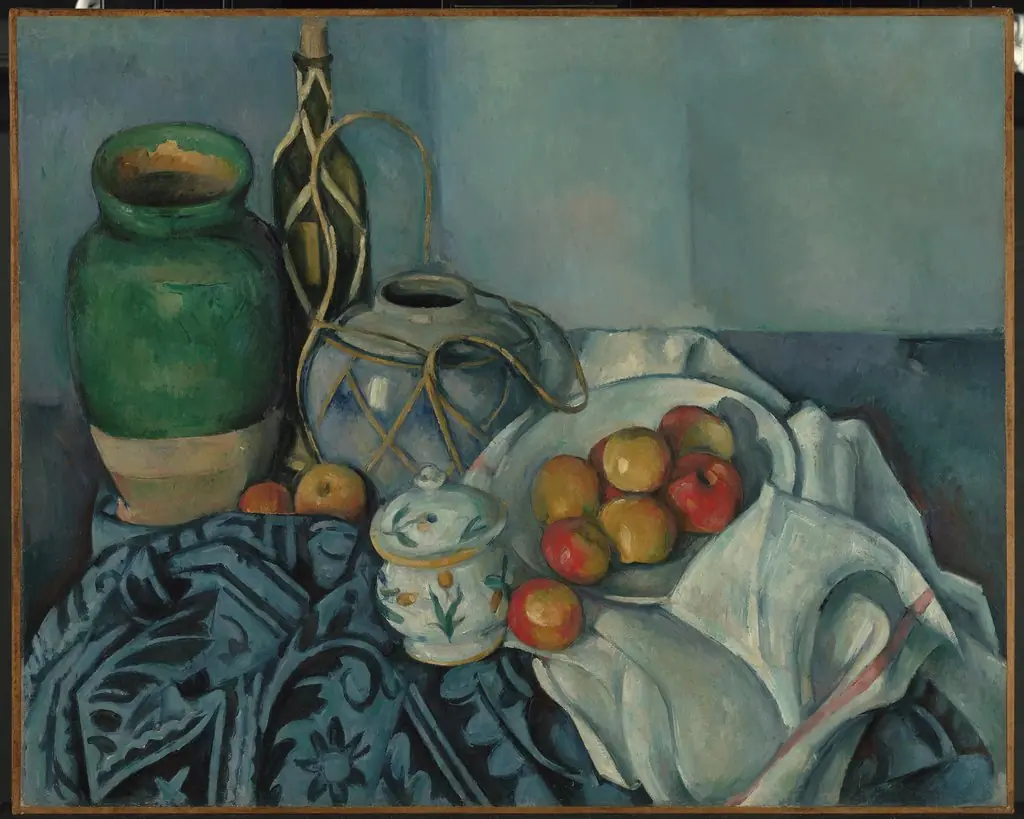
The composition centers on a group of apples in varying sizes and hues—red, yellow, and green—arranged without symmetry or idealization. Their placement suggests casual, observed reality rather than staged perfection. Cézanne’s focus on such humble subjects was deliberate: he sought to reveal the underlying geometry and weight of everyday things, elevating the mundane through sustained visual inquiry.
Technique & Style
Cézanne applied thick, deliberate brushstrokes to build form through color planes rather than linear contour. The apples’ surfaces are modeled with patches of pigment, their edges softened or hardening according to spatial depth. The muted, earth-toned background recedes quietly, allowing the fruit’s saturated tones to assert presence. Texture and brushwork are integral to the sense of solidity and tactility.
History & Provenance
Created during Cézanne’s mature period, this painting emerged from his decades-long study of still life, particularly apples, which he returned to repeatedly. It entered the Fitzwilliam Museum’s collection in the 20th century, likely through acquisition or bequest. Its preservation reflects its significance as a representative example of his methodical approach to perception and structure.
Context
In the late 19th century, Cézanne distanced himself from Impressionism’s fleeting effects, seeking permanence in form. While contemporaries captured light, he investigated how objects occupy space. His still lifes, including this one, challenged traditional perspective and influenced later artists like Picasso and Braque, who would develop Cubism by deconstructing volume and viewpoint.
Legacy
This painting exemplifies Cézanne’s contribution to modern art’s shift toward abstraction. By prioritizing structural integrity over illusionistic realism, he redefined how objects could be represented. His method of building form through color and brushwork became foundational for 20th-century movements, making his still lifes not merely depictions but experiments in visual logic.
Artist & collection
Artist
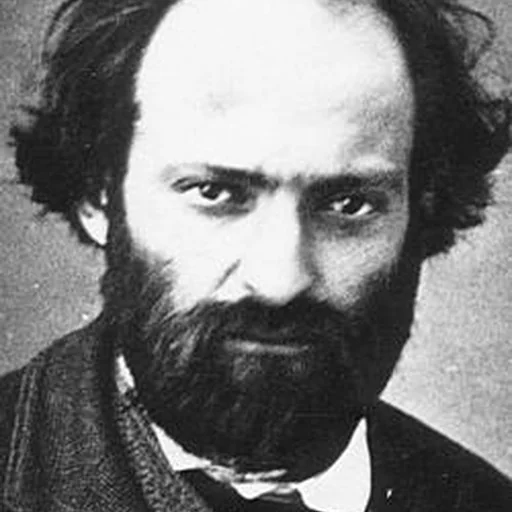
Paul Cézanne was born on January 19, 1839, in Aix-en-Provence, the son of a hatter turned wealthy banker.

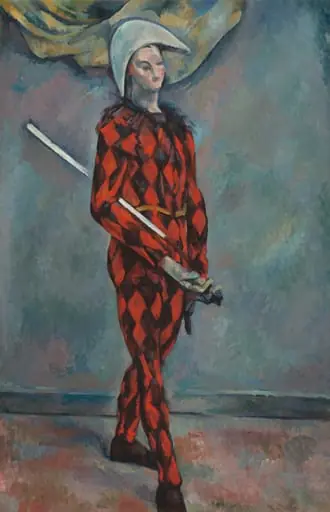 Harlequin
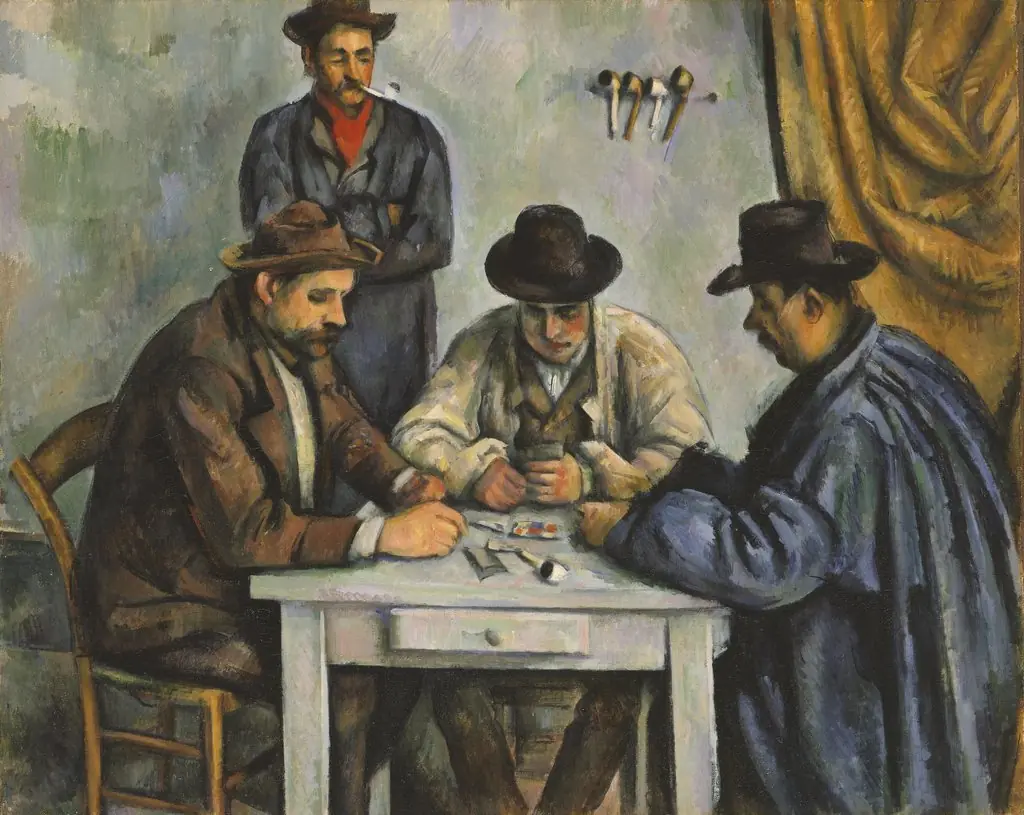 The Card Players
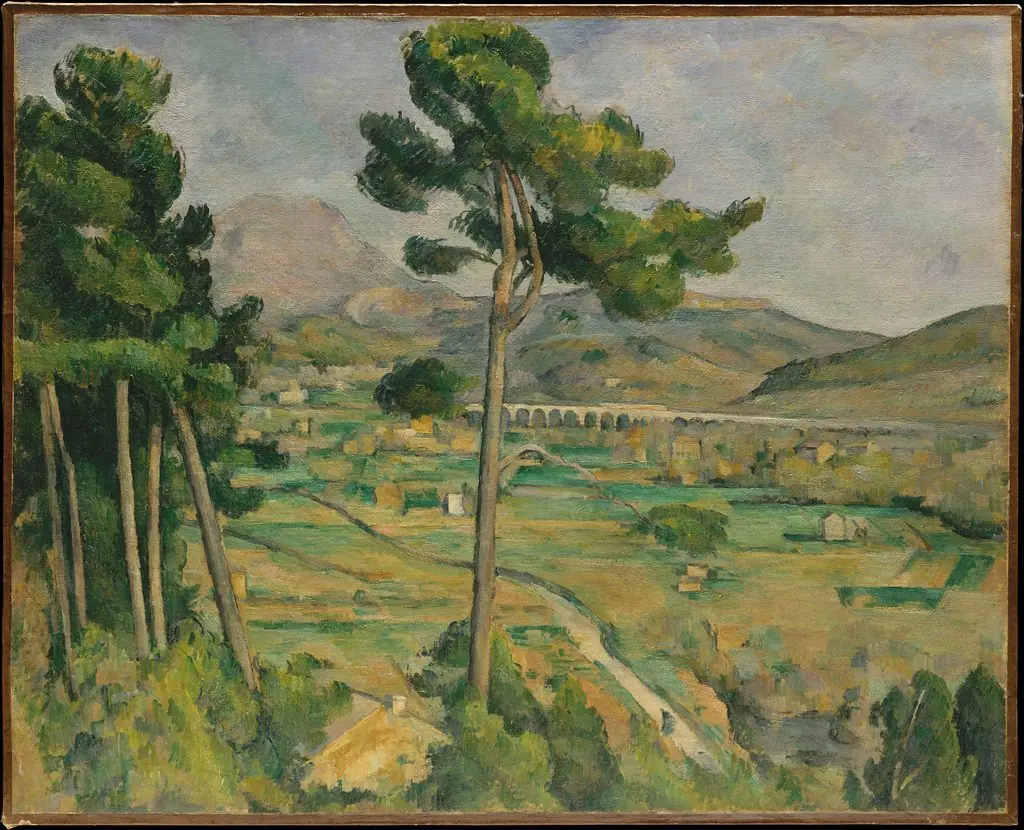 Mont Sainte-Victoire and the Viaduct of the Arc River Valley
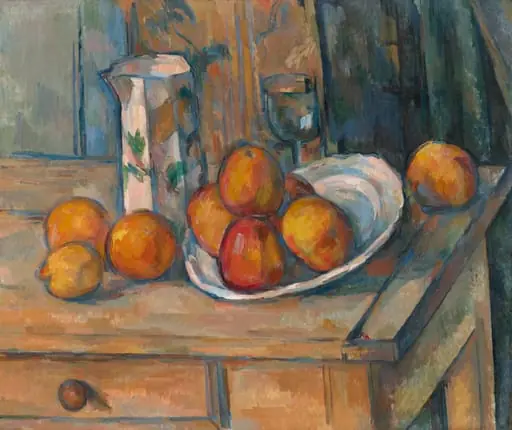 Still Life with Milk Jug and Fruit
 Le Golfe de Marseille vu de l'Estaque (The Gulf of Marseille Seen from L'Estaque)
 Houses in Provence: The Riaux Valley near L'Estaque
 Louis Guillaume
 Still Life with Jar, Cup, and Apples