Artwork
Still Life with Ginger Jar Sugar Bowl and Oranges
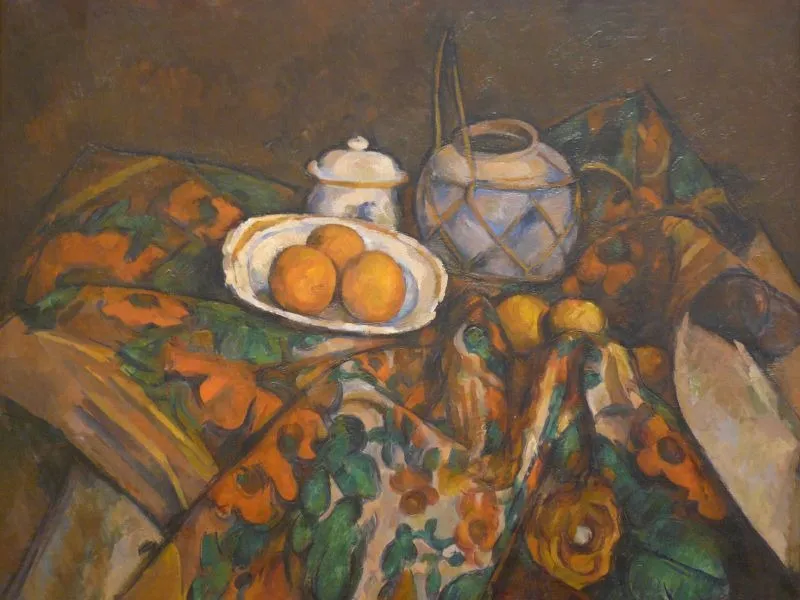
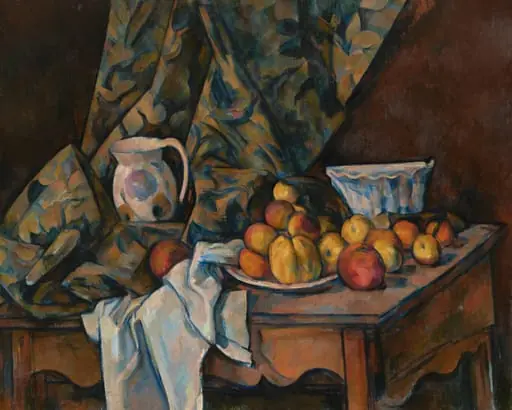
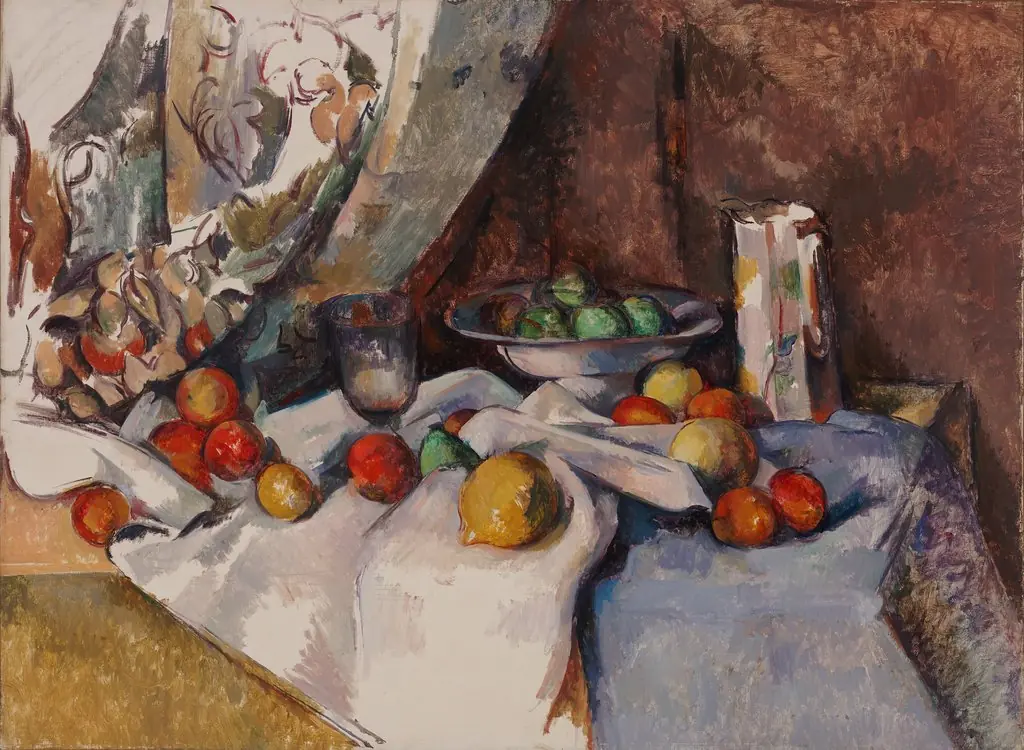
Still Life with Ginger Jar Sugar Bowl and Oranges is an oil painting by the Post-Impressionist artist Paul Cezanne. It dates from 1902 and is held in the collection of the Museum of Modern Art.
About this work
Overview
Painted in 1902, this oil on canvas work is one of Paul Cézanne’s later still lifes, reflecting his sustained focus on ordinary domestic objects.
Painted in 1902, this oil on canvas work is one of Paul Cézanne’s later still lifes, reflecting his sustained focus on ordinary domestic objects. It belongs to the Post-Impressionist tradition, where form and structure take precedence over fleeting light effects. The composition centers on a ginger jar, a sugar bowl, and a group of oranges arranged on a patterned cloth, all rendered with deliberate, layered brushwork that prioritizes spatial logic over naturalistic illusion.
Subject & Meaning
The arrangement includes common household items—a ceramic vessel, a sugar container, and citrus fruit—chosen for their varied shapes and surfaces. Cézanne treated these objects not as mere symbols of abundance but as geometric forms to be analyzed and balanced. The repetition of curved and angular volumes suggests an inquiry into how perception constructs reality, turning the mundane into a study of visual order.
Technique & Style
Cézanne applied oil paint in distinct, directional strokes that build volume rather than blend tone. Colors are saturated but controlled, with warm oranges contrasting against cooler blues and greens in the background. The floral tablecloth is rendered with flat, rhythmic patterns that assert the picture plane, while the ceramics are modeled through subtle shifts in hue rather than chiaroscuro, emphasizing structure over surface sheen.
History & Provenance
The painting entered the Museum of Modern Art’s collection in the 20th century, following its acquisition from a private collection. It was painted during Cézanne’s final years in Aix-en-Provence, a period marked by intense, solitary study of still life subjects. Unlike many of his contemporaries, he avoided public exhibitions of these works, preferring to refine them privately over time.
Context
In the early 1900s, Cézanne’s approach to form and color was gaining recognition among younger artists, including Picasso and Braque. His method of breaking down objects into underlying geometric planes influenced the development of Cubism. This painting exemplifies his transition from Impressionist observation to a more analytical mode, where perception is reconstructed through disciplined brushwork and compositional balance.
Legacy
This work contributes to Cézanne’s enduring influence on modern art’s shift toward abstraction. By treating still life as a field for structural experimentation, he redefined how objects could be represented—not as illusions, but as arrangements of color and form. Later generations saw in his paintings not just subjects, but the architecture of seeing itself.
Artist & collection
Artist
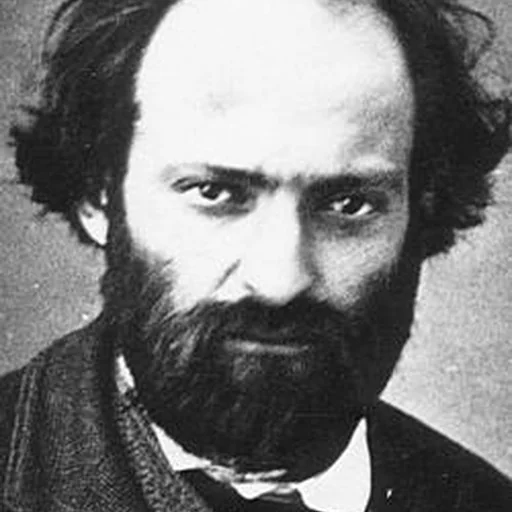
Paul Cézanne was born on January 19, 1839, in Aix-en-Provence, the son of a hatter turned wealthy banker.

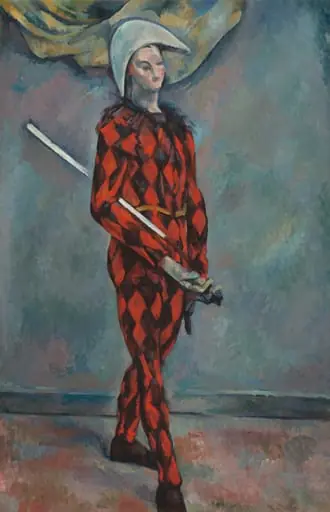 Harlequin
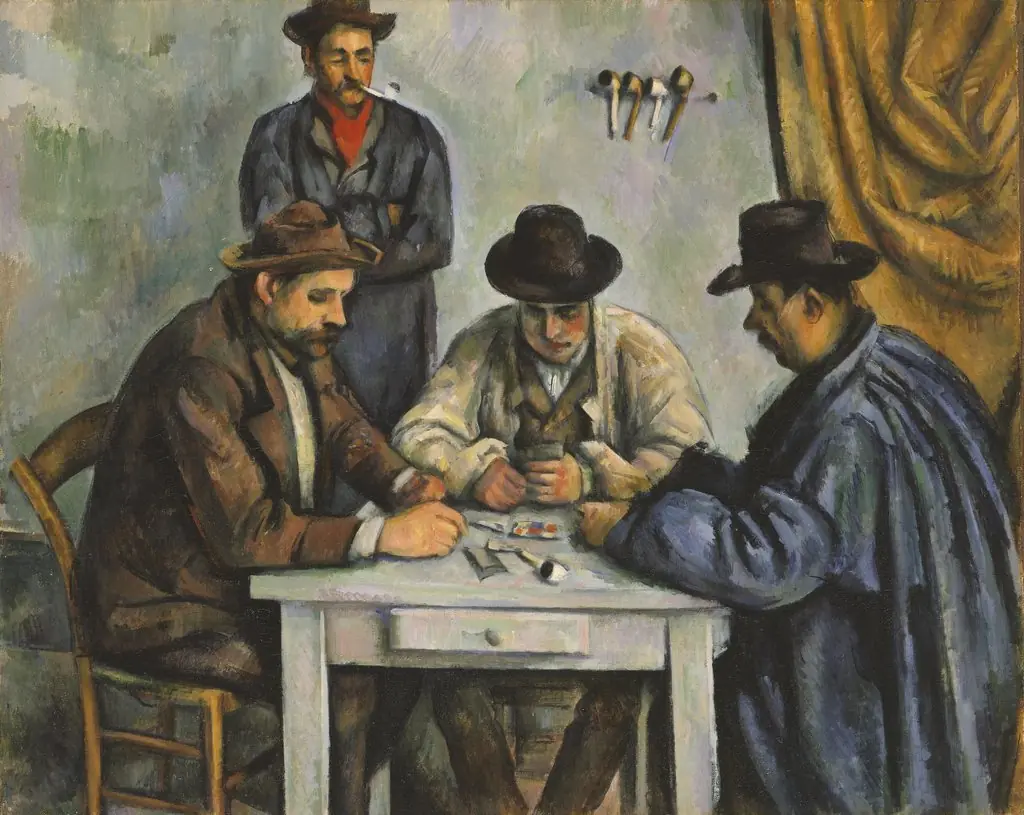 The Card Players
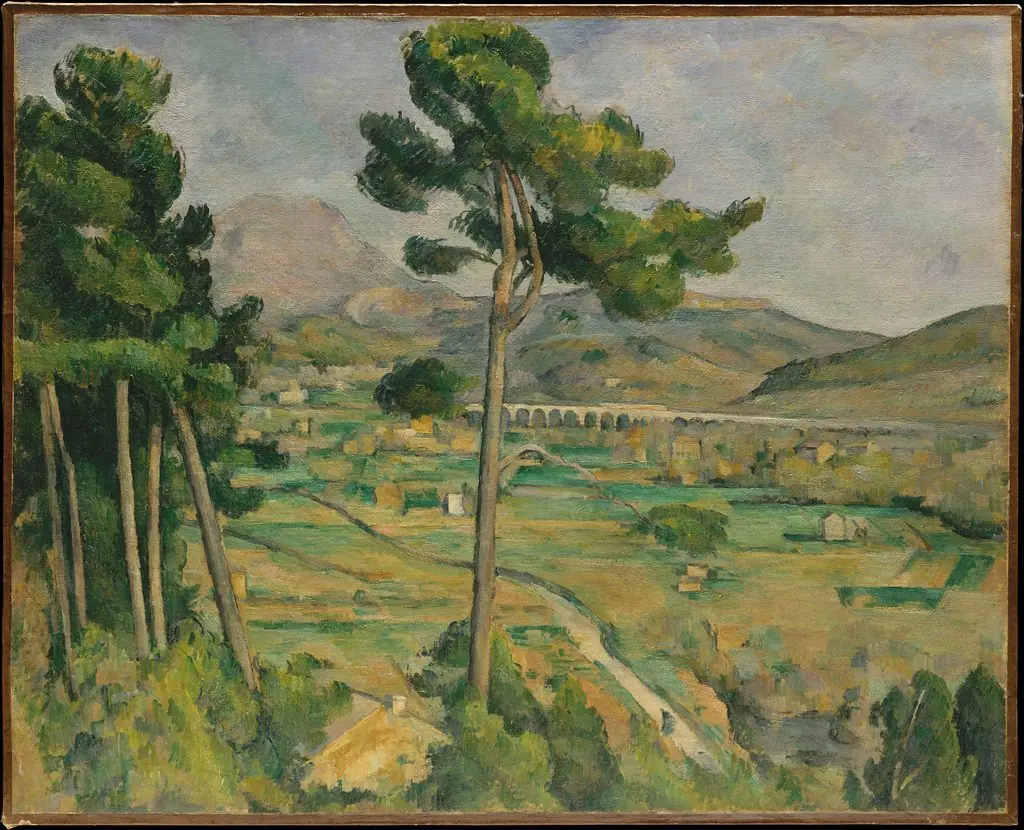 Mont Sainte-Victoire and the Viaduct of the Arc River Valley
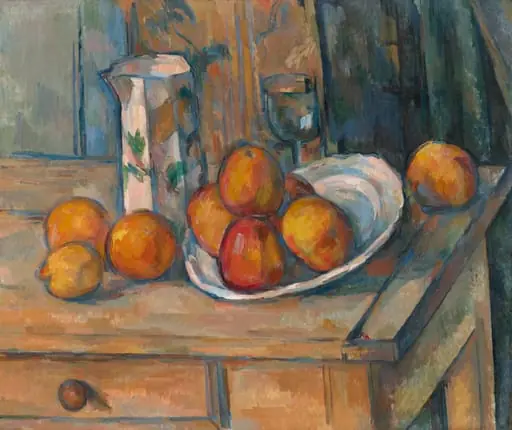 Still Life with Milk Jug and Fruit
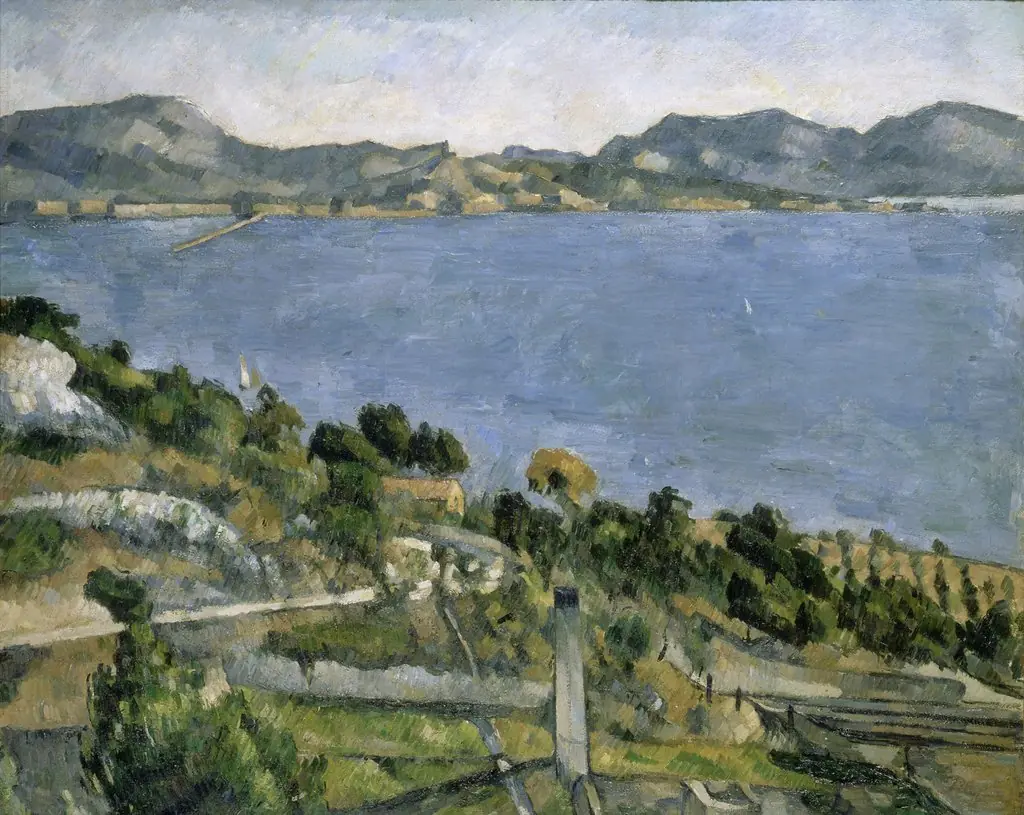 Le Golfe de Marseille vu de l'Estaque (The Gulf of Marseille Seen from L'Estaque)
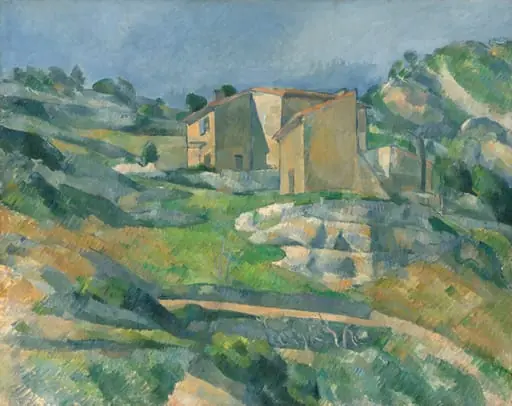 Houses in Provence: The Riaux Valley near L'Estaque
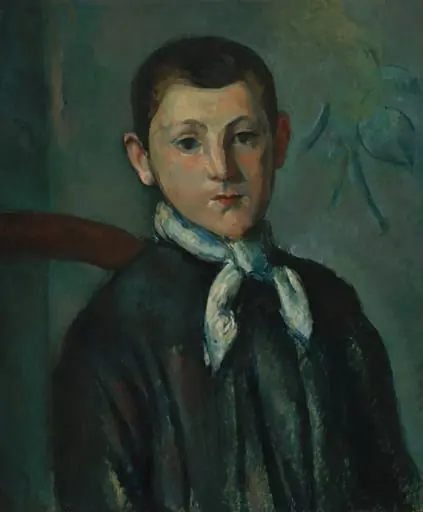 Louis Guillaume
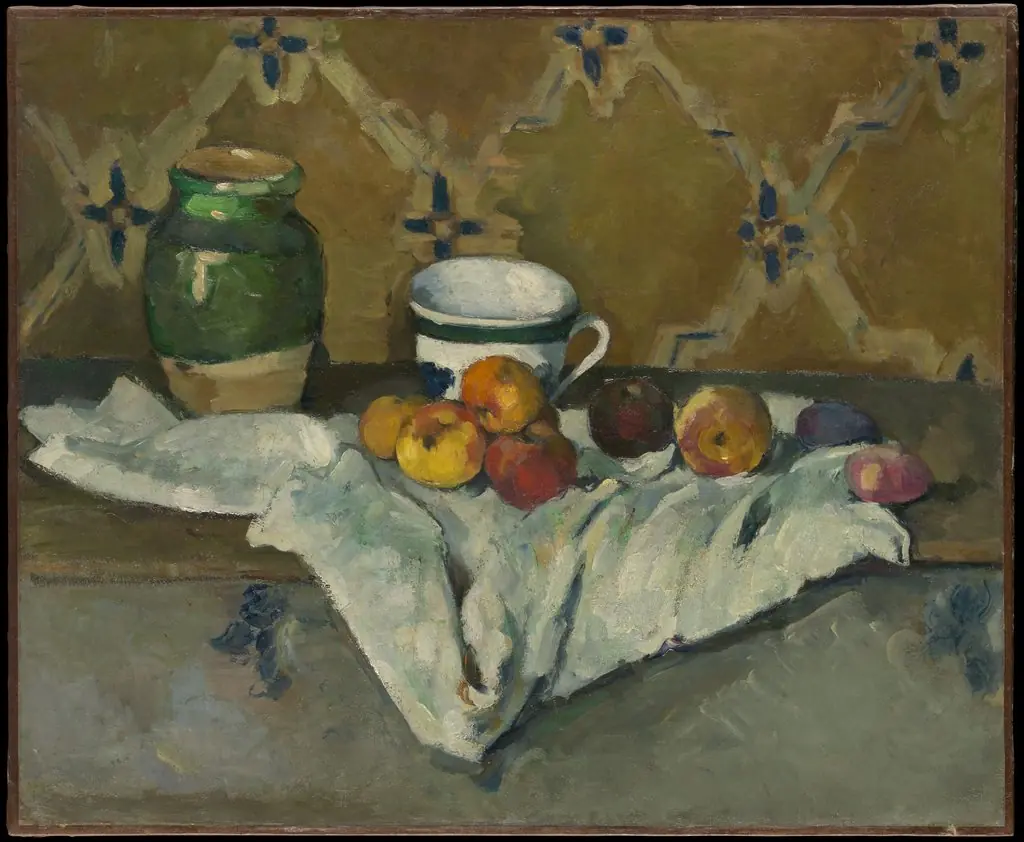 Still Life with Jar, Cup, and Apples