Artwork
Untitled
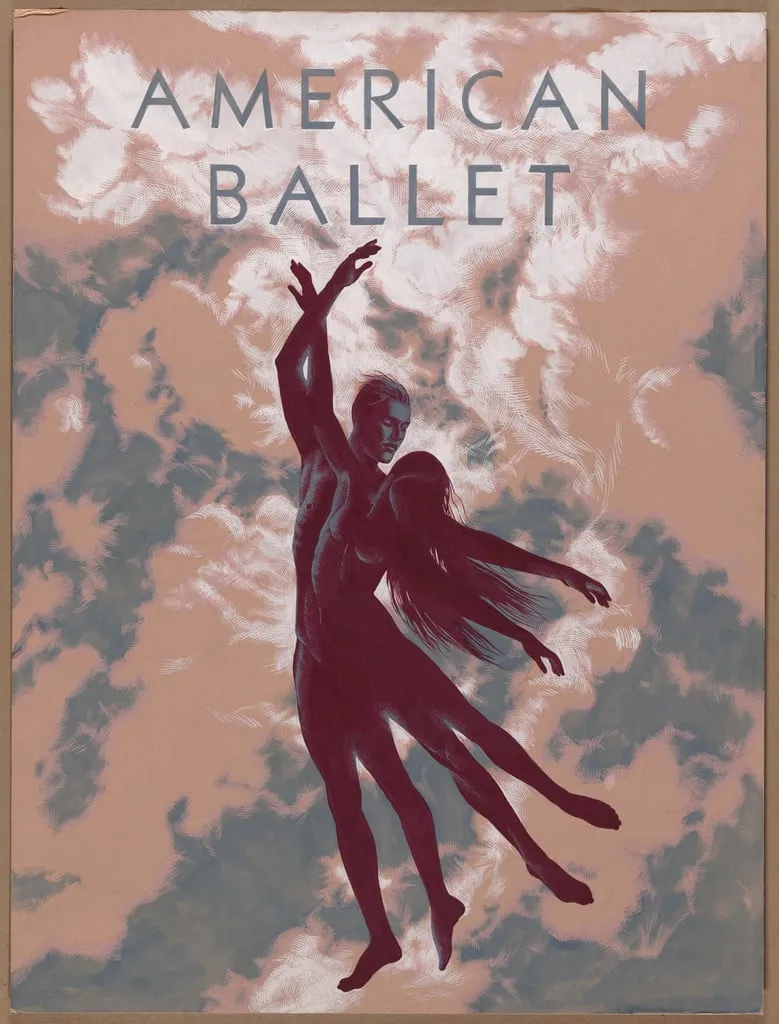
Untitled is a gouache drawing by Paul Cadmus. It dates from 1941 and is held in the collection of the Museum of Modern Art.
About this work
Overview
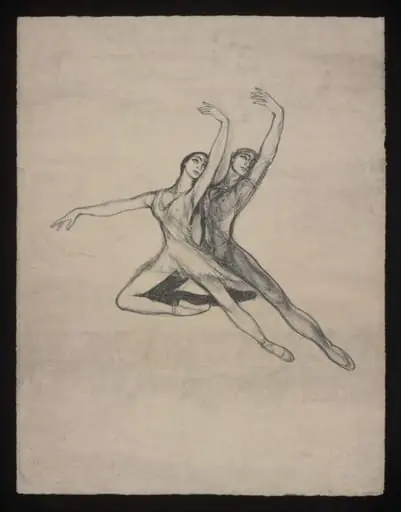
It depicts two dancers suspended in motion, their forms rendered in stark black silhouettes against a softly blended pink and blue background.
Created around 1941, this drawing by Paul Cadmus combines gouache and pencil on a colored paper-faced board. It depicts two dancers suspended in motion, their forms rendered in stark black silhouettes against a softly blended pink and blue background. The title 'AMERICAN BALLET' appears prominently at the top, anchoring the scene in a specific cultural context. The work’s simplicity of palette and emphasis on movement reflect Cadmus’s interest in capturing fleeting, theatrical moments with precision and emotional resonance.
Subject & Meaning
The two dancers, one facing forward and the other arched backward, suggest a moment of dynamic equilibrium—neither fully grounded nor entirely free. Their stylized, weightless forms evoke the grace of performance while hinting at underlying tension. The inclusion of 'AMERICAN BALLET' frames the scene as a commentary on national identity and artistic expression, possibly reflecting Cadmus’s observations of mid-century cultural institutions and the bodies that inhabit them.
Technique & Style
Cadmus employed gouache for its opaque, matte quality, allowing bold, flat areas of color to contrast with the delicate pencil lines defining the dancers’ contours. The background’s swirling hues are applied with soft, blended strokes, creating an ethereal atmosphere. The absence of detail in the figures enhances their symbolic quality, aligning the work with a dreamlike realism that prioritizes emotional tone over literal representation.
History & Provenance
The work entered the collection of The Museum of Modern Art, where it remains part of its holdings of 20th-century American drawings. Though not widely exhibited, its presence in the museum underscores Cadmus’s significance within the American modernist canon. Its creation in 1941 places it within a period when Cadmus was refining his distinctive visual language, often exploring themes of performance, desire, and social observation.
Context
In the early 1940s, Cadmus was engaged with themes of American life, often portraying urban scenes and marginalized figures with a blend of satire and tenderness. This drawing aligns with his broader interest in ballet and theater as spaces where social norms are both performed and subverted. The work reflects a moment when American art was negotiating realism, fantasy, and national identity amid the cultural shifts of wartime.
Legacy
Though less known than his larger tempera paintings, this drawing exemplifies Cadmus’s ability to distill complex social themes into intimate, visually arresting compositions. Its restrained palette and emphasis on line and movement influenced later artists interested in the intersection of performance and identity. The work endures as a quiet but potent statement on the fragility and beauty of human motion in a structured world.
Artist & collection
Artist
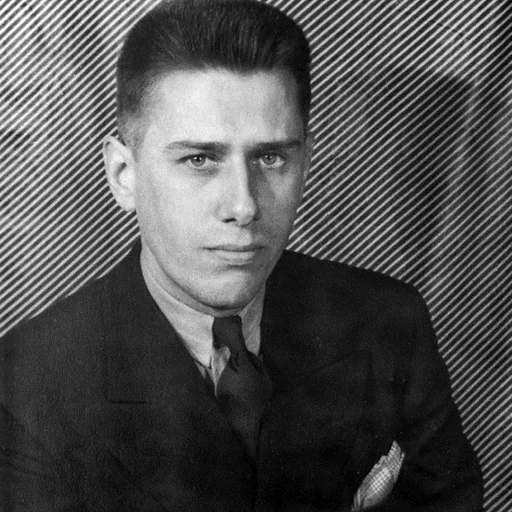
Paul Cadmus (December 17, 1904 – December 12, 1999) was an American artist widely known for his egg tempera paintings of gritty social interactions in urban settings.