Artwork
The Plate of Apples
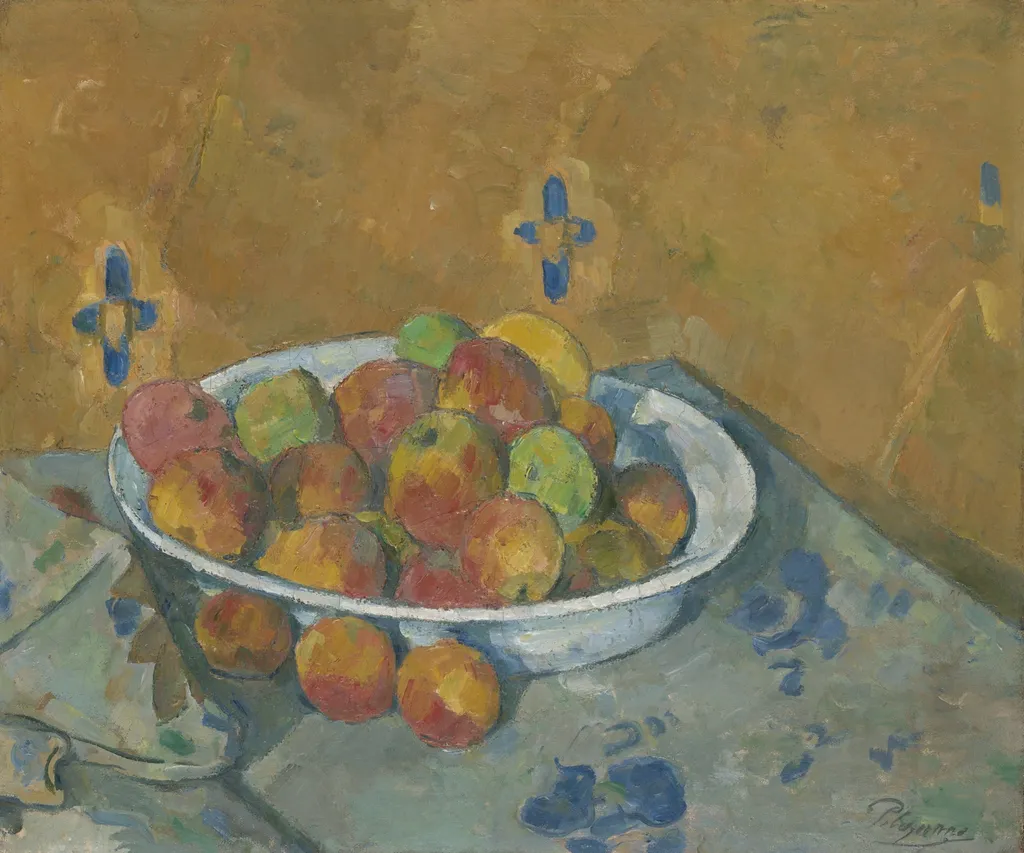
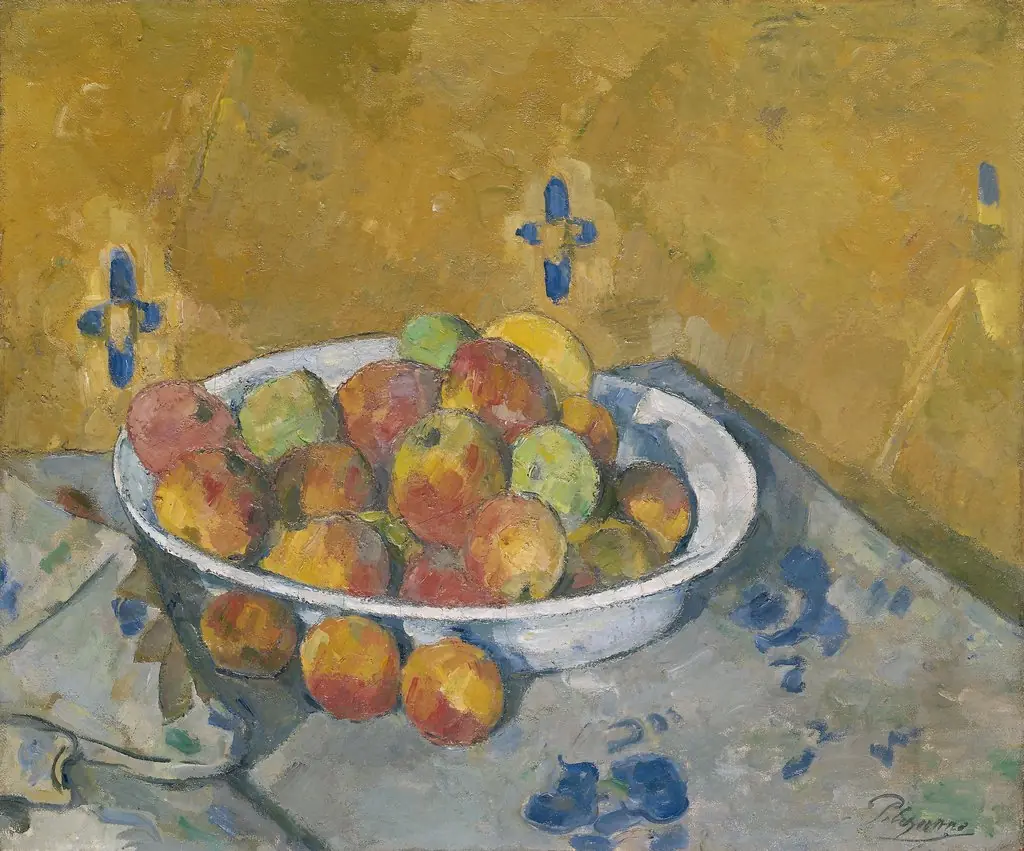
The Plate of Apples is an oil painting by the Impressionist artist Paul Cezanne. It dates from 1877 and is held in the collection of the Art Institute of Chicago.
About this work
Overview
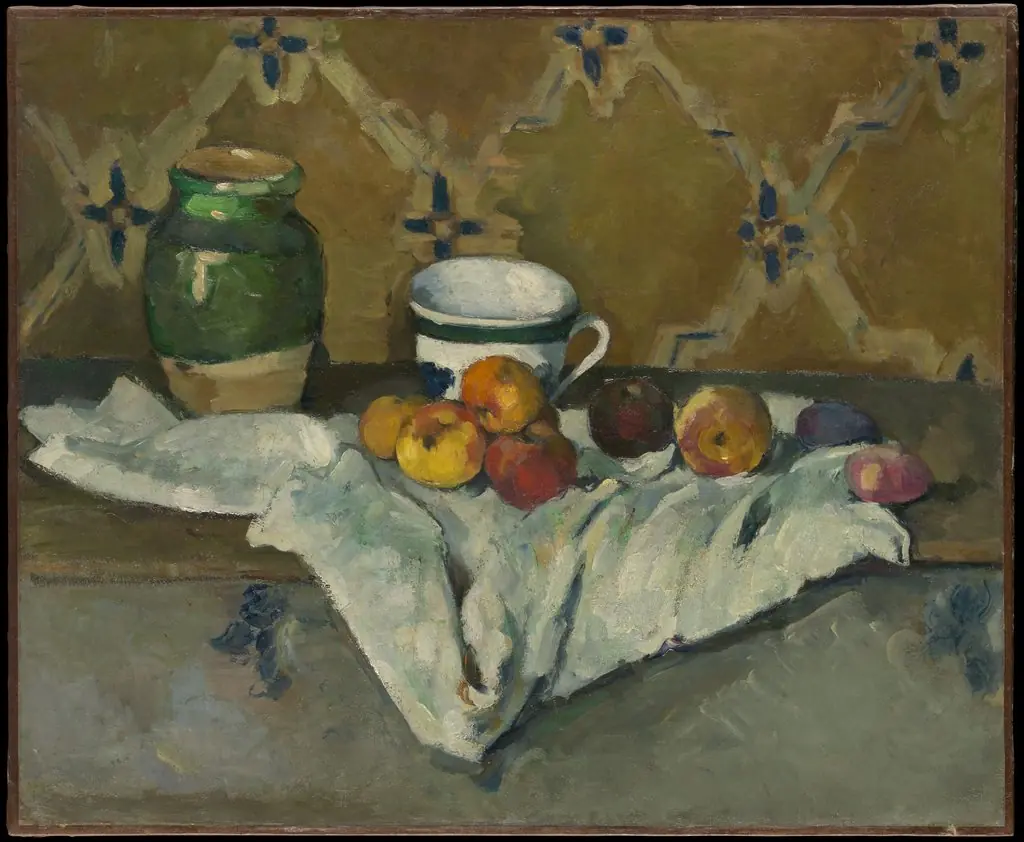
The Plate of Apples is an oil on canvas painting depicting a still life of apples on a plate, set against a distinctive lozenge-patterned wallpaper, identifiable with Paul Cezanne's Paris apartment (1875-1879).
Subject & Meaning
The subject is a simple still life, yet its presentation challenges contemporary painting norms. The tilted tabletop and plate, along with misaligned table edges, introduce disorientation, engaging the viewer in a novel, somewhat unsettling visual experience.
Technique & Style
Cezanne employed innovative techniques, including using a pointed tool (possibly a brush handle) to incise contours into semi-dry paint, creating heavy, sculptural forms around the plate and apples. This method, akin to impasto, adds tactile depth to the composition.
History & Provenance
Created during Cezanne's residency in his Paris apartment (1875-1879), the work reflects his early experiments with perspective and form, precursing later developments in his style.
Context
Within the late 19th-century art landscape, The Plate of Apples stands out for its rejection of traditional perspective rules, aligning with the broader shift towards modernist innovations in representation and space.
Legacy
This painting's unconventional spatial arrangements and textured technique have influenced subsequent artistic movements, particularly in the development of Cubism and the continued exploration of perspective in modern art.
Own this work as a print
Artist & collection
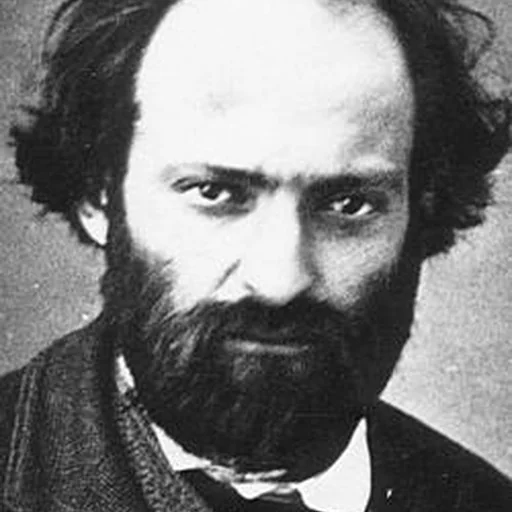
Artist
Paul Cézanne was born on January 19, 1839, in Aix-en-Provence, the son of a hatter turned wealthy banker.

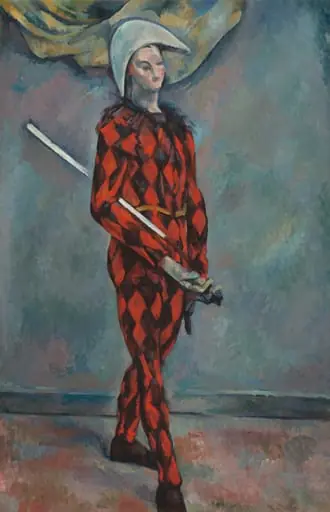 Harlequin
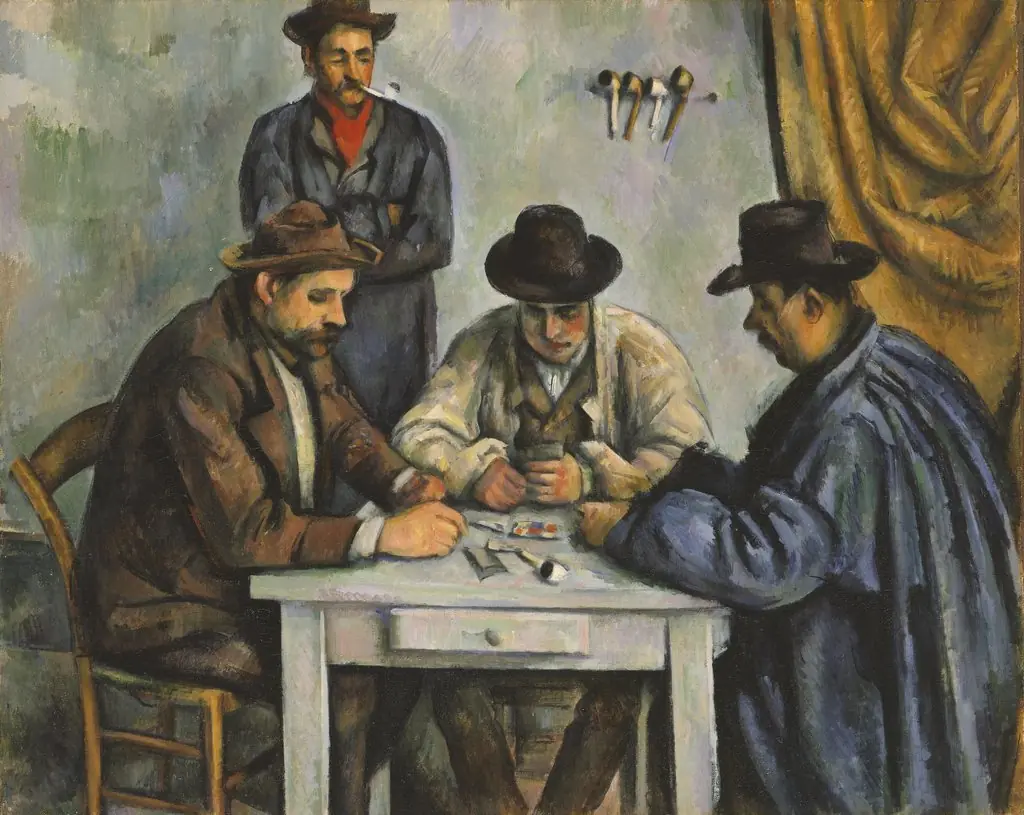 The Card Players
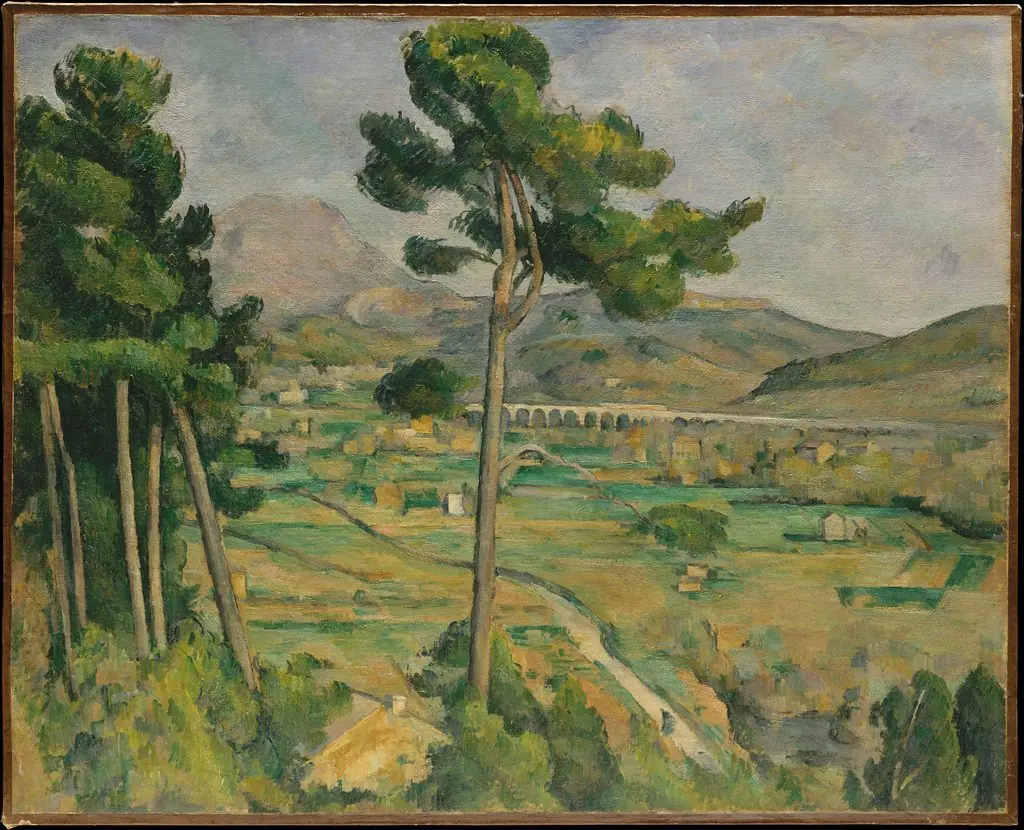 Mont Sainte-Victoire and the Viaduct of the Arc River Valley
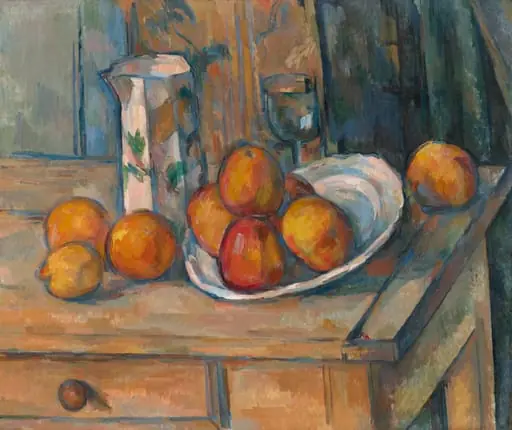 Still Life with Milk Jug and Fruit
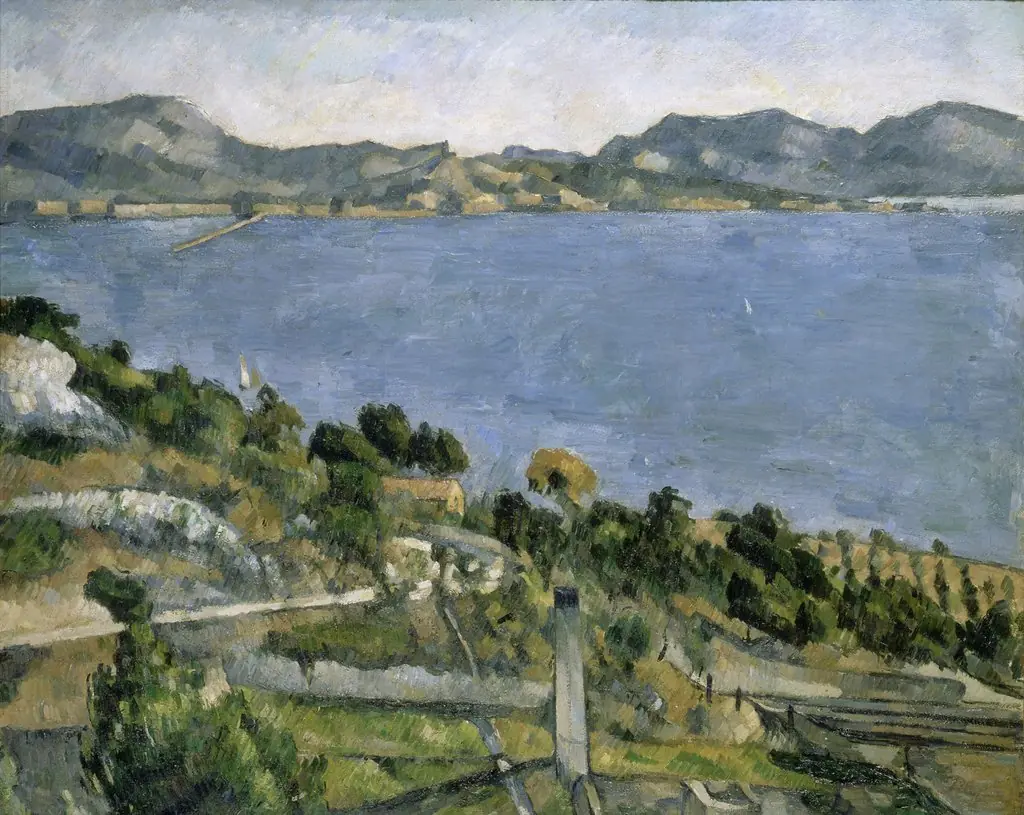 Le Golfe de Marseille vu de l'Estaque (The Gulf of Marseille Seen from L'Estaque)
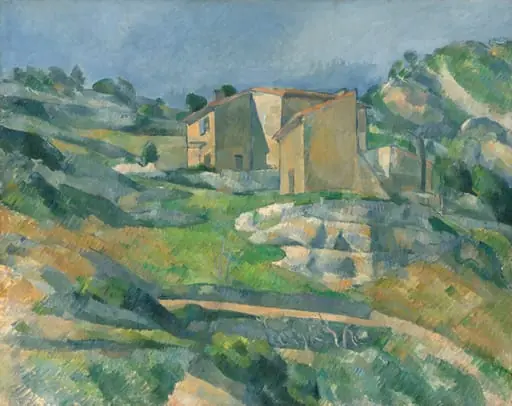 Houses in Provence: The Riaux Valley near L'Estaque
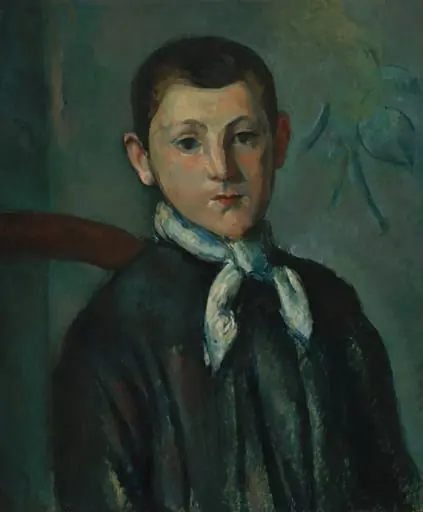 Louis Guillaume
 Still Life with Jar, Cup, and Apples