Artwork
The Plate of Apples
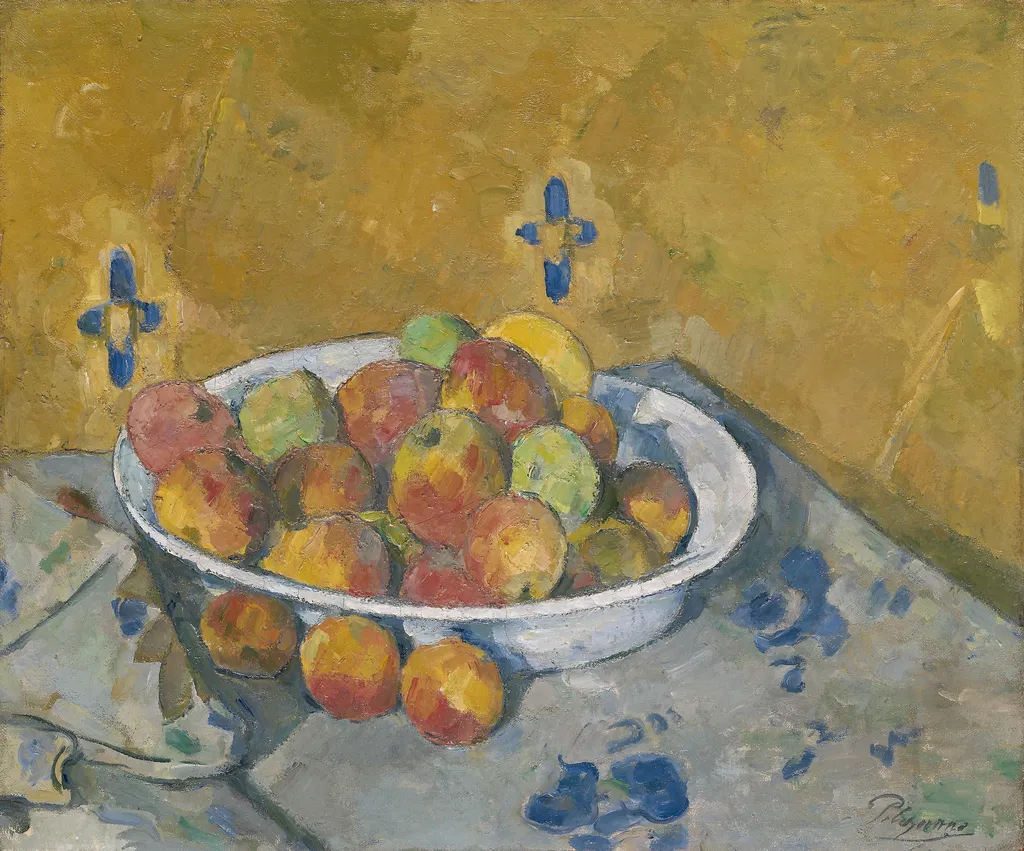
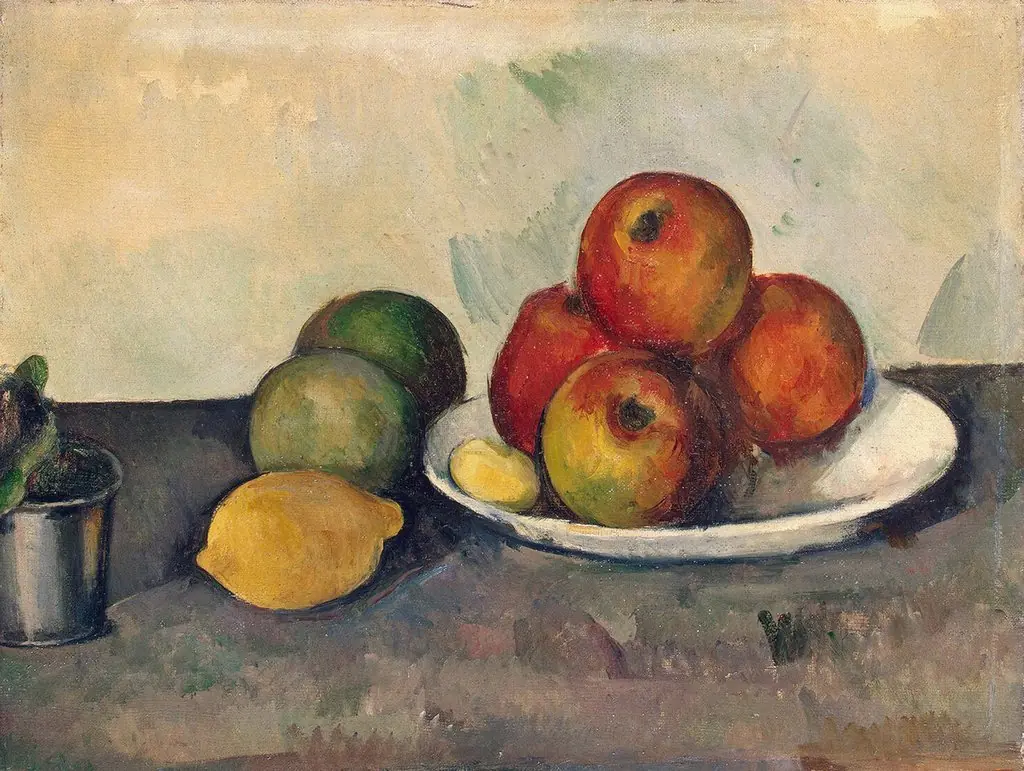
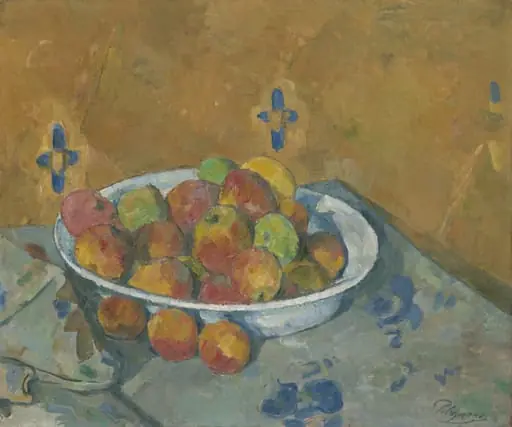
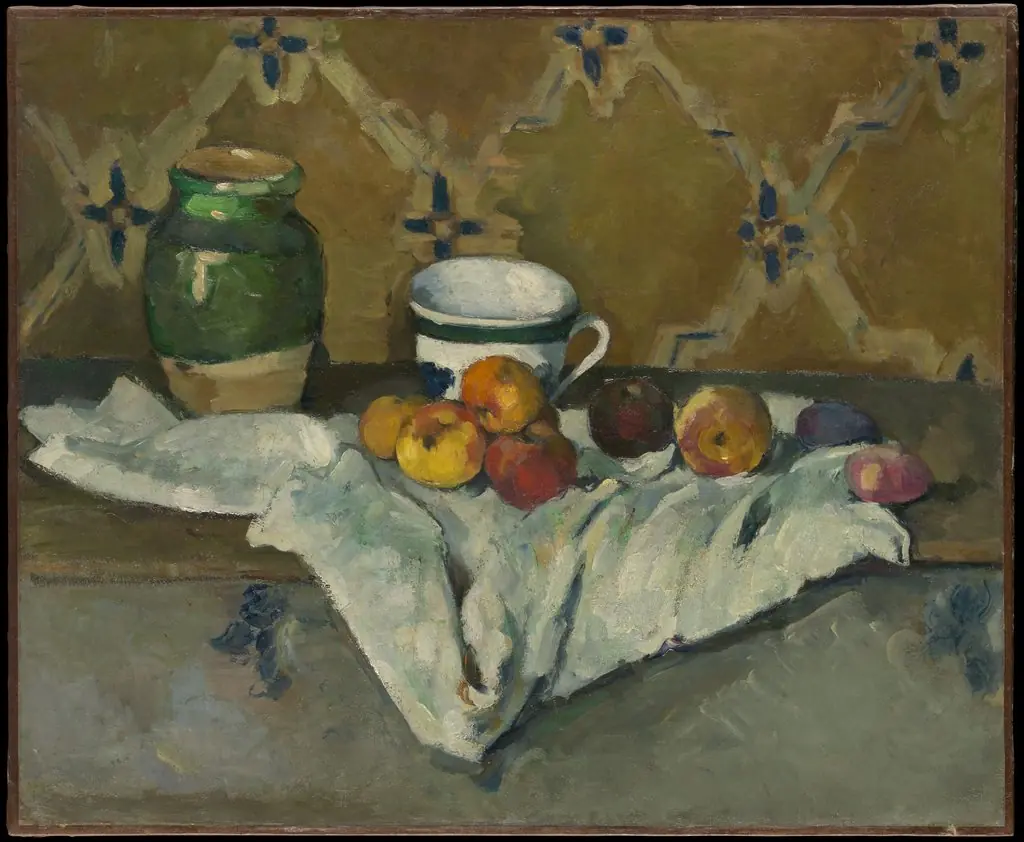
The Plate of Apples is an oil painting by the Post-Impressionist artist Paul Cezanne. It dates from 1889 and is held in the collection of the Art Institute of Chicago.
About this work
Overview
Created in 1889, this oil painting presents a modest still‑life arrangement: a white bowl brimming with apples of red, yellow and occasional green, some of which spill onto the tabletop. The backdrop is rendered in a warm, golden hue that contributes to a quiet, domestic atmosphere. The work exemplifies the artist’s focus on everyday objects rendered with careful observation.
Subject & Meaning
The composition centers on the simple act of fruit placed in a bowl, inviting contemplation of form and balance. By allowing a few apples to tumble beyond the rim, the artist introduces a subtle sense of movement and imperfection, suggesting the transient nature of ordinary moments while emphasizing the tactile qualities of the fruit.
Technique & Style
This handling of color and form reflects the artist’s transition from Impressionist observation toward a more structured, analytical approach.
Bold, expressive brushwork defines the surface, giving the apples a palpable texture that suggests three‑dimensionality. The palette combines saturated reds and yellows with muted greens, while the warm background enhances depth through nuanced shifts in light. This handling of color and form reflects the artist’s transition from Impressionist observation toward a more structured, analytical approach.
History & Provenance
The painting entered the collection of the Art Institute of Chicago, where it remains part of the museum’s holdings. Its acquisition reflects the institution’s commitment to representing pivotal works of late 19th‑century French art, particularly those illustrating the evolution toward modernist tendencies.
Context
Executed during a period when the artist was refining his method of reducing natural objects to basic geometric shapes, the work anticipates later developments in Cubism. Though rooted in the still‑life tradition, it demonstrates a shift toward emphasizing underlying structure over fleeting visual impression.
Own this work as a print
Artist & collection
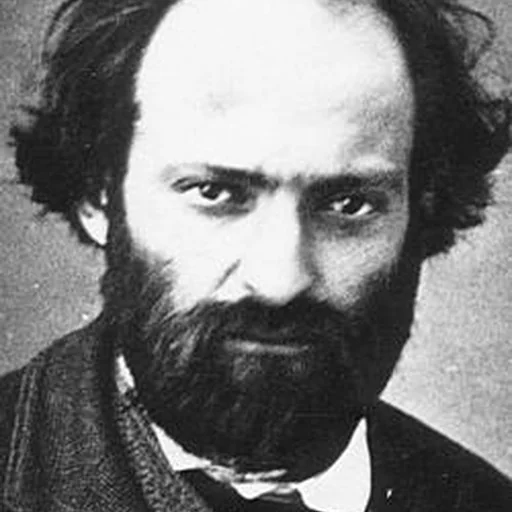
Artist
Paul Cézanne was born on January 19, 1839, in Aix-en-Provence, the son of a hatter turned wealthy banker.

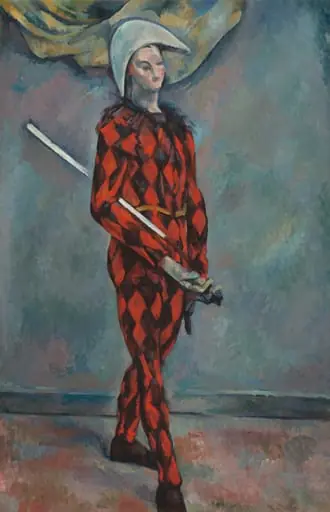 Harlequin
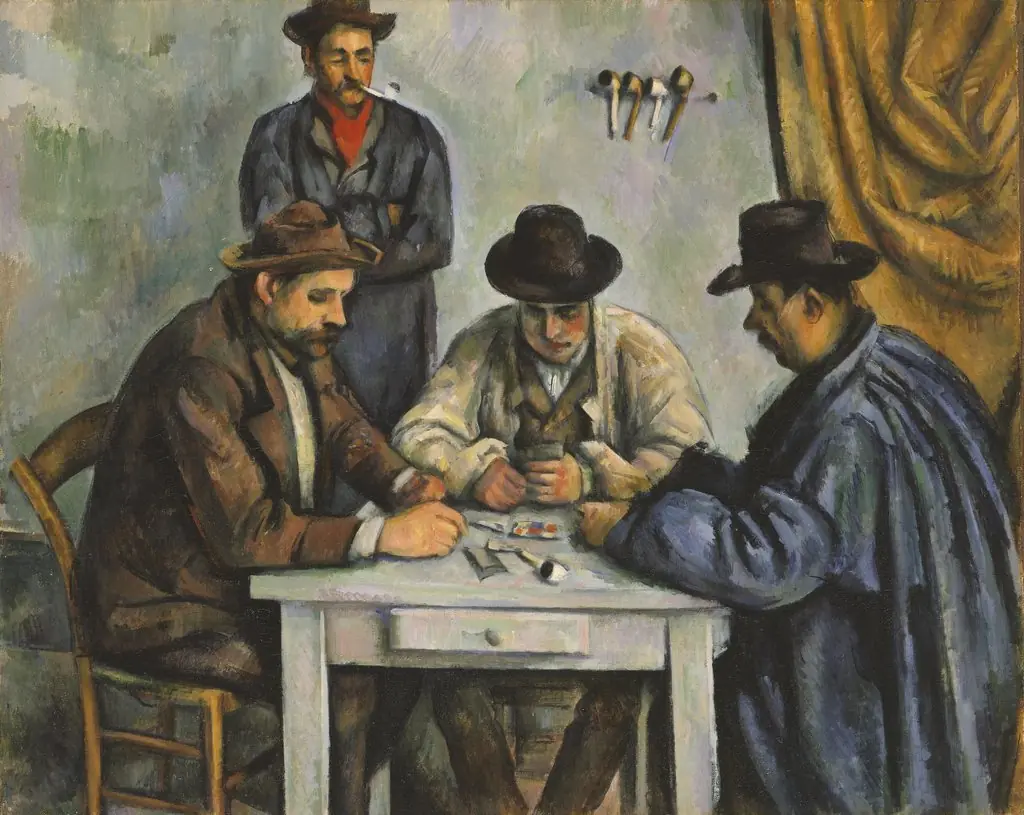 The Card Players
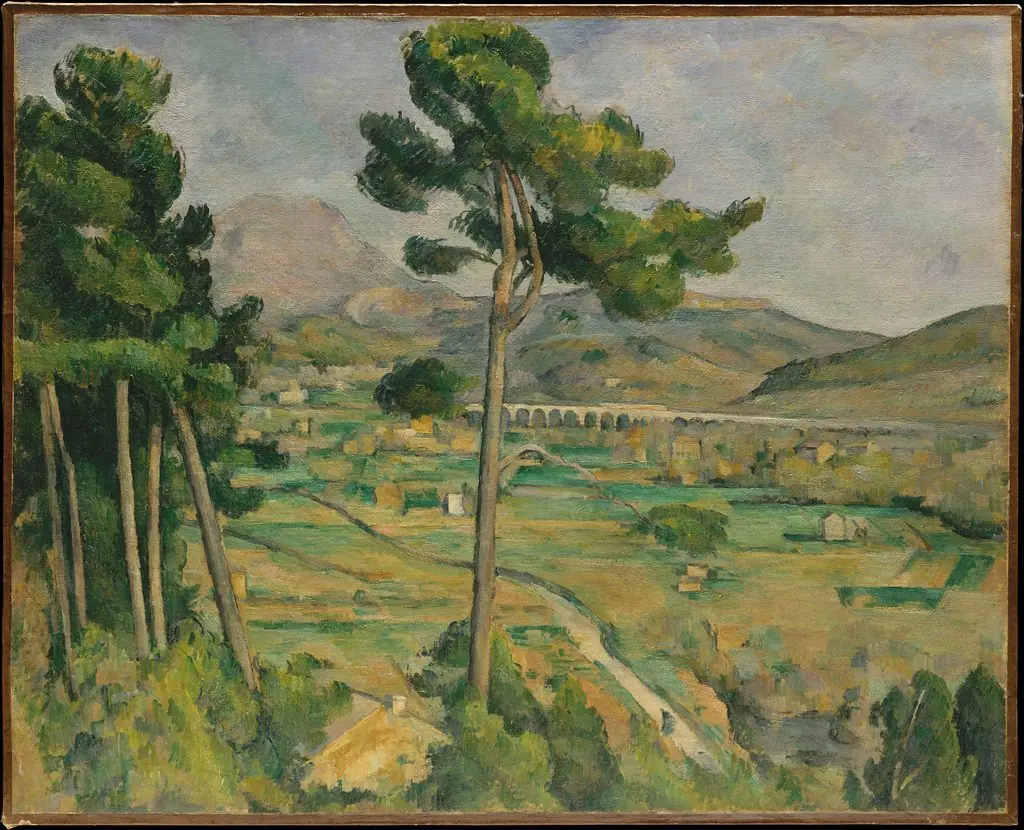 Mont Sainte-Victoire and the Viaduct of the Arc River Valley
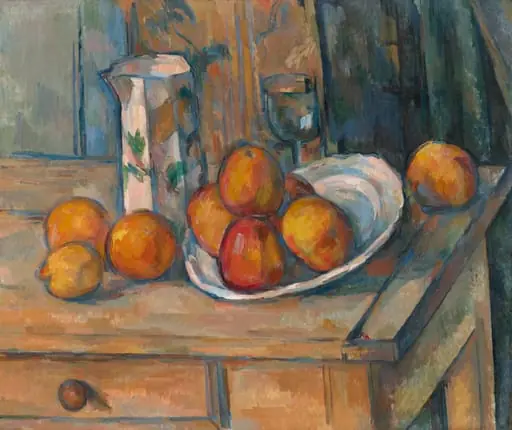 Still Life with Milk Jug and Fruit
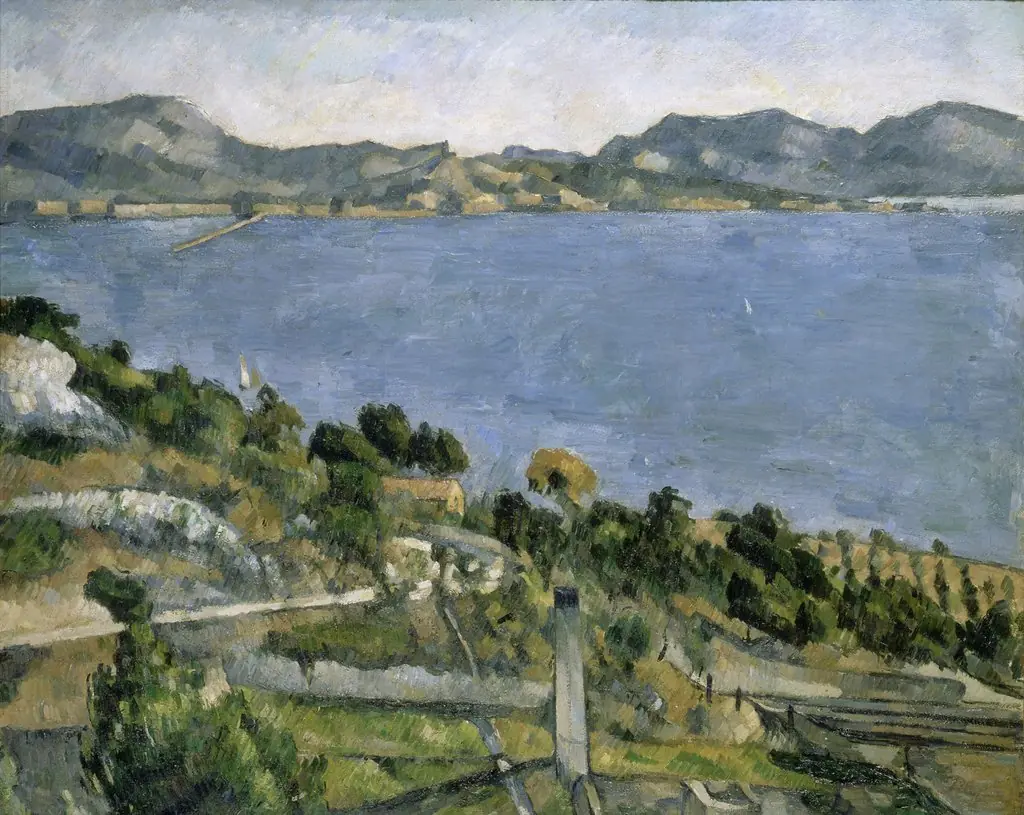 Le Golfe de Marseille vu de l'Estaque (The Gulf of Marseille Seen from L'Estaque)
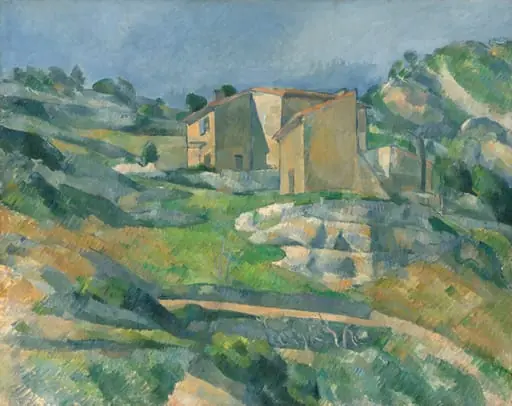 Houses in Provence: The Riaux Valley near L'Estaque
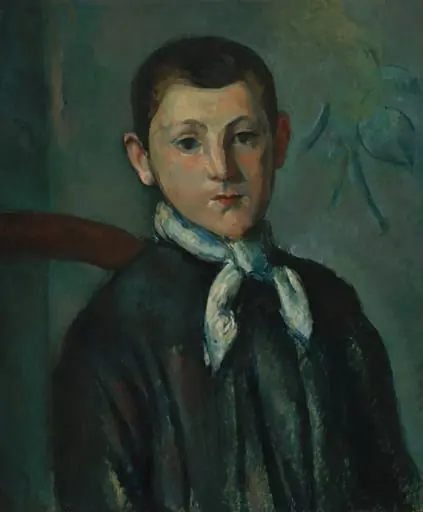 Louis Guillaume
 Still Life with Jar, Cup, and Apples