Artwork
Fruit Dish on a Garden Chair
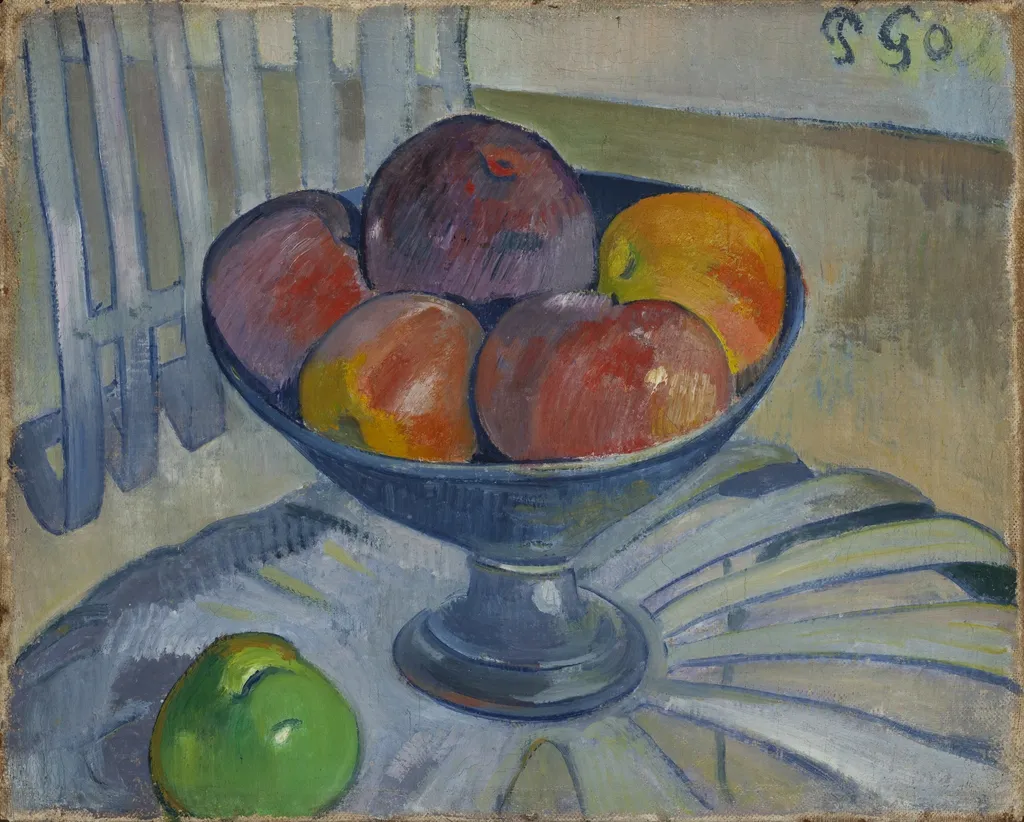
Fruit Dish on a Garden Chair is an oil painting by Paul Gauguin. It dates from 1896 and is held in the collection of the Los Angeles County Museum of Art.
About this work
Overview
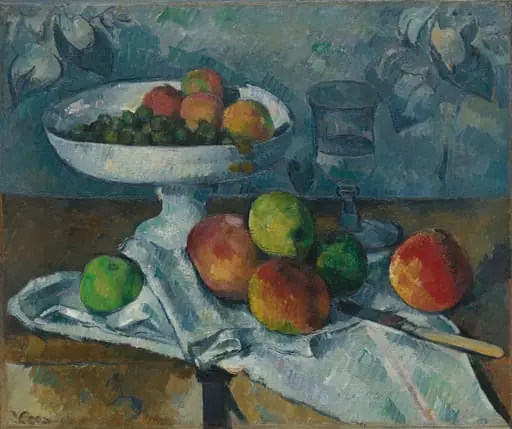
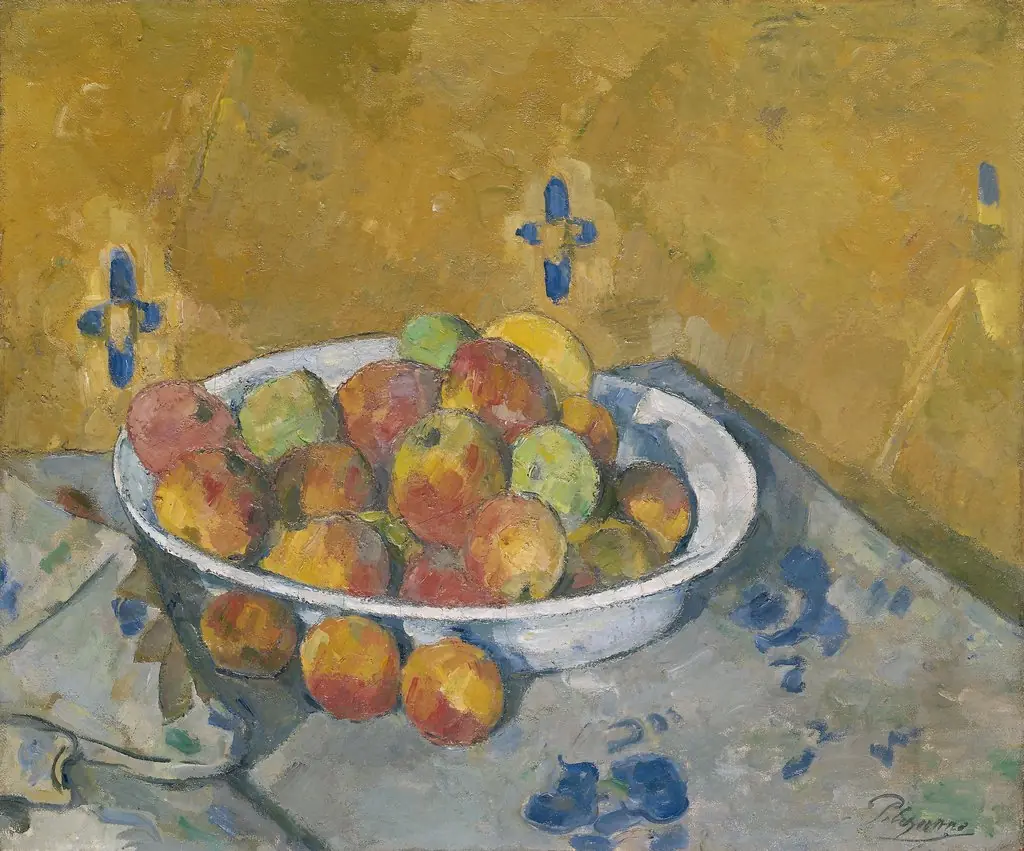
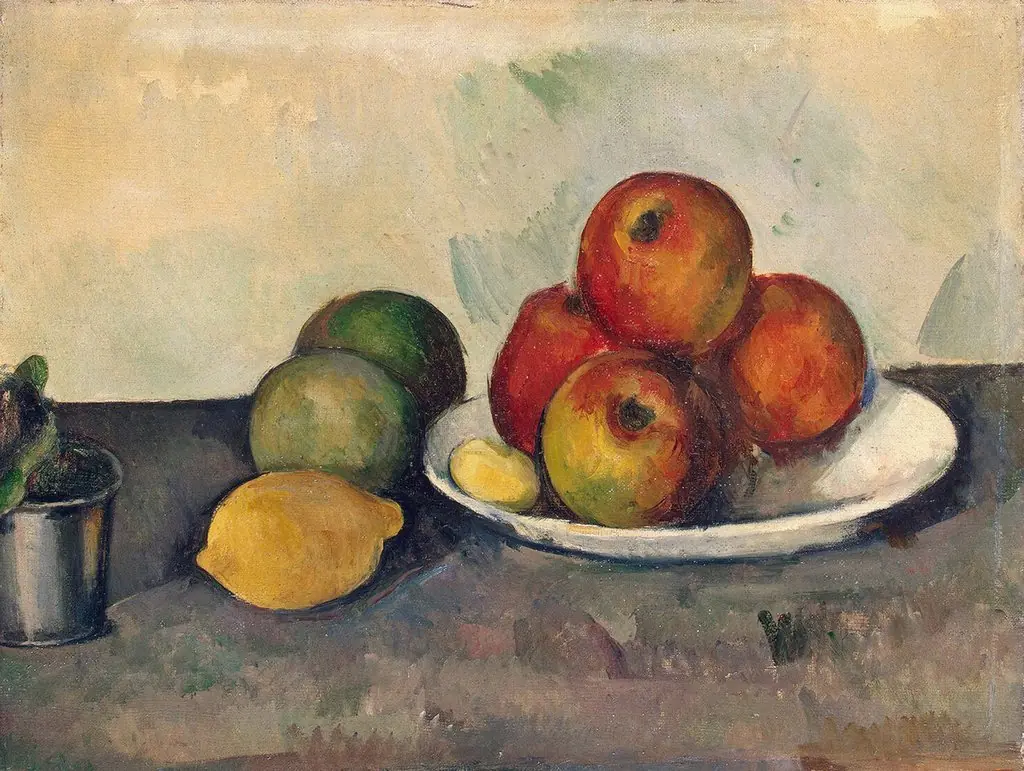
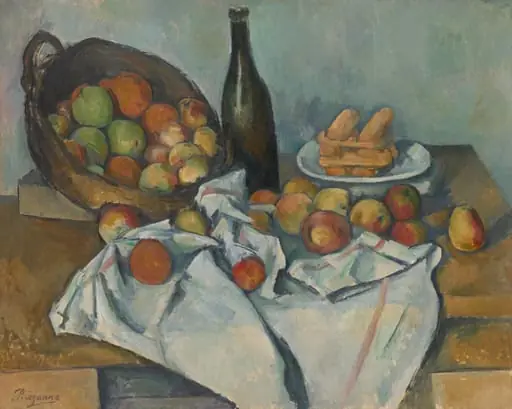
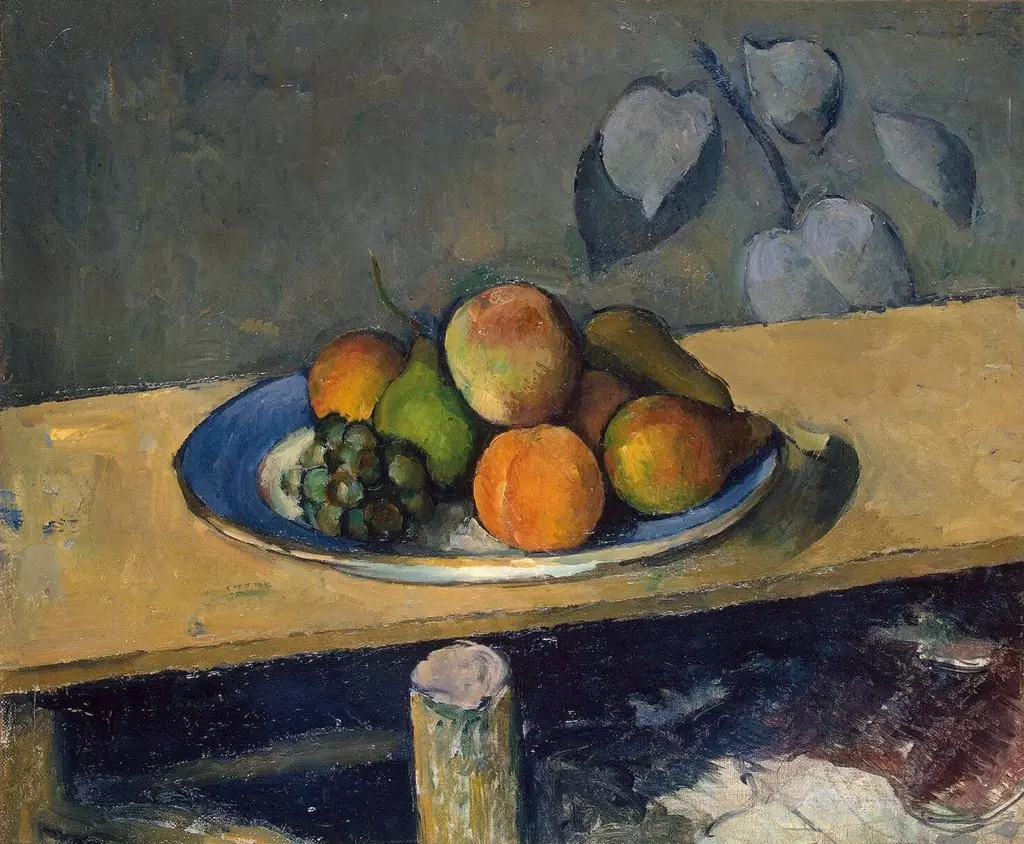
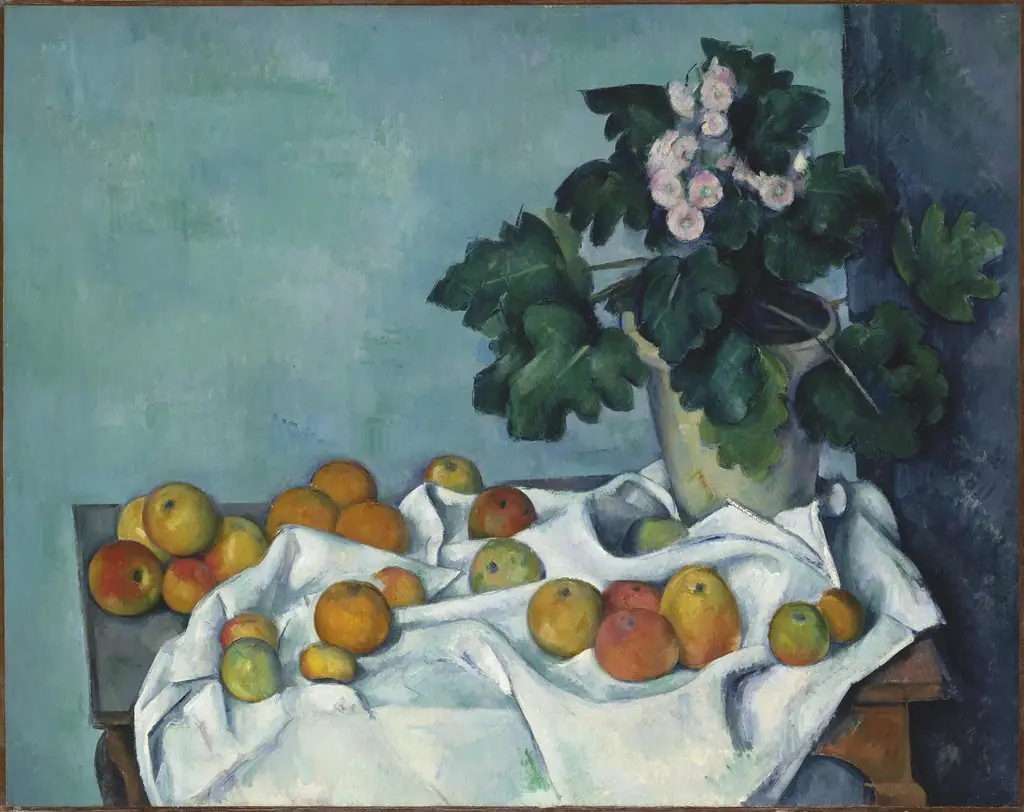
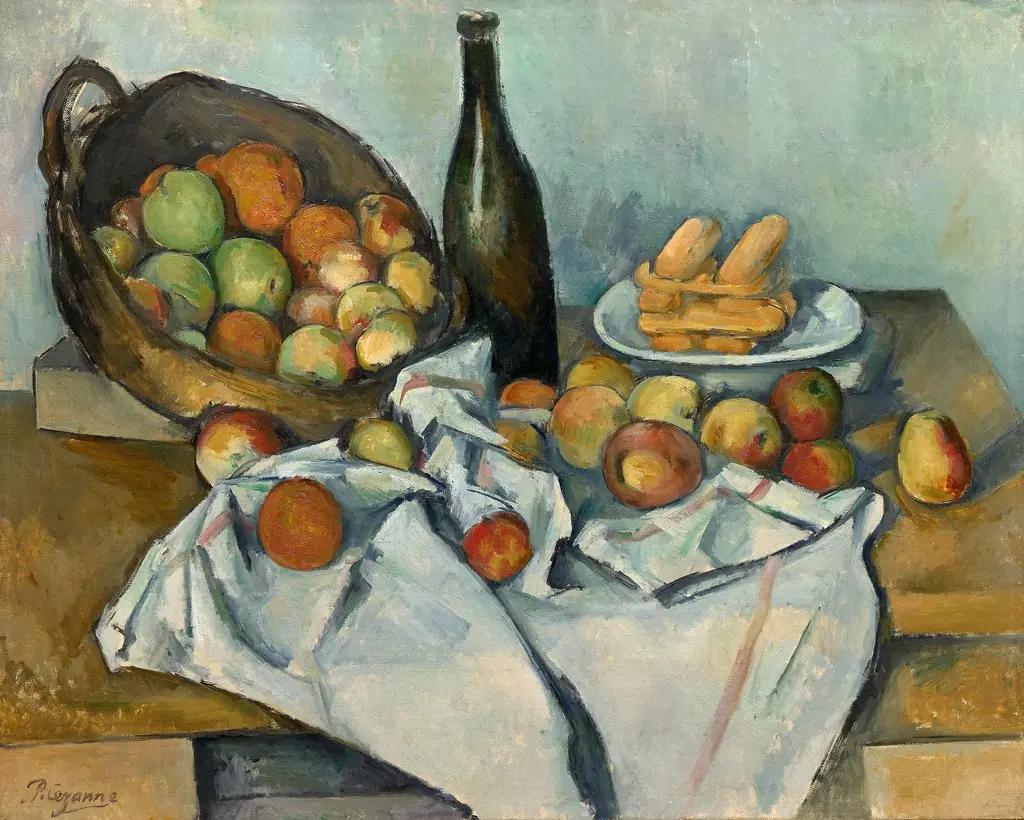
Paul Gauguin painted *Fruit Dish on a Garden Chair* in 1896 with oil on canvas. The work presents a simple still‑life composition: a blue bowl filled with apples and a banana rests on a light‑gray garden chair, set against a yard with a white fence. The painting measures roughly a typical easel size and exemplifies Gauguin’s late‑period output.
Subject & Meaning
The scene captures everyday objects—a fruit dish and a garden chair—arranged to highlight their forms and colors rather than narrative content. The inclusion of ripe fruit alongside a utilitarian chair suggests a quiet domestic moment, while the garden backdrop situates the composition within an outdoor, perhaps tropical, setting that Gauguin often favored.
Technique & Style
Executed in Gauguin’s mature Synthetist manner, the canvas features bold, non‑naturalistic hues and a flattened perspective.
Executed in Gauguin’s mature Synthetist manner, the canvas features bold, non‑naturalistic hues and a flattened perspective. Thick, expressive brushstrokes give the blue bowl and gray chair a tactile quality, while the vivid reds, greens, and yellows of the fruit contrast sharply with the muted background. This approach departs from Impressionist fleeting light, emphasizing symbolic color and simplified forms.
History & Provenance
Created during Gauguin’s post‑Tahiti period, the painting reflects his ongoing exploration of color and symbolism after leaving France. It entered private collections in the early 20th century before being acquired by a European museum in the 1970s, where it remains part of the institution’s holdings on Post‑Impressionist art.
Own this work as a print
Artist & collection
Artist
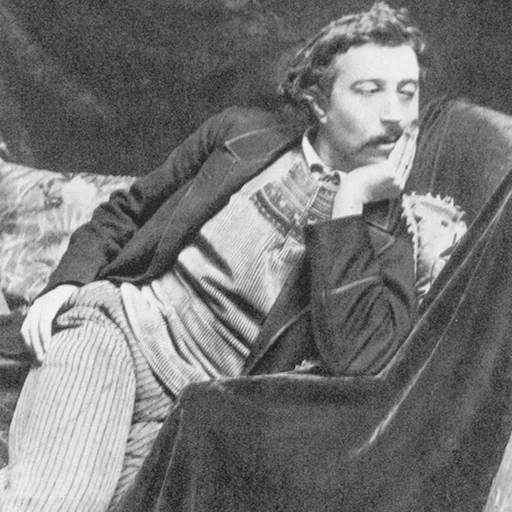
Eugène Henri Paul Gauguin (; French: ; 7 June 1848 – 8 May 1903) was a French painter, sculptor, printmaker, ceramist, and writer, whose work has been primarily associated with the Post-Impressionist and Symbolist movements.