Artwork
Untitled
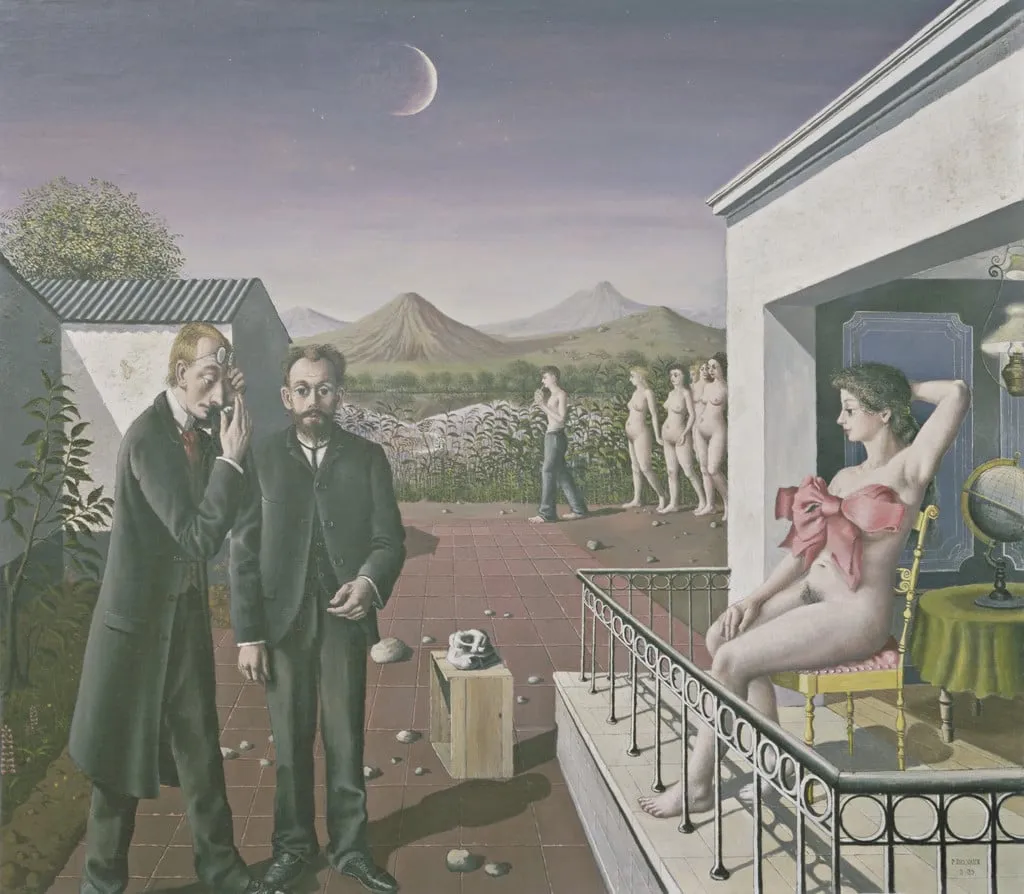
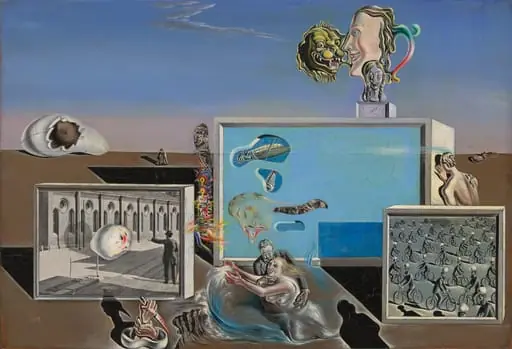
Untitled is an oil painting by the Surrealist artist Paul Delvaux. It dates from 1939 and is held in the collection of the Museum of Modern Art.
About this work
Overview
It presents a quiet, nocturnal scene that blends architectural elements with natural forms, creating an atmosphere detached from everyday logic.
Paul Delvaux painted this oil-on-canvas work in 1939, classifying it as a landscape despite its surreal composition. The piece resides in The Museum of Modern Art’s collection. It presents a quiet, nocturnal scene that blends architectural elements with natural forms, creating an atmosphere detached from everyday logic. The painting’s stillness and unusual juxtapositions invite contemplation rather than narrative interpretation.
Subject & Meaning
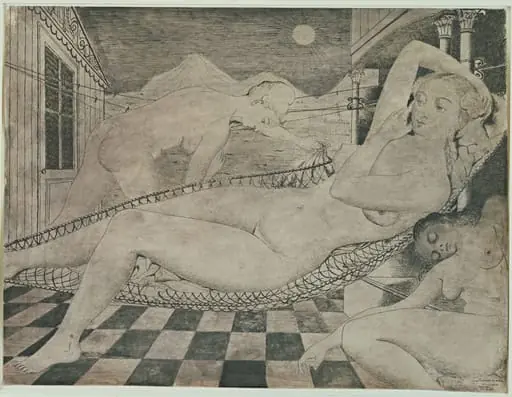
The painting features isolated figures in mismatched contexts: two men in formal attire observe through a magnifying glass, while nude women and a man in casual wear populate distant areas. A woman on a balcony, partially draped, gazes outward. No clear relationship exists between them, and their actions remain unexplained. The scene evokes psychological distance, suggesting inner worlds rather than shared reality.
Technique & Style
Delvaux employs precise, almost academic brushwork to render figures and surfaces, contrasting with the dreamlike arrangement of elements. The lighting is even and cool, enhancing the sense of stillness. Architectural details like tiled patios and balconies are rendered with clarity, while the distant mountains and crescent moon recede into a hazy, atmospheric background, reinforcing the painting’s otherworldly tone.
History & Provenance
Created in 1939, the painting entered The Museum of Modern Art’s collection shortly after its completion. It was produced during a period when Delvaux was refining his signature style—merging classical form with surrealist dislocation. The work remained in private hands before acquisition, but no public records detail its early ownership or exhibition history prior to its institutional acquisition.
Context
Painted on the eve of World War II, the work reflects the broader European surrealist preoccupation with alienation and subconscious imagery. Delvaux, influenced by de Chirico and Freudian thought, avoided political symbolism, instead focusing on psychological unease. The absence of overt narrative aligns with surrealist efforts to bypass rational interpretation and access deeper, ambiguous states of mind.
Legacy
This painting exemplifies Delvaux’s enduring contribution to surrealism through quiet, enigmatic compositions. Unlike contemporaries who embraced chaos, he favored stillness and solitude, influencing later artists drawn to psychological landscapes. Its presence in MoMA’s collection ensures continued study, particularly regarding the intersection of classical technique and dream logic in 20th-century painting.
Artist & collection

Artist
Paul Delvaux was a Belgian painter noted for his dream-like scenes of women, classical architecture, trains and train stations, and skeletons, often in combination.