Artwork
Volpini Suite: Human Misery (Misères Humaines)
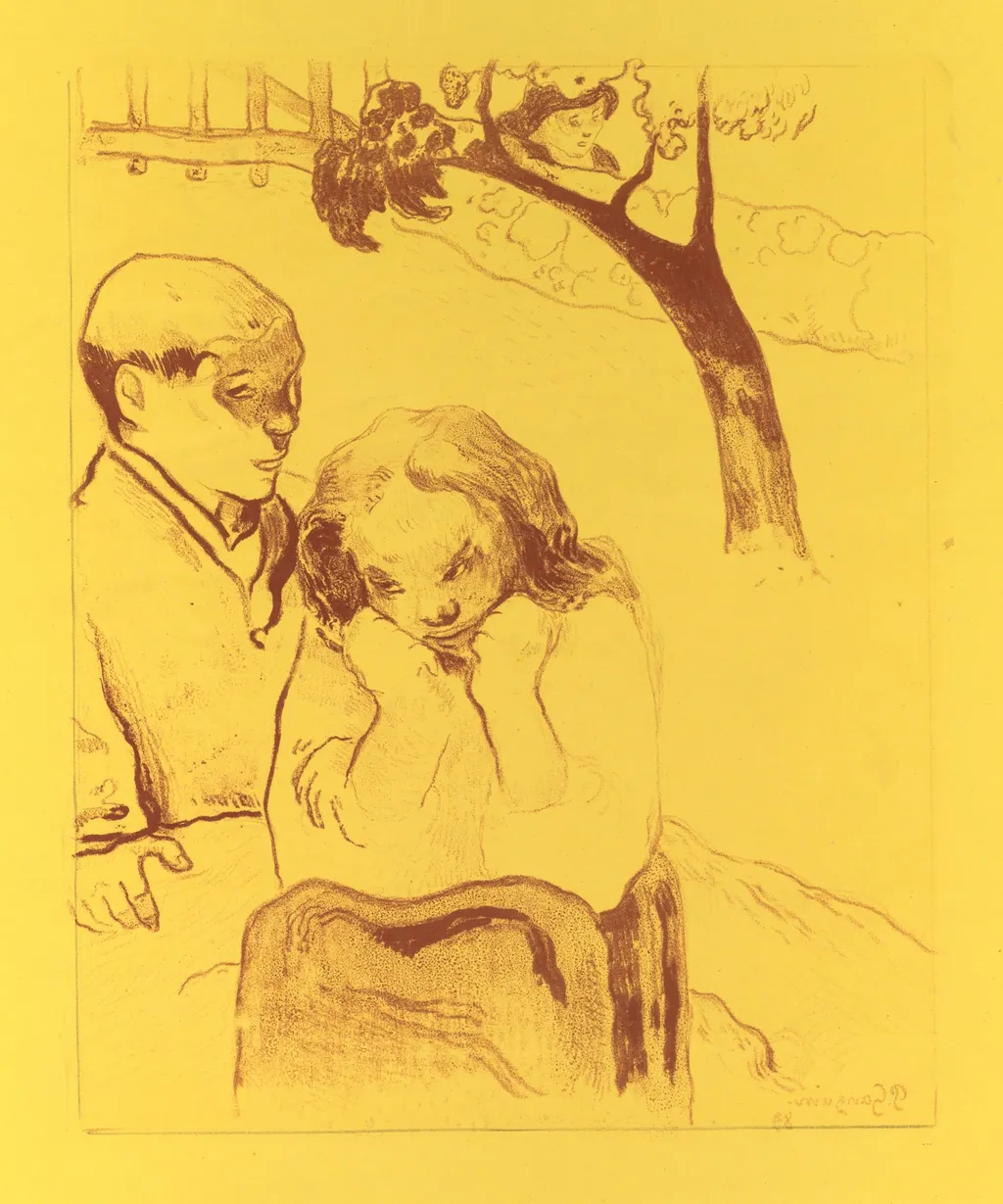
Volpini Suite: Human Misery (Misères Humaines) is a print by the Impressionist artist Paul Gauguin. It dates from 1889 and is held in the collection of the Cleveland Museum of Art.
About this work
Overview
In 1889 Paul Gauguin produced the print titled *Volpini Suite: Human Misery (Misères Humaines)*. Part of a series of zincographs that he printed himself, the work belongs to the later phase of his career when he was moving beyond Impressionist conventions toward Symbolist concerns.
Subject & Meaning
The image presents a man and a child seated together outdoors, the adult’s gaze tender yet distant as he looks toward the child. The child’s face is turned away, suggesting vulnerability. Together they evoke an allegorical representation of human hardship, a theme Gauguin explored through simplified, emblematic figures.
Technique & Style
Executed as a zincograph, the print features bold outlines and a reduction of detail that emphasizes flat areas of color. Gauguin’s handling of line is loose and sketch‑like, while the palette remains warm and muted, creating a quiet, intimate atmosphere that departs from the fleeting light effects of Impressionism.
History & Provenance
The suite was produced during Gauguin’s involvement with the Volpini exhibition, a group show organized by his friend Émile Schuffenecker. The prints were printed by the artist himself, reflecting his growing interest in wood engraving and other print media as vehicles for personal expression.
Context
Created at a time when Gauguin was distancing himself from the Parisian avant‑garde, the work aligns with Symbolist tendencies to convey inner states through stylized imagery. Its focus on poverty and the human condition mirrors broader late‑19th‑century concerns about social alienation.
Legacy
The *Human Misery* print illustrates Gauguin’s shift toward a more graphic, symbolic visual language, a development that would influence later modernist printmakers and contribute to the evolution of narrative illustration in early 20th‑century art.
Artist & collection
Artist
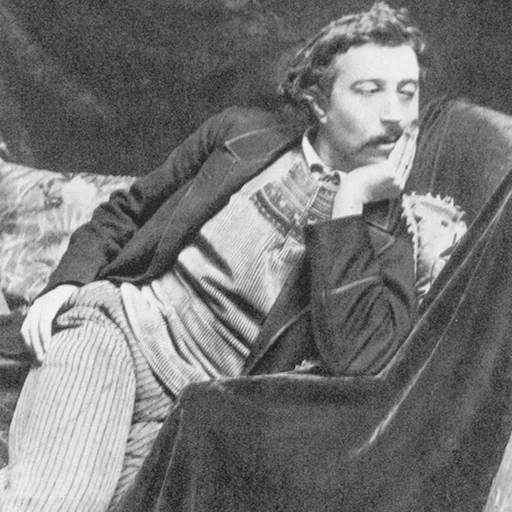
Eugène Henri Paul Gauguin (; French: ; 7 June 1848 – 8 May 1903) was a French painter, sculptor, printmaker, ceramist, and writer, whose work has been primarily associated with the Post-Impressionist and Symbolist movements.

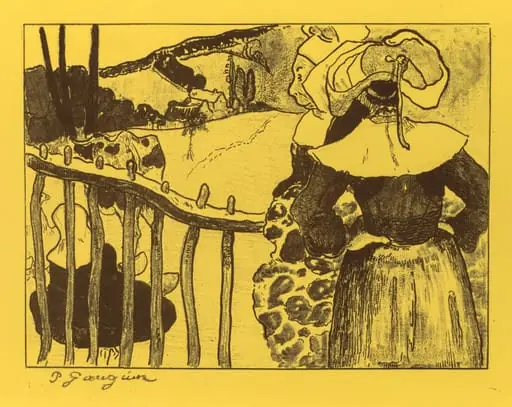 Volpini Suite: Breton Women by a Gate (Bretonnes à la Barrière)
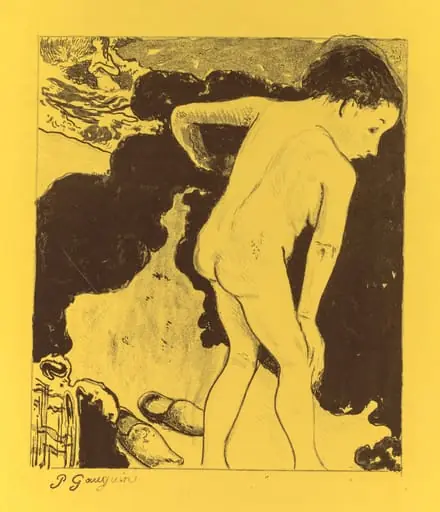 Volpini Suite: Breton Bathers (Baigneuses Bretonnes)
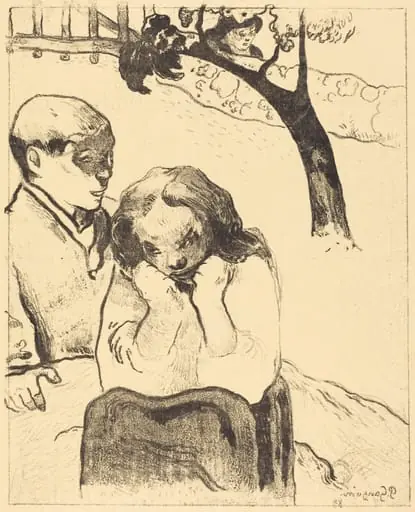 Human Sorrow (Miseres humaines)
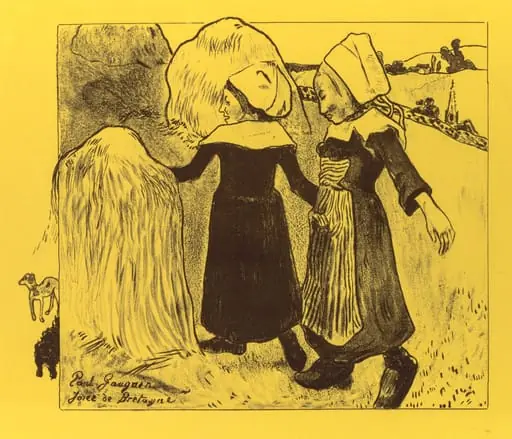 Volpini Suite: Joys of Brittany (Joies de Bretagne)
![Mahna no Varua Ino (The Demon Speaks) [verso], by Paul Gauguin](https://artifactworldgallery.com/img/paul-gauguin--mahna-no-varua-ino-the-demon-speaks-verso--4d5371963e3166cc-w320.webp) Mahna no Varua Ino (The Demon Speaks) [verso]
Mahna no Varua Ino (The Demon Speaks) [verso]![Volpini Suite: Old Women of Arles (Les Vieilles Filles [Arles]), by Paul Gauguin](https://artifactworldgallery.com/img/paul-gauguin--volpini-suite-old-women-of-arles-les-vieilles-filles-arles--8f32581a9b118a14-w320.webp) Volpini Suite: Old Women of Arles (Les Vieilles Filles [Arles])
Volpini Suite: Old Women of Arles (Les Vieilles Filles [Arles])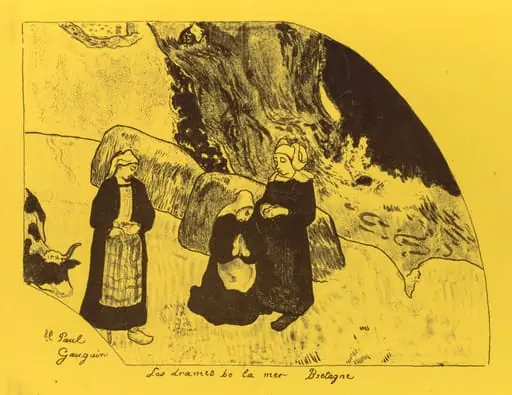 Volpini Suite: Dramas of the Sea: Brittany (Les Drames de la Mer, Bretagne)