Artwork
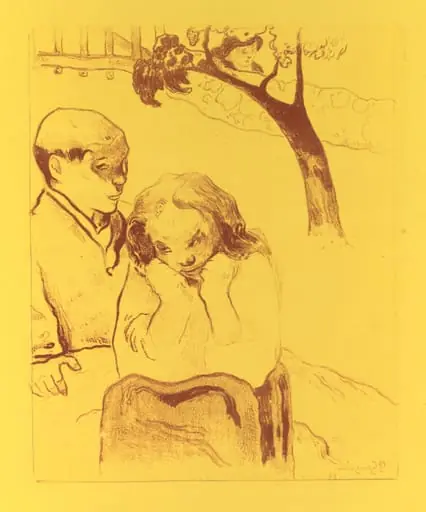
Human Sorrow (Miseres humaines)
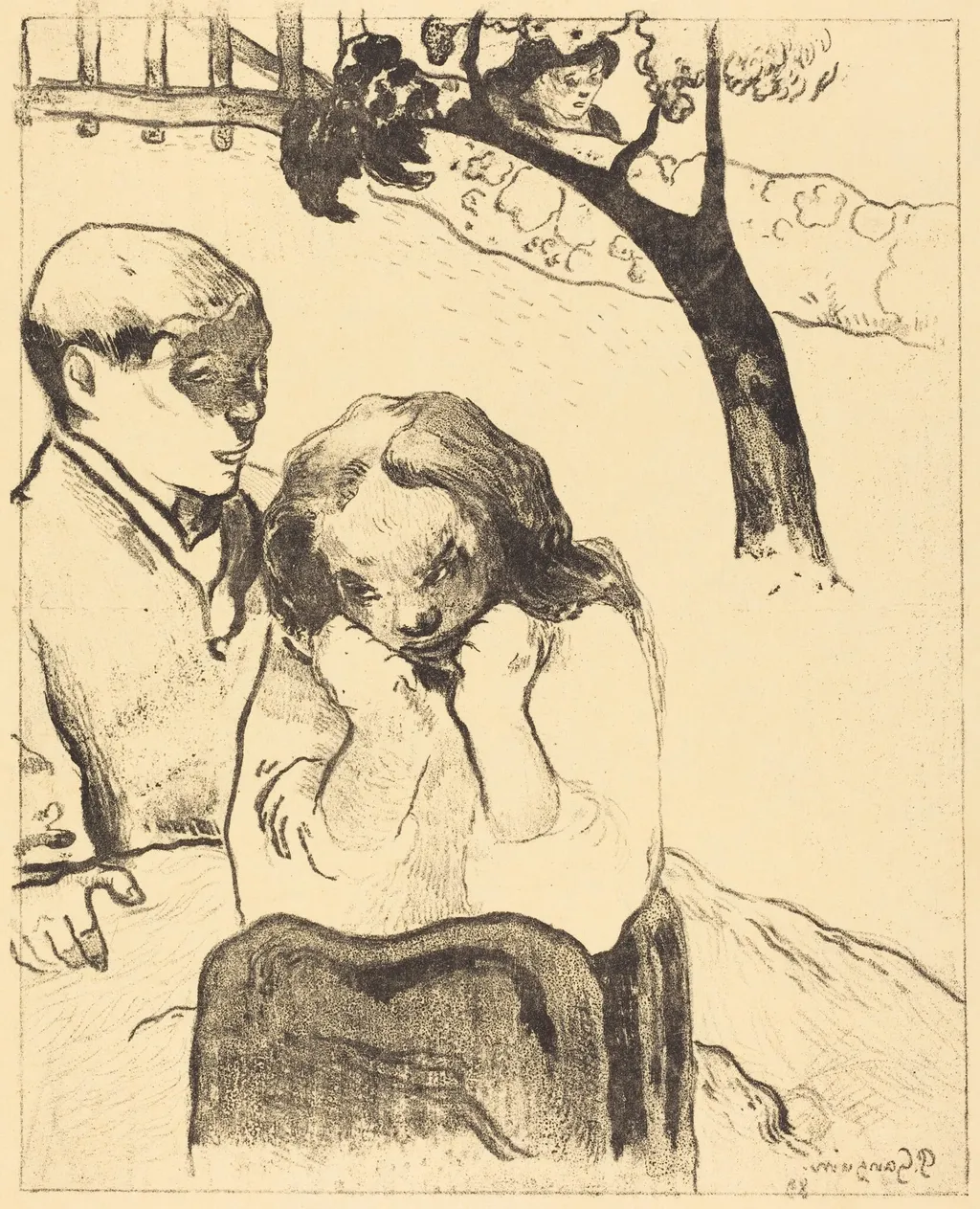
Human Sorrow (Miseres humaines) is an ink print by the Impressionist artist Paul Gauguin. It dates from 1889 and is held in the collection of the National Gallery of Art.
About this work
Overview
Paul Gauguin produced *Human Sorrow (Miseres humaines)* in 1889 as a lithograph on imitation Japan paper.
Paul Gauguin produced *Human Sorrow (Miseres humaines)* in 1889 as a lithograph on imitation Japan paper. Created during a period of intense experimentation with print media, the work belongs to a series of graphic pieces he developed alongside his paintings and sculptures. Unlike his colorful canvases, this piece relies on monochrome tonality and minimal line work to convey emotional weight, reflecting his interest in expressive form over naturalistic detail.
Subject & Meaning
The image depicts a man and a young girl seated beneath a spindly, twisted tree, their bodies pressed together in quiet intimacy. The child rests her head on the man’s shoulder, suggesting comfort or exhaustion. The sparse background—faint outlines of a bridge and distant structures—offers no context, amplifying the sense of isolation. The scene evokes vulnerability and silent endurance, aligning with Gauguin’s Symbolist leanings toward inner states over external narrative.
Technique & Style
Gauguin employed lithography on zinc, using a loose, almost hurried line quality that resembles a rapid sketch. The ink was applied unevenly, creating areas of soft gradation and stark contrast. The tree’s angular branches dominate the upper third, framing the figures with a sense of enclosure. The use of imitation Japan paper, thin and absorbent, enhanced the delicate, ephemeral texture of the lines, reinforcing the work’s somber, fleeting mood.
History & Provenance
Made during Gauguin’s time in Brittany, the print emerged from his broader exploration of printmaking as a means to bypass academic conventions. It was not widely circulated in his lifetime and remained largely in private hands until the 20th century. Few impressions were pulled, and surviving examples are rare, contributing to its status as a lesser-known but significant part of his graphic oeuvre.
Context
In 1889, Gauguin was distancing himself from Impressionism and seeking more symbolic, emotionally charged forms. He was influenced by medieval woodcuts, Japanese prints, and non-Western art, all of which informed his simplified compositions. This lithograph reflects his growing belief that art should express spiritual or psychological truths rather than depict observable reality, a shift central to the Symbolist movement.
Legacy
Though overshadowed by his paintings, *Human Sorrow* exemplifies Gauguin’s innovative approach to printmaking as a vehicle for introspection. Its raw, unpolished aesthetic influenced later Expressionist and modernist printmakers who valued emotional immediacy over technical refinement. The work remains a quiet testament to his pursuit of authenticity beyond conventional artistic norms.
Artist & collection
Artist
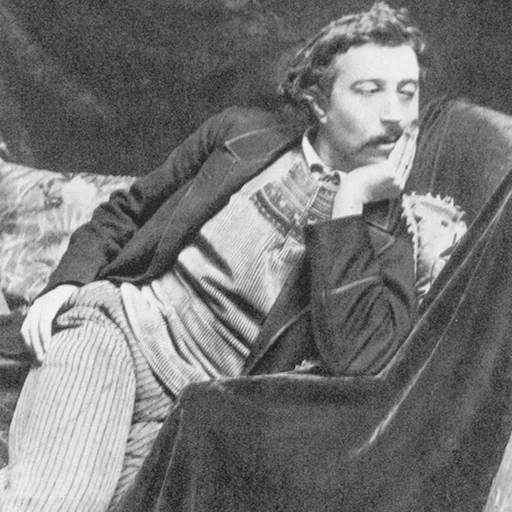
Eugène Henri Paul Gauguin (; French: ; 7 June 1848 – 8 May 1903) was a French painter, sculptor, printmaker, ceramist, and writer, whose work has been primarily associated with the Post-Impressionist and Symbolist movements.

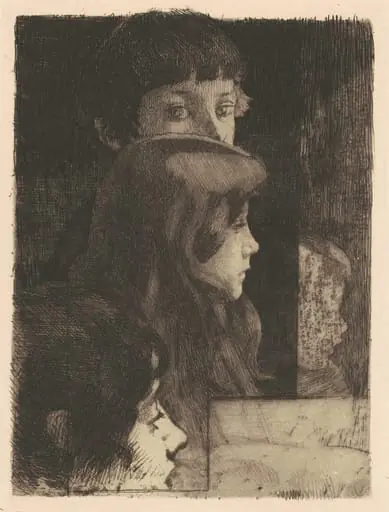 A Family (Une Famille)
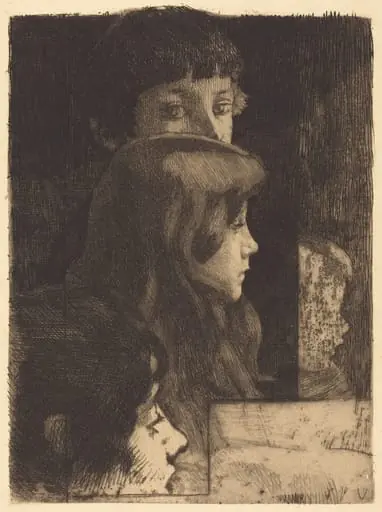 A Family (Une famille)
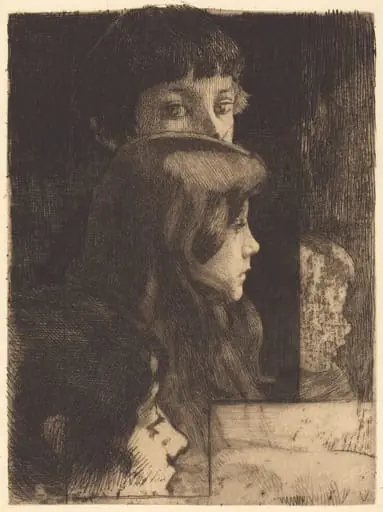 A Family (Une famille)
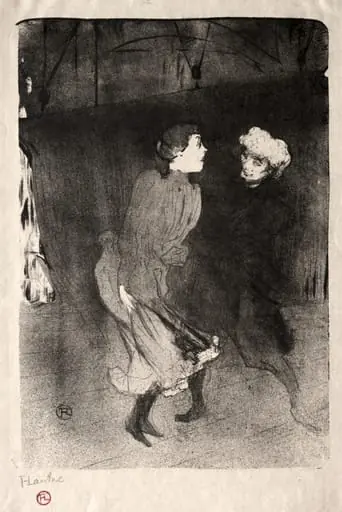 Emilienne d'Alecon and Mariquita of the Follies-Bergère
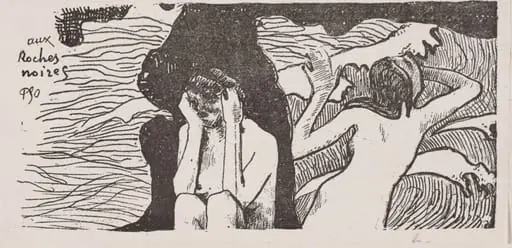 The Black Rocks
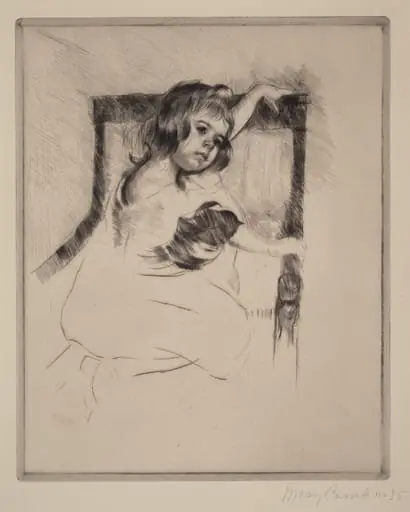 Kneeling in an Armchair
 Untitled
 Volpini Suite: Breton Women by a Gate (Bretonnes à la Barrière)
 Les Bretonneries: The Return from the Pilgrimage (Le Retour du Pardon)
 Ah, it's true, my poor old man, you would be the first to whom I would have made to miss his bus. "But I'll Miss My Bus" "My Customers Have Never Missed Their Bus"
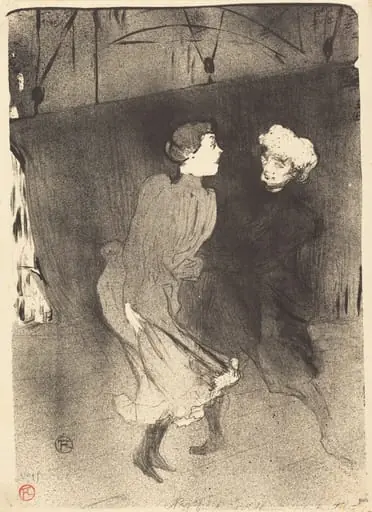 Dress Rehearsal at the Folies-Bergere (Répétition générale aux Folies-Bergère)
 Volpini Suite: Human Misery (Misères Humaines)