Artwork
Fruits and Knife
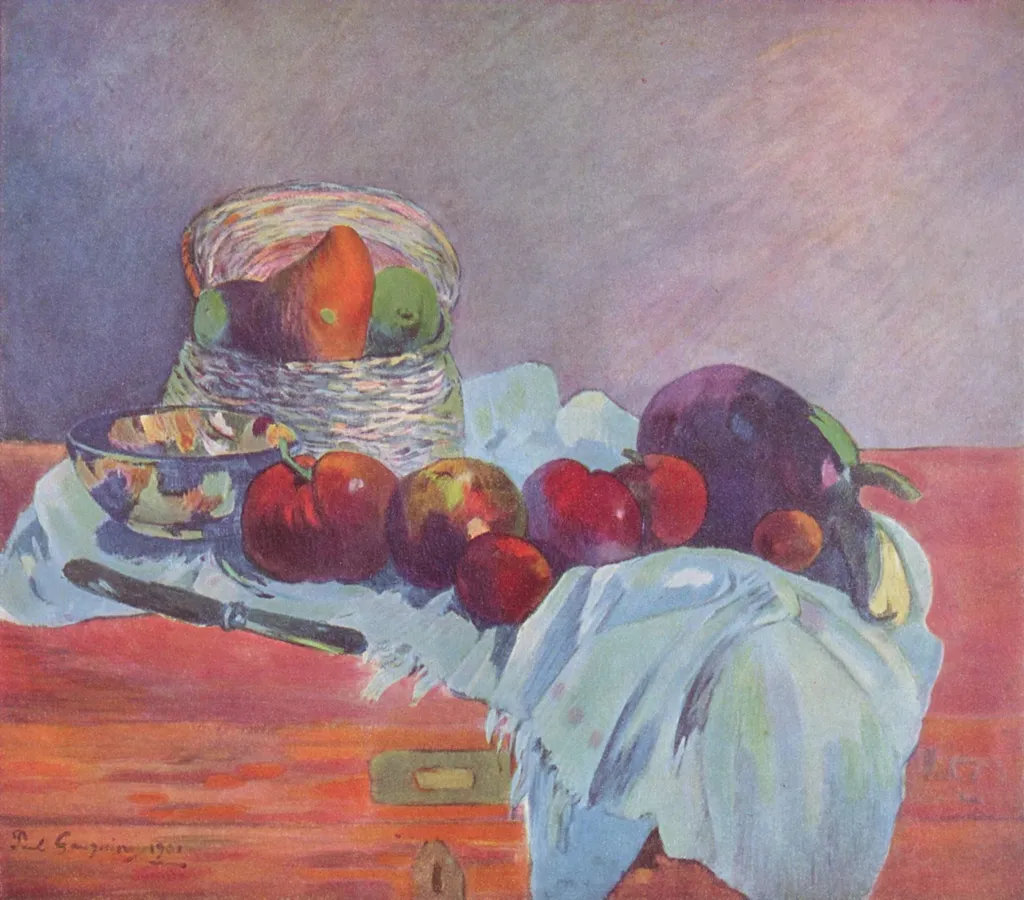
Fruits and Knife is an oil painting by the Post-Impressionist artist Paul Gauguin. It dates from 1901 and is held in the collection of the Foundation E.G. Bührle Collection.
About this work
Overview
Painted in 1901, *Fruits and Knife* is an oil-on-canvas still life by Paul Gauguin, created during his later years in the South Pacific. It reflects his continued exploration of form and color beyond Impressionism, aligning with the broader Post-Impressionist tendency to prioritize emotional resonance over naturalistic representation. The work is held in the collection of Kunsthaus Zürich.
Subject & Meaning
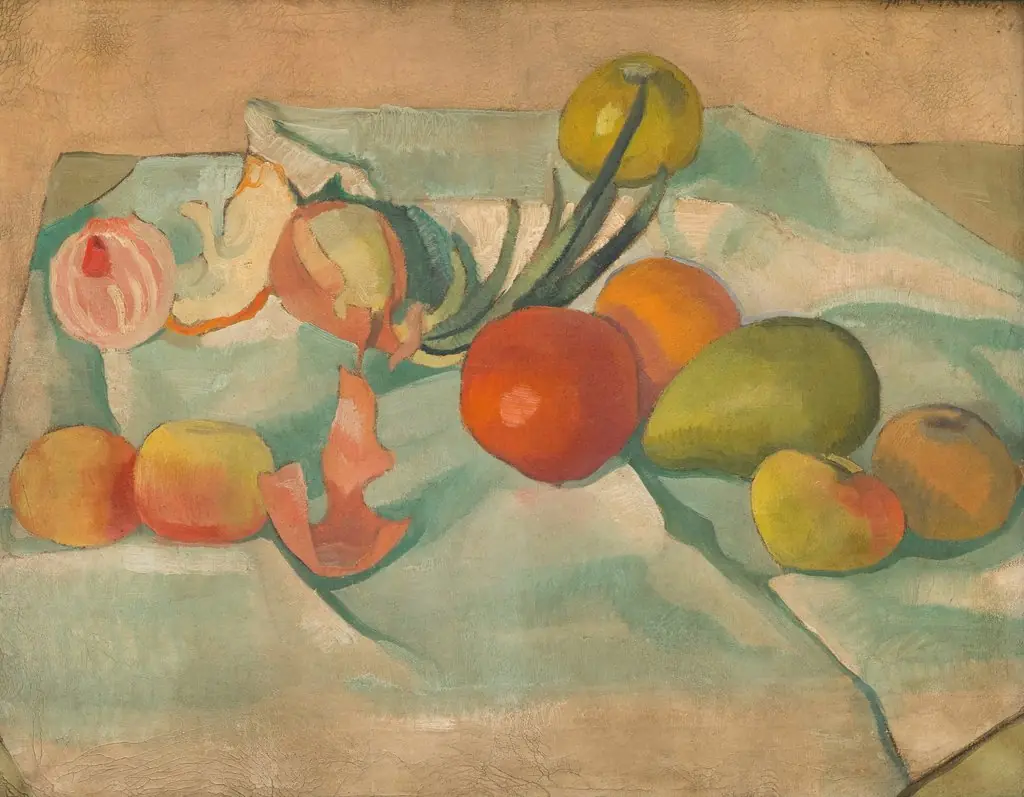
The composition centers on a simple arrangement of apples, pears, and a plum, placed on a white cloth beside a knife. The objects are rendered without narrative context, inviting contemplation rather than storytelling. The knife, blade directed toward the viewer, introduces a subtle tension, contrasting the organic abundance of the fruit with the sharpness of the tool.
Technique & Style
Gauguin employed bold, flat areas of color and visible brushwork to build texture and volume. The fruit’s hues—deep reds, yellows, and purples—are intensified against a muted, neutral background, enhancing their presence. His Synthetist approach simplifies forms into essential shapes, emphasizing emotional tone over optical accuracy, with contours often outlined to define boundaries.
History & Provenance
Though he struggled financially and in health during this period, his work gained increasing attention among avant-garde circles.
Created during Gauguin’s time in Tahiti, the painting reflects his retreat from European artistic norms. Though he struggled financially and in health during this period, his work gained increasing attention among avant-garde circles. After his death in 1903, collectors and institutions began systematically acquiring his paintings, including this one, now held in Zürich since the early 20th century.
Context
In the early 1900s, Gauguin sought to distance himself from Western conventions, drawing inspiration from Oceanic cultures and spiritual themes. *Fruits and Knife* belongs to a series of still lifes he produced in Tahiti, where everyday objects became vessels for symbolic weight. These works contrasted with his more overtly mythological subjects, offering quiet, introspective alternatives.
Legacy
The painting exemplifies Gauguin’s influence on modern art’s shift toward expressive color and symbolic form. Though less discussed than his figural works, his still lifes contributed to the redefinition of genre painting in the 20th century. Artists such as Matisse and the Fauves later cited his use of non-naturalistic color as foundational to their own innovations.
Own this work as a print
Artist & collection
Artist
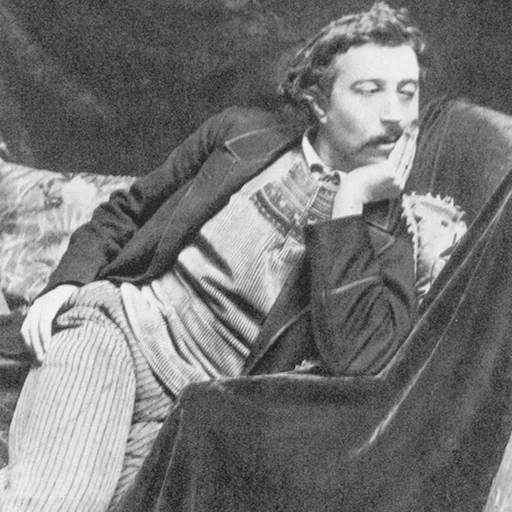
Eugène Henri Paul Gauguin (; French: ; 7 June 1848 – 8 May 1903) was a French painter, sculptor, printmaker, ceramist, and writer, whose work has been primarily associated with the Post-Impressionist and Symbolist movements.

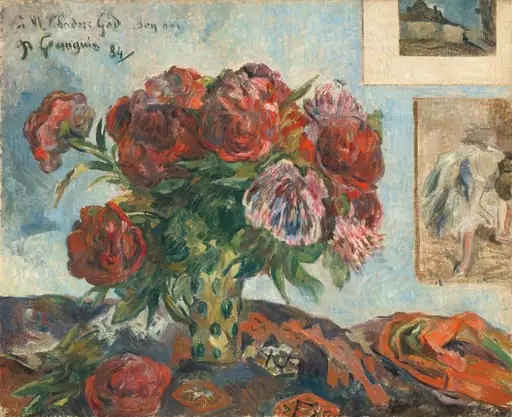
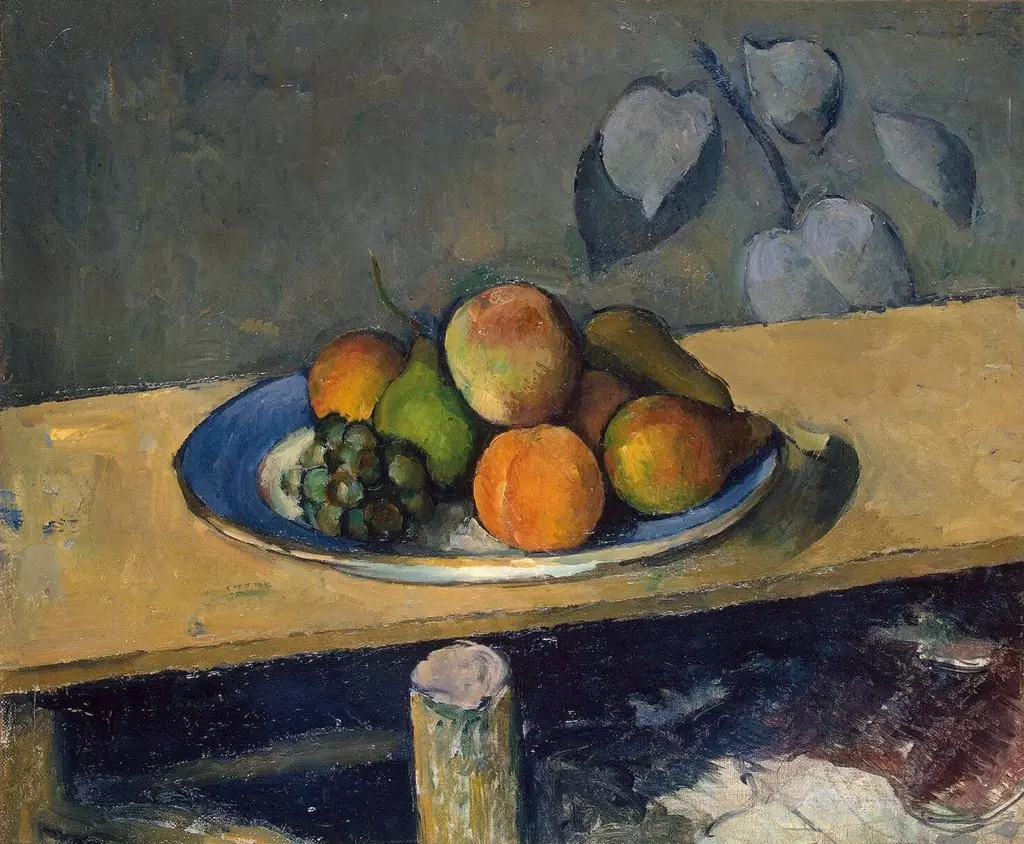 Apples, Peaches, Pears and Grapes
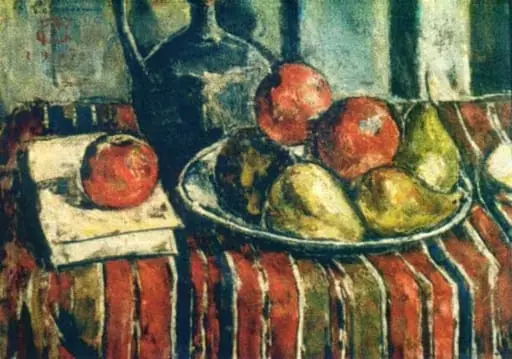 Natură statică cu mere
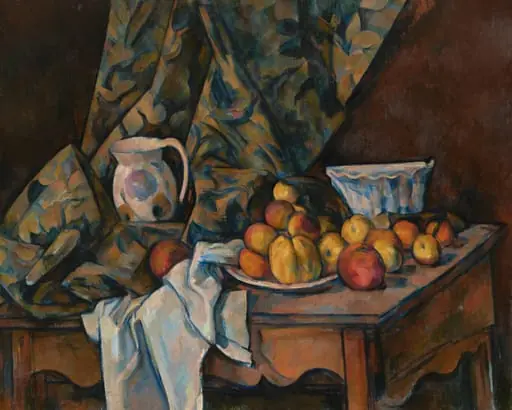 Still Life with Apples and Peaches
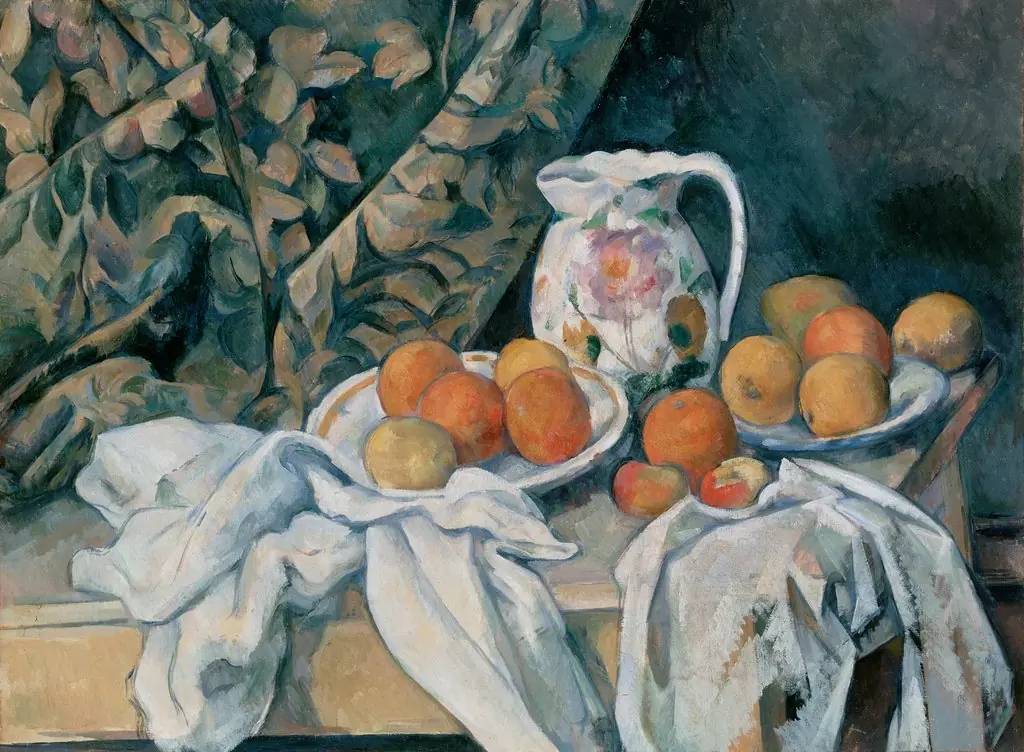 Still Life with a Curtain
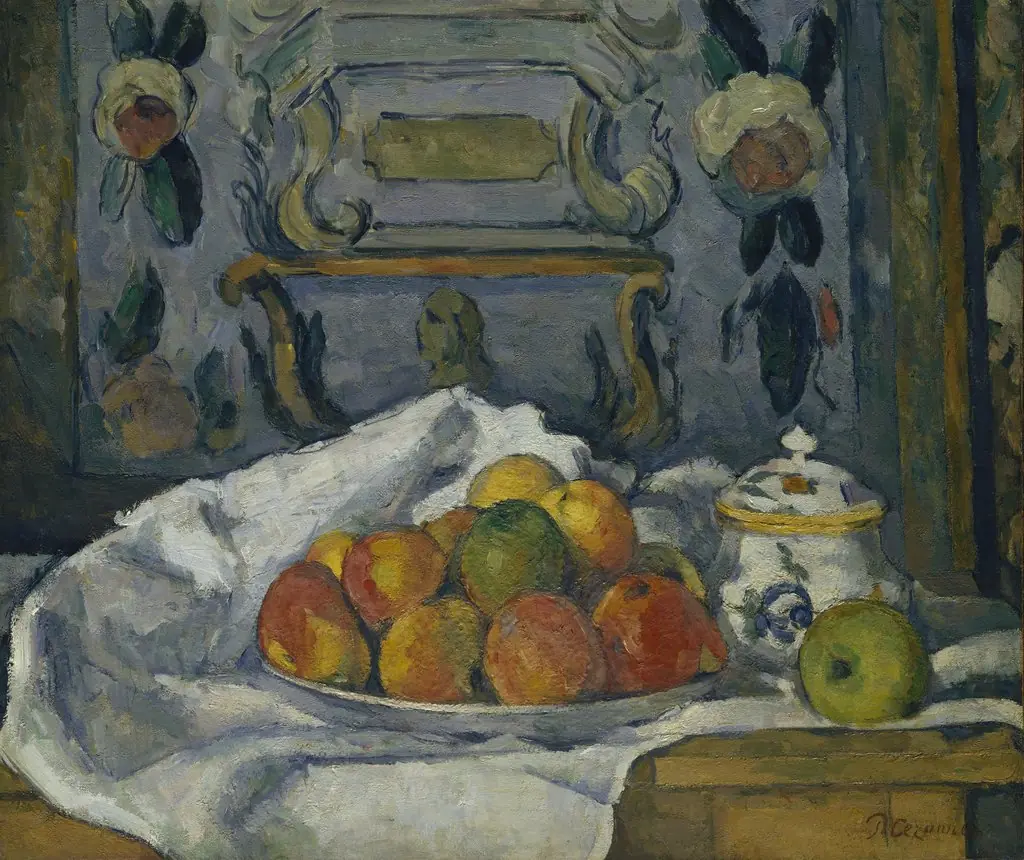 Dish of Apples
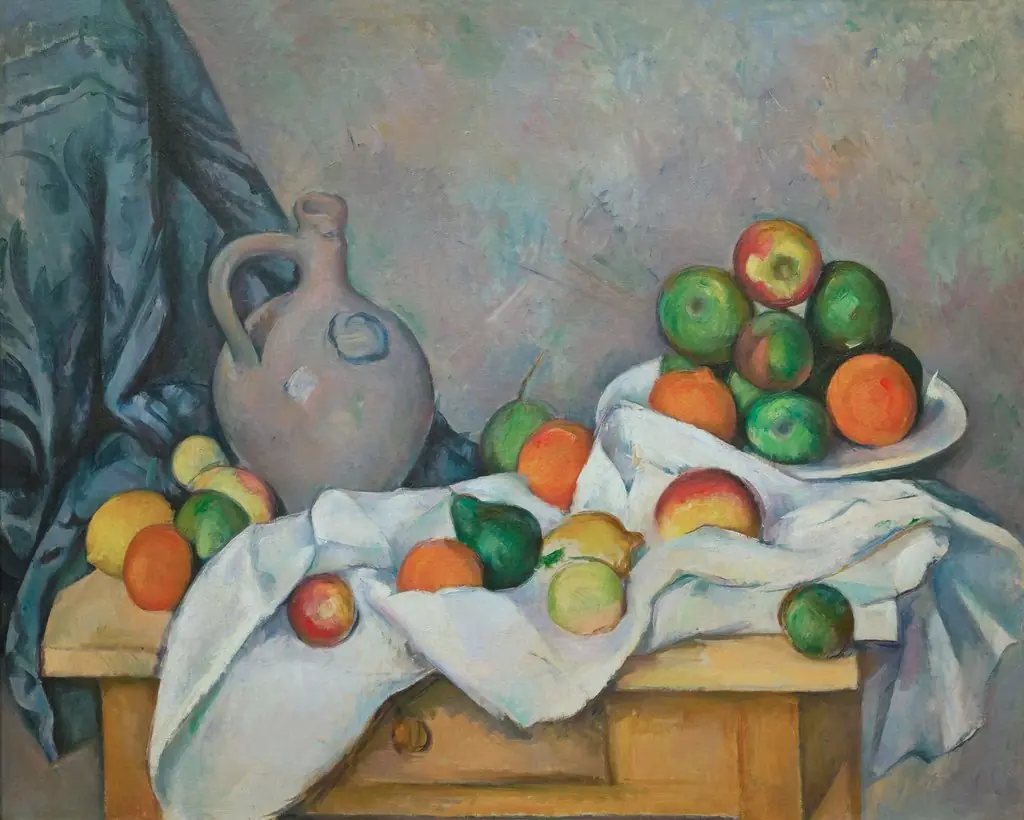 Rideau, Cruchon et Compotier
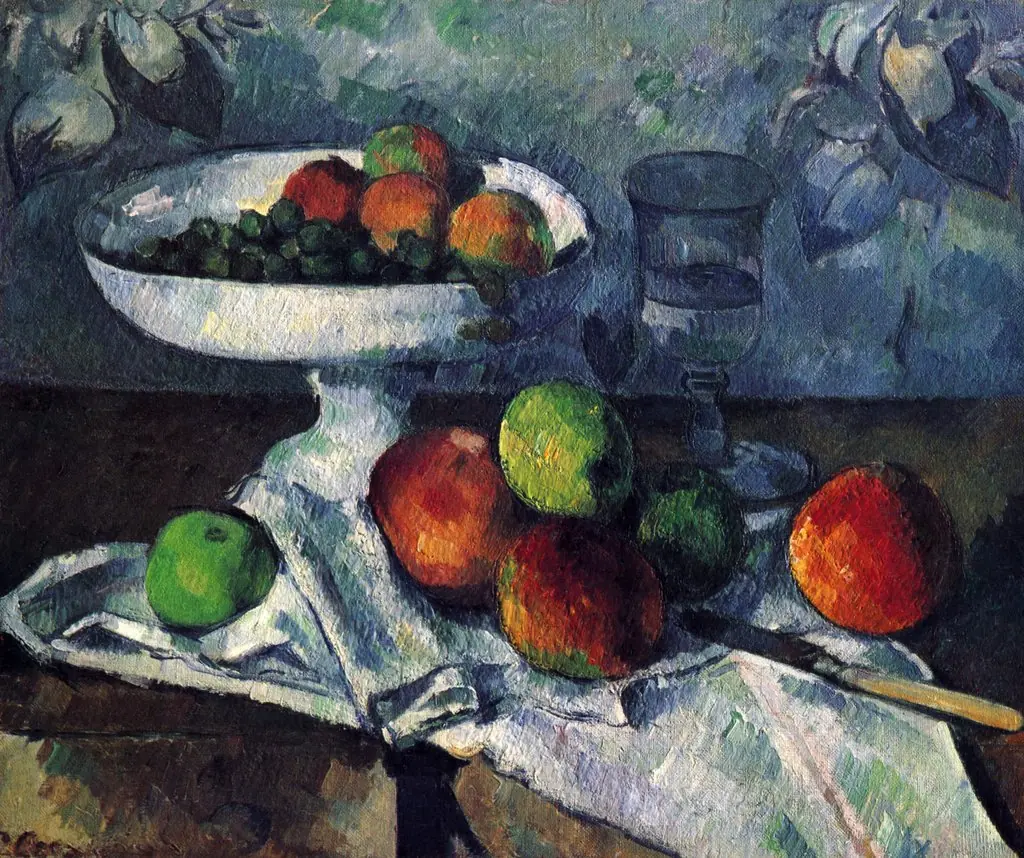 Still Life with Compotier
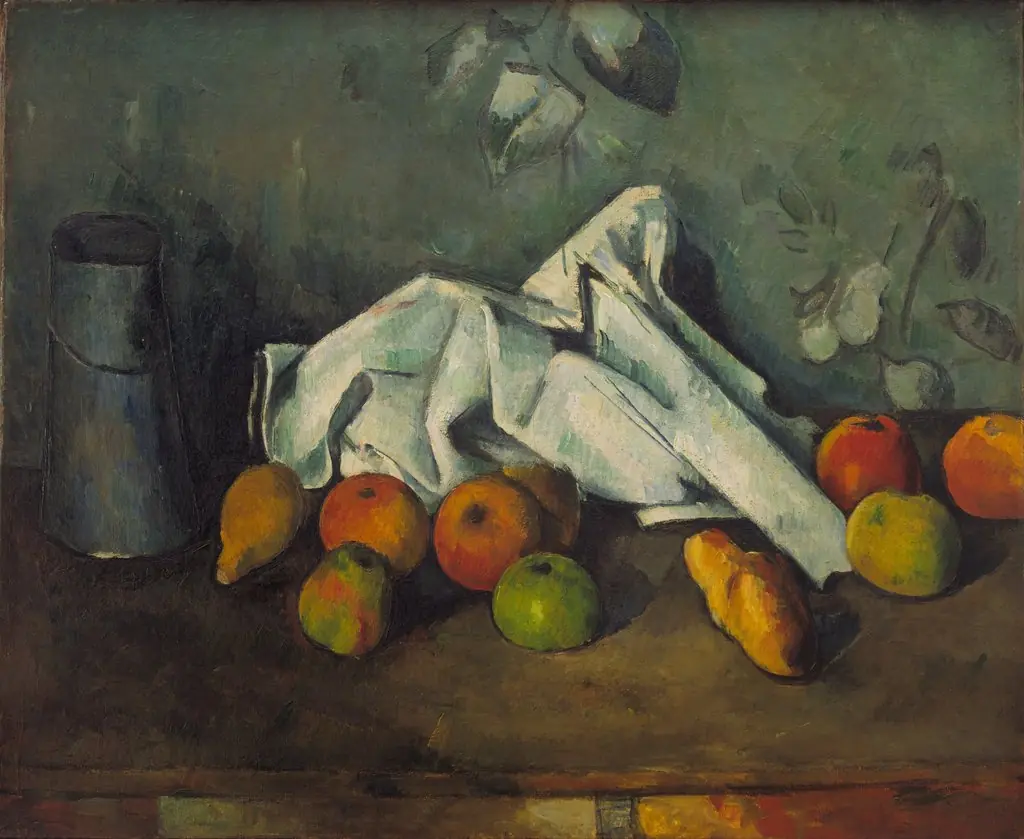 Milk Can and Apples
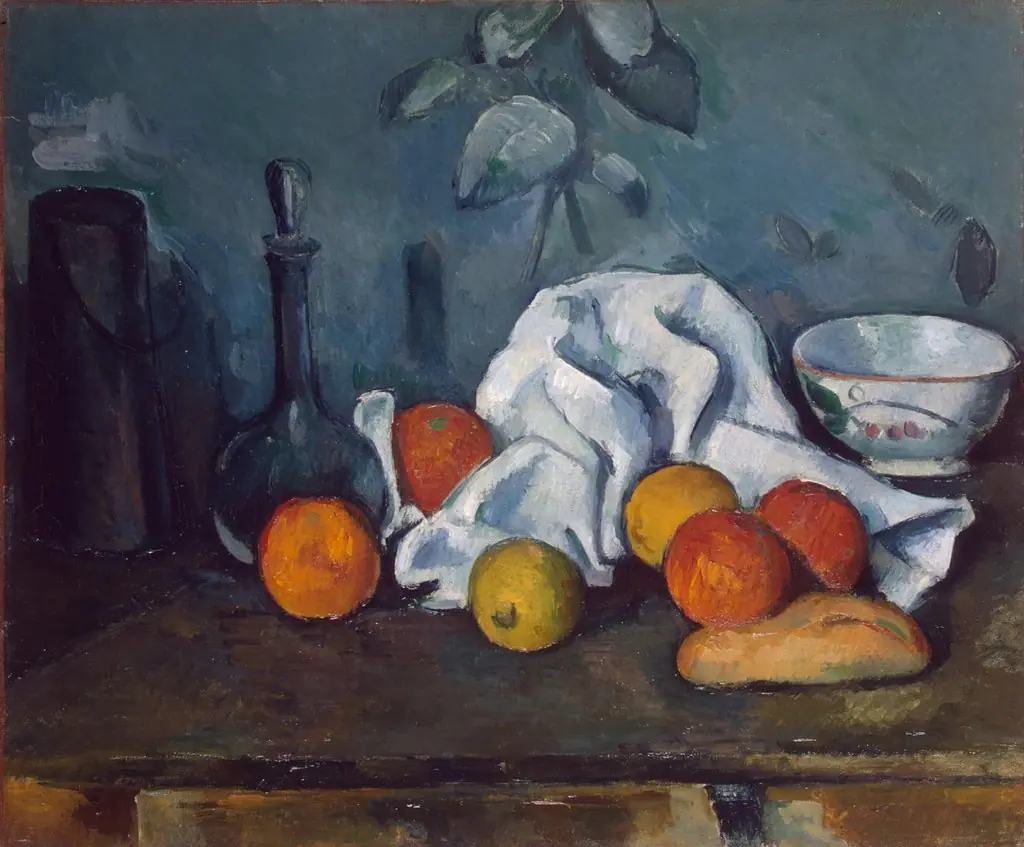 Boîte à lait, carafe et bol
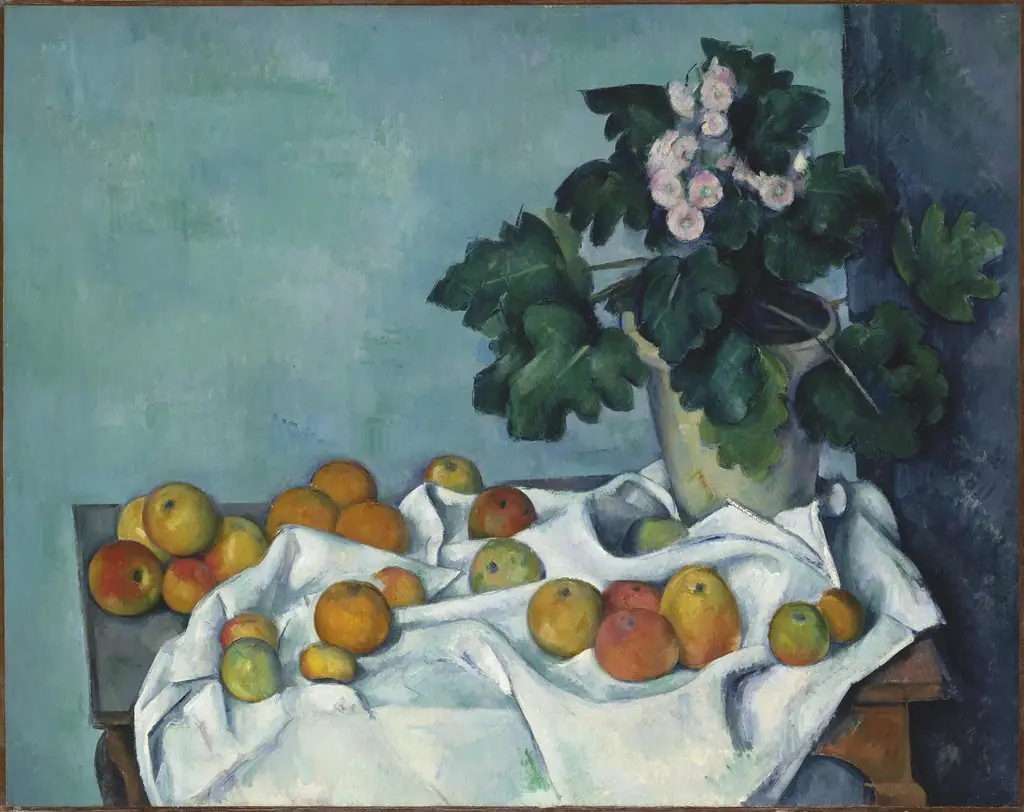 Still Life with Apples and a Pot of Primroses
 Still life
 The Basket of Apples