Artwork
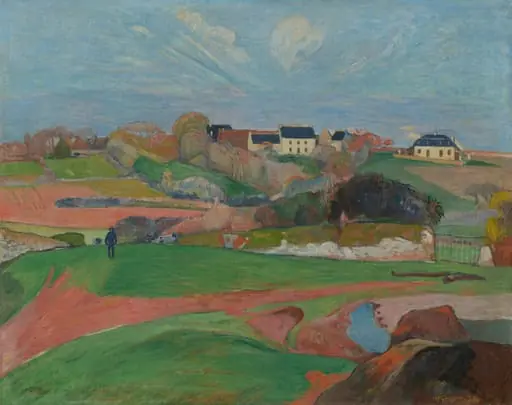
Landscape of Brittany
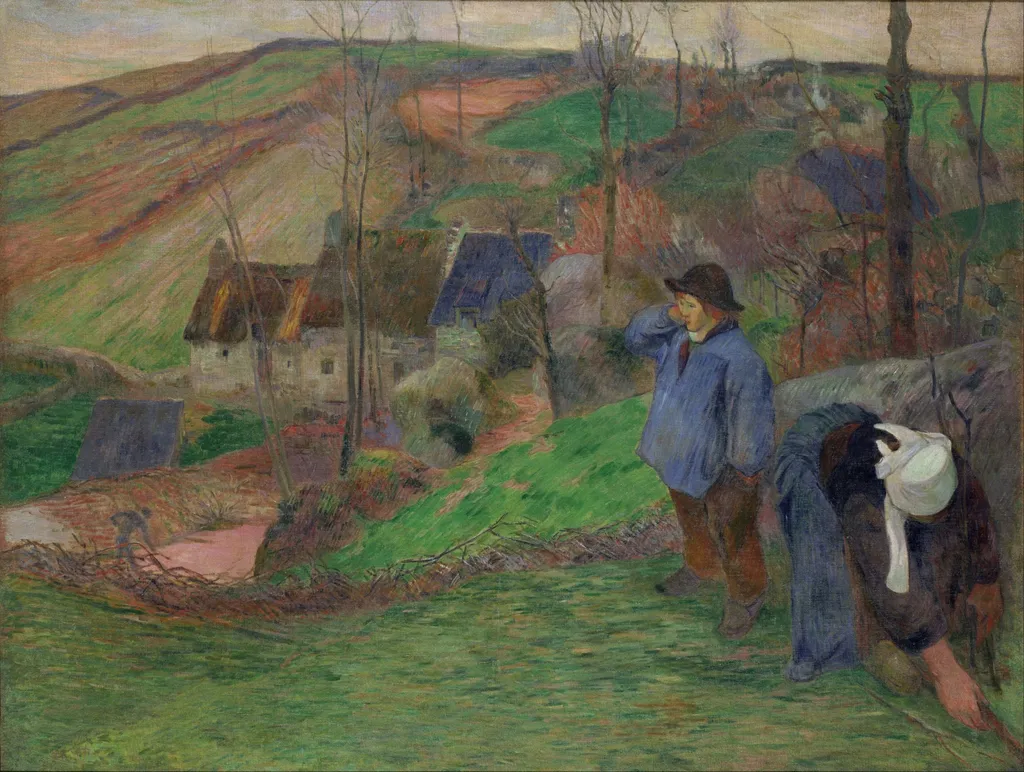
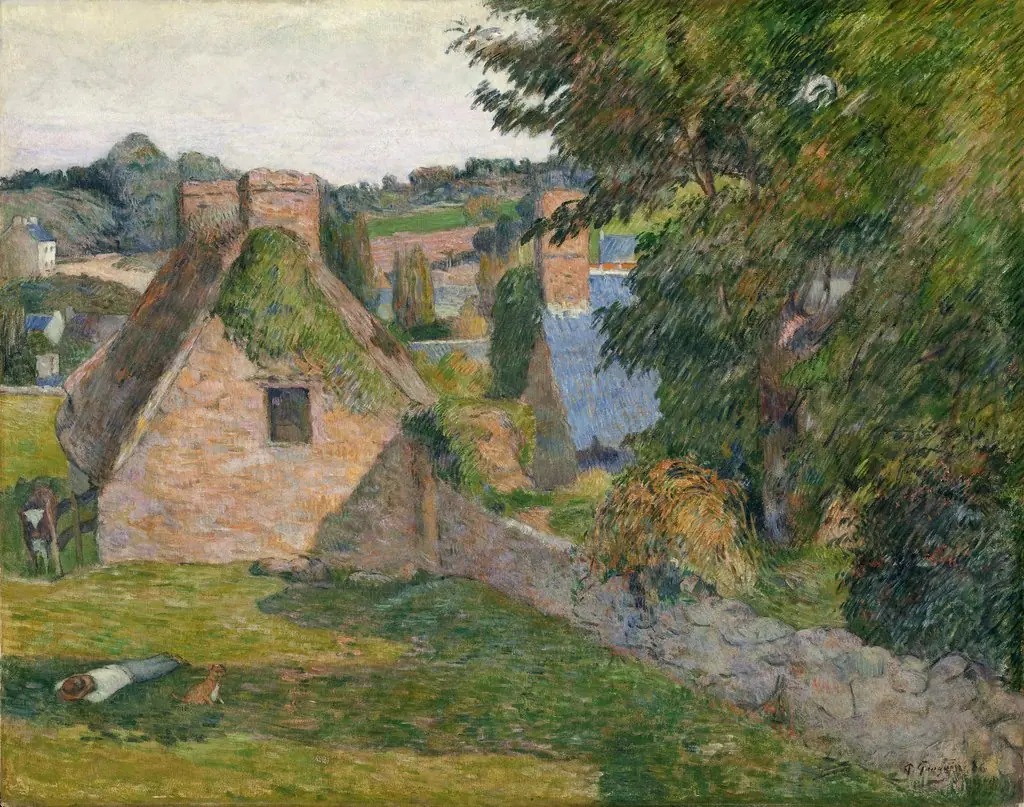
Landscape of Brittany is an oil painting by the Post-Impressionist artist Paul Gauguin. It dates from 1894 and is held in the collection of the National Museum of Western Art.
About this work
Overview
Painted in 1894, *Landscape of Brittany* is an oil work by Paul Gauguin that captures a quiet rural scene in northwestern France.
Painted in 1894, *Landscape of Brittany* is an oil work by Paul Gauguin that captures a quiet rural scene in northwestern France. It reflects his period of residence in the region, where he sought to distance himself from urban modernity. The painting belongs to the Post-Impressionist tradition, emphasizing emotional tone over optical realism. It is currently held in the National Museum of Western Art’s collection.
Subject & Meaning
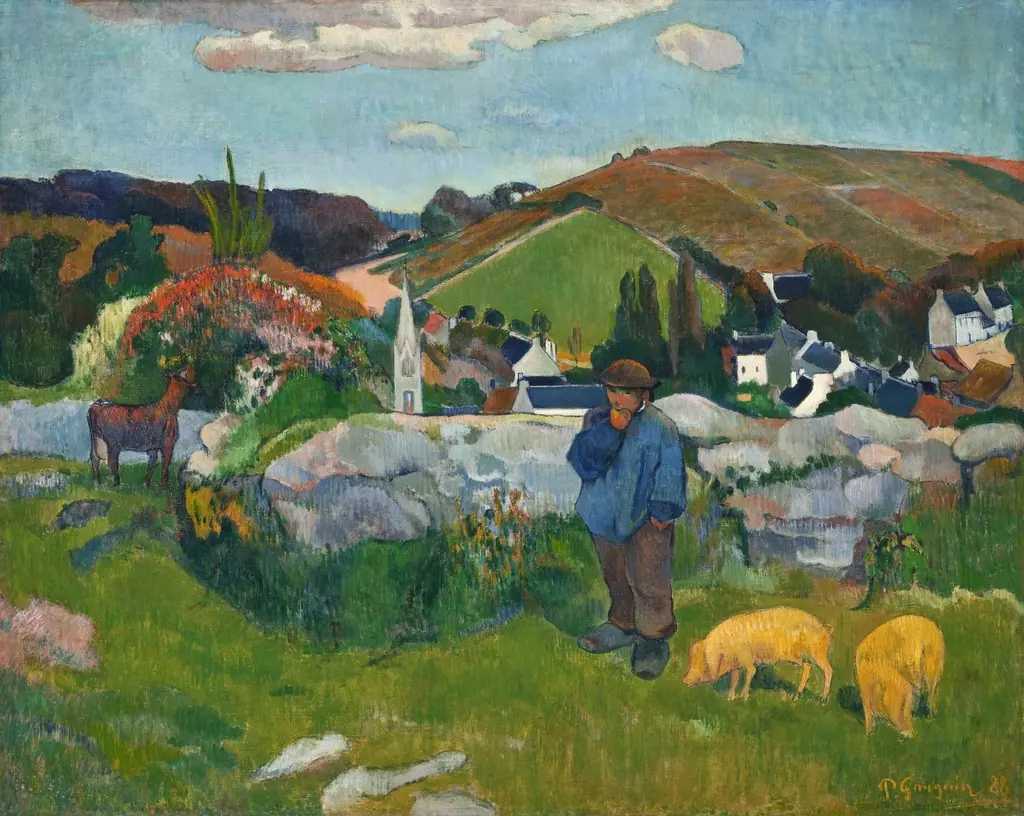
The scene portrays two figures in a field: a man standing on a rise, gazing downward, and a woman bent in labor nearby. Their postures suggest daily rural existence, but Gauguin avoids narrative detail, instead evoking stillness and introspection. The figures are integrated into the land, not dominant over it, reinforcing his interest in the spiritual resonance of peasant life and the land’s enduring presence.
Technique & Style
Gauguin employed broad, flattened planes of color and loose brushwork to structure the landscape, moving away from Impressionist optical effects. The palette is restrained—greens, browns, and muted blues—creating a somber harmony. Forms are simplified, edges softened, and perspective flattened, aligning with Synthetism: a method that prioritized symbolic composition over naturalistic representation.
History & Provenance
Created during Gauguin’s second stay in Brittany, the painting emerged from a period of intense artistic experimentation following his departure from Paris. It was likely made in or near Pont-Aven, a hub for artists drawn to the region’s cultural distinctiveness. The work entered the National Museum of Western Art’s collection through established acquisition channels, though its early ownership history remains undocumented in public records.
Context
In the 1890s, Gauguin was part of a broader movement among artists rejecting industrialization’s influence. Brittany, with its preserved traditions and Celtic heritage, offered a perceived authenticity. His work here responded to both aesthetic and philosophical impulses: to simplify form, deepen color symbolism, and align art with what he saw as timeless, uncorrupted ways of life.
Legacy
Though not among Gauguin’s most widely reproduced works, *Landscape of Brittany* exemplifies his shift toward symbolic abstraction and emotional landscape. It influenced later modernists seeking alternatives to naturalism, particularly in how color and form could convey mood rather than depict reality. The painting remains a quiet testament to his pursuit of artistic renewal through rural isolation.
Own this work as a print
Artist & collection
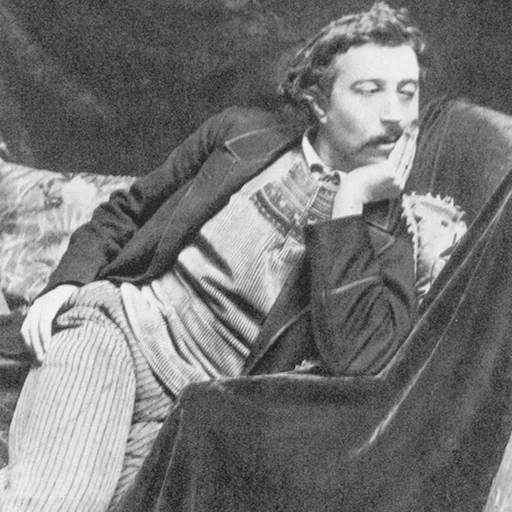
Artist
Eugène Henri Paul Gauguin (; French: ; 7 June 1848 – 8 May 1903) was a French painter, sculptor, printmaker, ceramist, and writer, whose work has been primarily associated with the Post-Impressionist and Symbolist movements.