Artwork
The Red Cow
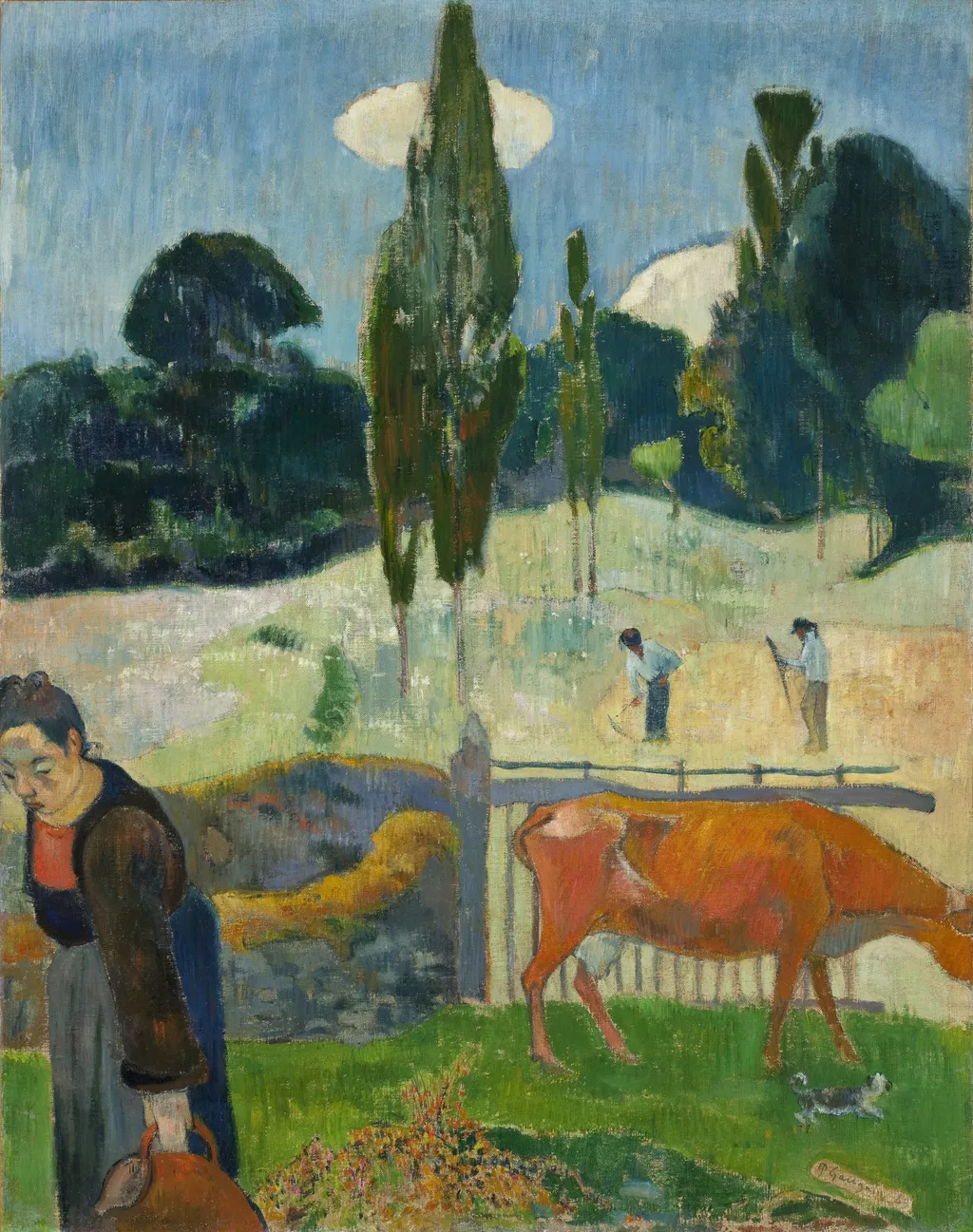
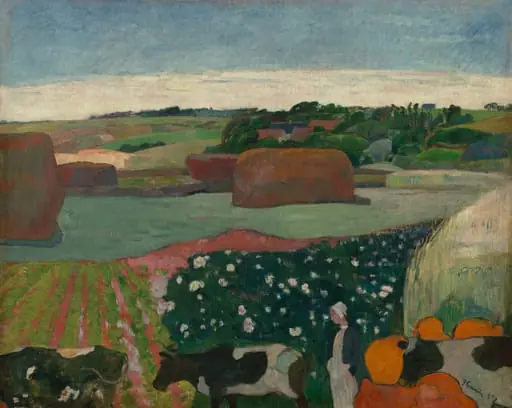
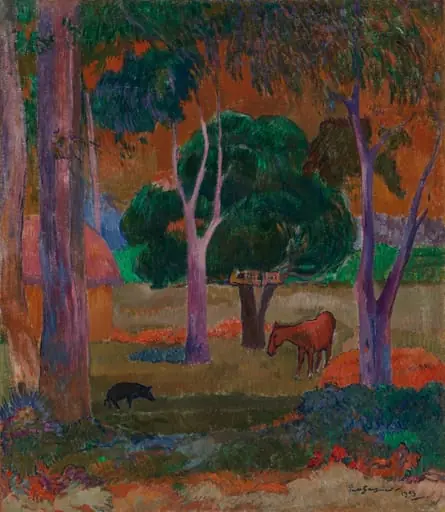
The Red Cow is an oil painting by the Post-Impressionist artist Paul Gauguin. It dates from 1895 and is held in the collection of the Los Angeles County Museum of Art.
About this work
Overview
Created during his time in Tahiti, the work reflects his shift away from European artistic conventions toward a more symbolic and emotionally charged approach.
Paul Gauguin completed *The Red Cow* in 1895 using oil on canvas. Created during his time in Tahiti, the work reflects his shift away from European artistic conventions toward a more symbolic and emotionally charged approach. The painting is part of the Los Angeles County Museum of Art’s collection and exemplifies his mature style, characterized by flattened forms and intense, non-naturalistic color.
Subject & Meaning
The painting centers on a red cow grazing in a field, its head lowered as it feeds. Behind it, figures work the land under a sky of vivid blue and among trees rendered in simplified shapes. The cow, rendered in an unnatural hue, may symbolize fertility, primal energy, or a connection to the land—themes Gauguin associated with Tahitian life and his search for spiritual authenticity beyond Western modernity.
Technique & Style
Gauguin employed thick, deliberate brushwork and areas of unmodulated color, rejecting realistic shading in favor of expressive flatness. The cow’s crimson form contrasts sharply with the green earth and blue sky, creating a rhythmic tension. This approach aligns with Synthetism, where form and color are simplified to convey emotional or symbolic meaning rather than optical accuracy.
History & Provenance
Painted during Gauguin’s second stay in Tahiti, *The Red Cow* emerged from a period of intense personal and artistic exploration. After leaving France, he sought to escape industrial society and immerse himself in what he perceived as an unspoiled culture. The work remained in private hands before entering LACMA’s collection, where it has been held since the mid-20th century.
Context
In the mid-1890s, Gauguin was distancing himself from Impressionism and embracing non-Western aesthetics, spiritual symbolism, and indigenous life. *The Red Cow* reflects his broader project of redefining art through color and form as vessels of inner experience. His Tahitian works, including this one, were part of a larger effort to construct a visual language rooted in myth and memory rather than observation.
Legacy
The painting contributes to Gauguin’s influence on modern art’s move toward abstraction and symbolic representation. While controversial for his personal conduct and colonial perspectives, his use of bold color and simplified forms paved the way for Fauvism and Expressionism. *The Red Cow* remains a quiet but potent example of his attempt to merge the natural world with spiritual resonance.
Own this work as a print
Artist & collection
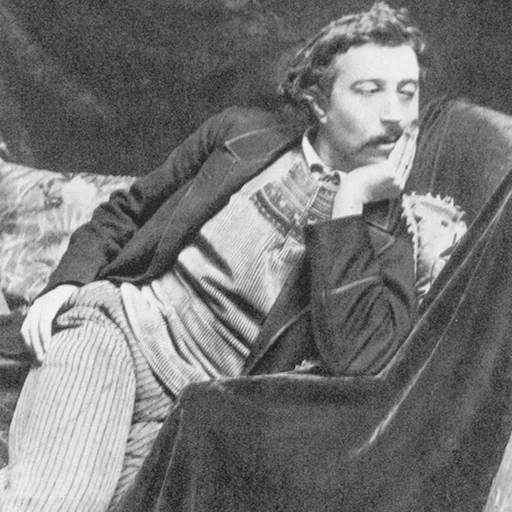
Artist
Eugène Henri Paul Gauguin (; French: ; 7 June 1848 – 8 May 1903) was a French painter, sculptor, printmaker, ceramist, and writer, whose work has been primarily associated with the Post-Impressionist and Symbolist movements.