Artwork
The Royal End
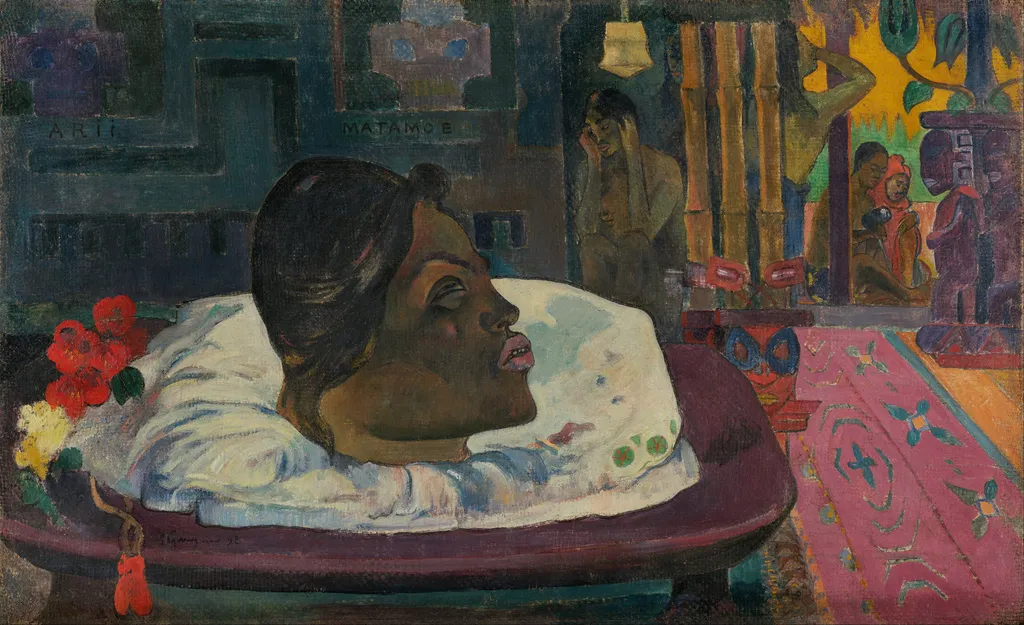
The Royal End is an oil painting by the Post-Impressionist artist Paul Gauguin. It dates from 1896 and is held in the collection of the J. Paul Getty Museum.
About this work
Overview
Created in 1892 during Paul Gauguin’s inaugural stay in Tahiti, *Arii Matamoe* (also known as *The Royal End*) is an oil painting executed on a coarse cloth support. The work presents a stark, theatrical scene that contrasts sharply with the artist’s earlier tropical landscapes, marking a decisive moment in his Pacific period.
Subject & Meaning
The composition centers on a severed male head placed on a pillow, surrounded by figures who appear to be mourners. Although the tableau does not correspond to any documented Tahitian funerary practice, it is thought to echo the recent death of King Pōmare V in 1891, shortly after Gauguin’s arrival, and to explore themes of mortality, exoticism, and cultural otherness.
Technique & Style
Gauguin applied the oil in thick, impasto strokes, allowing the reds, greens, and ochres to stand out against the muted background. The heavy texture gives the surface a tactile quality, while the simplified forms and flattened perspective reinforce a dreamlike, almost theatrical atmosphere.
History & Provenance
The painting was likely intended to provoke a reaction from Parisian audiences upon Gauguin’s return, a motive suggested by curators at the J. Paul Getty Museum. Since its creation, *Arii Matamoe* has passed through several private collections before entering public holdings, where it continues to be studied for its provocative subject matter and its place in Gauguin’s Tahitian oeuvre.
Own this work as a print
Artist & collection
Artist
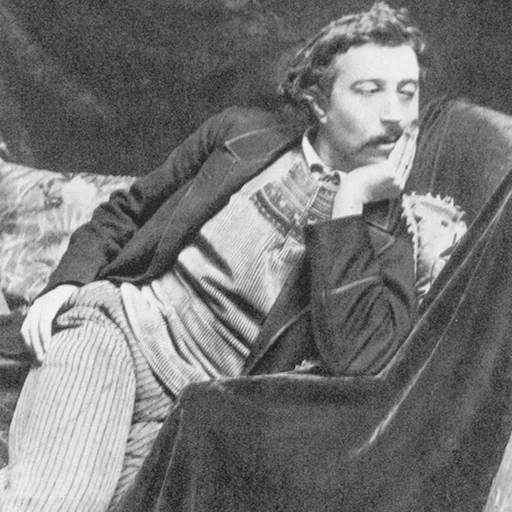
Eugène Henri Paul Gauguin (; French: ; 7 June 1848 – 8 May 1903) was a French painter, sculptor, printmaker, ceramist, and writer, whose work has been primarily associated with the Post-Impressionist and Symbolist movements.

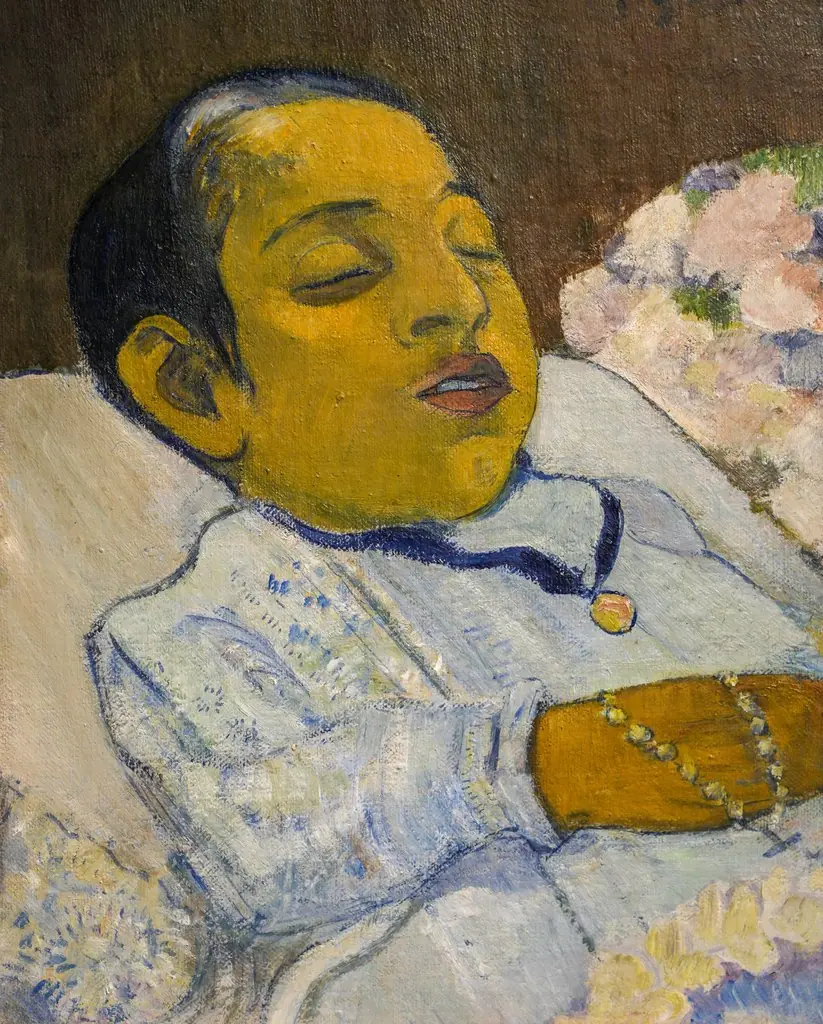 Deathbed portrait of Aristide 'Atiti' Suhas, died 5 March 1892, 1.5 years old
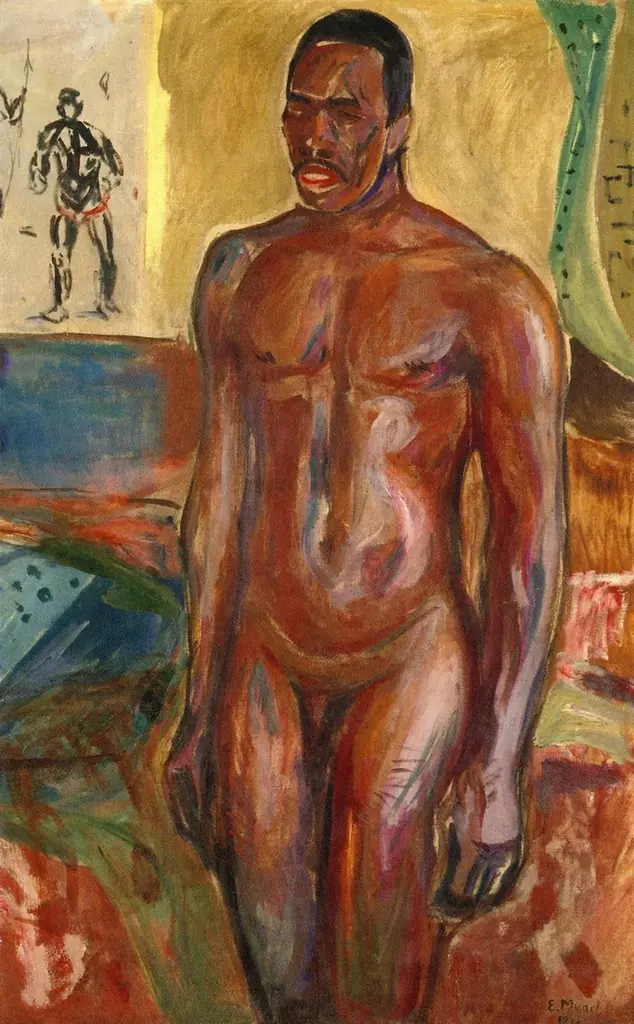 Standing Naked African
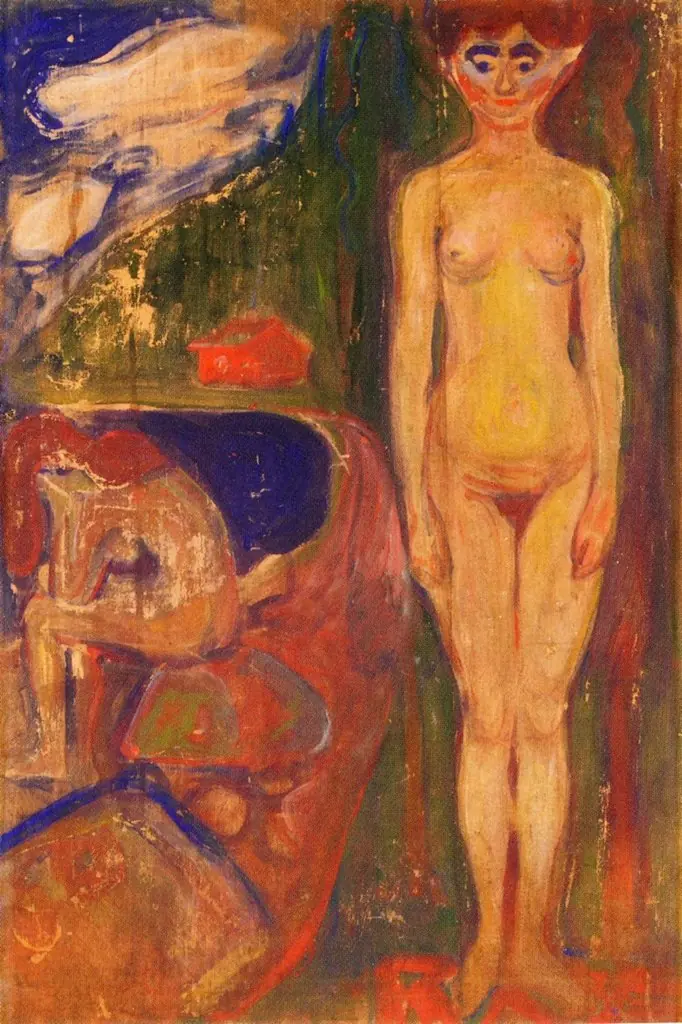 Two Women. Symbolic Study
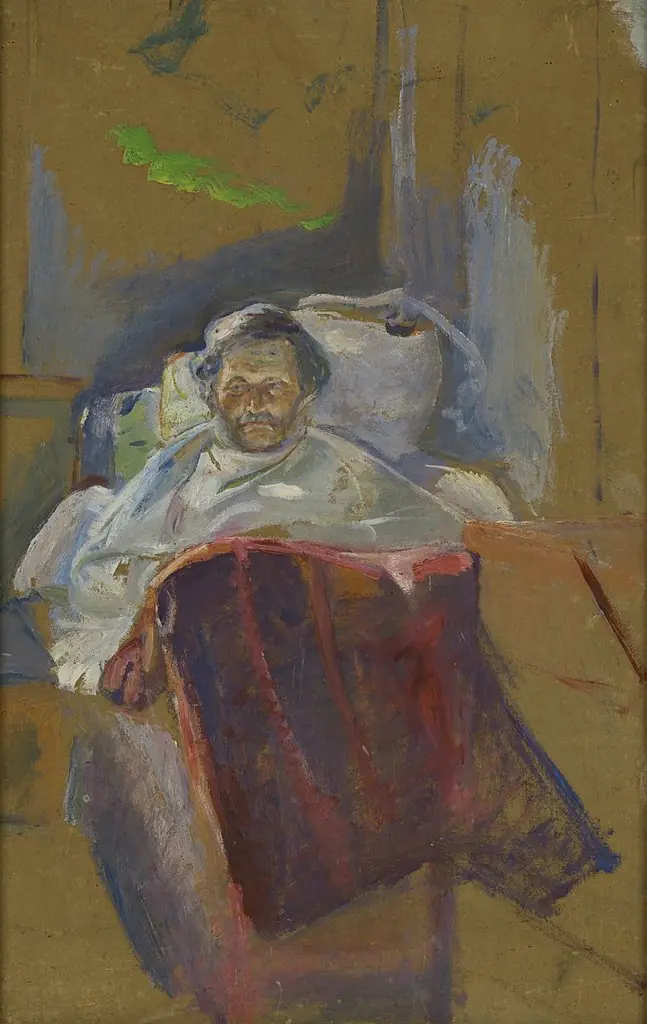 Andreas Bjølstad
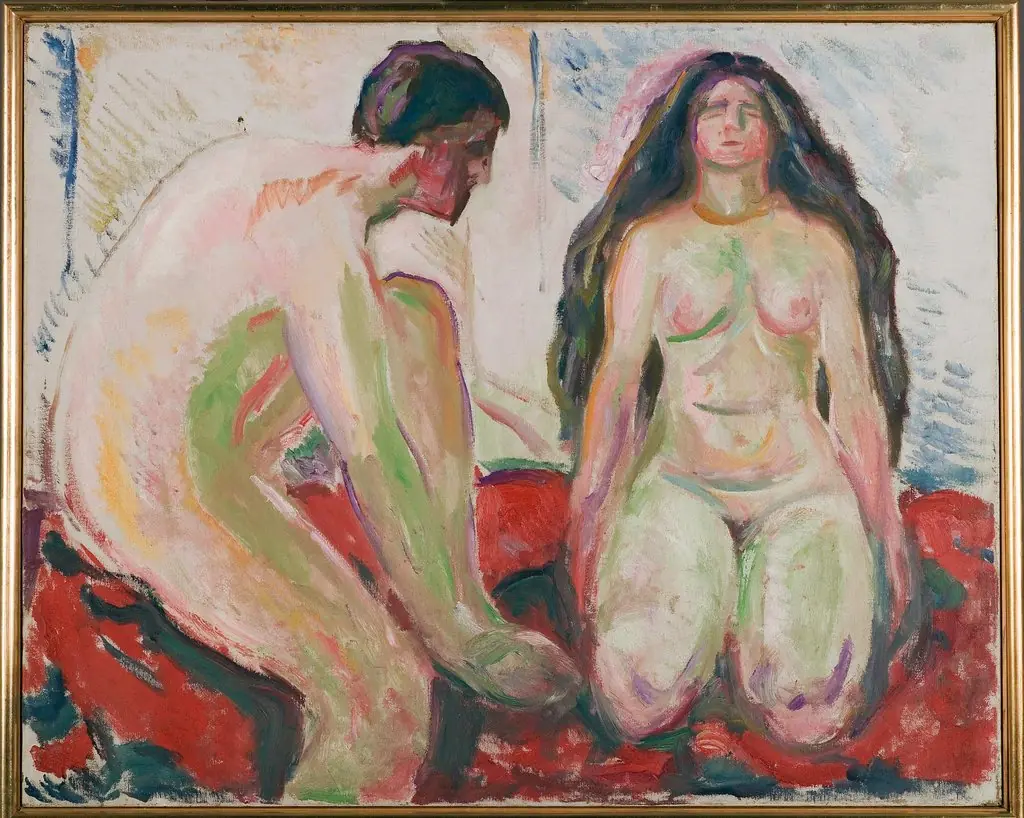 Naked Man and Woman
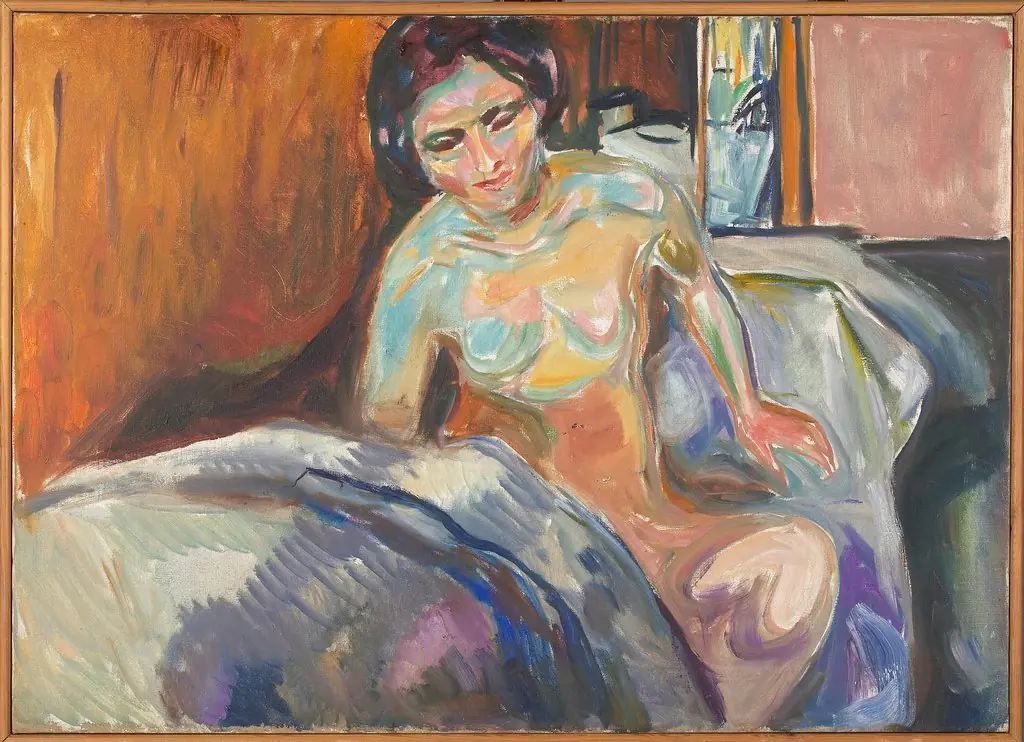 Seated Nude: Morning
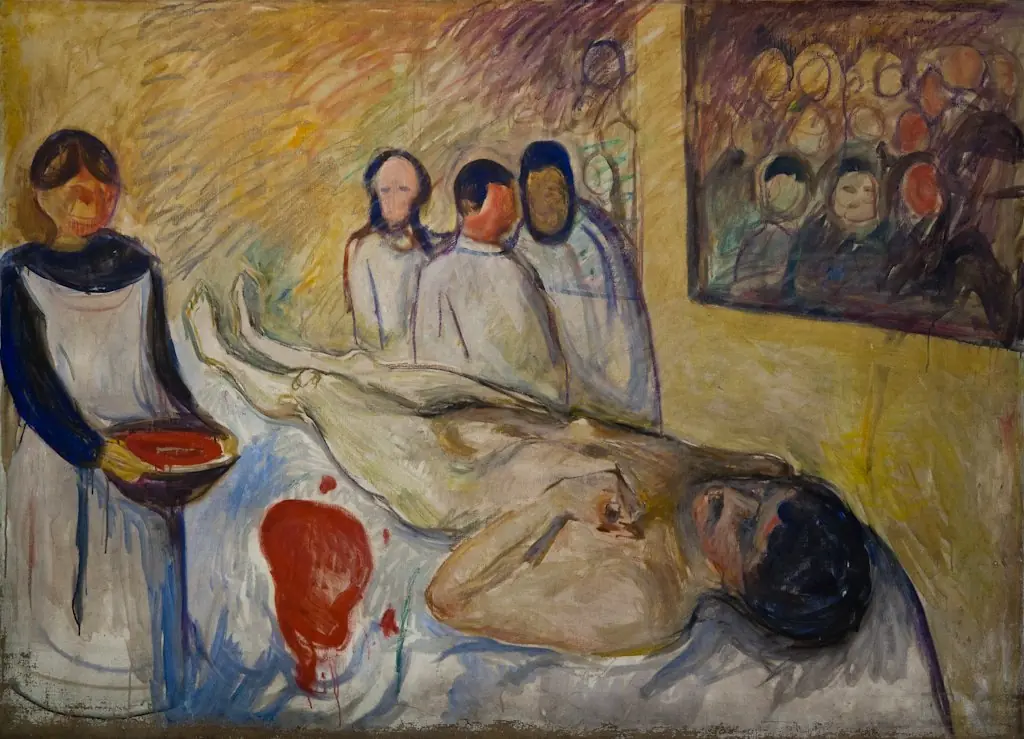 On the Operating Table
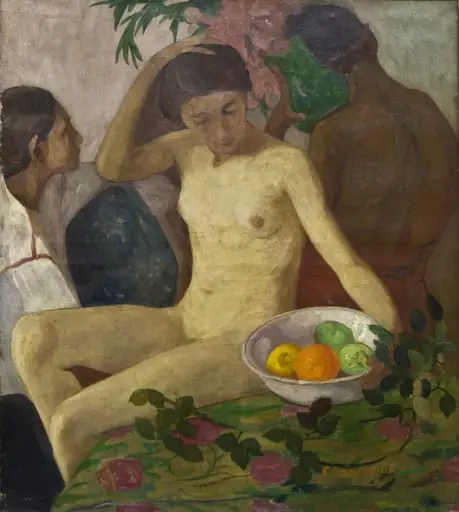 Nud cu vas cu fructe
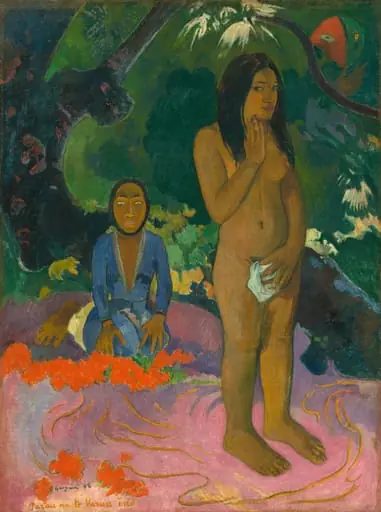 Parau na te Varua ino (Words of the Devil)
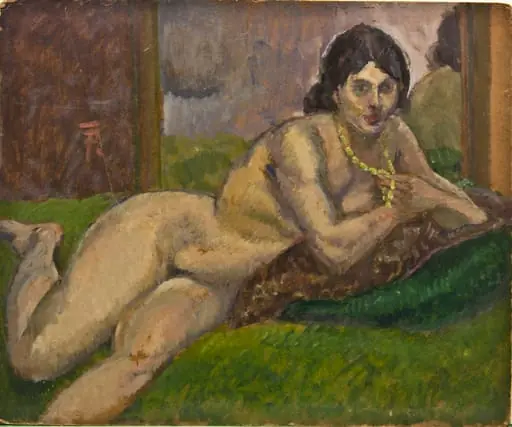 Nud cu mărgele galbene
 Female Nude Reading
 Girl with a Cat, Fränzi