Artwork
The Sacred Mountain (Parahi Te Marae)
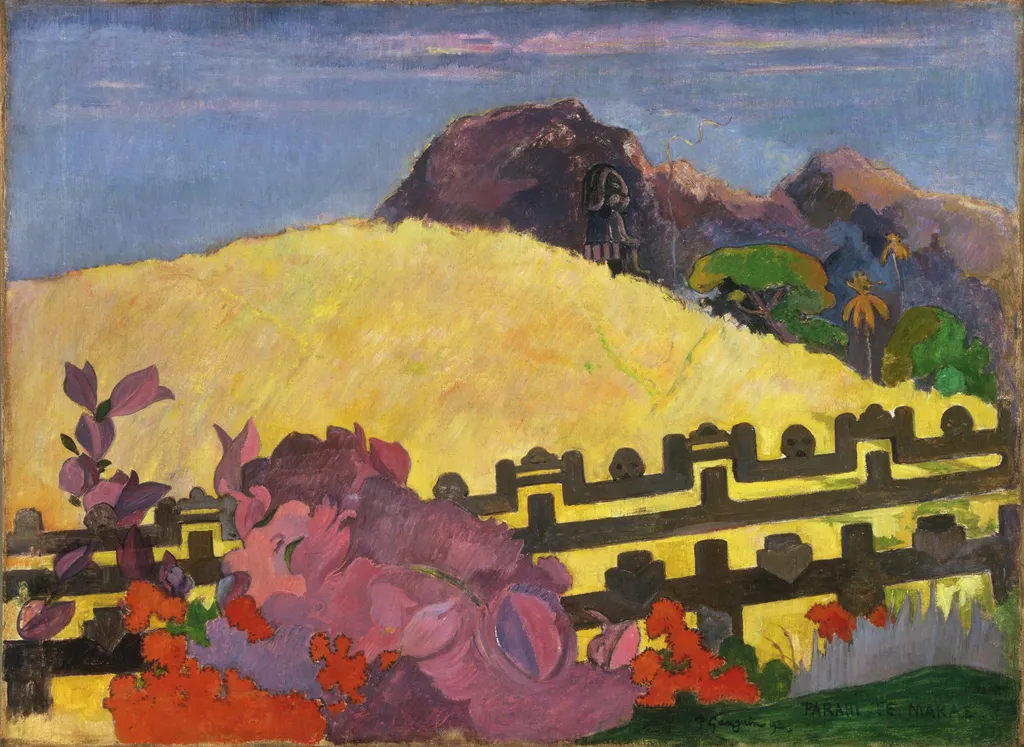
The Sacred Mountain (Parahi Te Marae) is an oil painting by the Post-Impressionist artist Paul Gauguin. It dates from 1896 and is held in the collection of the Philadelphia Museum of Art.
About this work
Overview
Painted in 1896, *The Sacred Mountain (Parahi Te Marae)* is an oil-on-canvas work by Paul Gauguin, created during his second stay in Tahiti.
Painted in 1896, *The Sacred Mountain (Parahi Te Marae)* is an oil-on-canvas work by Paul Gauguin, created during his second stay in Tahiti. It presents a stylized view of a sacred Polynesian ceremonial ground, rendered with flattened forms and bold, non-naturalistic color. The painting reflects Gauguin’s departure from Western academic traditions and his pursuit of an alternative visual language rooted in perceived indigenous spirituality.
Subject & Meaning
The painting centers on a marae, a sacred open-air temple complex in Polynesian culture, set against a towering mountain. Figures in the foreground, possibly priests or worshippers, are rendered with minimal detail, emphasizing ritual presence over individual identity. Gauguin imbued the scene with symbolic weight, framing it not as documentary record but as an imagined spiritual landscape, blending local motifs with his own mystical ideals.
Technique & Style
Gauguin employed Synthetism, reducing forms to simplified shapes and using flat areas of unmodulated color to convey emotion rather than optical realism. The horizon is high, compressing space and drawing attention to the mountain’s dominance. Contour lines define figures and structures, while the palette—deep greens, ochres, and muted blues—avoids atmospheric perspective, reinforcing the painting’s symbolic, rather than literal, intent.
History & Provenance
Created during Gauguin’s years in Tahiti, the painting was likely completed in 1896 before he returned to France. It entered the Philadelphia Museum of Art’s collection in the early 20th century, acquired through a private donation. Its presence in the museum reflects early American interest in Gauguin’s exoticized visions of the Pacific, though its cultural interpretations remain contested by contemporary scholars.
Context
Gauguin’s time in Tahiti was shaped by his desire to escape European modernity and engage with what he perceived as an uncorrupted, spiritual culture. While he drew on local religious sites, his depictions were filtered through European romanticism and colonial assumptions. *The Sacred Mountain* exemplifies this tension—respecting form while reimagining meaning through a foreign lens.
Legacy
The painting contributed to the broader reception of Gauguin as a pioneer of modern primitivism, influencing later artists seeking alternatives to naturalism. However, its idealized portrayal of Polynesian life has prompted critical reassessment, highlighting how colonial perspectives shaped early 20th-century art narratives. Today, it stands as both a formal experiment and a cultural artifact of complex cross-cultural encounter.
Own this work as a print
Artist & collection
Artist
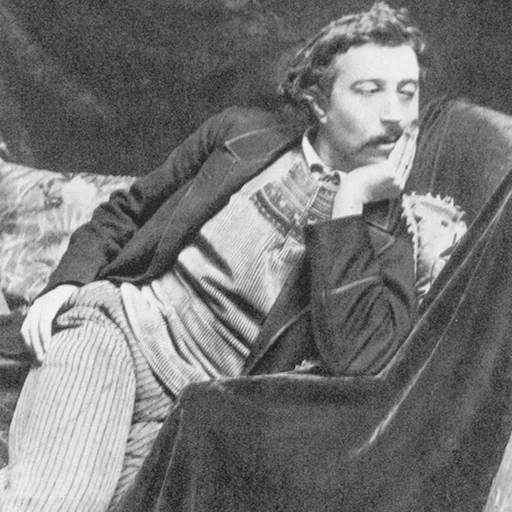
Eugène Henri Paul Gauguin (; French: ; 7 June 1848 – 8 May 1903) was a French painter, sculptor, printmaker, ceramist, and writer, whose work has been primarily associated with the Post-Impressionist and Symbolist movements.

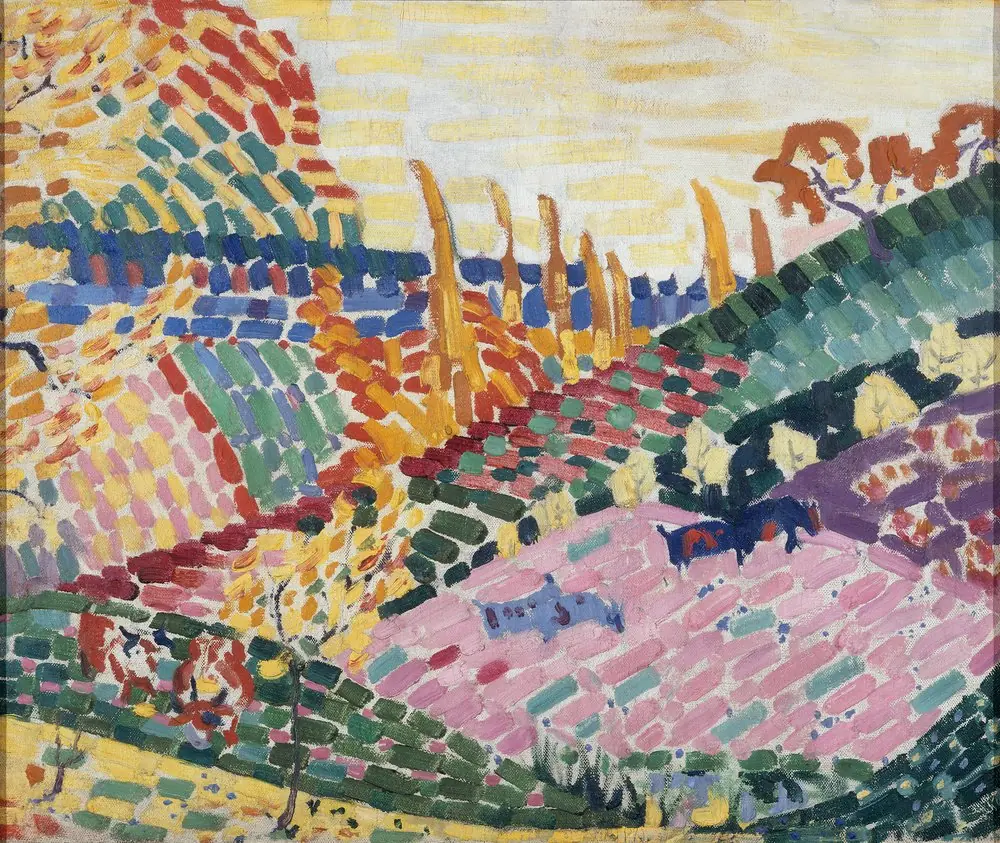 Landscape with Cows
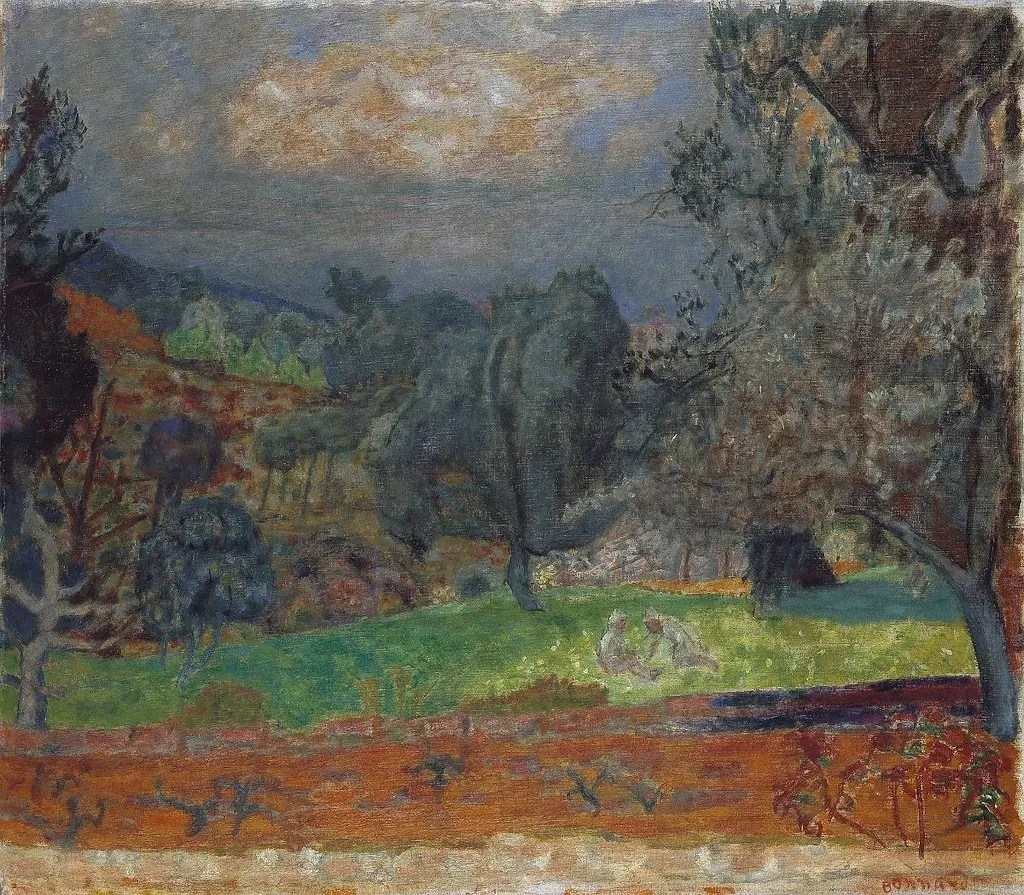 Paysage au soleil couchant. Le Cannet
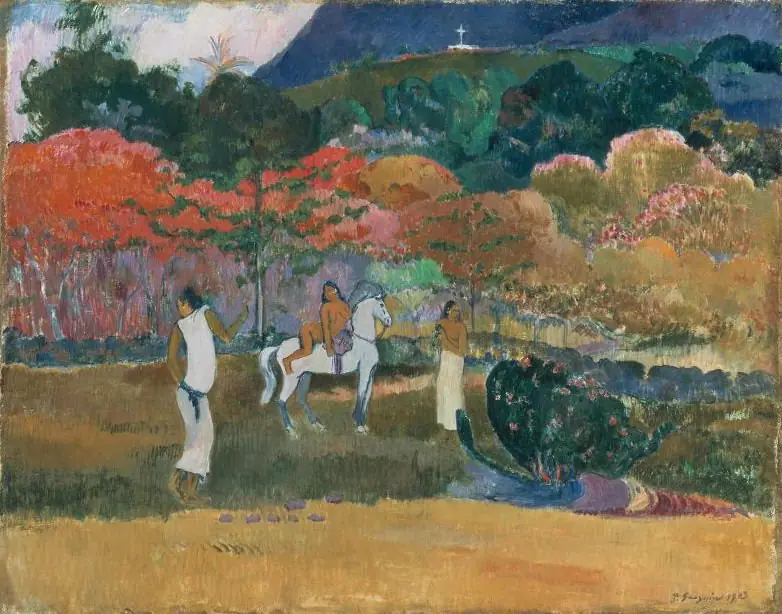 Women and a White Horse
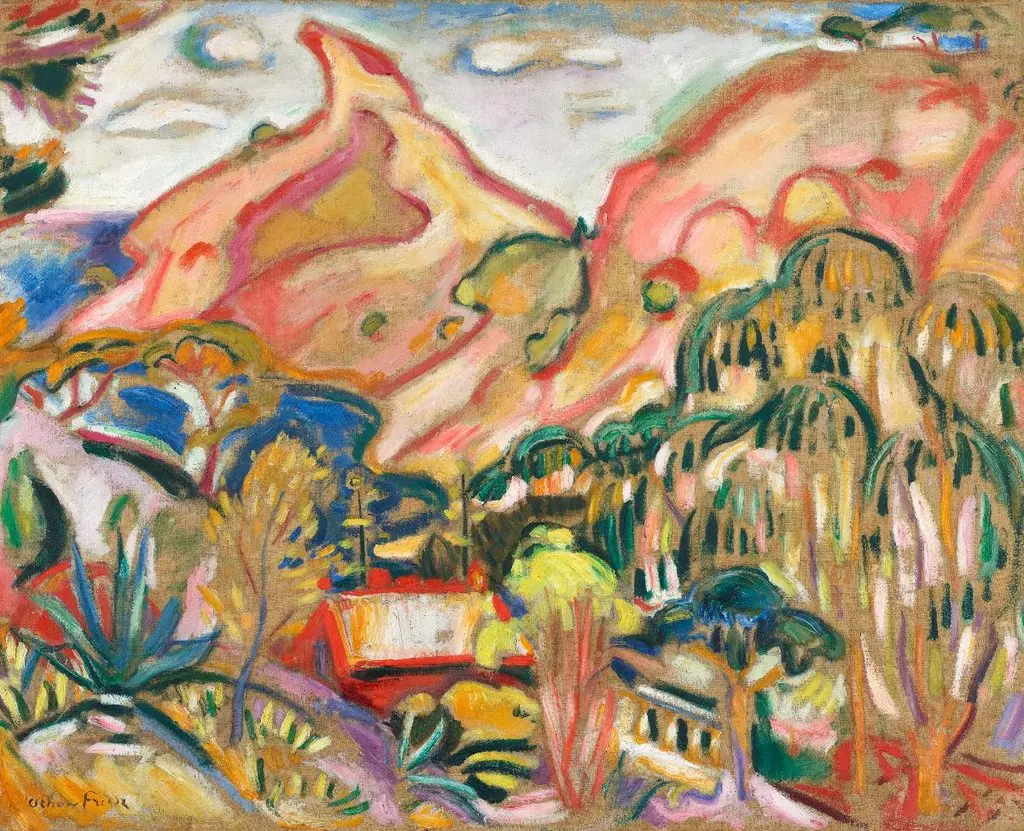 Le Bec de L'Aigle, La Ciotat
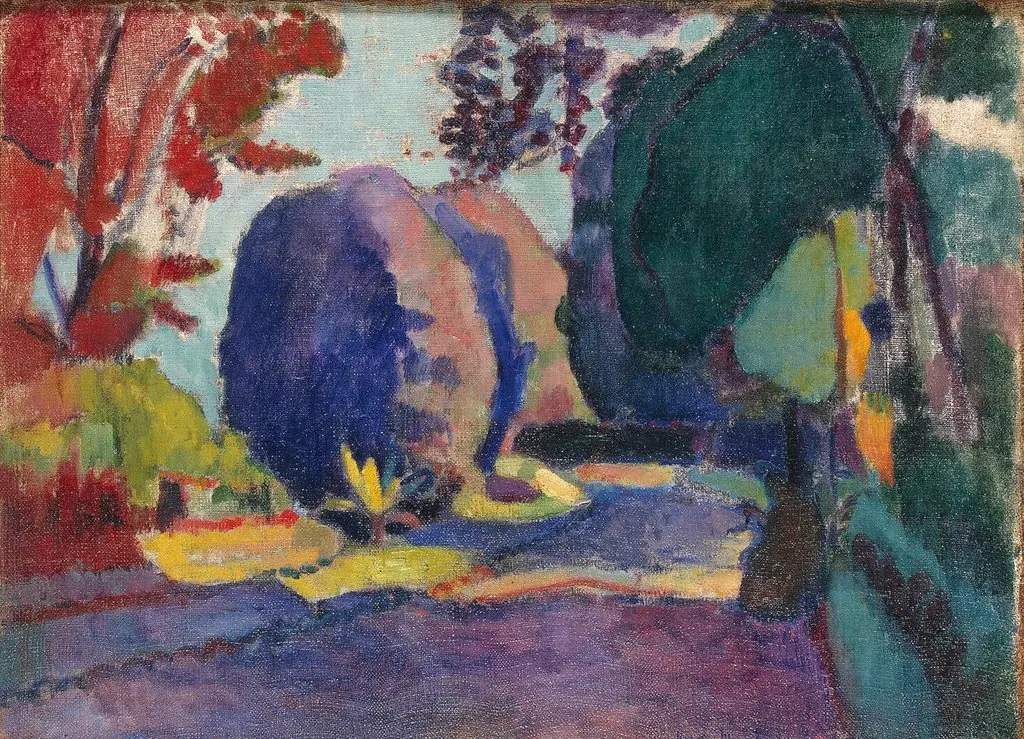 Luxembourg Gardens
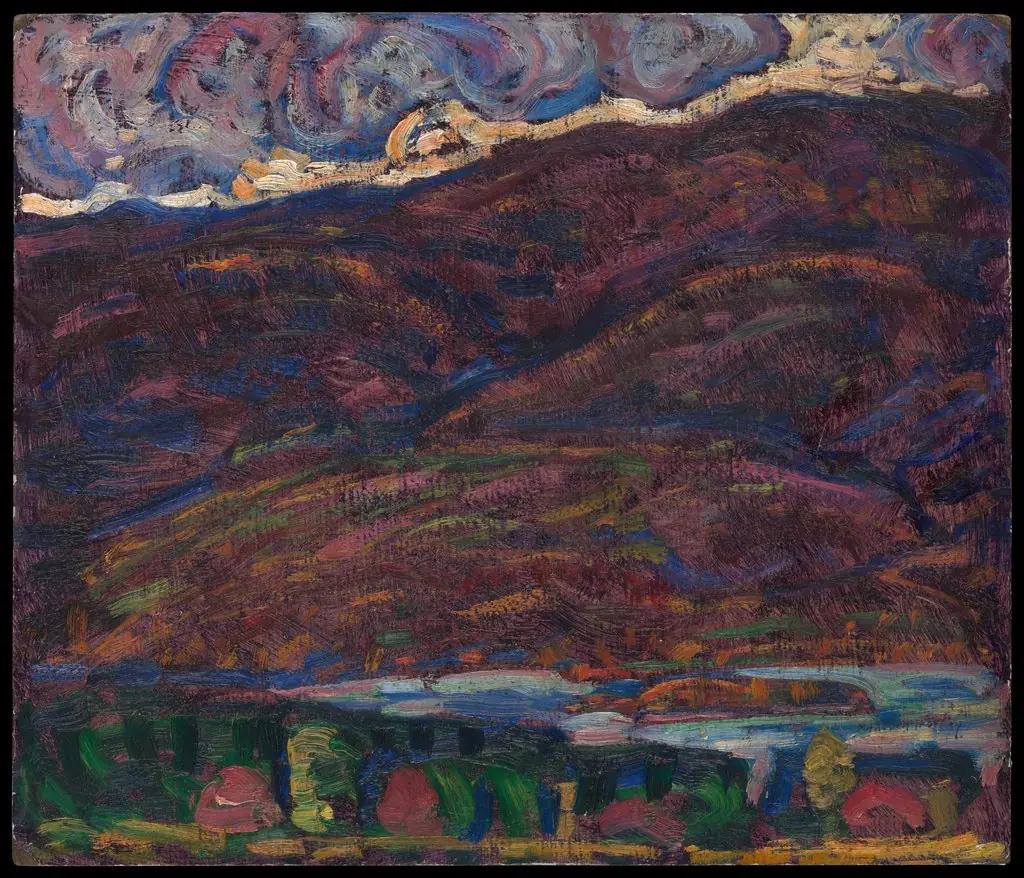 Autumn Color
 The Olive Grove. With Cagnes in the Background. Against the Light
 Painting with Troika
 Untitled
 Ungarische Landschaft
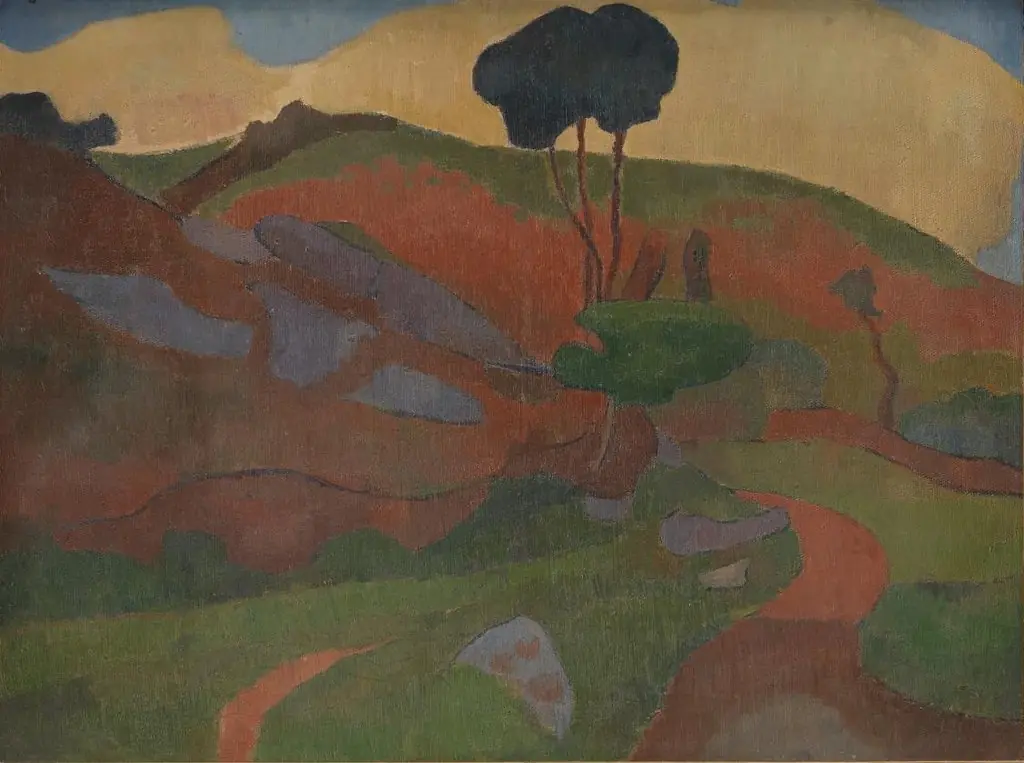 Landscape. Brittany
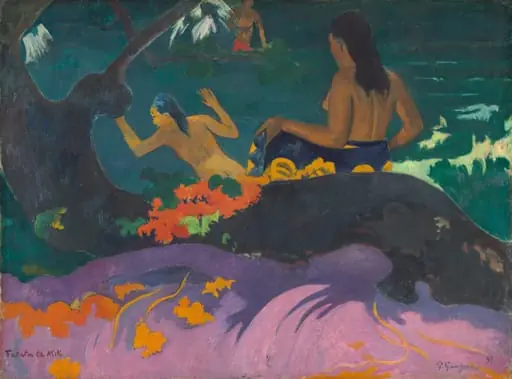
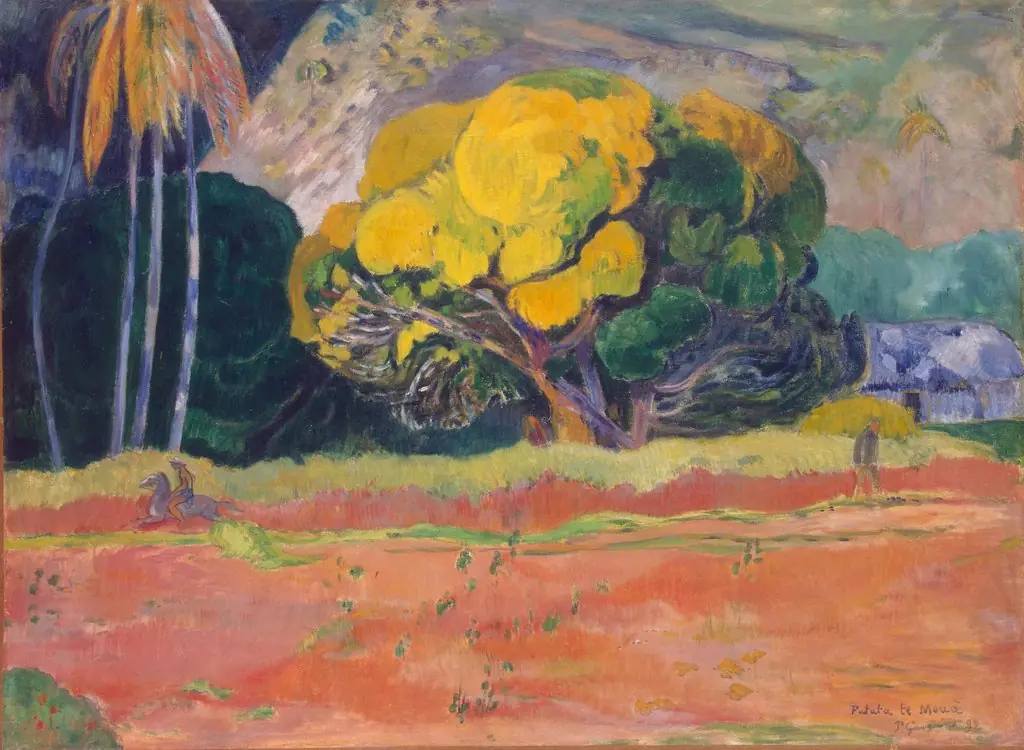 Fatata Te Moua (At the Foot of a Mountain)