Artwork
Enfant de Paris
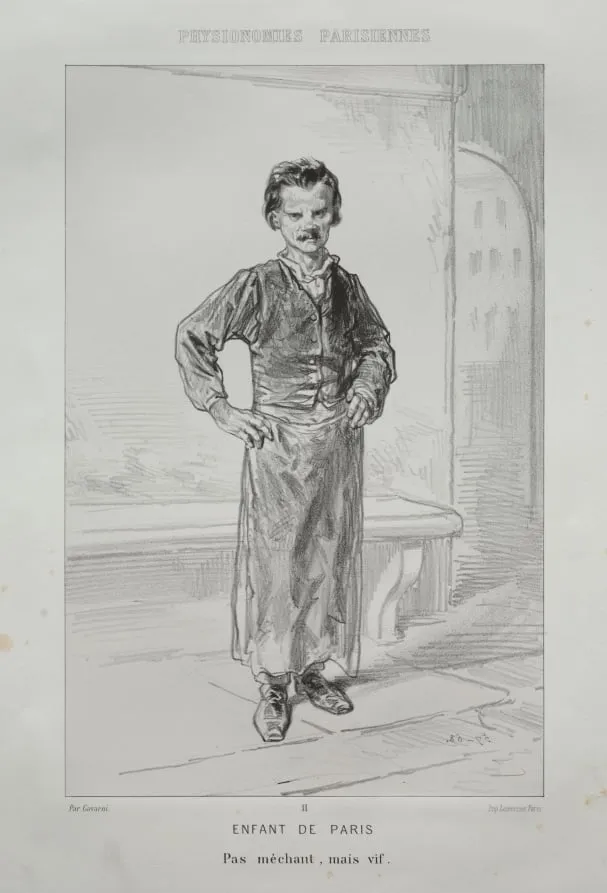
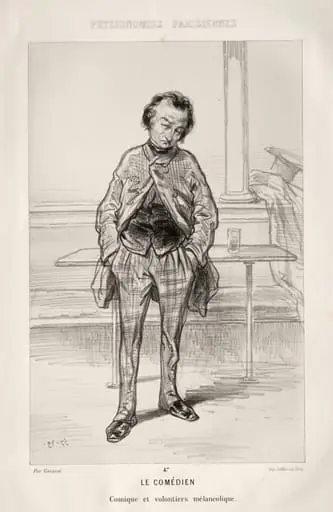
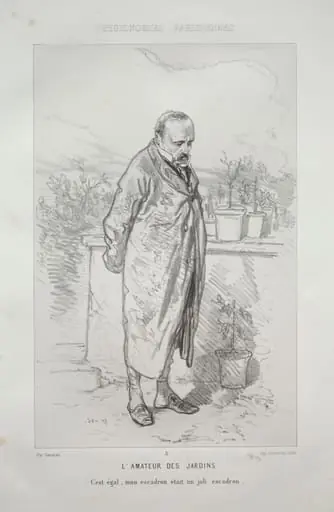
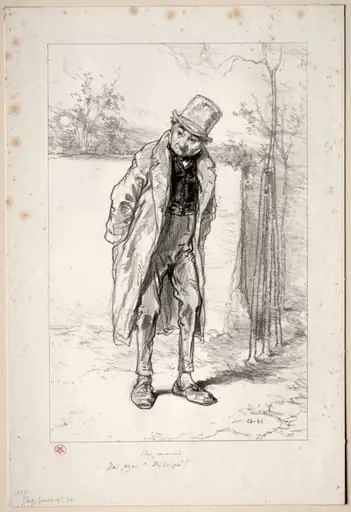
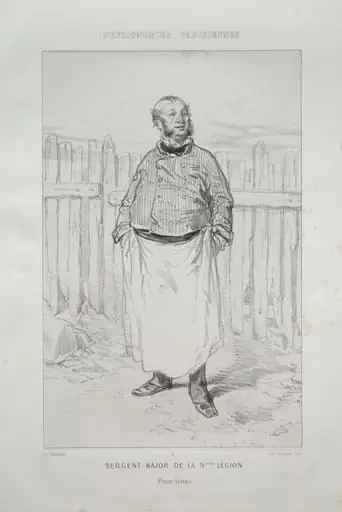
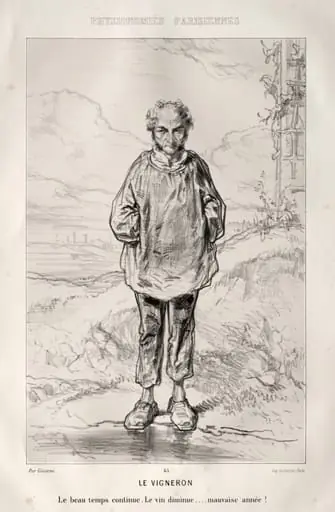
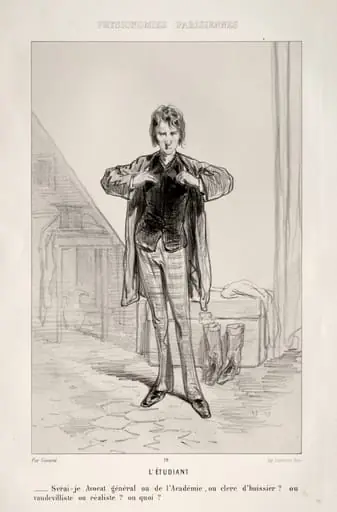
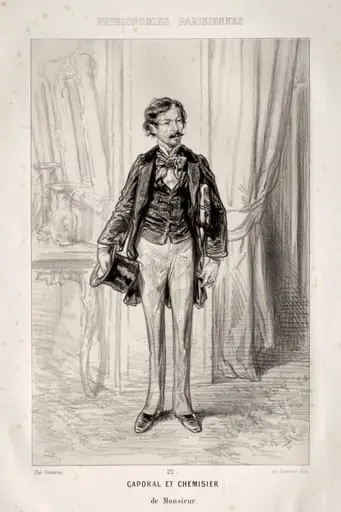
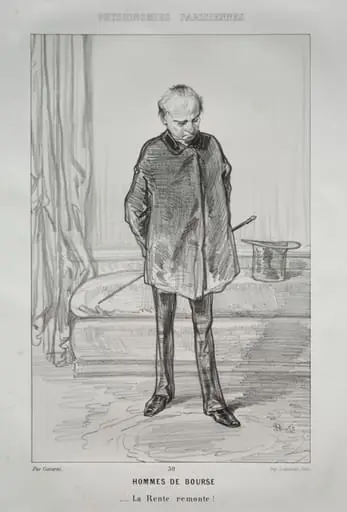
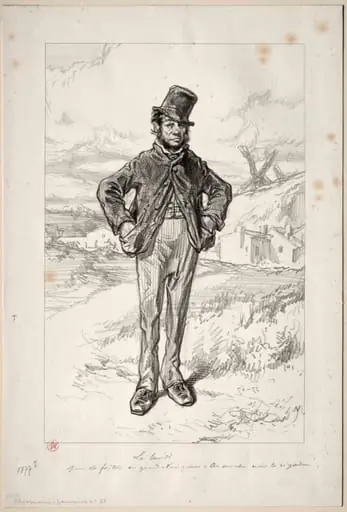
Enfant de Paris is a print by the Romanticist artist Paul Gavarni. It dates from 1857 and is held in the collection of the Cleveland Museum of Art.
About this work
Overview
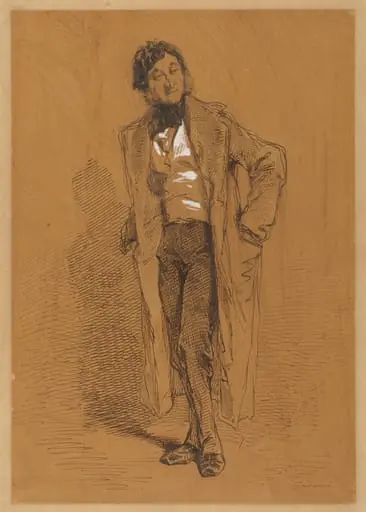
Created around 1857 by French artist Paul Gavarni, this ink sketch depicts a Parisian child in a modest interior setting. The work is part of a broader series documenting urban youth in mid-19th-century France. It resides in the collection of The Cleveland Museum of Art, where it is valued for its candid portrayal of everyday life rather than idealized narrative.
Subject & Meaning
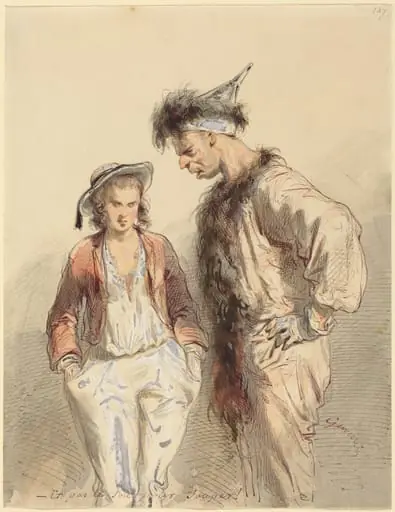
The caption, 'Pas méchant, mais vif'—'not wicked, but lively'—frames him not as a moral example but as a recognizable type: a street-smart child of Paris.
The figure is a boy standing with hands on hips, his expression a subtle smirk suggesting quiet defiance or self-assurance. The caption, 'Pas méchant, mais vif'—'not wicked, but lively'—frames him not as a moral example but as a recognizable type: a street-smart child of Paris. The image avoids sentimentality, presenting youth as energetic and unpolished, grounded in observation rather than moralizing.
Technique & Style
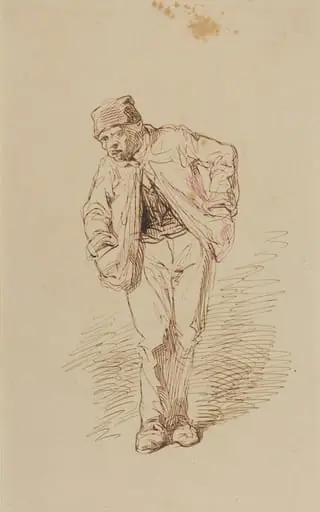
Gavarni rendered the figure with swift, confident ink lines, emphasizing posture and gesture over detail. The background is minimal—a chair and a window with a blurred street glimpse—directing focus to the boy’s presence. The loose, economical strokes reflect a sketchbook sensibility, aligning with journalistic illustration traditions of the time rather than academic finish.
History & Provenance
The print originated in Gavarni’s prolific output for illustrated periodicals, where he documented Parisian social types. It entered the Cleveland Museum of Art’s collection through established acquisition channels in the 20th century. No record of earlier ownership or exhibition history beyond its publication context is documented, suggesting its value lies in its typological significance rather than provenance.
Context
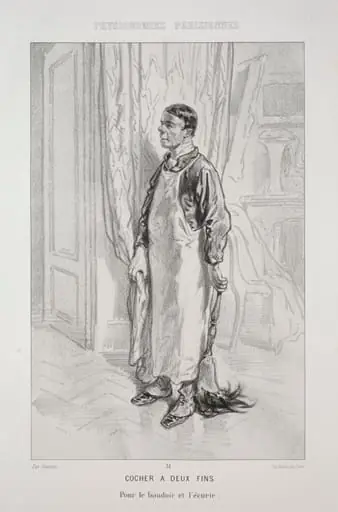
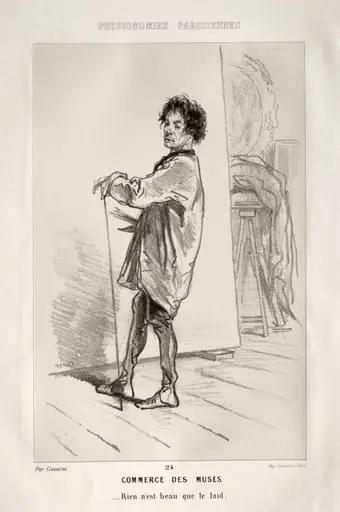
Gavarni’s work emerged during a period when urban life in Paris was being systematically observed and recorded. His drawings responded to growing public interest in the lives of the working class and street children, paralleling literary realism and early photojournalism. Unlike Romantic idealization, his subjects were chosen for their authenticity, reflecting a shift toward social documentation in visual culture.
Legacy
Gavarni’s depictions of Parisian children influenced later illustrators and cartoonists who sought to capture urban character with empathy and precision. His approach contributed to the development of the social genre in print media, paving the way for artists like Daumier. The work remains a quiet example of how everyday figures were elevated through attentive, unembellished observation.
Artist & collection

Artist
Paul Gavarni was the pen name of Sulpice Guillaume Chevalier (13 January 1804 – 24 November 1866), a French illustrator, born in Paris.