Artwork
Physionomies Parisiennes: Le Lundi
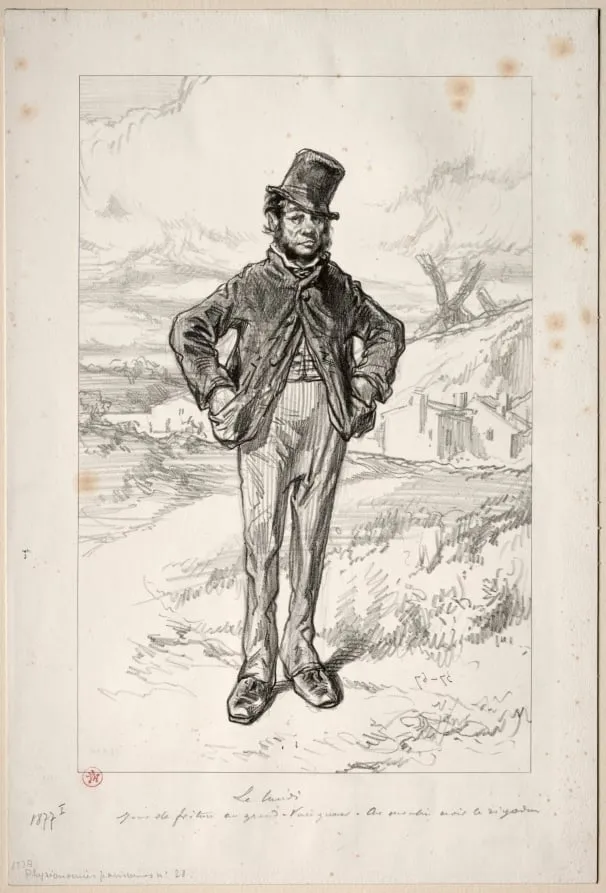
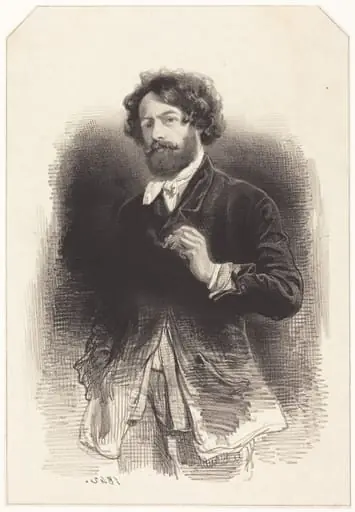
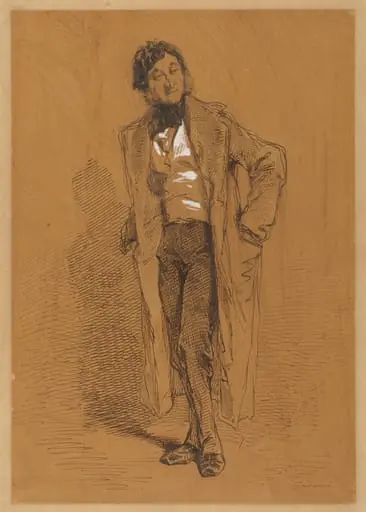
Physionomies Parisiennes: Le Lundi is a print by the Impressionist artist Paul Gavarni. It dates from 1858 and is held in the collection of the Cleveland Museum of Art.
About this work
Overview
Unlike the oil paintings of the Impressionists, this work is a lithograph, produced for mass circulation in illustrated periodicals.
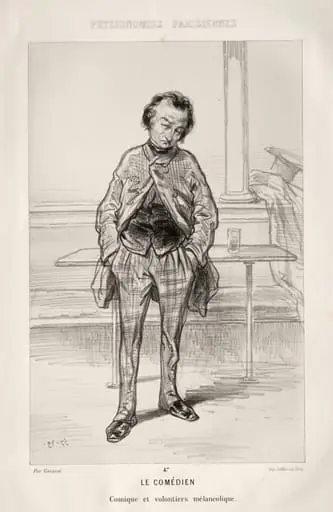
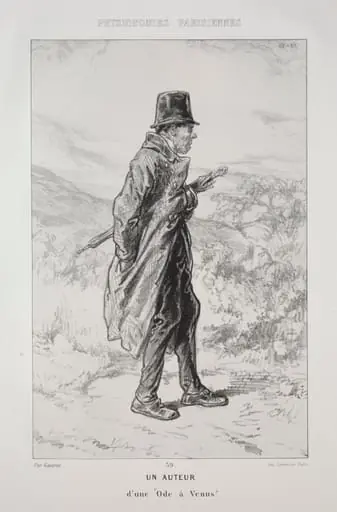
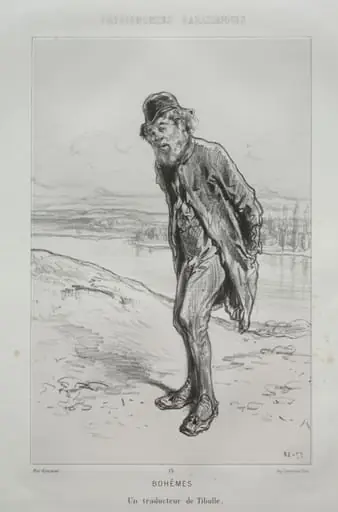
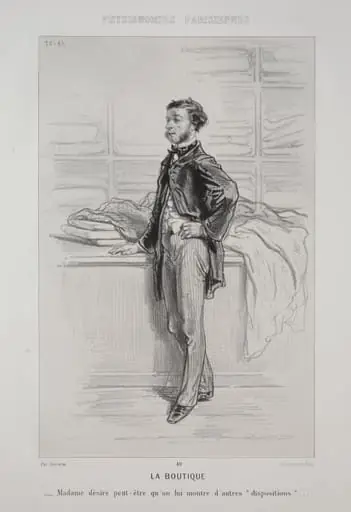
Created in 1858 by Paul Gavarni, this print is part of the series Physionomies Parisiennes, which captures everyday Parisian life through observational sketches. Unlike the oil paintings of the Impressionists, this work is a lithograph, produced for mass circulation in illustrated periodicals. It reflects Gavarni’s focus on urban types rather than landscapes, offering a quiet portrait of a solitary man in the city.
Subject & Meaning
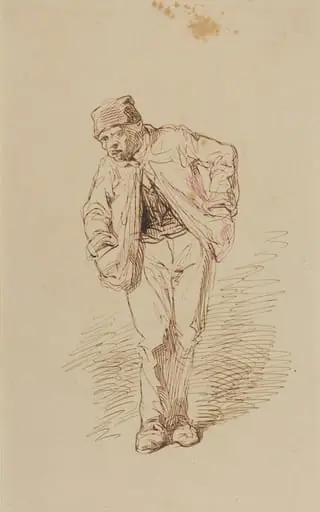
The figure is a middle-class Parisian man, dressed in a dark jacket, trousers, and top hat, standing still with hands in pockets. His direct gaze toward the viewer suggests an unspoken engagement, perhaps inviting reflection on the rhythms of urban routine. The image avoids narrative drama, instead emphasizing stillness and introspection, characteristic of Gavarni’s interest in the psychological texture of ordinary lives.
Technique & Style
Executed as a lithograph, the image relies on ink lines and tonal washes to define form and atmosphere. The background is rendered with loose, suggestive strokes that imply rolling terrain and distant buildings without detailed precision. The muted palette and restrained shading contribute to a subdued mood, prioritizing character over environment. The technique aligns with 19th-century printmaking traditions rather than the brushwork of Impressionist painting.
History & Provenance
The print was originally published in a serialized format during the late 1850s, likely in a French illustrated journal. It entered the collection of The Cleveland Museum of Art through documented acquisition, though its specific path from Paris to Cleveland remains unrecorded in public sources. Gavarni’s prints were widely distributed, making this piece representative of popular visual culture of the era.
Context
Gavarni’s work emerged amid a surge in illustrated journalism in France, where artists documented social types with wit and empathy. Physionomies Parisiennes responded to urbanization and class visibility in post-revolutionary Paris. Unlike Romantic or academic art, these prints favored realism and subtle satire, capturing the quiet dignity of anonymous citizens rather than heroic or idealized figures.
Legacy
Gavarni’s series influenced later generations of illustrators and social commentators, including Honoré Daumier. While not part of the Impressionist movement, his focus on everyday moments prefigured their interest in modern life. Today, his prints are valued for their historical insight into Parisian society and the evolution of graphic media as a vehicle for social observation.
Artist & collection

Artist
Paul Gavarni was the pen name of Sulpice Guillaume Chevalier (13 January 1804 – 24 November 1866), a French illustrator, born in Paris.