Artwork
Fourberies de Femmes En Matière de Sentiment
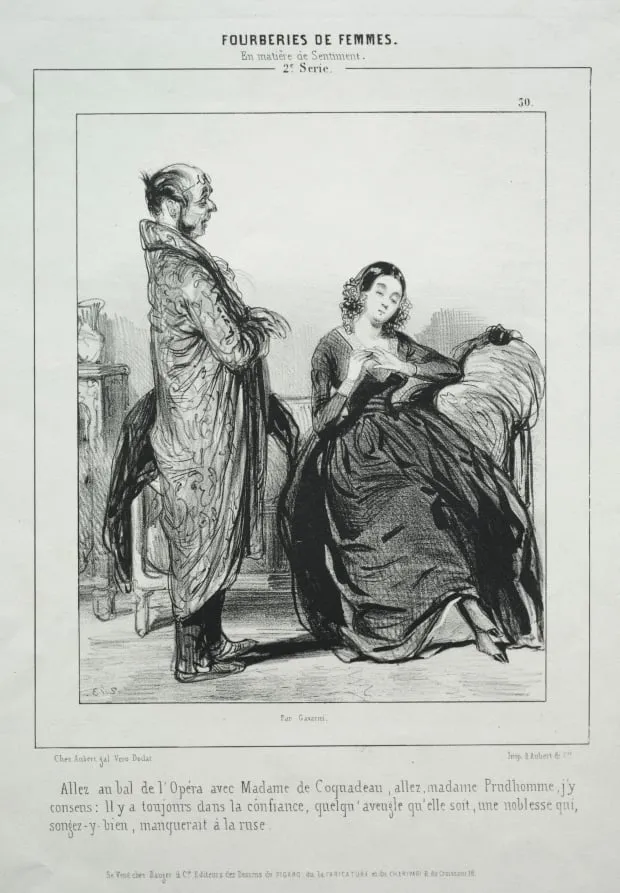
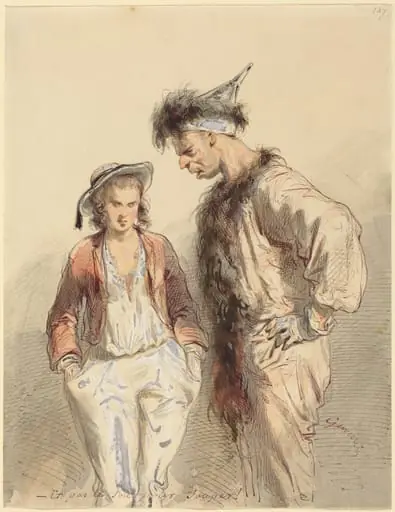
Fourberies de Femmes En Matière de Sentiment is a print by the Romanticist artist Paul Gavarni. It dates from 1839 and is held in the collection of the Cleveland Museum of Art.
About this work
Overview
Created in 1839 by French artist Paul Gavarni, this print is part of a series exploring emotional deception in romantic relationships. Executed in ink on paper, it reflects the artist’s focus on urban social manners. The work is currently held in the collection of The Cleveland Museum of Art, where it serves as an example of 19th-century satirical illustration rooted in everyday human behavior.
Subject & Meaning
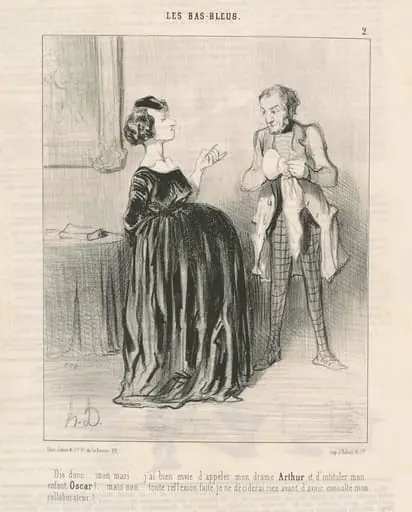
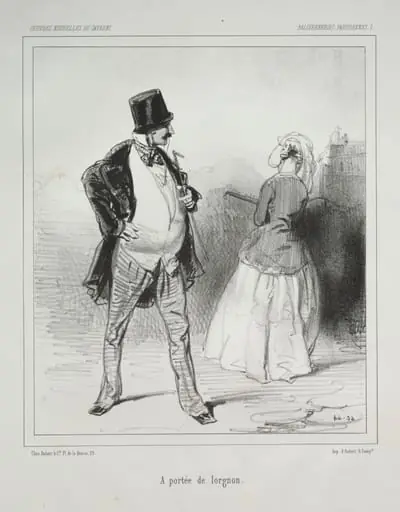
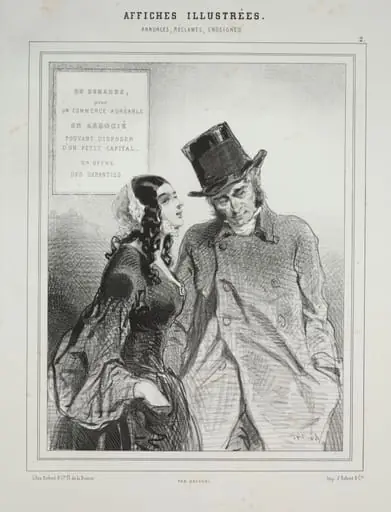
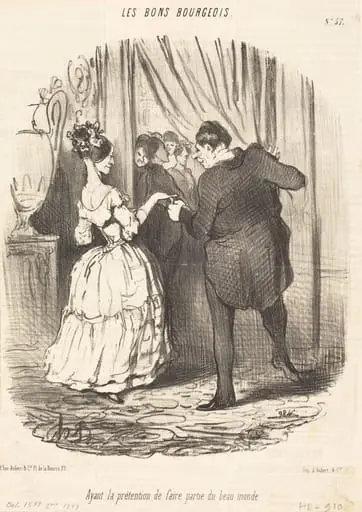
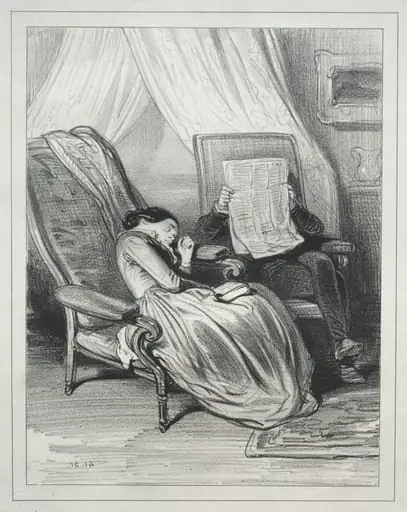
The scene depicts a man standing rigidly with hands behind his back, while a woman kneels before him, clutching her dress and gazing upward with uncertainty. The caption suggests a narrative of emotional betrayal, where one party manipulates the other’s trust. Gavarni captures a moment of quiet tension, using minimal gestures to imply a larger social drama about sincerity and deceit in courtship.
Technique & Style
Gavarni employs clean, confident linework without shading or texture, relying on posture and facial expression to convey emotion.
Gavarni employs clean, confident linework without shading or texture, relying on posture and facial expression to convey emotion. The figures are rendered with economical strokes, emphasizing form over detail. The sparse background—hinting at furniture and a window—focuses attention on the interaction. This restrained approach aligns with the tradition of French caricature, where clarity and wit outweigh ornamental embellishment.
History & Provenance
The print was produced during Gavarni’s early career, when he contributed regularly to illustrated journals in Paris. It was likely published as part of a serialized commentary on bourgeois relationships. Acquired by The Cleveland Museum of Art in the 20th century, the work has remained in its collection since, valued for its insight into mid-19th-century French social critique.
Context
Emerging in the wake of Romanticism, Gavarni’s work responds to its emotional intensity but redirects it toward satire. Rather than idealizing love, he exposes its vulnerabilities and performative aspects within middle-class society. His prints were widely circulated, offering sharp, accessible commentary that resonated with urban readers navigating shifting gender roles and social expectations.
Legacy
Gavarni’s influence extended to later illustrators and cartoonists who adopted his blend of social observation and graphic economy. His depictions of domestic tension helped shape the visual language of narrative illustration in periodicals. Though not widely known today, his work remains a significant reference in studies of 19th-century French visual culture and the evolution of editorial satire.
Artist & collection

Artist
Paul Gavarni was the pen name of Sulpice Guillaume Chevalier (13 January 1804 – 24 November 1866), a French illustrator, born in Paris.