Artwork
Un Fort
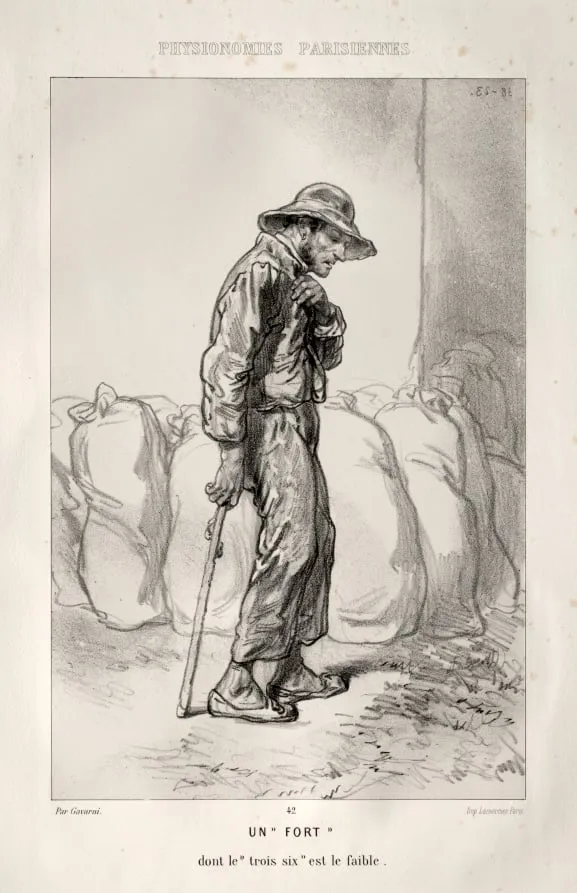
Un Fort is a print by the Impressionist artist Paul Gavarni. It dates from 1858 and is held in the collection of the Cleveland Museum of Art.
About this work
Overview
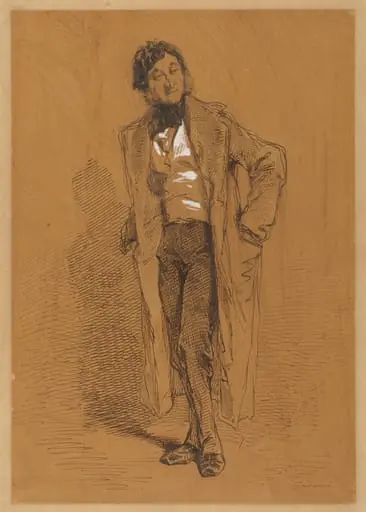
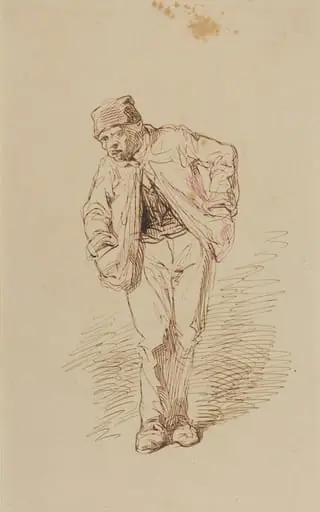
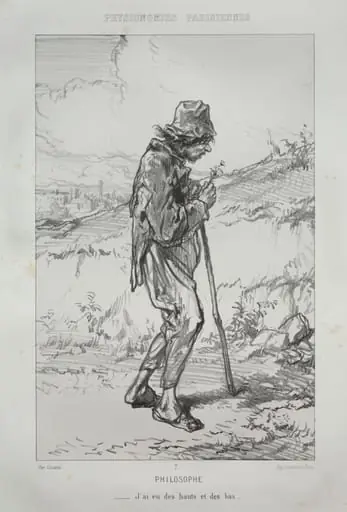
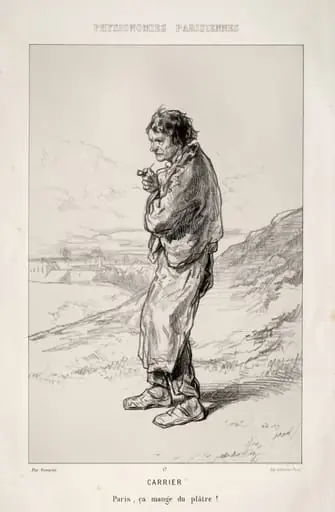
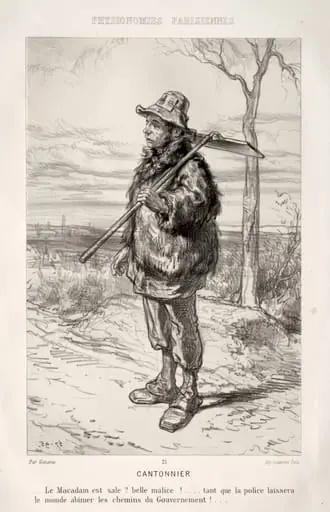
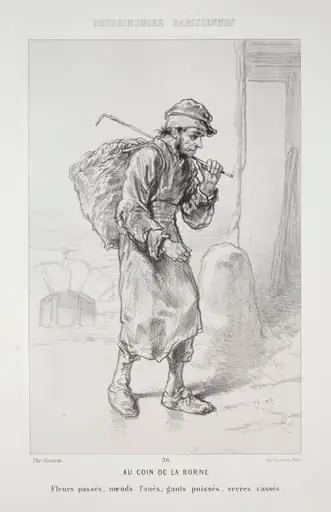
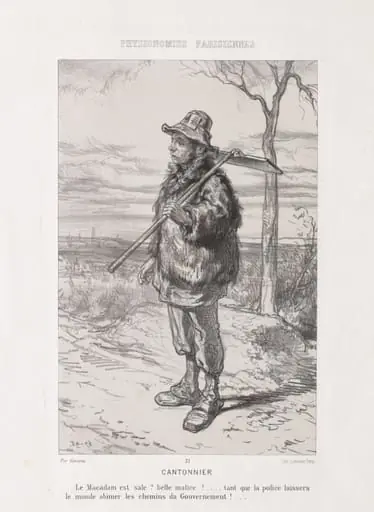
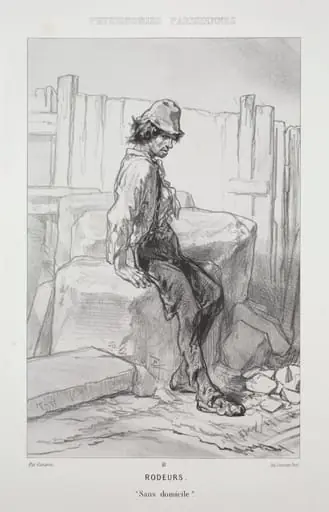
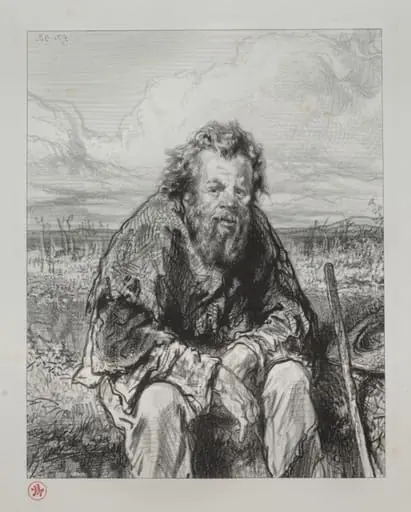
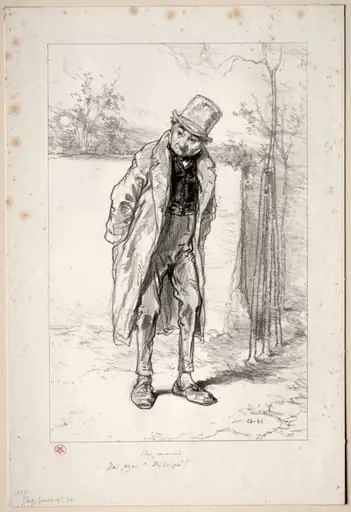
Created around 1858 by Paul Gavarni, Un Fort is a lithograph held in the collection of The Cleveland Museum of Art. The work captures a solitary laborer in a moment of stillness, his physical strain evident in his posture and attire. The title, meaning 'a strong one,' contrasts sharply with the figure’s weary demeanor, suggesting irony as a central device in the composition.
Subject & Meaning
The title’s irony underscores the gap between societal expectations of labor and the reality of physical depletion experienced by the working class.
The figure, dressed in worn work clothes and leaning heavily on a stick, embodies exhaustion rather than strength. His low-hanging hat and slumped shoulders convey fatigue, while the pile of sacks and uneven ground behind him hint at a life of manual toil. The title’s irony underscores the gap between societal expectations of labor and the reality of physical depletion experienced by the working class.
Technique & Style
Gavarni employed loose, rapid linework typical of sketch-based lithography to convey immediacy and emotional texture. The uneven contours of the ground, the blurred edges of the sacks, and the fragmented shading all contribute to a sense of transience. The style avoids idealization, focusing instead on the raw, unpolished details of the figure’s environment and condition.
History & Provenance
The print was produced in the late 1850s during a period when French illustrators increasingly turned to scenes of everyday life. It entered the Cleveland Museum of Art’s collection through established acquisition channels, likely as part of a broader interest in 19th-century European graphic art. Its provenance reflects its role as a document of social observation rather than a commercial commodity.
Context
Un Fort aligns with the Realist movement’s emphasis on depicting ordinary people without romanticization. Gavarni, known for his satirical illustrations, used this work to critique social narratives around labor and resilience. The image resonates with contemporaneous works by Daumier and Courbet, who similarly portrayed the dignity and burden of manual work in post-revolutionary France.
Legacy
The print remains a quiet but pointed example of how graphic art could convey social commentary with minimal means. While not widely exhibited, it contributes to scholarly understanding of how 19th-century illustrators used irony and observation to challenge prevailing attitudes toward labor. Its endurance in museum collections underscores its value as a visual record of working-class experience.
Artist & collection

Artist
Paul Gavarni was the pen name of Sulpice Guillaume Chevalier (13 January 1804 – 24 November 1866), a French illustrator, born in Paris.