Artwork
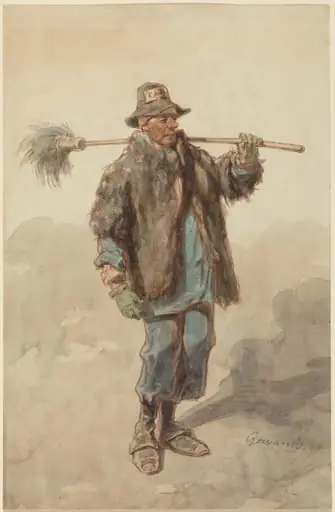
Cantonnier
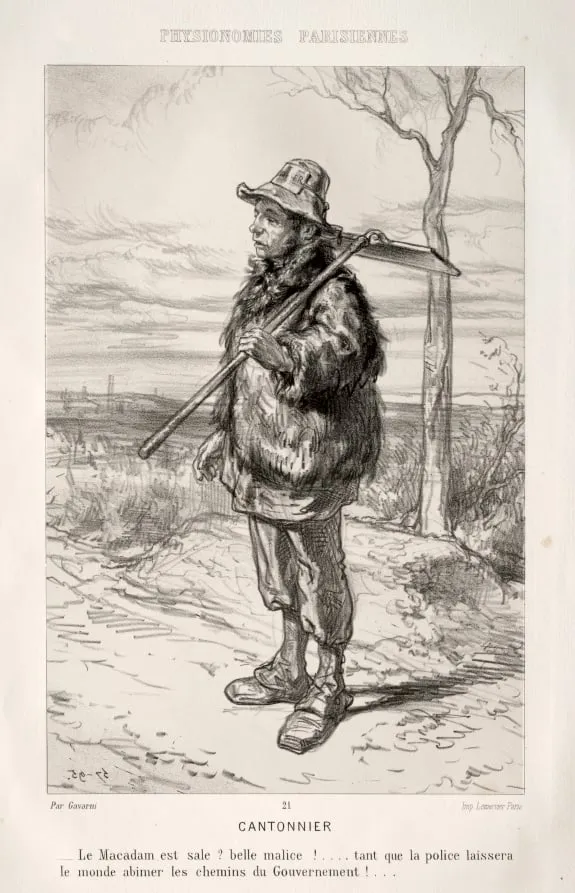
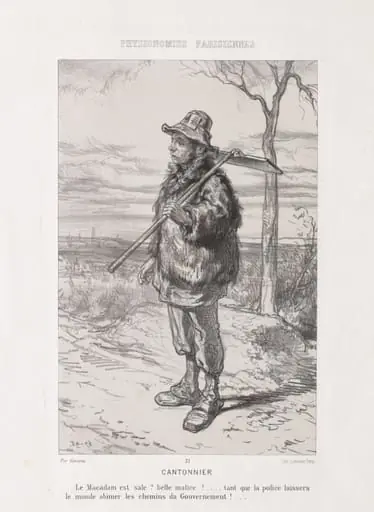
Cantonnier is a print by the Impressionist artist Paul Gavarni. It dates from 1857 and is held in the collection of the Cleveland Museum of Art.
About this work
This painting shows a man sitting at a table, looking tired.
He's dressed in simple clothes, with a hat and a coat on.
The scene is quiet and still.
The artist paid attention to the man's face and clothes.
The painting gives us a glimpse into everyday life in 19th century France.
To learn more about this style, look up the technique: sfumato.
Overview
The work is held in the collection of The Cleveland Museum of Art, where it is preserved as an example of 19th-century social observation in print.
Cantonnier is a lithograph by French artist Paul Gavarni, dated around 1857. It depicts a solitary municipal worker, likely a road maintenance laborer, seated at a modest table. The image is part of a broader series documenting ordinary French citizens in their daily routines. The work is held in the collection of The Cleveland Museum of Art, where it is preserved as an example of 19th-century social observation in print.
Subject & Meaning
The figure, identified as a cantonnier, represents a low-ranking public servant responsible for rural road upkeep. His slumped posture and weary expression convey exhaustion, reflecting the physical toll of manual labor. Gavarni avoids romanticizing the subject, instead presenting him with quiet dignity. The stillness of the scene emphasizes solitude and routine, offering a subtle commentary on the invisible workers sustaining urban infrastructure.
Technique & Style
Gavarni employed lithography to achieve fine tonal gradations and delicate line work. His rendering of the man’s worn clothing and facial features relies on subtle shading rather than bold outlines. The composition is restrained, with minimal background detail, focusing attention on the figure’s presence. Unlike the sfumato technique used in Renaissance painting, Gavarni’s approach is grounded in the precision and immediacy of 19th-century printmaking.
History & Provenance
Created during the height of Gavarni’s career, Cantonnier was originally published as part of a serialized portfolio illustrating French social types. It entered The Cleveland Museum of Art’s collection through documented acquisition in the 20th century. The print’s survival in good condition reflects its historical value as a record of working-class life, preserved alongside other social commentaries from the period.
Context
In mid-19th-century France, urbanization and state expansion increased the visibility of public laborers like the cantonnier. Gavarni’s work emerged alongside a growing interest in documenting everyday life, influenced by realism and journalistic illustration. His prints were widely circulated in periodicals, offering middle-class audiences a glimpse into lives often overlooked in official art and literature.
Legacy
Cantonnier contributes to a tradition of social portraiture that prioritized empathy over spectacle. Gavarni’s focus on unglamorous laborers influenced later artists and illustrators who sought to humanize the working class. Though not widely known today, the print remains a significant artifact in the study of French visual culture and the evolution of print as a medium for social observation.
Artist & collection

Artist
Paul Gavarni was the pen name of Sulpice Guillaume Chevalier (13 January 1804 – 24 November 1866), a French illustrator, born in Paris.