Artwork
Tightrope Walker
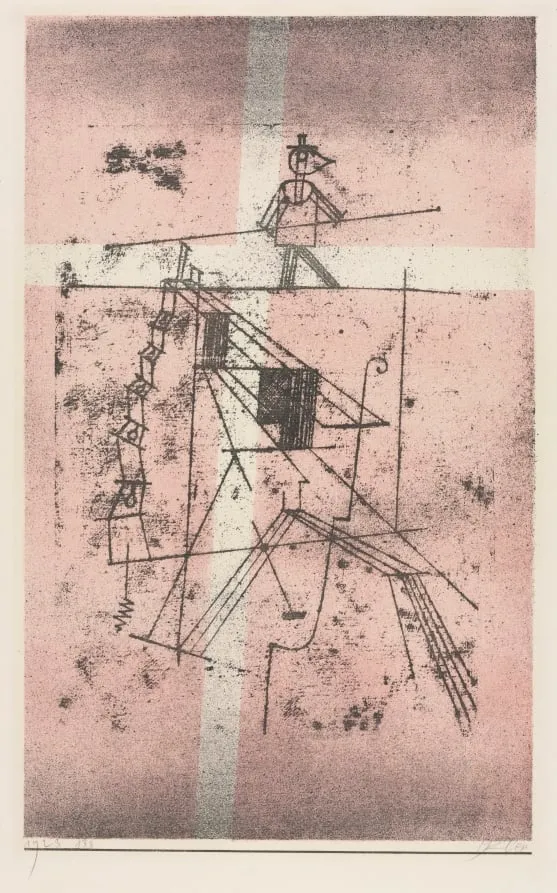
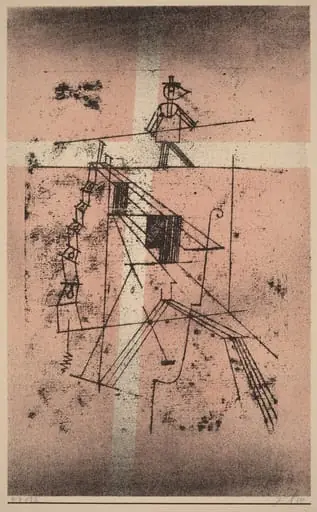
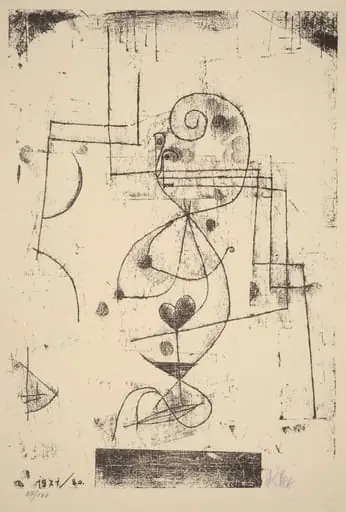
Tightrope Walker is a print by Paul Klee. It dates from 1923 and is held in the collection of the Cleveland Museum of Art.
About this work
Overview
Paul Klee’s lithograph titled *Tightrope Walker* presents a diminutive figure poised on a rope that arches above a chaotic arrangement of stairs and winding paths. The composition is set against a luminous pink field that suggests a dreamlike atmosphere, while the figure occupies only a fraction of the surface, emphasizing its precariousness within an expansive, abstracted space.
Subject & Meaning
Klee repeatedly used the tightrope walker as a metaphor for the artist’s own practice, embodying the delicate equilibrium between mastery and risk, intention and chance. The ambiguous network of stairs and pathways offers no clear destination, reinforcing a sense of playful uncertainty that mirrors the creative process itself.
Technique & Style
The print combines several lithographic methods: fine pen lines delineate the walker and surrounding architecture, while broader washes create smooth gradients above and below the figure, producing a subtle spot‑light effect. Klee’s handling of color transitions evokes a soft, blended quality reminiscent of sfumato, allowing simple marks to convey depth and movement.
Context
Created during a period when Klee explored symbolic subjects through printmaking, the work reflects his interest in visualizing internal states with minimal forms. The juxtaposition of precise linear detail and atmospheric color fields aligns with his broader oeuvre, which often balances geometric abstraction with lyrical, almost musical, expression.
Artist & collection
Artist
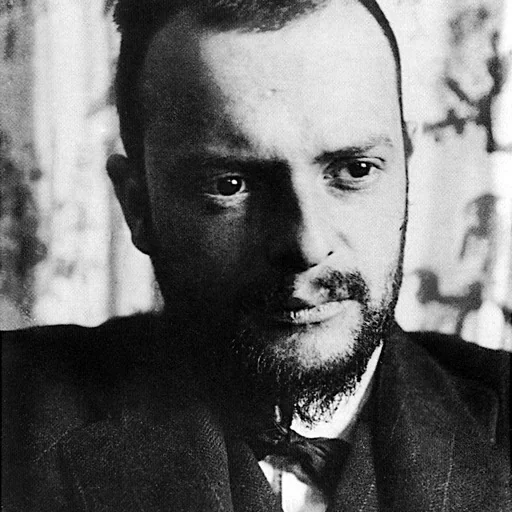
Paul Klee (German: ; 18 December 1879 – 29 June 1940) was a Swiss-born German artist.