Artwork
The Tight Rope Walker (Seiltänzer)
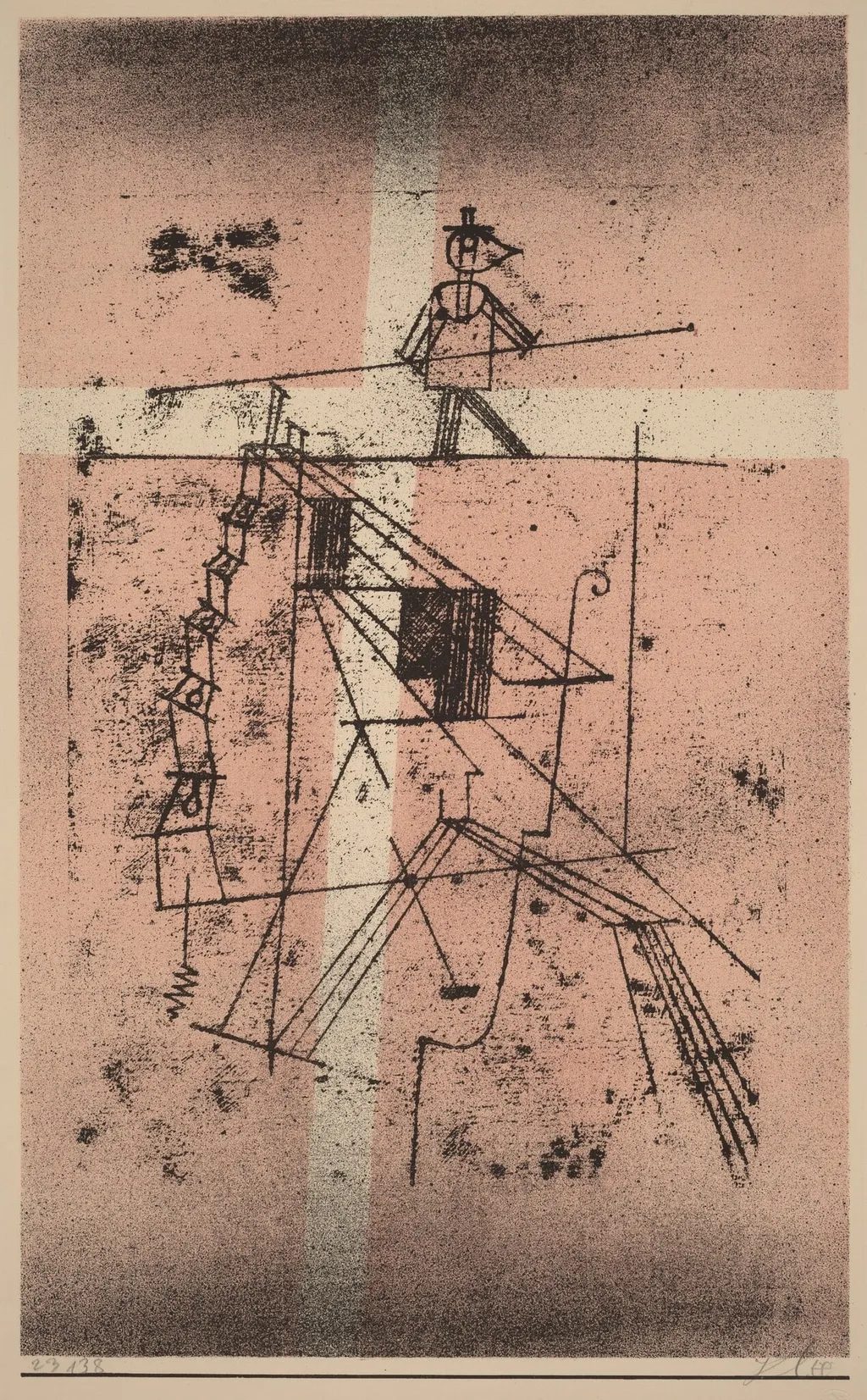
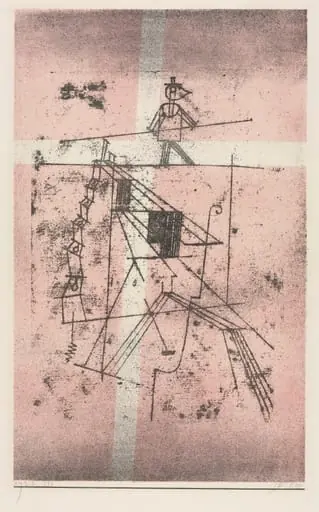
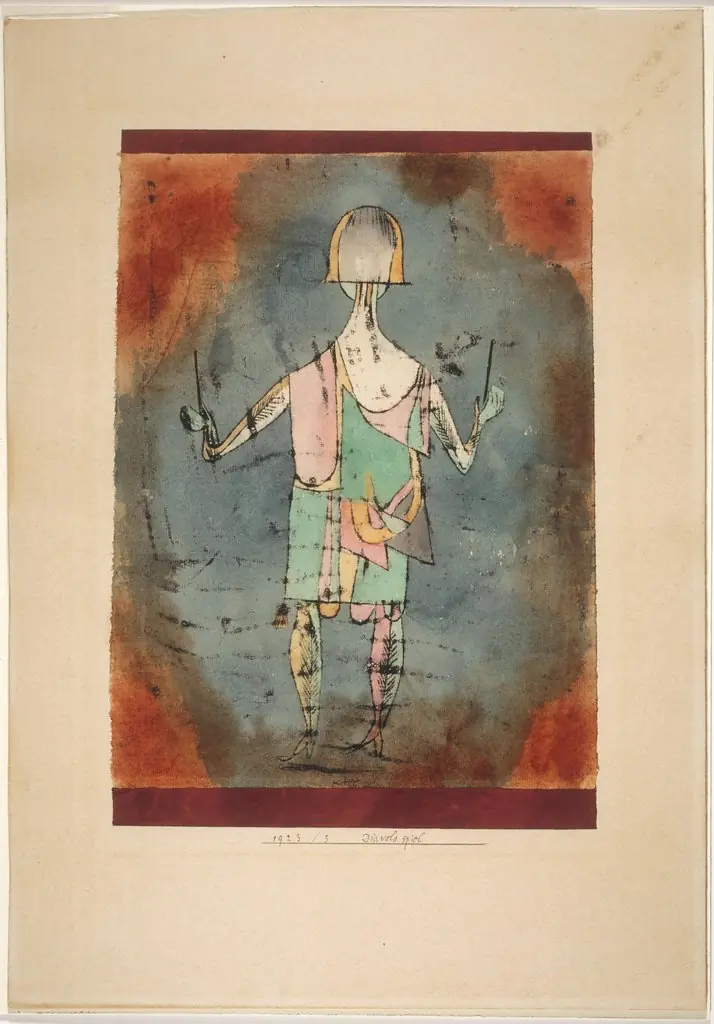
The Tight Rope Walker (Seiltänzer) is an ink print by Paul Klee. It dates from 1923 and is held in the collection of the National Gallery of Art.
About this work
Overview
The work belongs to a period when Klee was deeply immersed in formal experimentation, blending abstraction with poetic suggestion.
Created in 1923, *The Tight Rope Walker* is a lithograph by Paul Klee, rendered in black ink with subtle pink washes. The work belongs to a period when Klee was deeply immersed in formal experimentation, blending abstraction with poetic suggestion. Its delicate, almost ephemeral quality reflects his interest in capturing transient states rather than fixed realities, using the lithographic process to achieve nuanced tonal variations.
Subject & Meaning
The figure, a solitary walker on a thin line, evokes themes of precarious balance—both physical and existential. The sparse ground below, suggested by minimal marks, and the elevated pole held in the figure’s hands reinforce a sense of vulnerability. Klee does not depict a circus act but rather a metaphor for the fragile equilibrium of thought, art, or life itself, stripped of narrative detail.
Technique & Style
Klee employed lithography to layer soft, smudged washes of pink over crisp black lines, creating a sense of atmospheric haze and instability. The tightrope is rendered as a single, trembling stroke; the figure’s form is simplified yet animated by irregular contours. The background’s irregular textures suggest spontaneity, as if drawn in a single breath, aligning with his belief in art as a record of inner movement.
History & Provenance
Produced during Klee’s tenure at the Bauhaus, the print emerged from his engagement with pedagogical and artistic innovation. It was likely made as part of a series exploring visual rhythm and spatial tension. While specific early ownership records are limited, the work entered major collections in the mid-20th century, recognized for its quiet yet profound formal economy.
Context
In early 1920s Germany, Klee’s work stood apart from dominant movements by rejecting overt political or emotional rhetoric. His synthesis of Cubist structure, Expressionist line, and Surrealist ambiguity reflected a broader search for visual language beyond representation. This print aligns with his theoretical writings on color and form, where art became a means to map invisible forces.
Legacy
*The Tight Rope Walker* exemplifies Klee’s influence on postwar abstraction, particularly in how he transformed printmaking into a medium for introspective expression. Its understated tension and poetic minimalism inspired later artists to explore vulnerability and impermanence through simplified forms, cementing its place as a quiet but enduring statement on the act of balancing—on the edge, in art and life.
Own this work as a print
Artist & collection
Artist
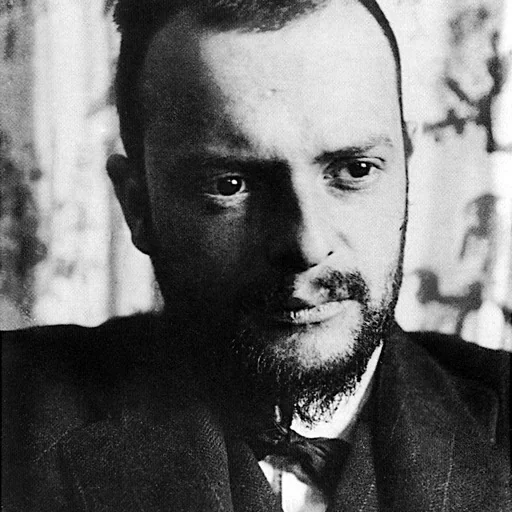
Paul Klee (German: ; 18 December 1879 – 29 June 1940) was a Swiss-born German artist.