Artwork
The Seine at Mantes
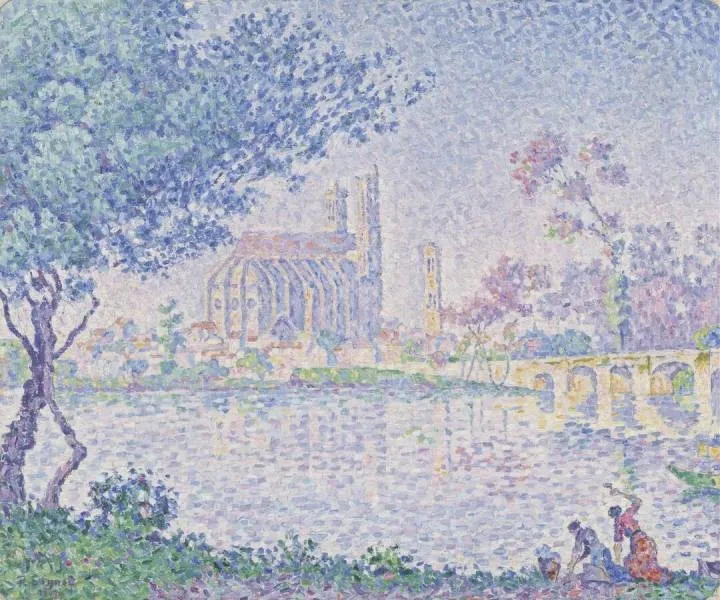
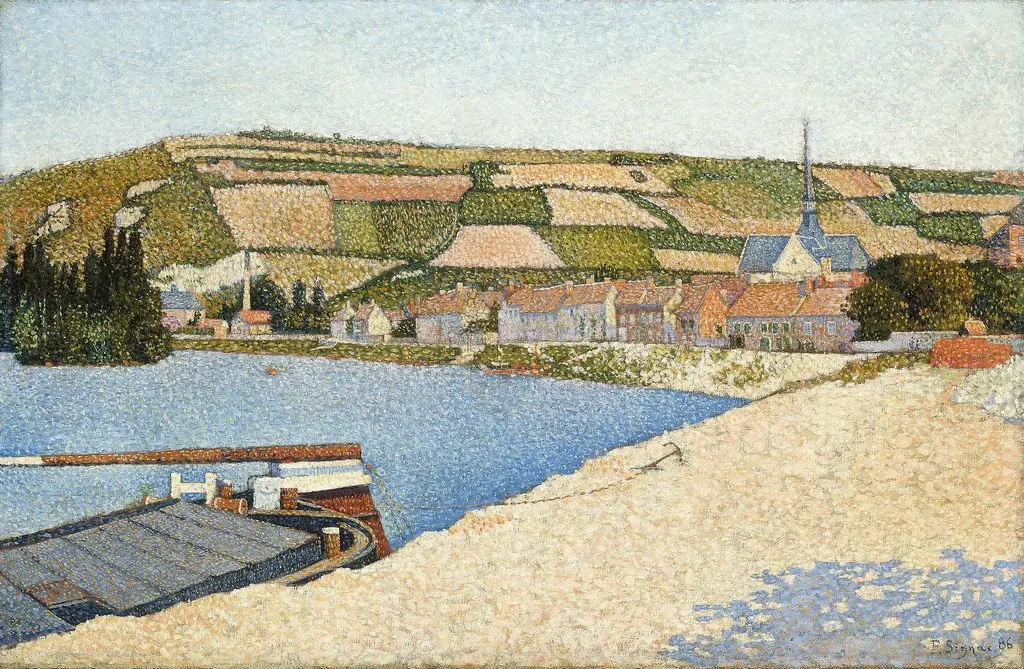
The Seine at Mantes is an unspecified painting by Paul Signac. It dates from 1909 and is held in the collection of the Kröller-Müller Museum.
About this work
Overview
Signac’s focus on waterways and light reflects his enduring interest in the interplay between nature and atmosphere, a theme central to his later career.
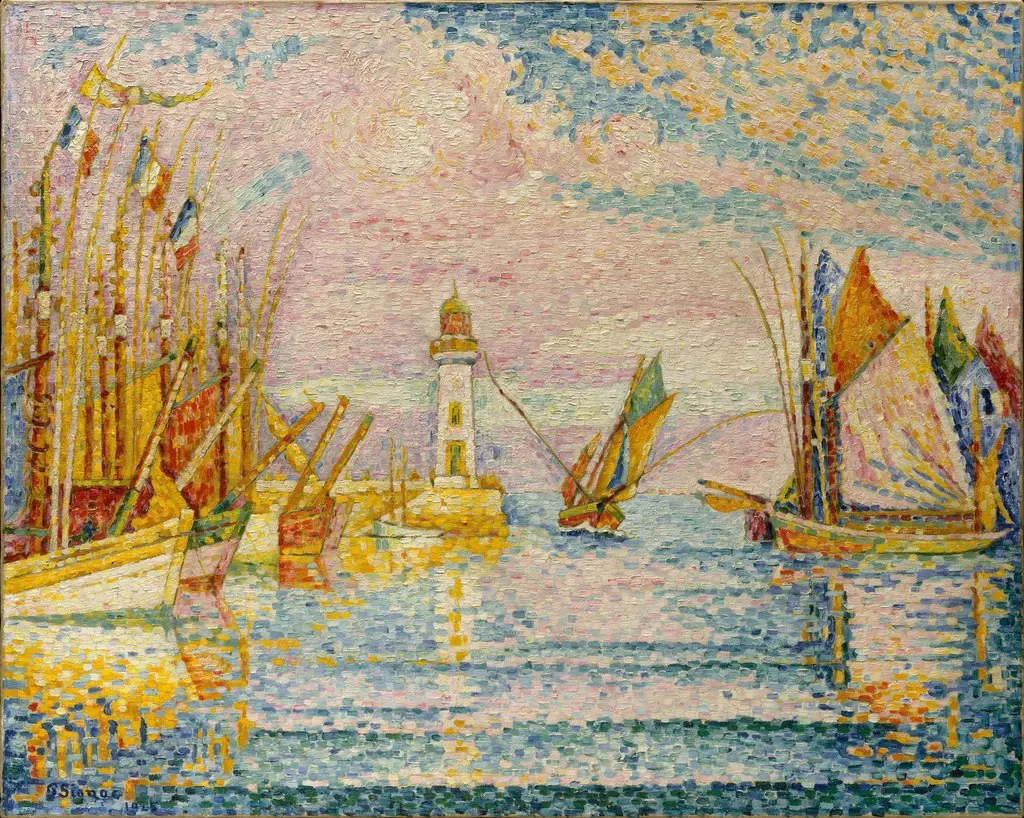
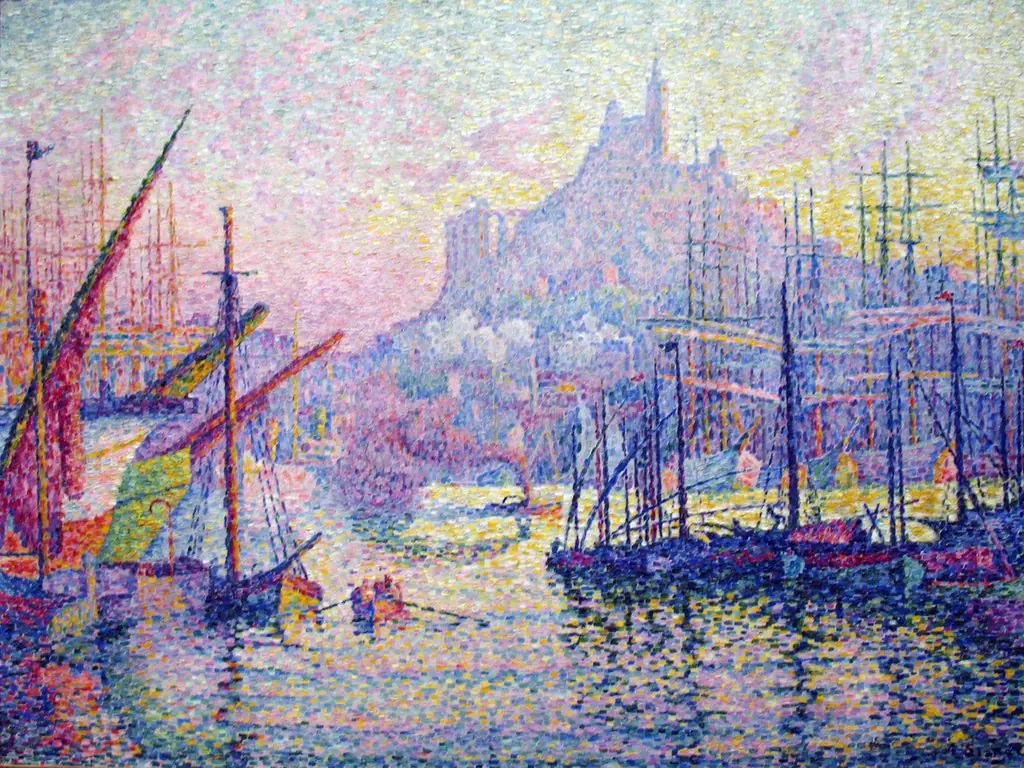
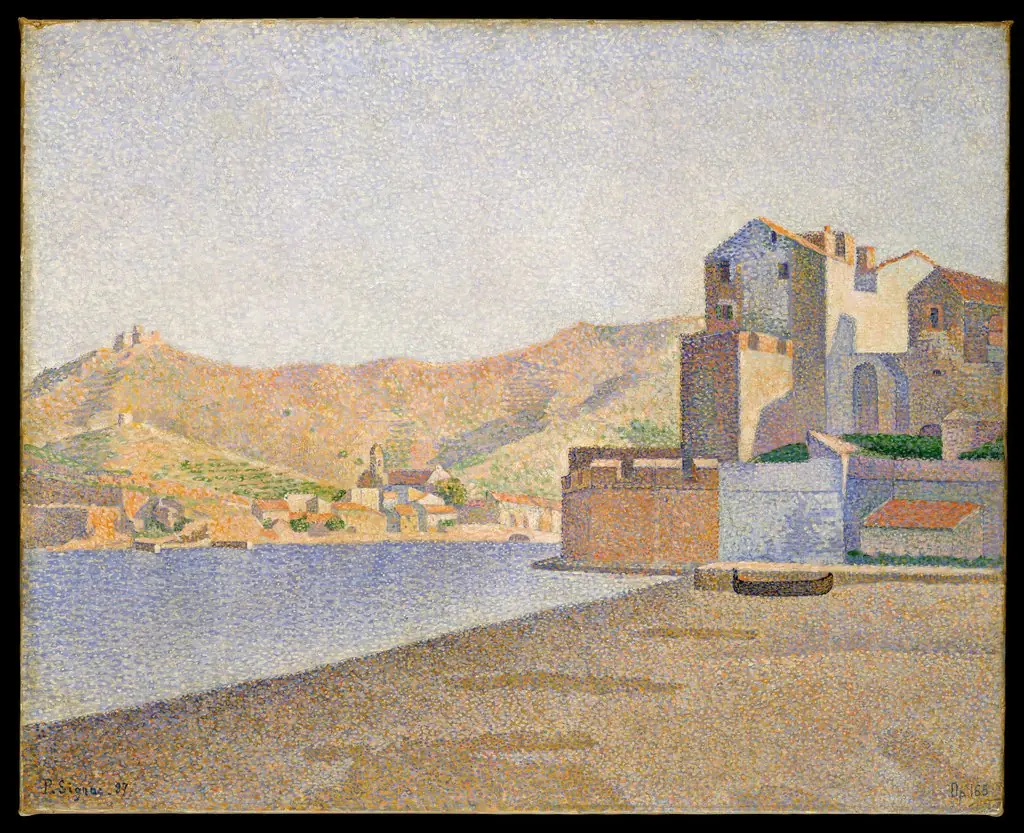
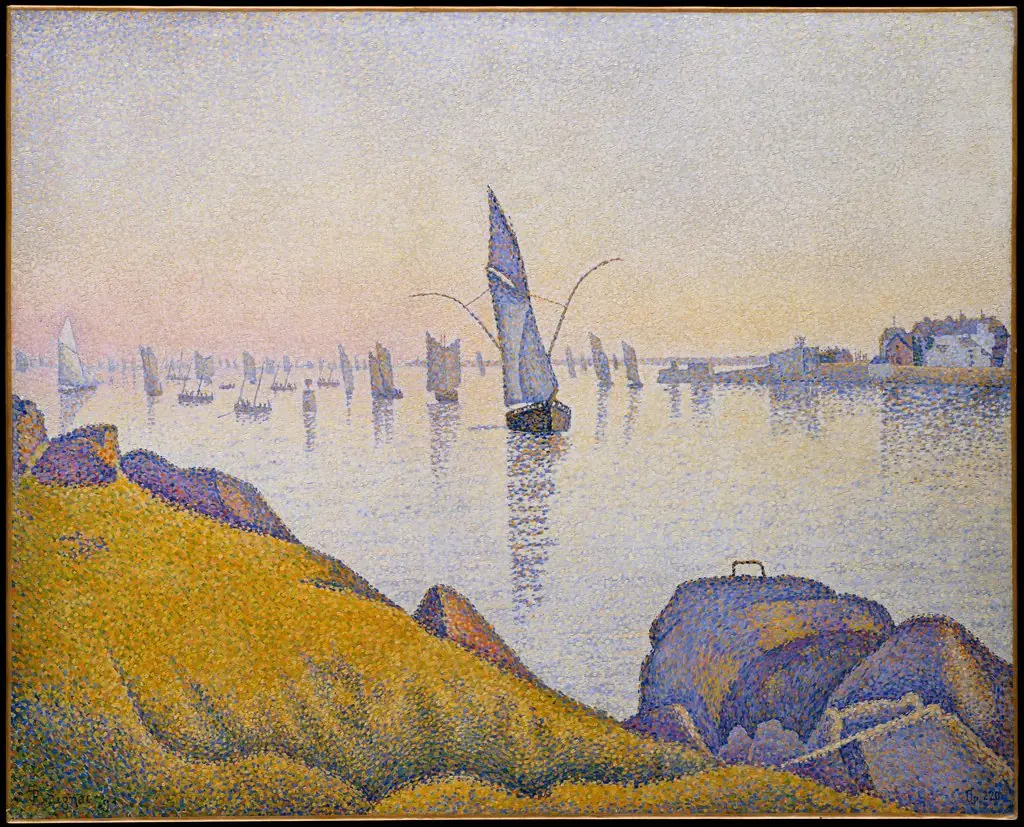
Painted around 1909, *The Seine at Mantes* is a landscape by French artist Paul Signac, a leading figure in the Neo-Impressionist movement. The work captures a quiet stretch of the Seine near the town of Mantes, rendered through the systematic application of small pigment dots. Signac’s focus on waterways and light reflects his enduring interest in the interplay between nature and atmosphere, a theme central to his later career.
Subject & Meaning
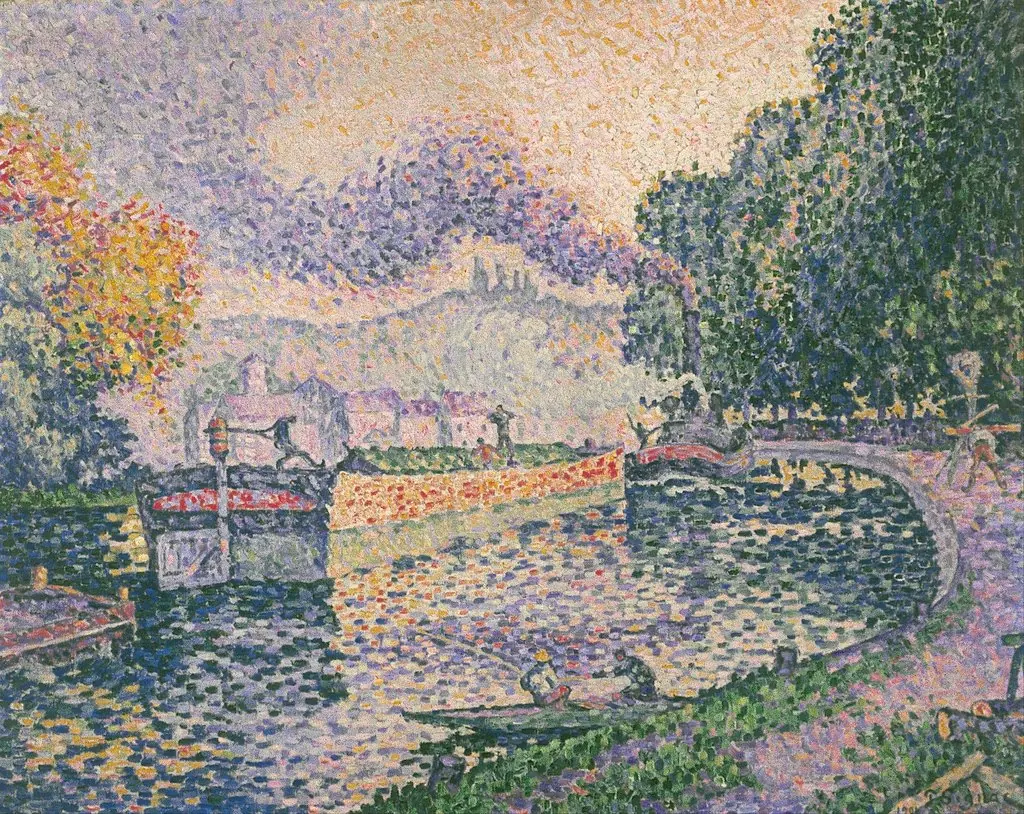
The painting presents a calm riverside scene: gentle water reflects the sky, while modest boats and figures along the bank suggest quiet daily life. In the distance, a church spire and clustered buildings anchor the view in a specific place without dominating it. Signac avoids narrative drama, instead emphasizing stillness and harmony, inviting contemplation rather than storytelling.
Technique & Style
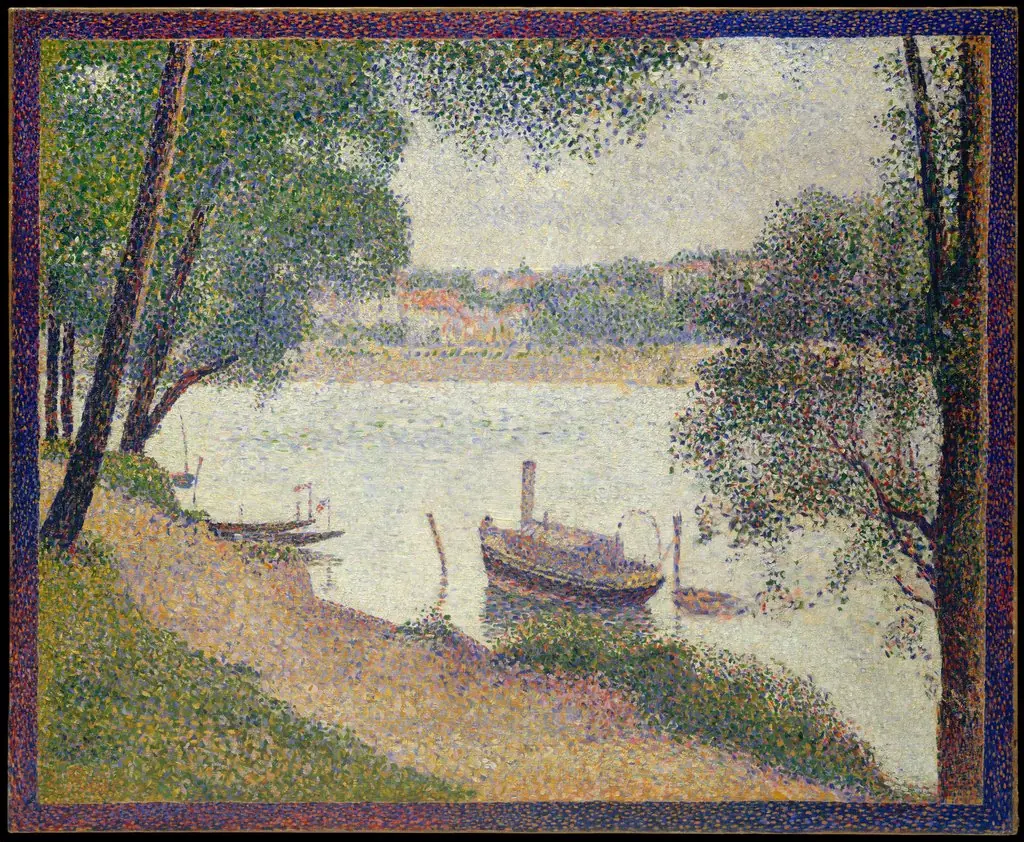
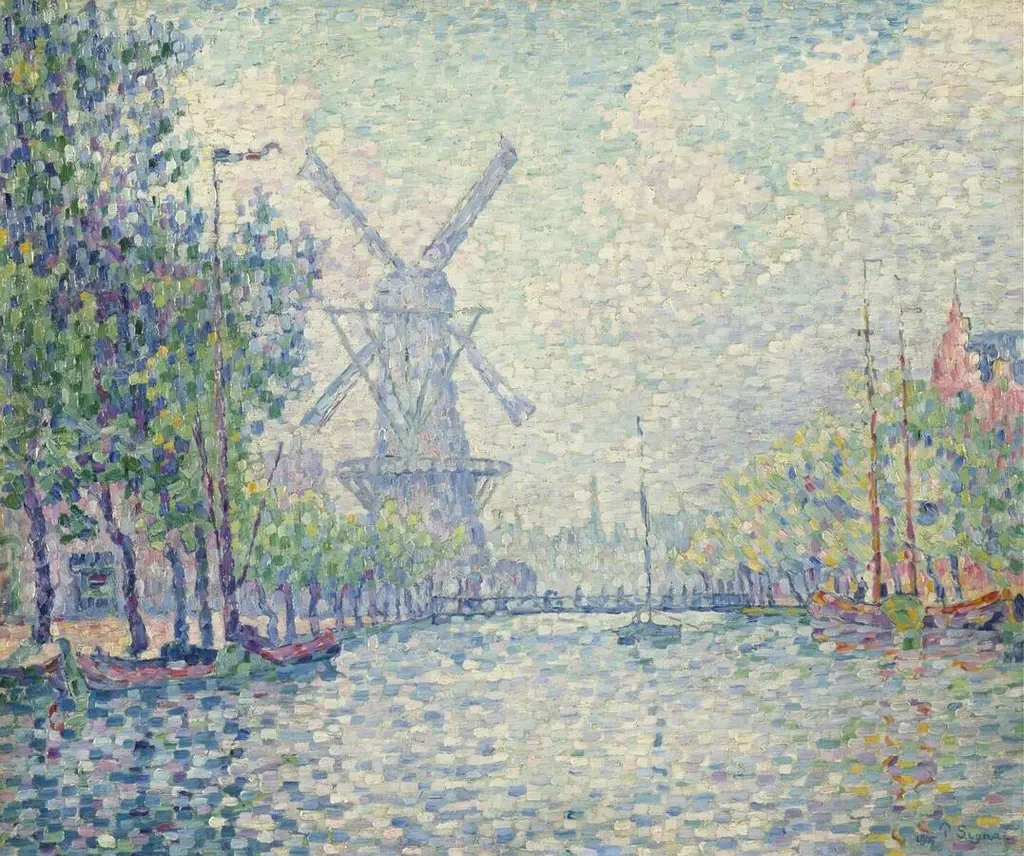
Signac applied the Pointillist method, using tiny, deliberate dots of pure color to build form and light. Rather than blending pigments on the palette, he relied on optical mixing, allowing the viewer’s eye to blend hues like blue, green, and ochre from a distance. This technique enhances the luminosity of the scene and reinforces the sense of atmospheric stillness characteristic of his mature style.
History & Provenance
The painting entered the collection of the Kröller-Müller Museum in the Netherlands, where it remains today. The museum holds one of the world’s most significant assemblages of Neo-Impressionist works, largely due to the acquisitions of Helene Kröller-Müller in the early 20th century. Signac’s works were among her favored holdings, reflecting her deep engagement with contemporary European art.
Context
By 1909, Signac had moved beyond the strict Pointillism of his youth, adopting a looser, more expressive application of dots while retaining its optical principles. This period saw him increasingly drawn to river and coastal scenes across northern France, often painted en plein air. His work during these years bridged scientific color theory with a lyrical sensitivity to natural light.
Legacy
Signac’s approach influenced later movements, including Fauvism and early abstraction, through his emphasis on color structure and systematic mark-making. Though less widely known than Seurat, his dedication to Pointillism and his writings on color theory helped preserve and evolve the Neo-Impressionist legacy. *The Seine at Mantes* exemplifies his mature vision: a quiet, luminous harmony between observation and technique.
Artist & collection

Artist
Paul Victor Jules Signac ( seen-YAHK, French: ; 11 November 1863 – 15 August 1935) was a French Neo-Impressionist painter who, with Georges Seurat, helped develop the artistic technique Pointillism.