Artwork
View of Collioure
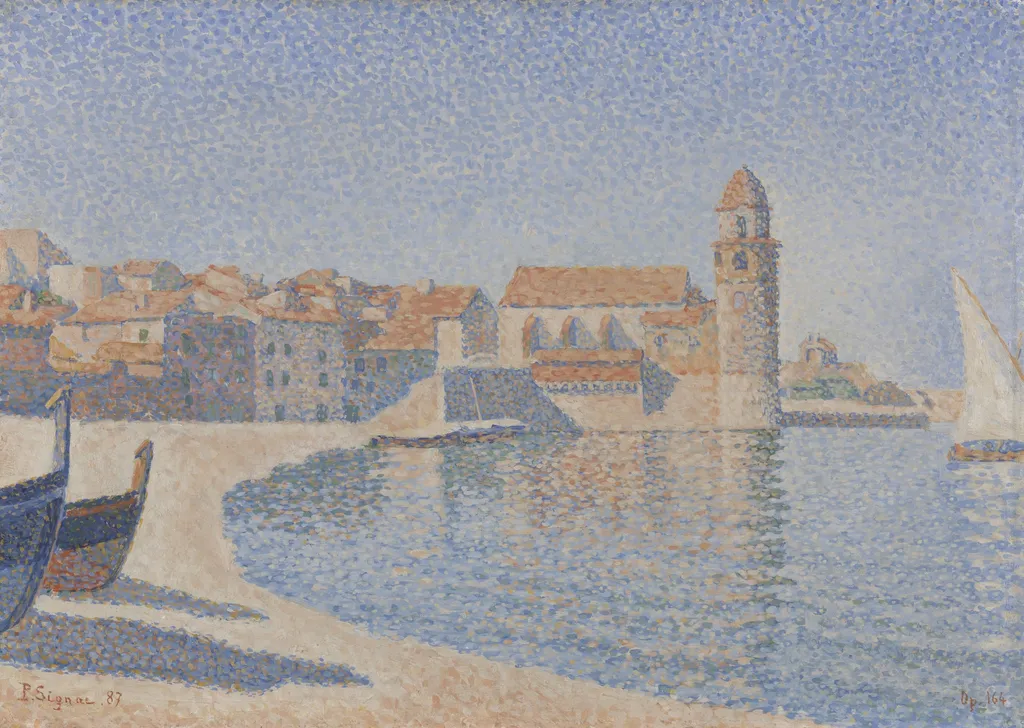
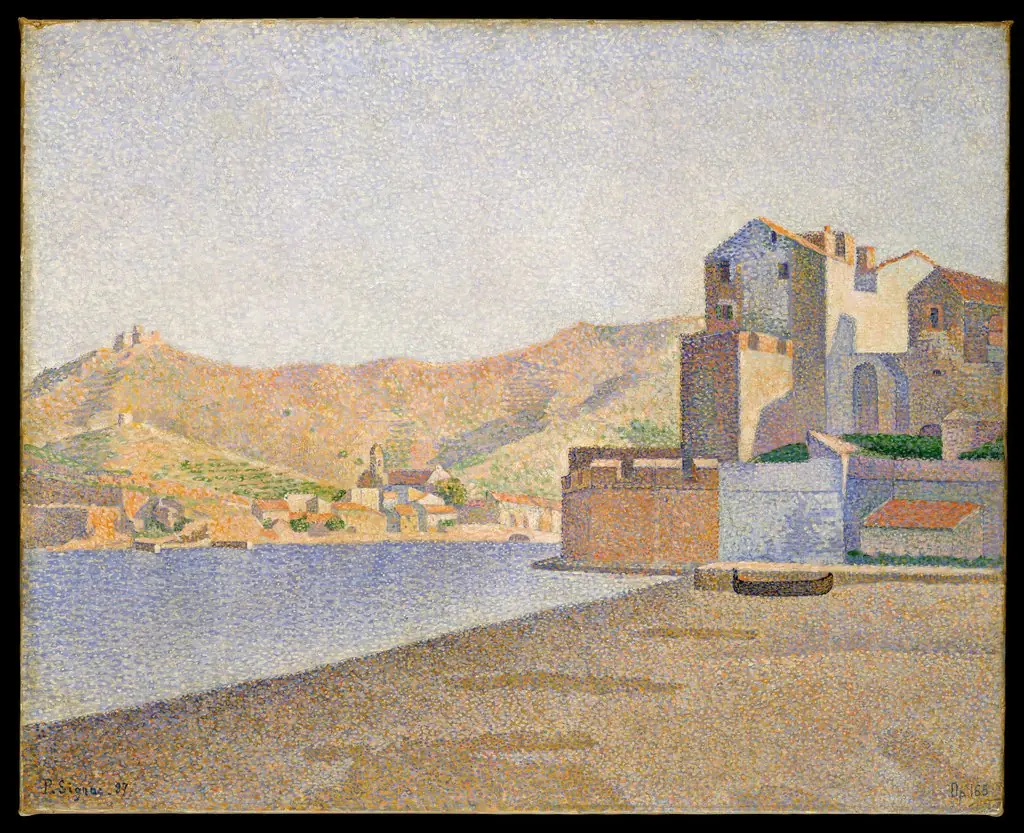
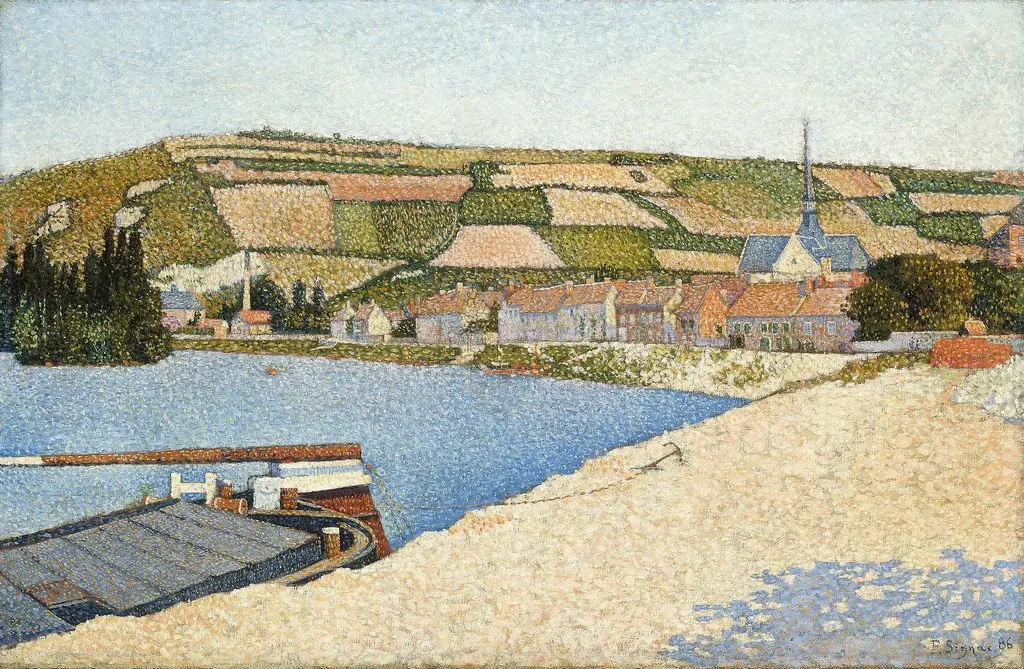
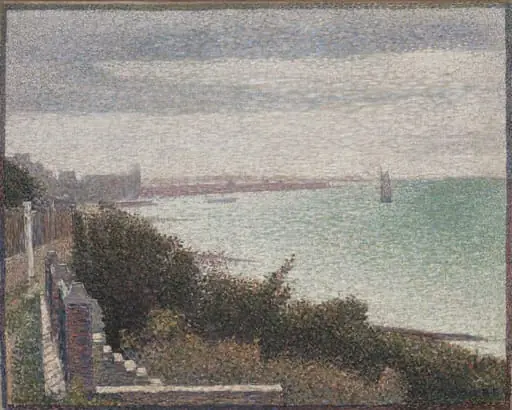
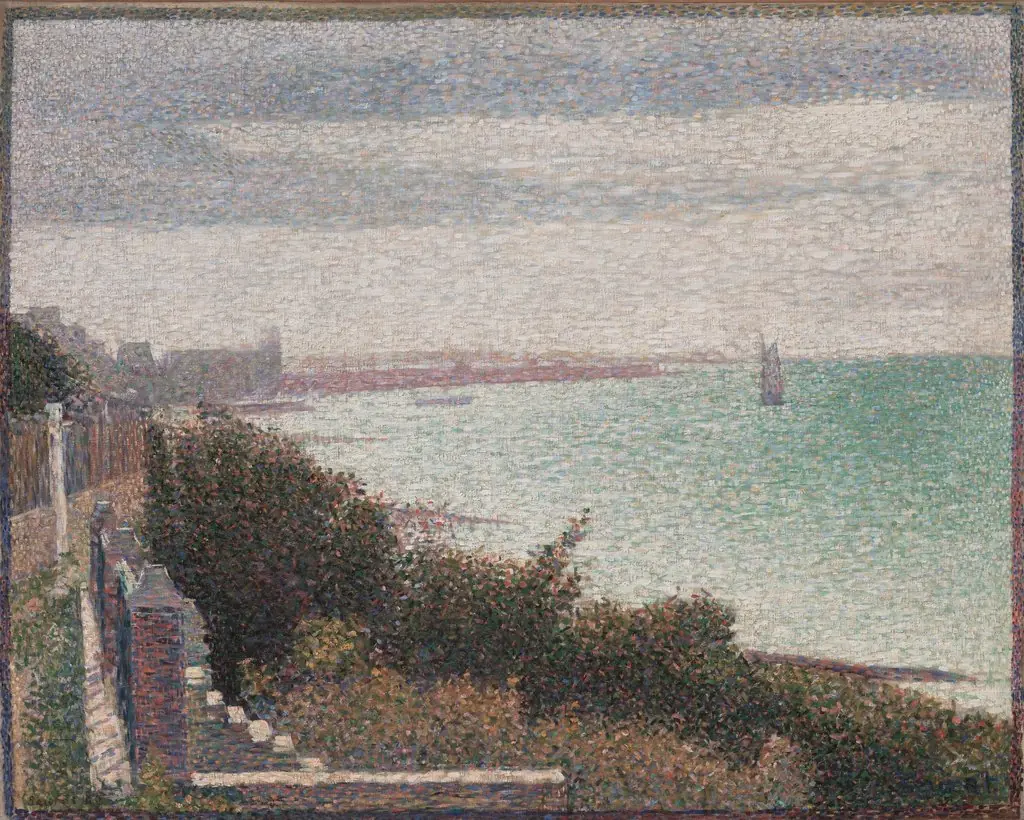
View of Collioure is an unspecified painting by the Post-Impressionist artist Paul Signac. It dates from 1894 and is held in the collection of the Kröller-Müller Museum.
About this work
Overview
The painting captures the quiet harbor of the southern French town, emphasizing light and structure through disciplined technique.
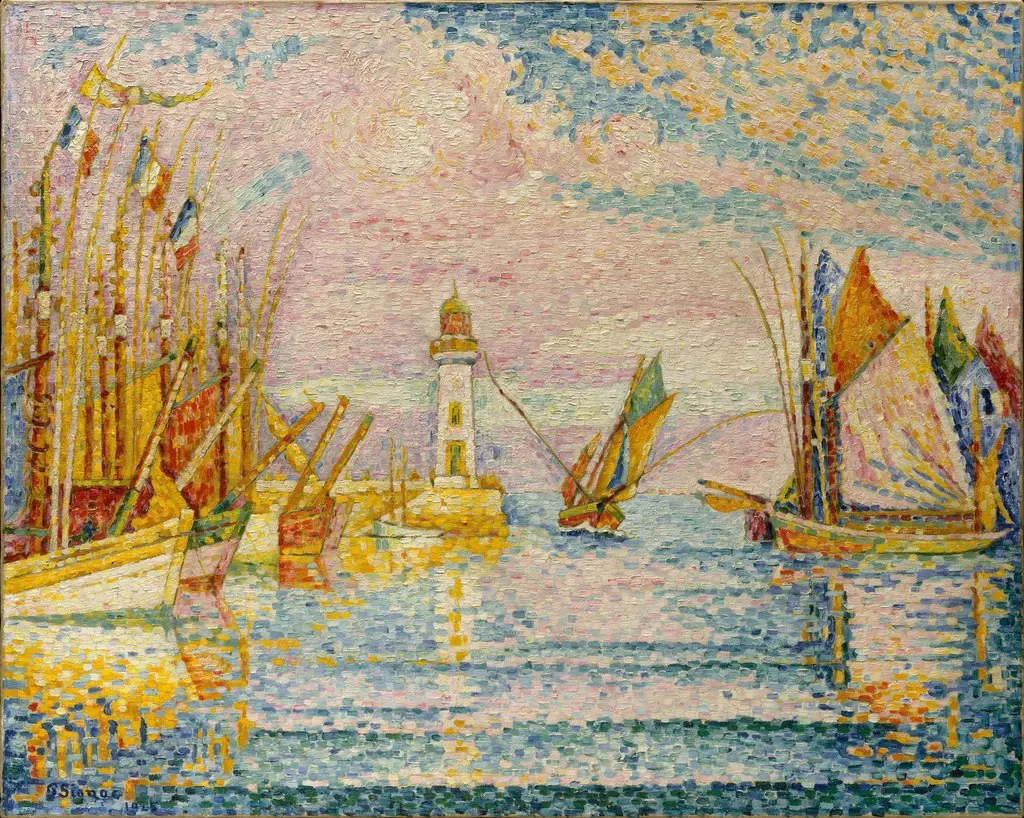
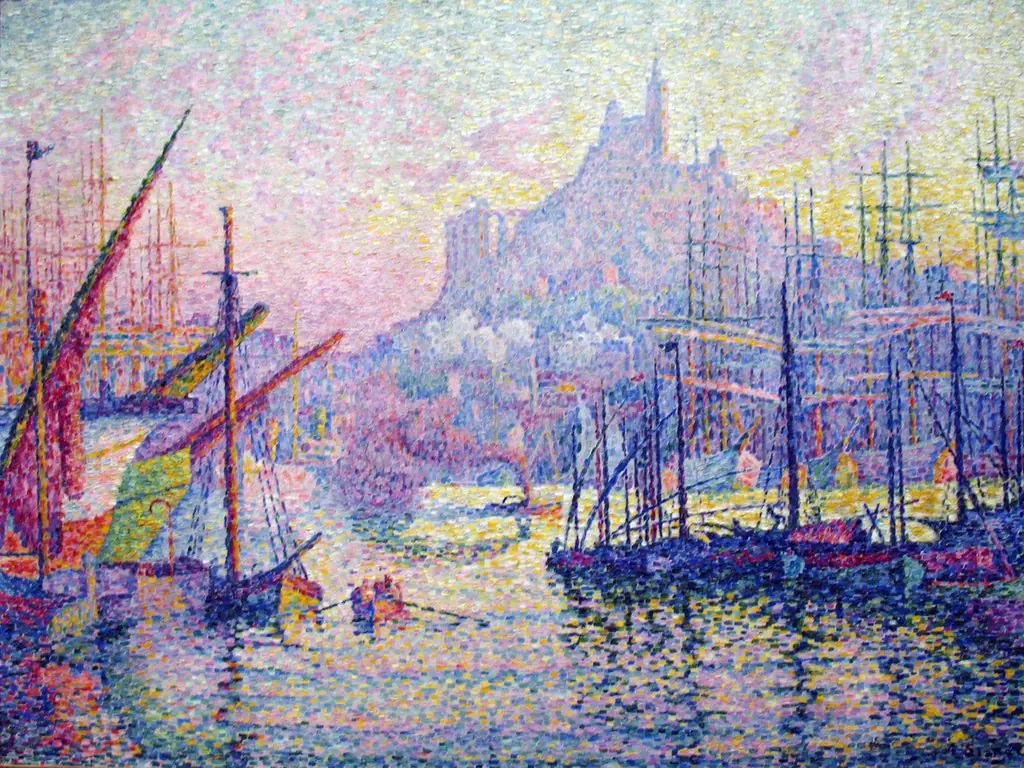
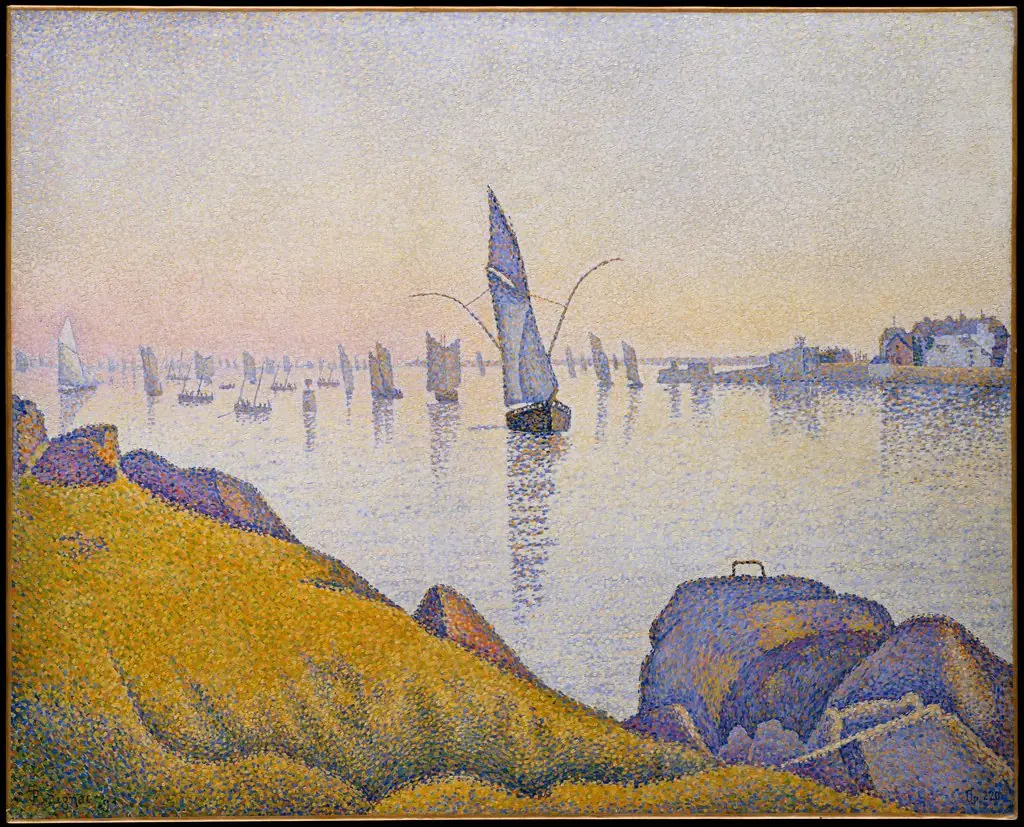
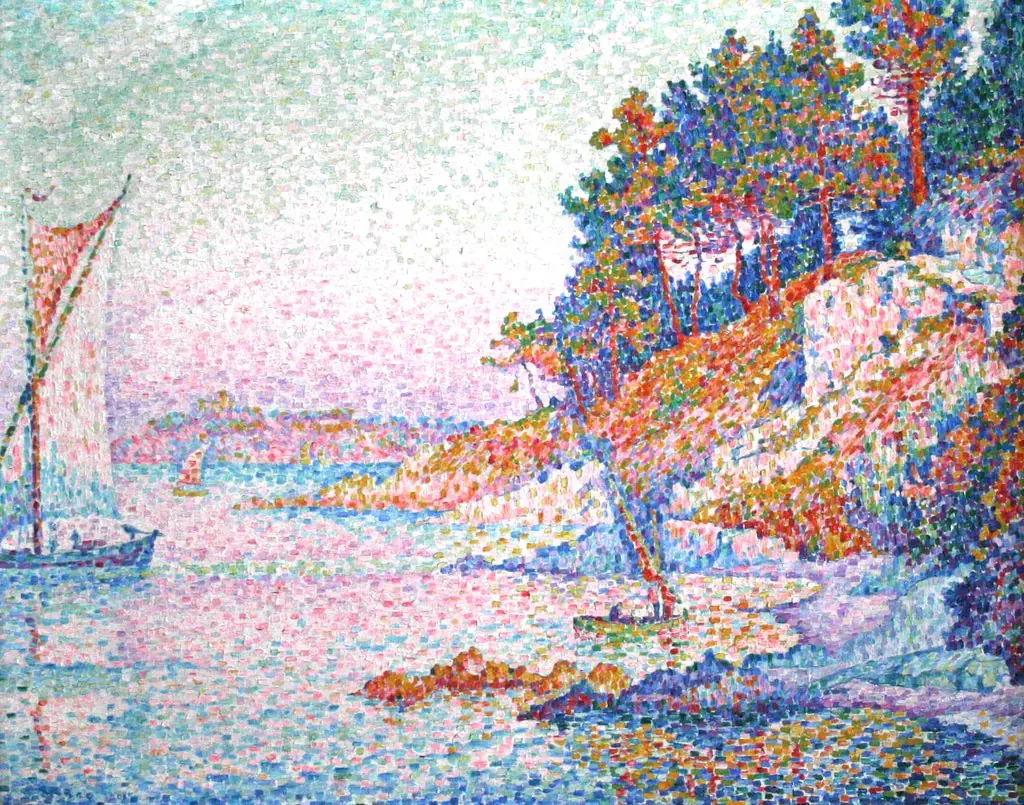
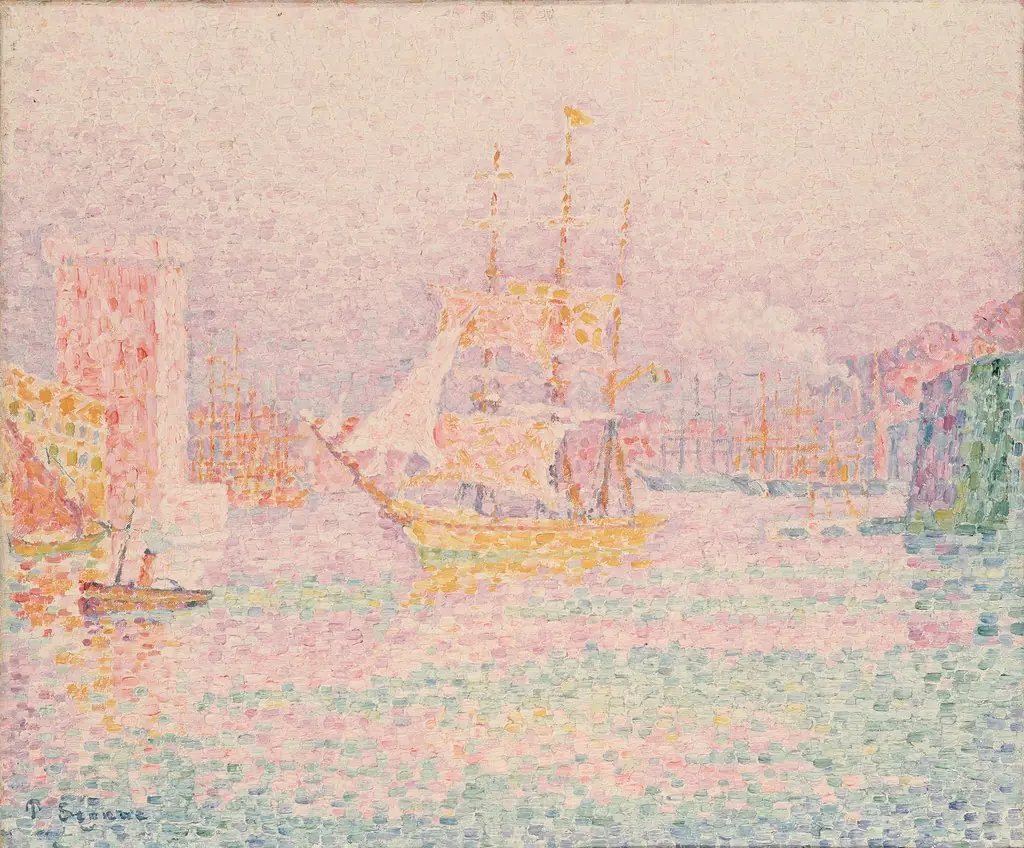
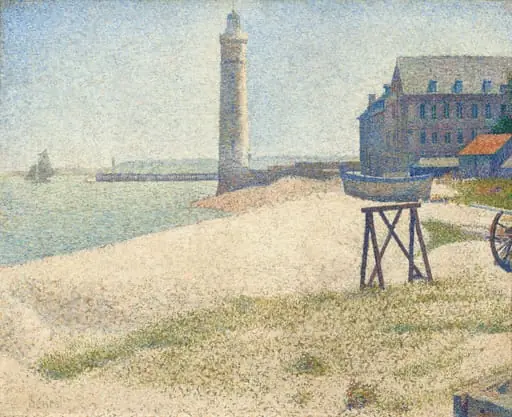
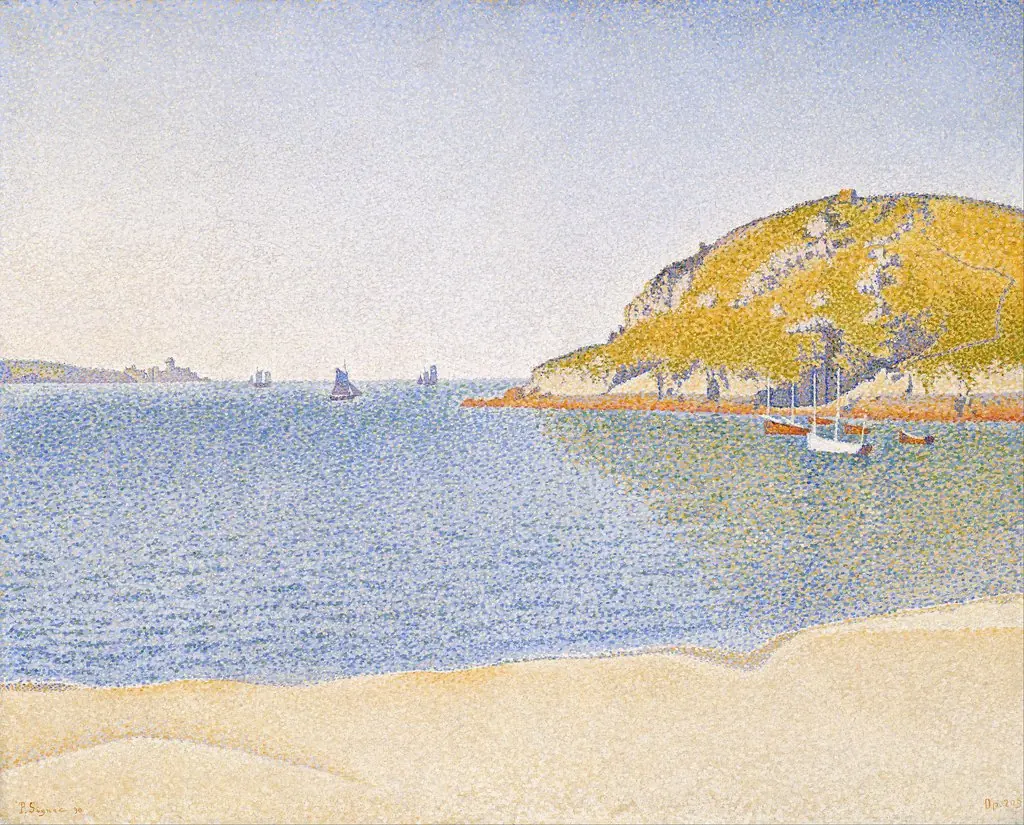
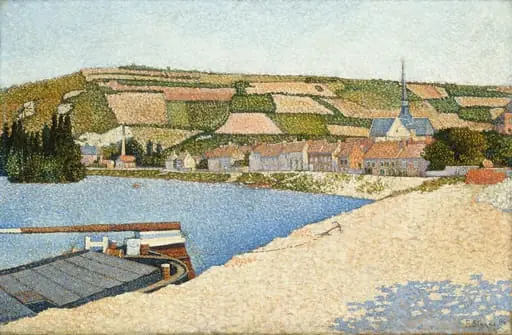
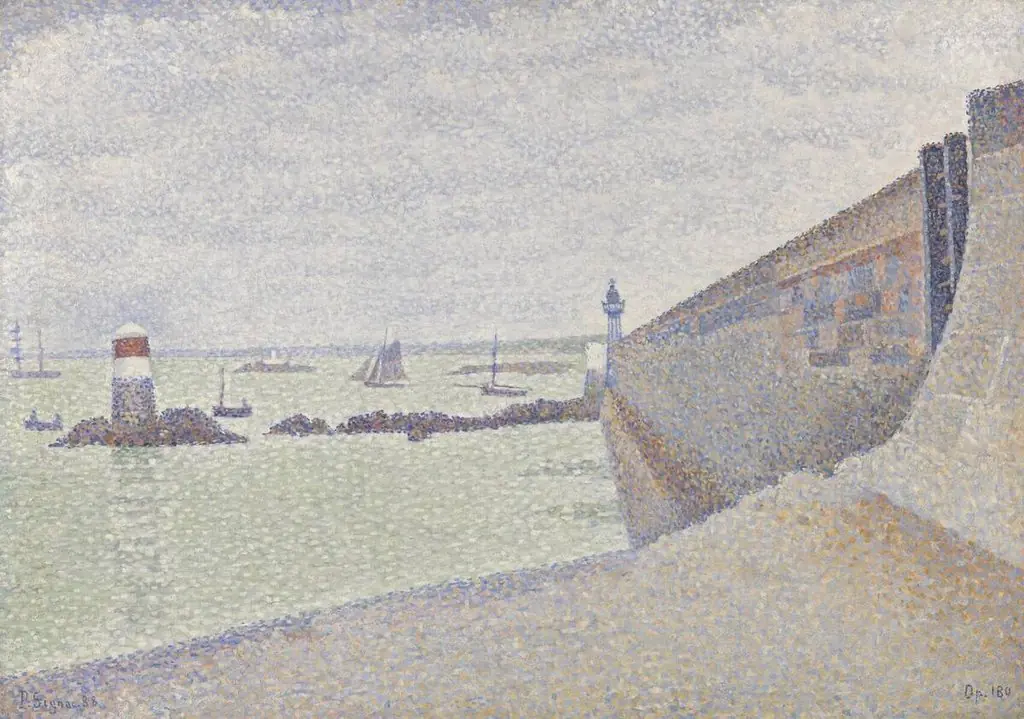
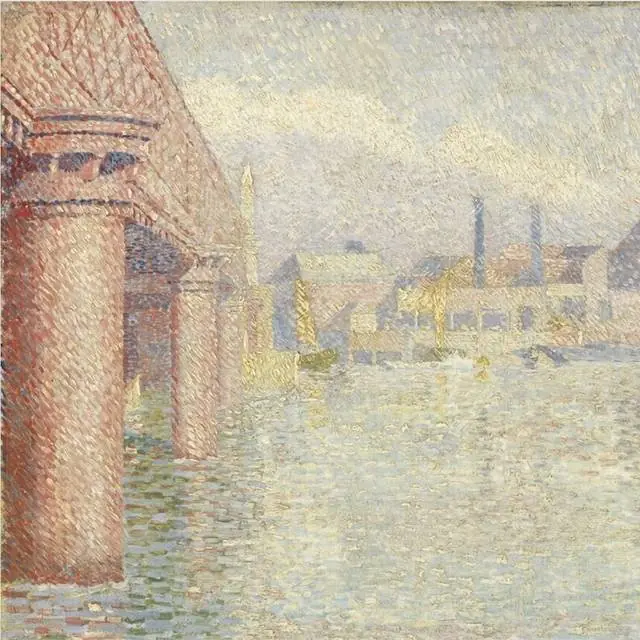
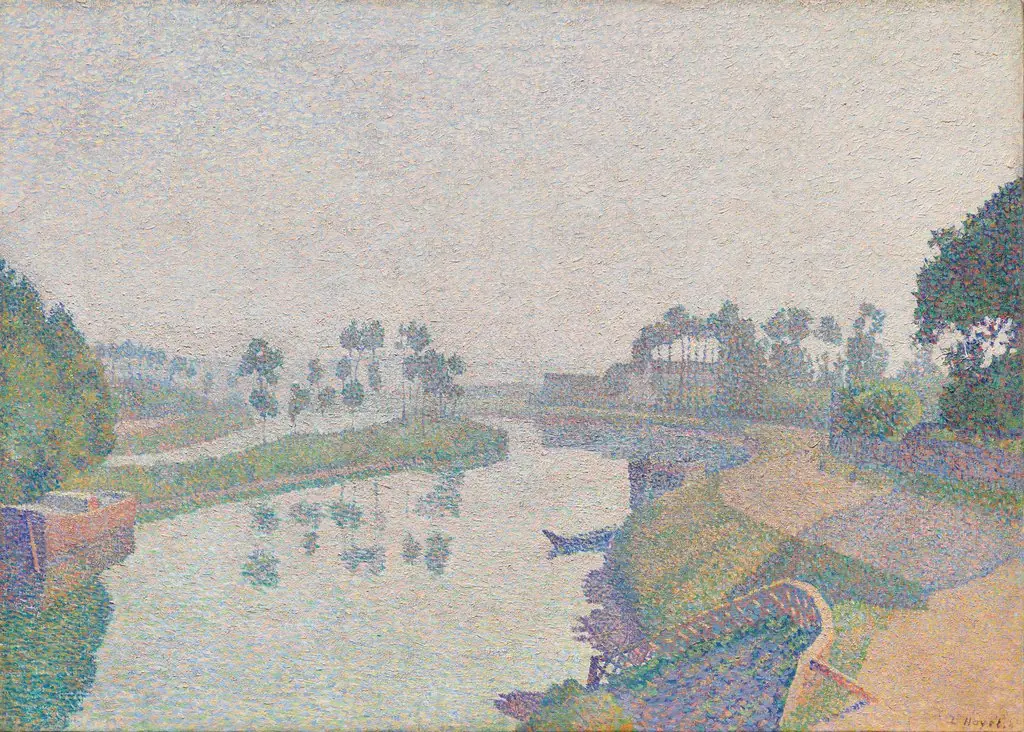
Painted in 1894, Paul Signac’s *View of Collioure* is a coastal scene rendered in the Neo-Impressionist style he helped refine. Unlike the spontaneous brushwork of Impressionism, this work employs a systematic application of pure color dots, designed to blend optically rather than on the palette. The painting captures the quiet harbor of the southern French town, emphasizing light and structure through disciplined technique.
Subject & Meaning
The scene portrays Collioure’s harbor with a modest boat resting near the shore, its dark form contrasting with the luminous water and whitewashed buildings. Behind them, a church steeple pierces the skyline, anchoring the composition in local identity. There is no narrative drama—only a still, sunlit moment that invites contemplation, reflecting Signac’s interest in harmony between nature and human presence.
Technique & Style
Signac applies pigment in tiny, uniform dots of unmixed color, a method derived from Seurat’s scientific approach to light. Each dot—blue, violet, ochre, white—retains its individuality while contributing to a cohesive whole when viewed from a distance. This pointillist technique enhances luminosity and texture, creating a shimmering surface that mimics the play of sunlight on water and stone.
History & Provenance
The painting entered the Kröller-Müller Museum’s collection in the early 20th century, part of a broader acquisition of Neo-Impressionist works by Helene Kröller-Müller. Its presence there underscores the museum’s commitment to modern European art movements. The work has remained in the same institutional care since its acquisition, with no documented changes in ownership or significant restoration.
Context
Created during a period when artists sought to move beyond Impressionism’s fleeting impressions, *View of Collioure* reflects the broader post-Impressionist turn toward structure and theory. Signac, influenced by color theory and anarchist ideals, viewed his method as both aesthetic and ethical—a deliberate, orderly alternative to chaotic modern life, rooted in observation and precision.
Legacy
Signac’s approach in this painting helped define Neo-Impressionism’s legacy, influencing later movements that valued systematic color application. Though pointillism never became dominant, its emphasis on optical blending informed Fauvism and even early abstraction. *View of Collioure* remains a clear example of how scientific principles were translated into serene, enduring visual experiences.
Own this work as a print
Artist & collection

Artist
Paul Victor Jules Signac ( seen-YAHK, French: ; 11 November 1863 – 15 August 1935) was a French Neo-Impressionist painter who, with Georges Seurat, helped develop the artistic technique Pointillism.