Artwork
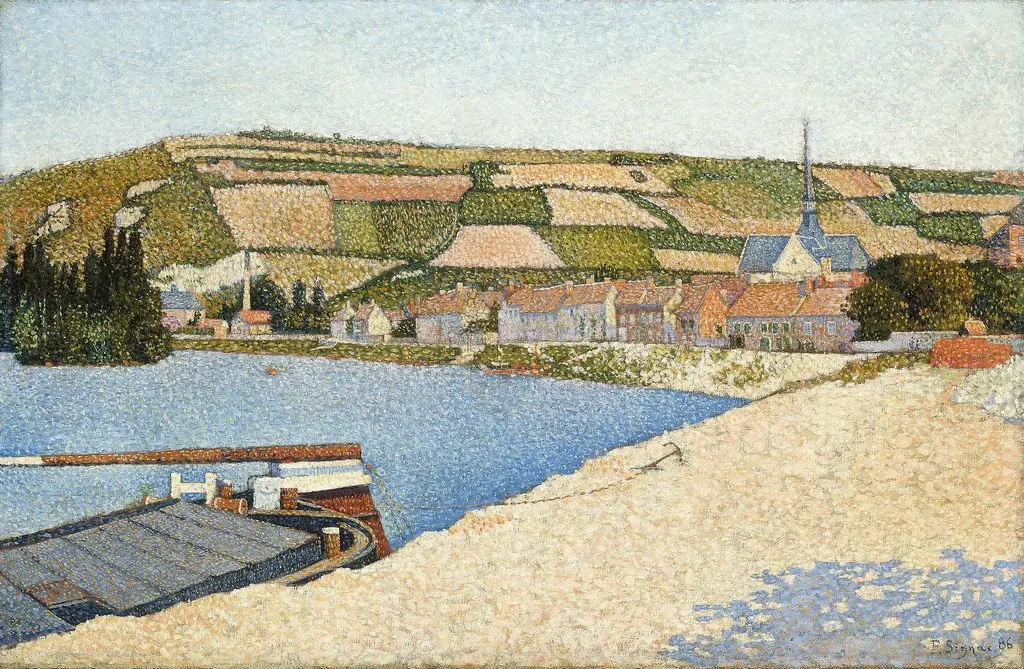
Les Andelys, Côte d'Aval
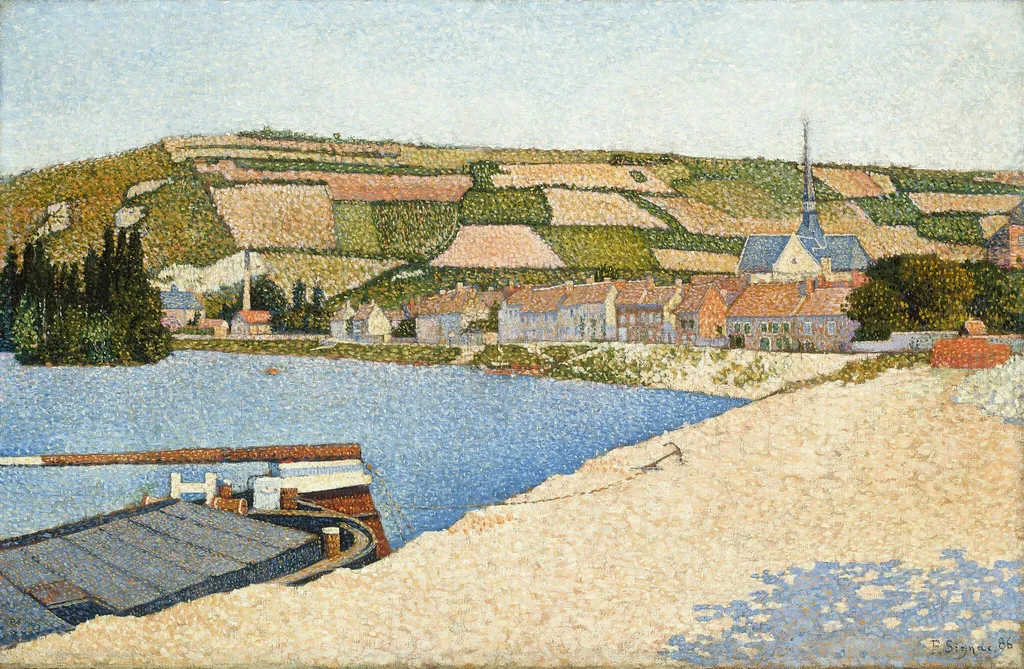
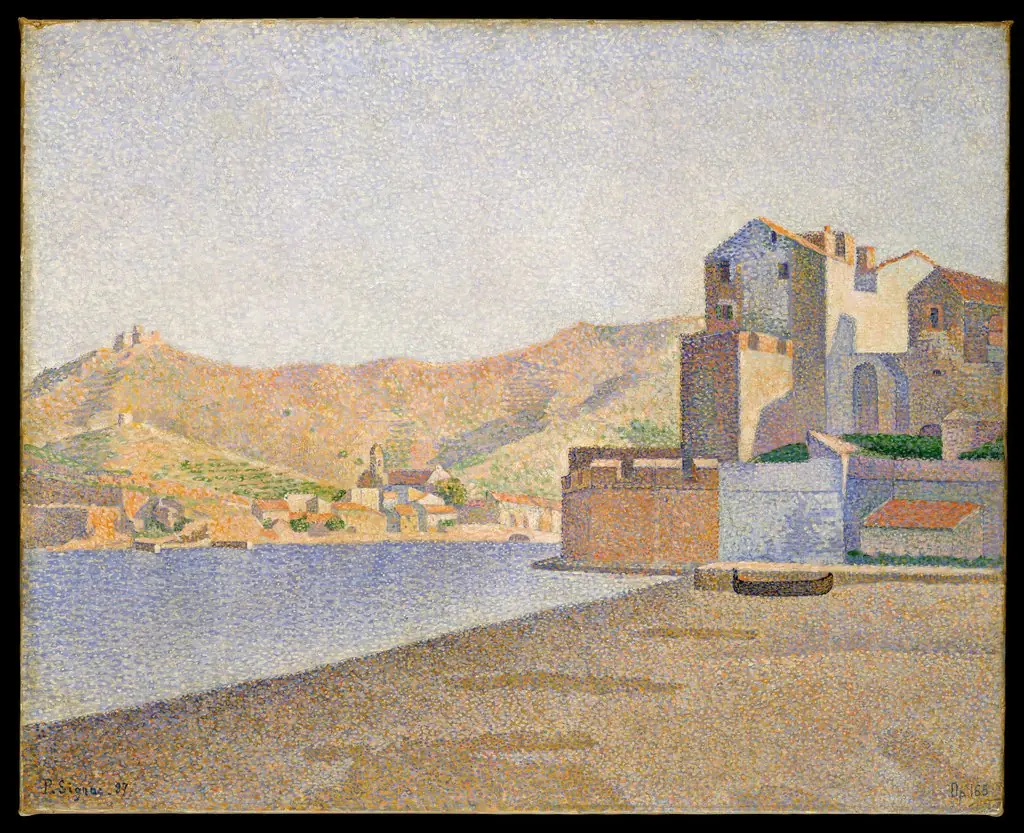
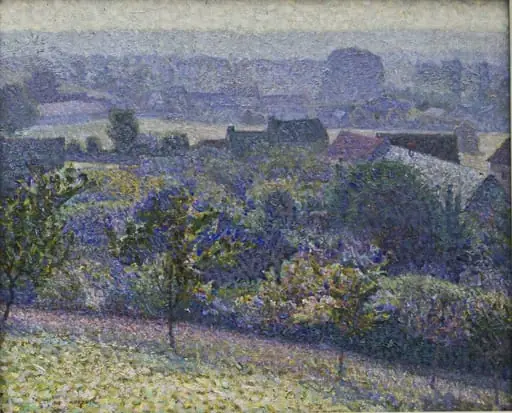
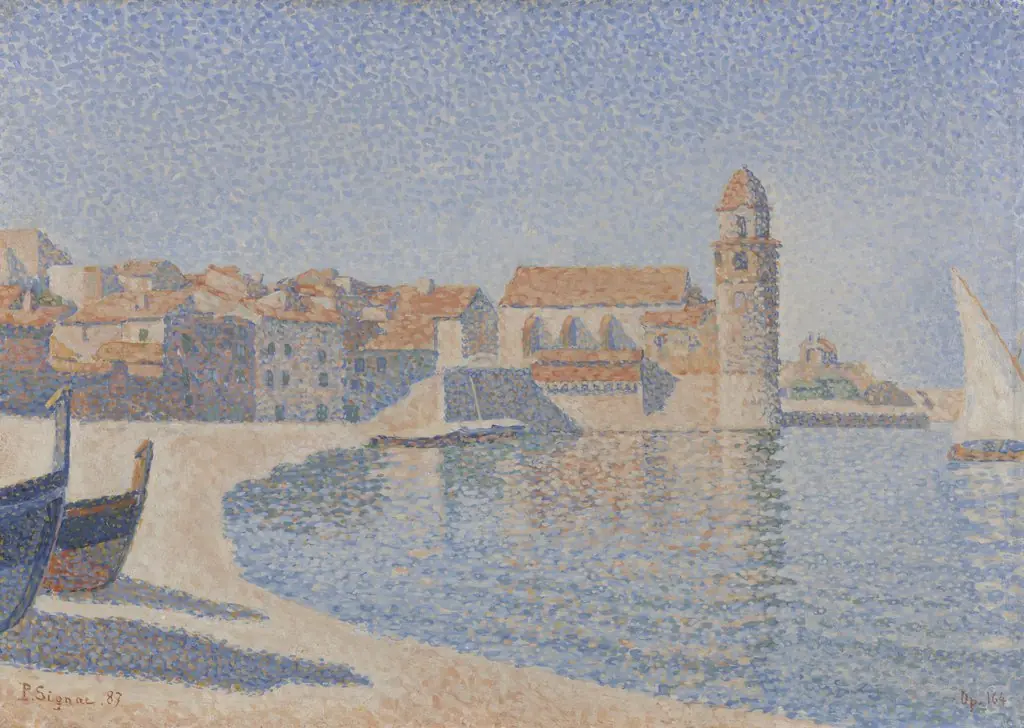
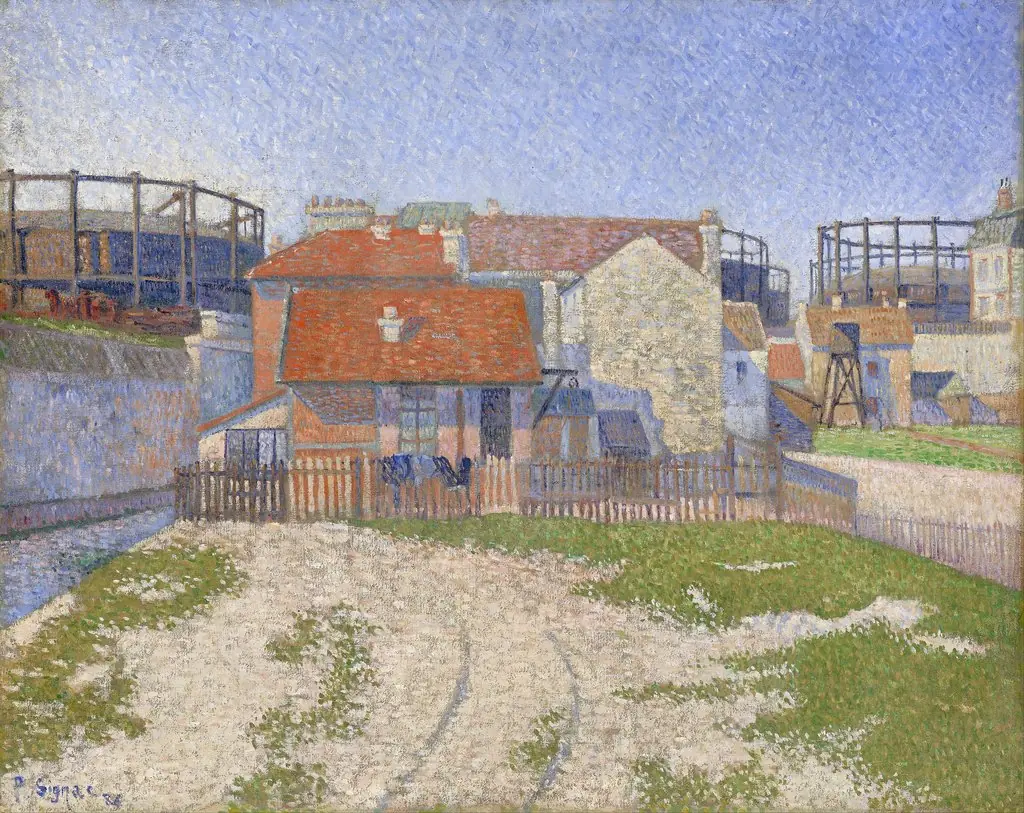
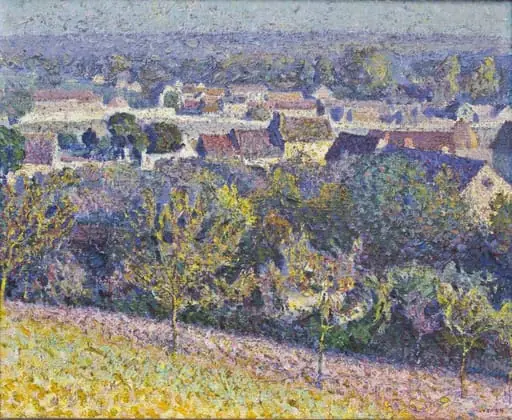
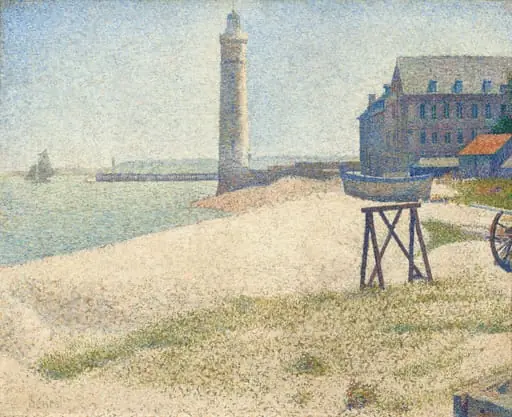
Les Andelys, Côte d'Aval is an oil painting by the Impressionist artist Paul Signac. It dates from 1886 and is held in the collection of the Art Institute of Chicago. Painted in oil on canvas, Les Andelys, Côte d’Aval captures the harbor of a small Seine River village near Giverny.
About this work
Overview
It belongs to Paul Signac’s early series exploring pointillism, a method of applying pigment in discrete dots and dashes.
Painted in oil on canvas, Les Andelys, Côte d’Aval captures the harbor of a small Seine River village near Giverny. It belongs to Paul Signac’s early series exploring pointillism, a method of applying pigment in discrete dots and dashes. Though developed by Georges Seurat, Signac refined the technique with a distinct emphasis on structural form, using color placement to suggest shape and movement rather than outline.
Subject & Meaning
The scene depicts a quiet harbor with moored boats and a distant village nestled along the riverbank. There is no narrative or symbolic intent; the focus lies in the arrangement of light, water, and land. Signac treats the landscape as a composition of visual elements—color patches and geometric contours—prioritizing optical harmony over anecdotal detail.
Technique & Style
Signac applied paint in small, deliberate dots and dashes of contrasting hues, allowing them to blend optically when viewed from a distance. He structured the composition with geometric forms: a triangular blue area suggests the river’s curve, while trapezoidal shapes define the cultivated hills. This approach transforms natural forms into rhythmic, abstract patterns grounded in color theory.
History & Provenance
Created during Signac’s formative years as a pointillist, the work dates to the late 1880s, shortly after he began collaborating with Seurat. It reflects his transition from Impressionist brushwork to a more systematic method. The painting remained in private hands until entering a public collection, where it now serves as an example of Neo-Impressionist practice in its early phase.
Context
At the time, pointillism was a radical departure from traditional painting methods, emerging from scientific studies of color perception. Signac aligned with anarchist ideals that valued order and structure, which found expression in his methodical brushwork. His work stood apart from the spontaneity of Impressionism, offering instead a calculated, almost architectural vision of nature.
Legacy
Signac’s use of geometric abstraction within pointillism influenced later movements, including Fauvism and Cubism. His theoretical writings helped codify the technique, ensuring its place in modern art discourse. Though pointillism was never widely adopted, his insistence on structure and color science left a lasting imprint on 20th-century painting.
Own this work as a print
Artist & collection

Artist
Paul Victor Jules Signac ( seen-YAHK, French: ; 11 November 1863 – 15 August 1935) was a French Neo-Impressionist painter who, with Georges Seurat, helped develop the artistic technique Pointillism.