Artwork
Untitled
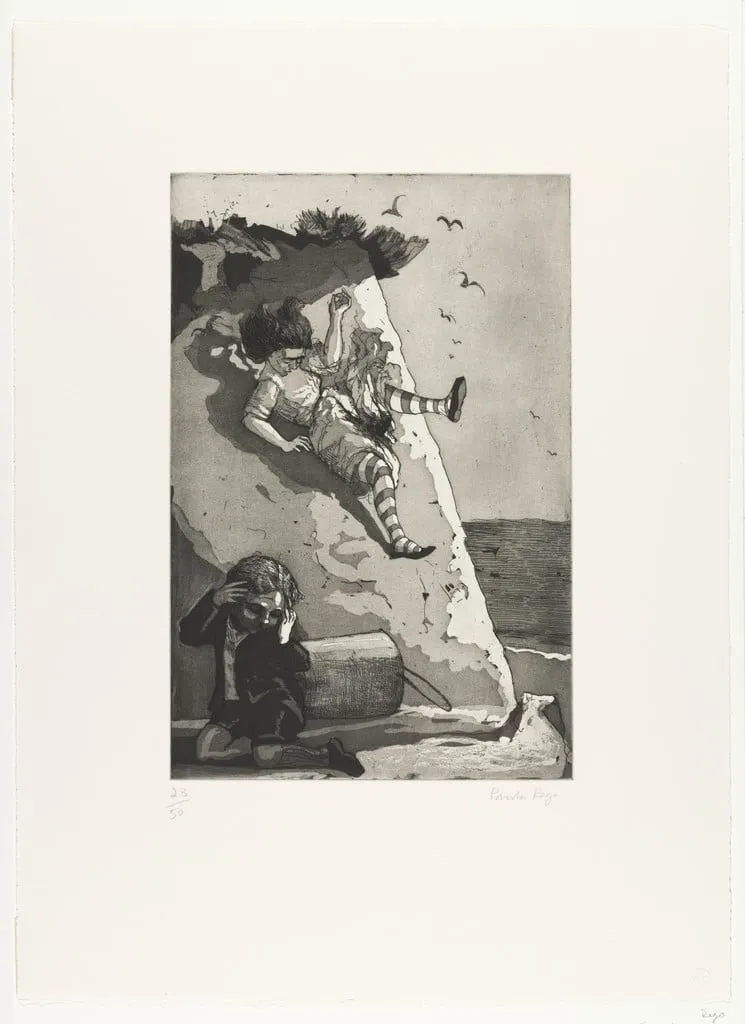
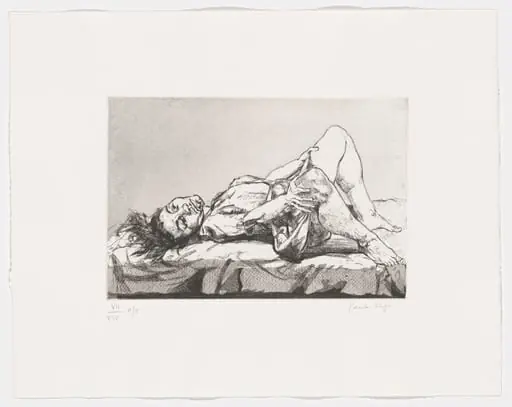
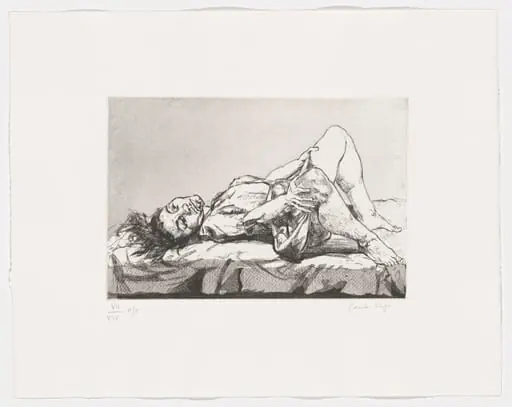
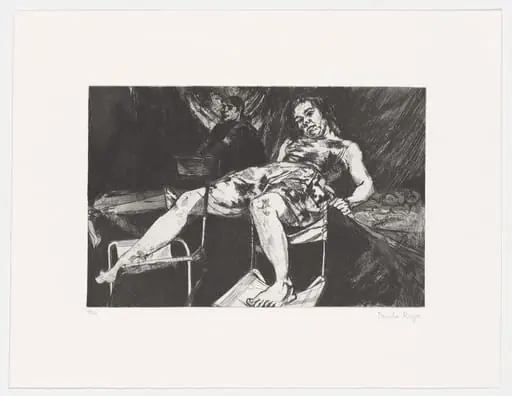
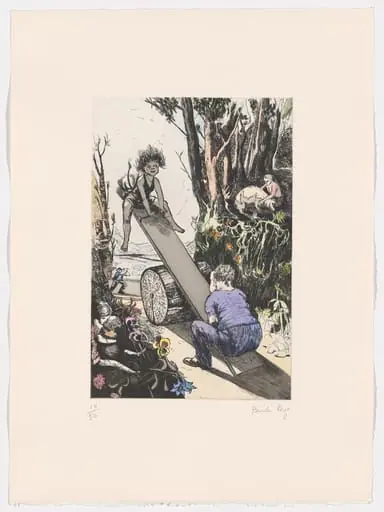
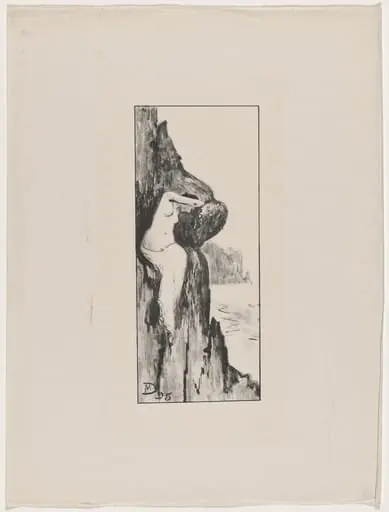
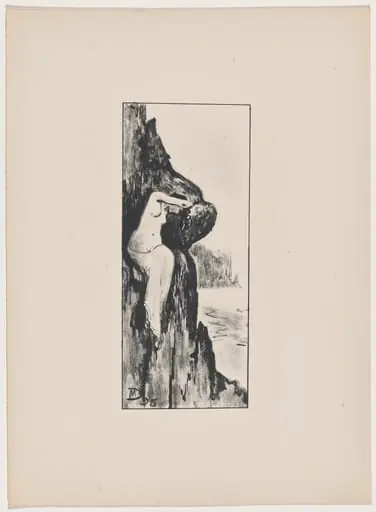
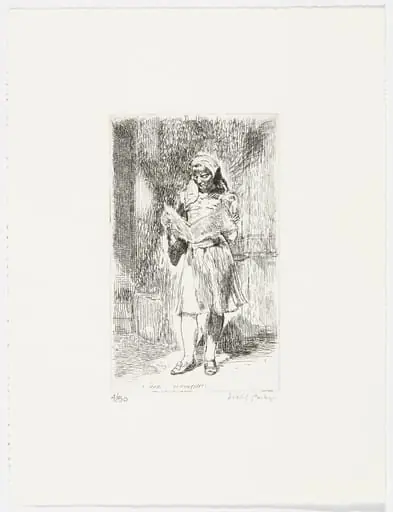
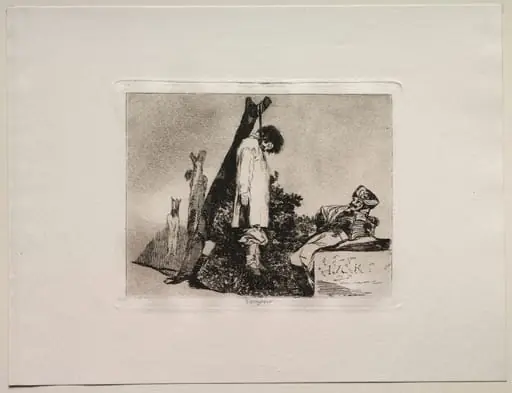
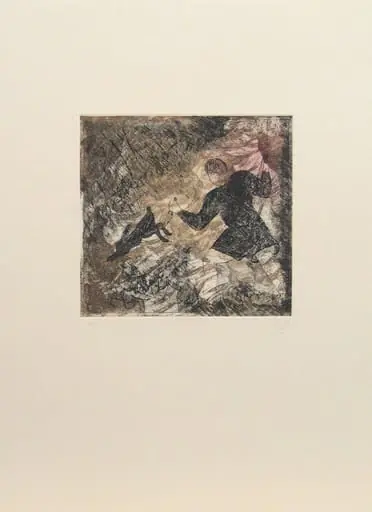
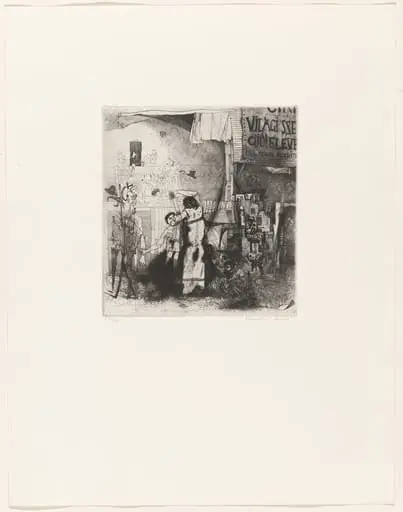
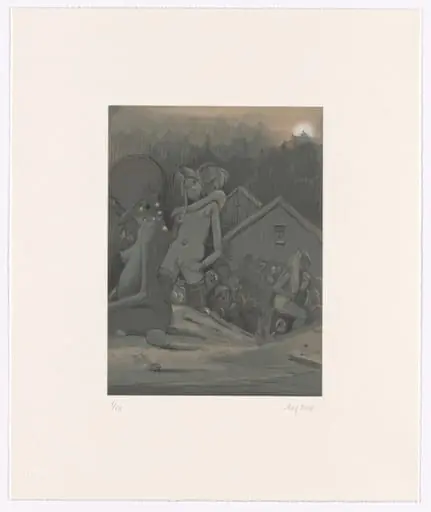
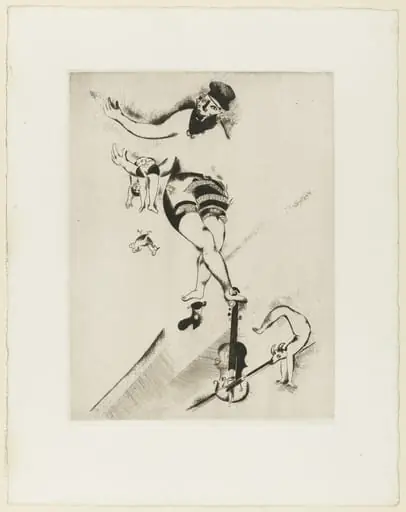
Untitled is an ink print by Paula Rego. It dates from 1989 and is held in the collection of the Museum of Modern Art.
About this work
Overview
Rego, trained at the Slade School and active in London’s art circles, consistently explored psychological depth through intimate, often unsettling scenes.
Created in 1989, this etching and aquatint by Paula Rego is part of a body of work that bridges personal narrative and cultural memory. Executed in monochrome tones, the print reflects Rego’s shift from abstraction to figurative storytelling. It resides in the collection of The Museum of Modern Art, reflecting its significance within late 20th-century printmaking. Rego, trained at the Slade School and active in London’s art circles, consistently explored psychological depth through intimate, often unsettling scenes.
Subject & Meaning
The image depicts two children on a rugged coastal cliff. One ascends a steep rock face with focused determination, while the other sits slumped below, head in hands. The contrast suggests tension between action and withdrawal, effort and despair. The setting—stormy sea, dark sky, distant birds—amplifies a sense of isolation. Rego often infused childhood scenes with emotional ambiguity, drawing from folk tales where innocence intersects with danger, leaving interpretation open to the viewer’s experience.
Technique & Style
Rego employed etching and aquatint to achieve rich tonal contrasts and textured surfaces. The rough, granular quality of the aquatint mimics weathered stone and turbulent water, while fine etched lines define the figures’ forms. The restricted palette of black, white, and gray heightens the emotional gravity. The deliberate roughness of the print’s surface conveys urgency and instability, aligning the medium’s physicality with the psychological tension of the scene.
History & Provenance
This print was made during a period when Rego was deeply engaged with narrative imagery rooted in Portuguese storytelling and childhood fears. It entered The Museum of Modern Art’s collection shortly after its creation, recognized for its contribution to contemporary printmaking. Rego’s work from this era gained increasing institutional attention, particularly for its unflinching portrayal of vulnerability and power dynamics within domestic and imagined spaces.
Context
In the late 1980s, Rego was part of a broader movement in British and Portuguese art that reclaimed figurative expression after decades of abstraction. Her work drew from folk narratives, fairy tales, and personal memory, often challenging idealized depictions of childhood and femininity. This piece reflects her engagement with psychological realism and the influence of artists like Goya and Dürer, whose graphic intensity informed her approach to emotional storytelling.
Legacy
Rego’s prints from this period helped redefine the potential of etching as a vehicle for psychological depth. Her integration of narrative, gender, and cultural memory influenced a generation of figurative artists. Though not overtly political, her work carried quiet resistance to conventional portrayals of women and children. Today, her prints are studied for their nuanced balance of vulnerability and resilience, continuing to resonate in discussions of identity and representation.
Artist & collection
Artist
Dame Maria Paula Figueiroa Rego (Portuguese: : 26 January 1935 – 8 June 2022) was a British-Portuguese visual artist, widely considered the pre-eminent woman artist of the late 20th and early 21st century, known…