Artwork
Una asturiana desplumando un pichón
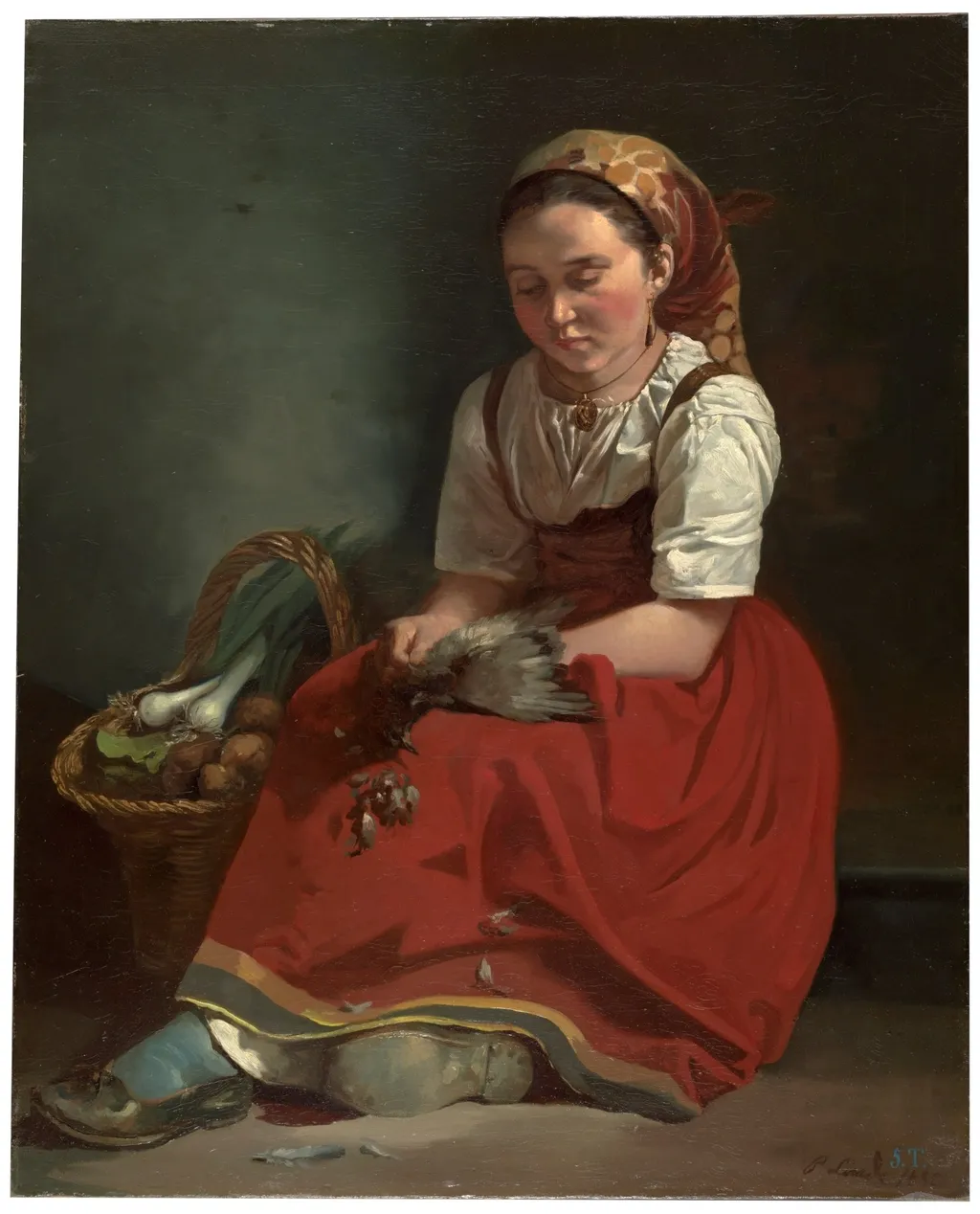
Una asturiana desplumando un pichón is an oil painting by the Realist artist Paulino de la Linde. It dates from 1856 and is held in the collection of the Museo del Prado.
About this work
Overview
De la Linde, active during a brief but productive career before his early death in 1862, utilized this piece to capture the quiet dignity of peasant labor.
Painted in 1856 by Paulino de la Linde, 'Una asturiana desplumando un pichón' depicts a young Asturian woman seated on the floor, absorbed in the domestic task of plucking a pigeon. The composition centers on the figure, who is dressed in traditional regional attire consisting of a red skirt, a white blouse, and a headscarf. A wicker basket filled with vegetables rests beside her, grounding the scene in rural daily life. Executed in oil paint, the work exemplifies the costumbrista genre popular in mid-19th century Spain, which sought to document local customs and folk types with ethnographic attention. De la Linde, active during a brief but productive career before his early death in 1862, utilized this piece to capture the quiet dignity of peasant labor. The artist employs a straightforward, observational approach, focusing on the subject's concentration and the textures of her clothing and the bird. This painting reflects the broader artistic movement of the time that valued regional identity and the depiction of everyday activities over idealized historical or mythological narratives.
Subject & Meaning
The work captures a domestic, rural moment of everyday life, emphasizing the meticulous care involved in preparing food. By focusing on the woman’s concentration, the painting reflects themes of labor, tradition, and the intimate relationship between people and their environment in 19th‑century Asturias.
Technique & Style
Executed in oil on canvas, de la Linde employs a limited palette and chiaroscuro to model the figure against the deep background. The brushwork renders the textures of fabric, wicker, and feathers with precise detail, while the subdued lighting creates a sense of stillness and draws attention to the central action.
History & Provenance
Created in 1856, the painting entered the collection of the Museo del Prado, where it remains on display. Its acquisition reflects the museum’s interest in documenting regional Spanish life and genre scenes from the mid‑19th century.
Context
During the mid‑1800s, Spanish genre painting often highlighted rural customs and the lives of ordinary people. De la Linde’s depiction aligns with this trend, offering a visual record of Asturian domestic practices and the role of women in household tasks.
Own this work as a print
Artist & collection

 Young Woman Peeling Apples
 The Kitchen Maid
 Woman Eating, Known as ‘The Cat’s Breakfast’
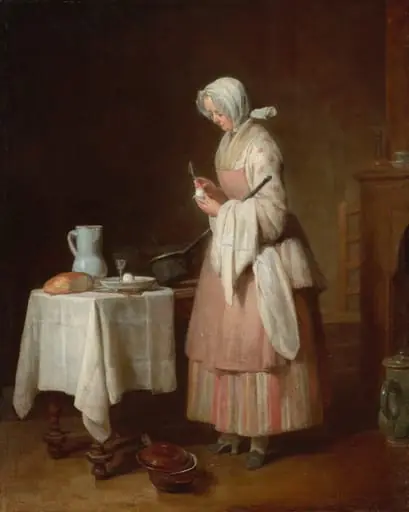 The Attentive Nurse
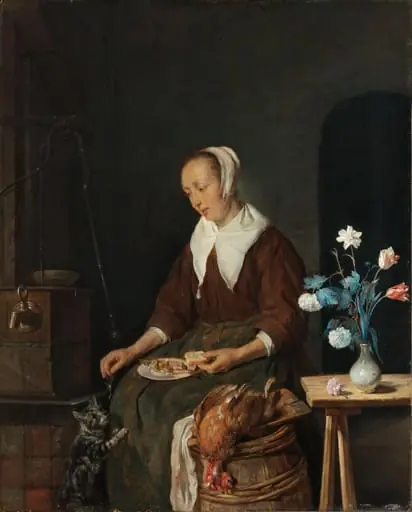 Vrouw aan de maaltijd, bekend als ‘Het ontbijt van de kat’
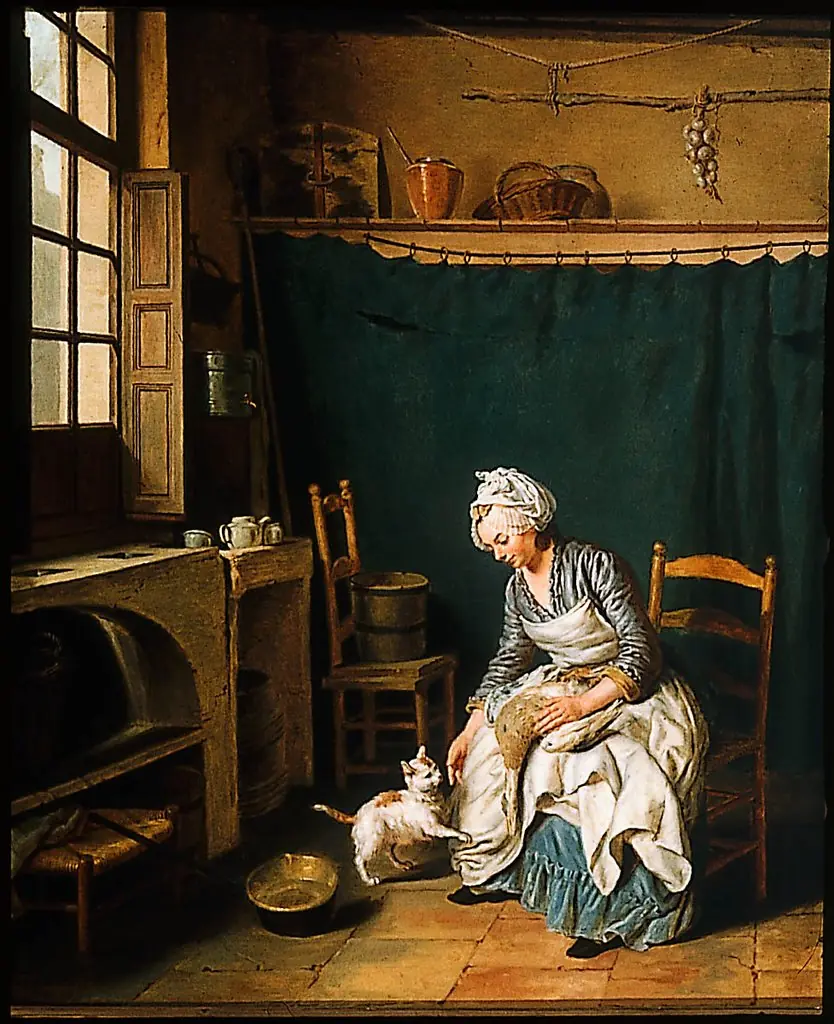 Servant Girl Plucking a Chicken
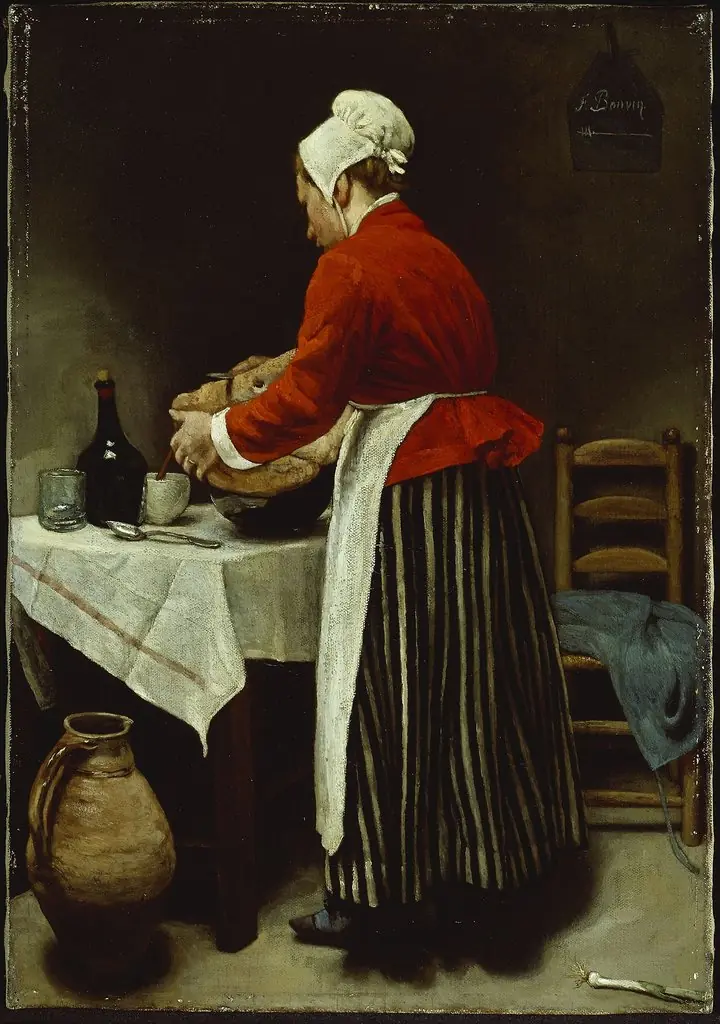 The Maid
 Grandmother with her granddaughter
 The Capuchin Doll
 Allegory of the Month of March
 Expectation
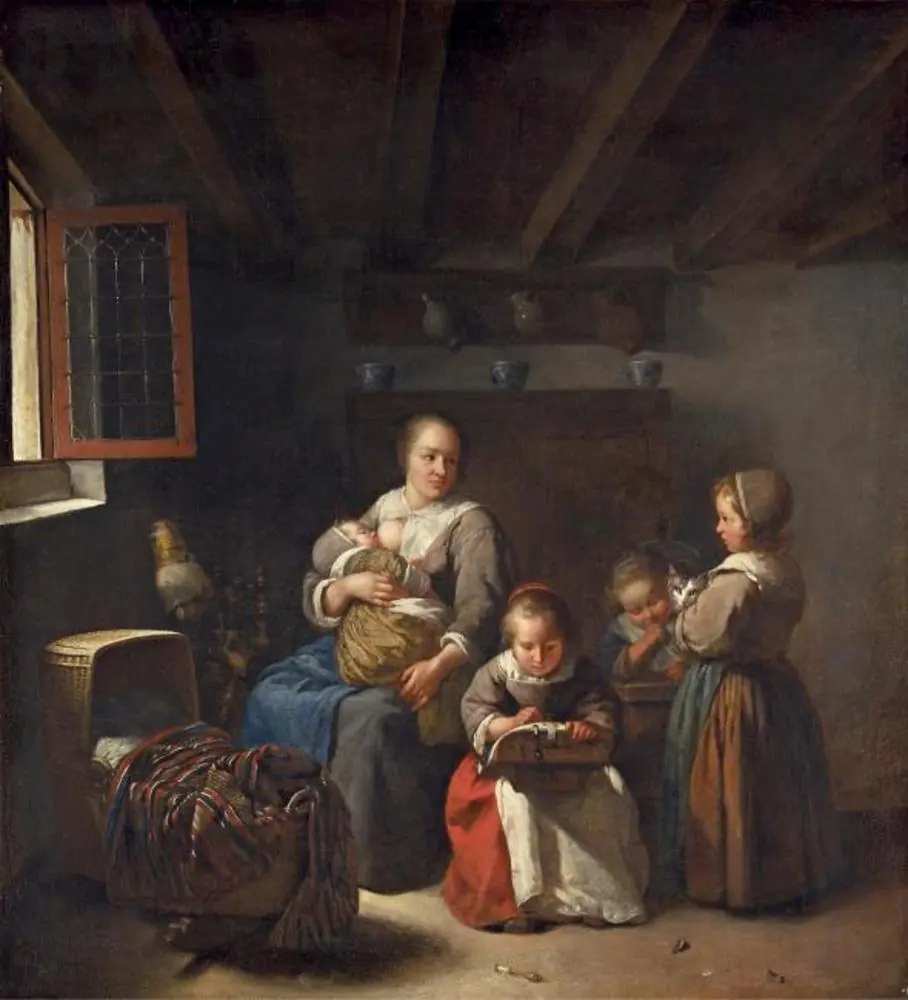 Nursing mother with three girls