Artwork
Cat Playing with Two Dogs
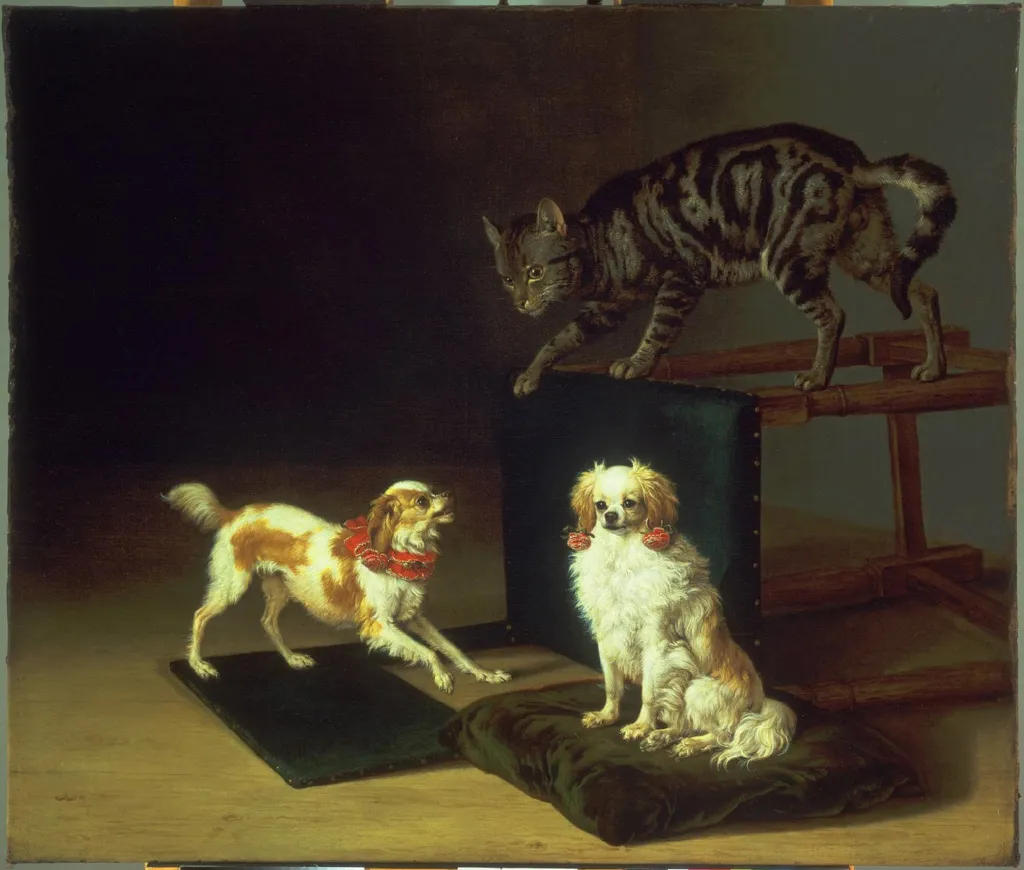
Cat Playing with Two Dogs is an oil painting by Paulus Potter. It dates from 1652 and is held in the collection of the Philadelphia Museum of Art.
About this work
Overview
Though his career was short—ending with his death in 1654—he produced a focused body of work centered on livestock and household creatures.
Painted in 1652 by Paulus Potter, this oil-on-canvas work captures a quiet domestic moment between a cat and two dogs. Potter, active in the Dutch Golden Age, specialized in animal subjects rendered with close observation. Though his career was short—ending with his death in 1654—he produced a focused body of work centered on livestock and household creatures. This painting is one of fewer than a hundred attributed to him and is now part of the Philadelphia Museum of Art’s collection.
Subject & Meaning
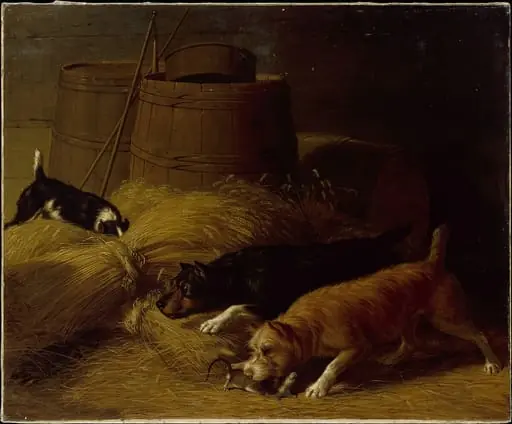
The scene portrays a striped cat perched on a raised wooden surface, observing two dogs below—one resting on a black mat, the other on a green cushion. Their postures suggest a moment of playful tension rather than aggression. The cat’s elevated position implies dominance or curiosity, while the dogs’ alertness conveys cautious engagement. The composition avoids anthropomorphism, instead emphasizing natural behavior, reflecting a broader Dutch interest in the quiet life of the home and its animals.
Technique & Style
Potter employed chiaroscuro to model the forms of the animals and the wooden platform, enhancing three-dimensionality within a dim interior. His brushwork is precise yet unobtrusive, capturing the texture of fur, wood grain, and fabric with quiet realism. The low viewpoint, characteristic of his style, brings the viewer into the animals’ spatial world. Light falls subtly from an unseen source, illuminating the cat’s striped coat and the dogs’ white fur, while shadows deepen the sense of enclosure.
History & Provenance
Created in the final years of Potter’s life, the painting entered the Philadelphia Museum of Art’s collection in the 20th century. Its early ownership is undocumented, but its survival reflects the enduring interest in Dutch animal painting. Potter’s reputation grew posthumously, particularly among collectors drawn to his meticulous rendering of animals. The work’s attribution has remained consistent, with no significant disputes over authorship or date.
Context
In mid-17th-century Holland, domestic scenes featuring animals were popular among middle-class patrons who valued realism and moral subtlety. Potter’s focus on non-idealized creatures aligned with a broader cultural shift toward observing nature without mythological or allegorical framing. While other artists depicted grand pastoral scenes, Potter turned inward—to barnyards, kitchens, and hearths—capturing the unassuming dignity of everyday animal life.
Legacy
Though not widely exhibited, the painting exemplifies Potter’s contribution to Dutch genre painting: a quiet, unsentimental gaze at animal behavior. His influence is seen in later naturalist painters who prioritized anatomical accuracy and environmental realism. The work remains a testament to his ability to transform ordinary moments into studies of form, light, and quiet interaction, without narrative embellishment.
Own this work as a print
Artist & collection
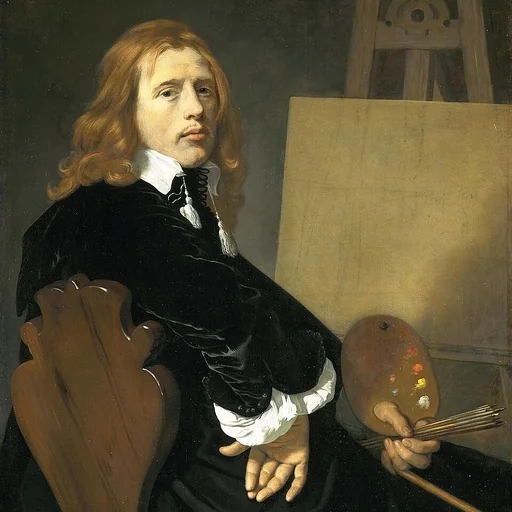
Artist
Paulus Potter (Dutch pronunciation: ; 20 November 1625 (baptised) – 17 January 1654 (buried)) was a Dutch painter who specialized in landscapes featuring animals, often from a low vantage point.