Artwork
Two Pigs in a Sty
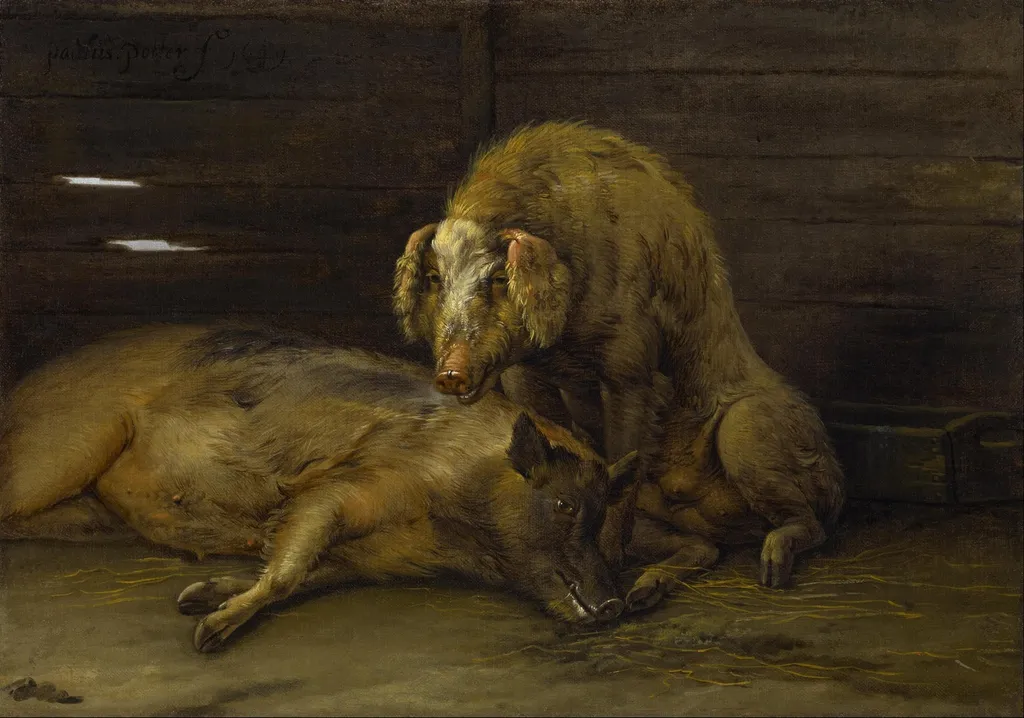
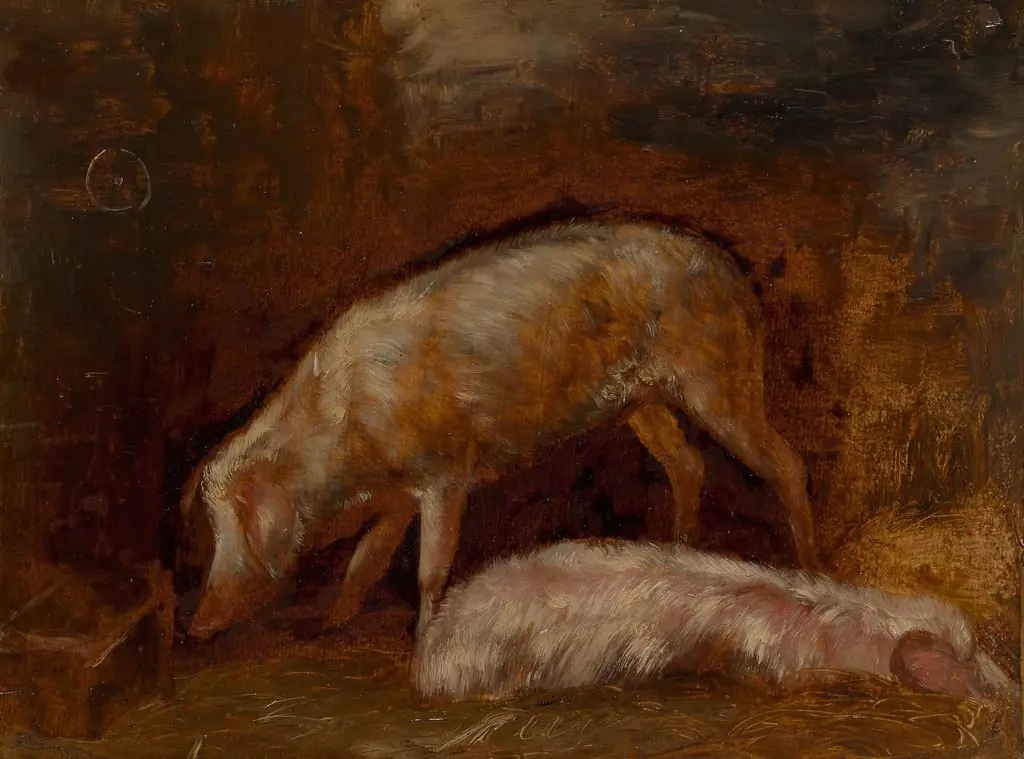
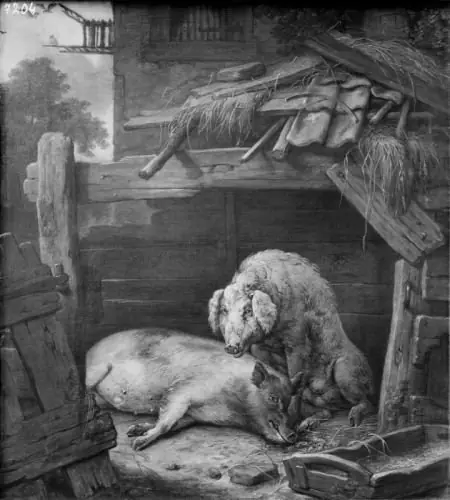
Two Pigs in a Sty is an oil painting by the Dutch Golden Age artist Paulus Potter. It dates from 1649 and is held in the collection of the Museum of Fine Arts, Houston.
About this work
Overview
Painted in 1649 by Paulus Potter, *Two Pigs in a Sty* is a small-scale oil work from the Dutch Golden Age that focuses on domestic animals in a confined space.
Painted in 1649 by Paulus Potter, *Two Pigs in a Sty* is a small-scale oil work from the Dutch Golden Age that focuses on domestic animals in a confined space. Potter, who died at 28, produced nearly a hundred paintings in his brief career, most centered on livestock and rural scenes. This piece exemplifies his dedication to observing animals with precision, avoiding idealization in favor of quiet realism.
Subject & Meaning
The painting shows two pigs in a wooden enclosure: one standing, the other recumbent. Their physical contrast—size, posture, coat color—suggests a moment of quiet dominance or rest, not overt aggression. There is no human presence, and the scene carries no moral or allegorical message. Instead, it presents animal life as it is, inviting contemplation of the ordinary and unembellished.
Technique & Style
Potter employs chiaroscuro to model the pigs’ forms, using subtle shifts in light to define muscle and texture against the dim sty. The wooden slats of the enclosure are rendered with careful attention to grain and shadow, enhancing spatial depth. His brushwork is precise yet unobtrusive, avoiding theatricality in favor of quiet observation, characteristic of Dutch genre painting of the period.
History & Provenance
Created in 1649, the painting remained in private collections for centuries before entering the Museum of Fine Arts, Houston’s holdings. Its documented history is modest, reflecting its status as a minor work within Potter’s oeuvre. Unlike his larger, more celebrated animal scenes, this piece was likely intended as a study or intimate composition, not a public commission.
Context
During the Dutch Golden Age, artists increasingly turned to everyday subjects—livestock, peasants, domestic interiors—as worthy of artistic attention. Potter’s focus on pigs aligns with this trend, rejecting mythological or aristocratic themes in favor of the rural world familiar to urban viewers. His work contributed to a broader cultural interest in naturalism and the dignity of the commonplace.
Legacy
Though Potter’s career was cut short, his influence endured among later animal painters who admired his technical restraint and observational rigor. *Two Pigs in a Sty* remains a quiet testament to his ability to elevate humble subjects through careful attention to form and light. It stands as an example of how Dutch art found significance in the unremarkable, reshaping artistic priorities of its time.
Own this work as a print
Artist & collection
Artist
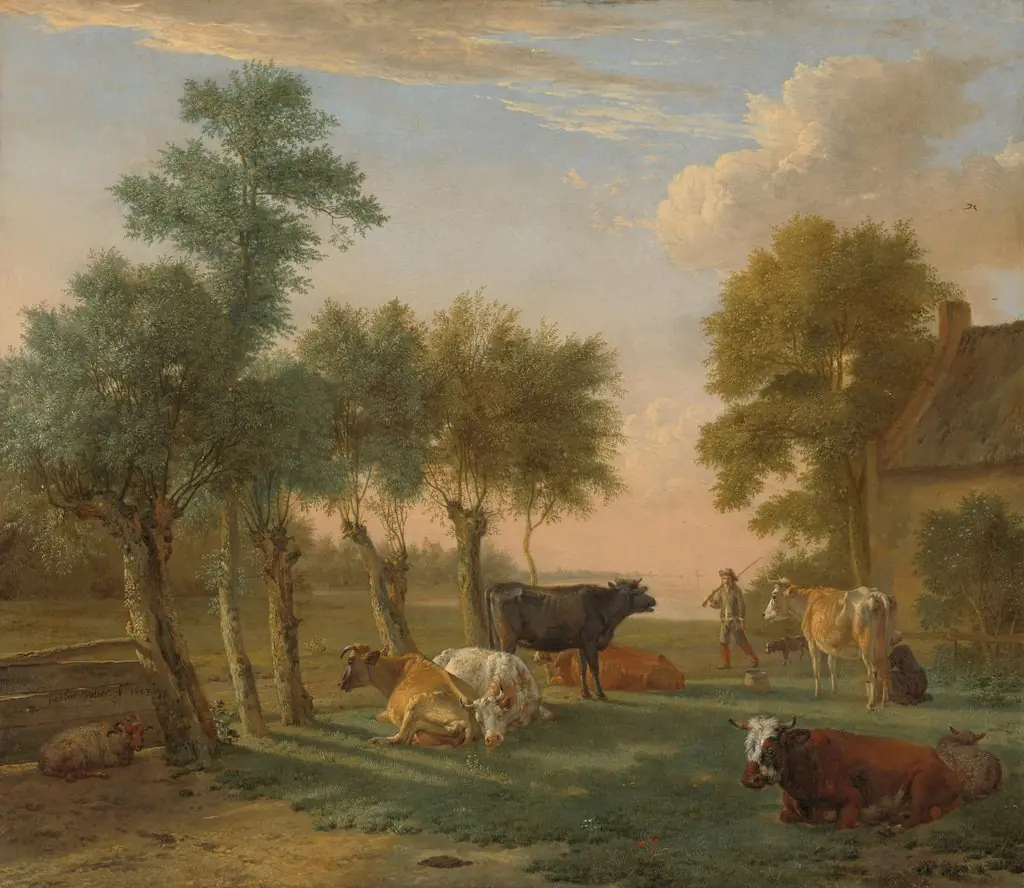
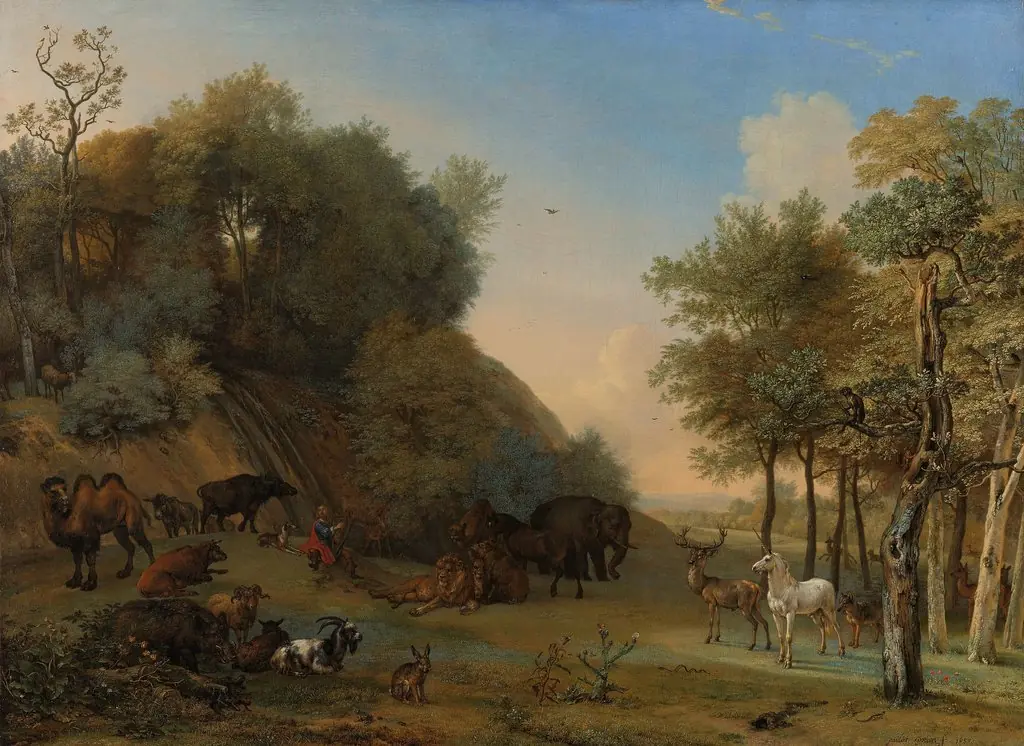
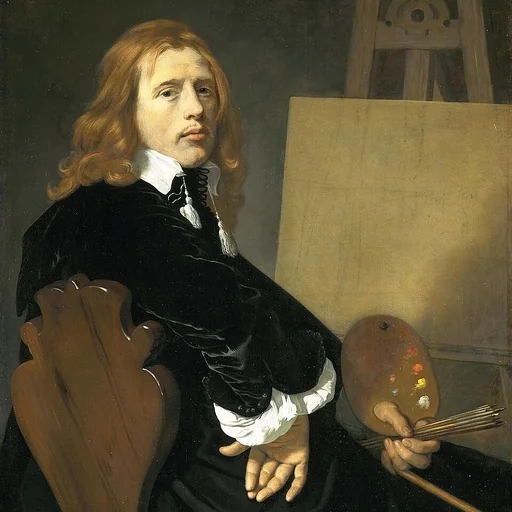
Paulus Potter (Dutch pronunciation: ; 20 November 1625 (baptised) – 17 January 1654 (buried)) was a Dutch painter who specialized in landscapes featuring animals, often from a low vantage point.