Artwork
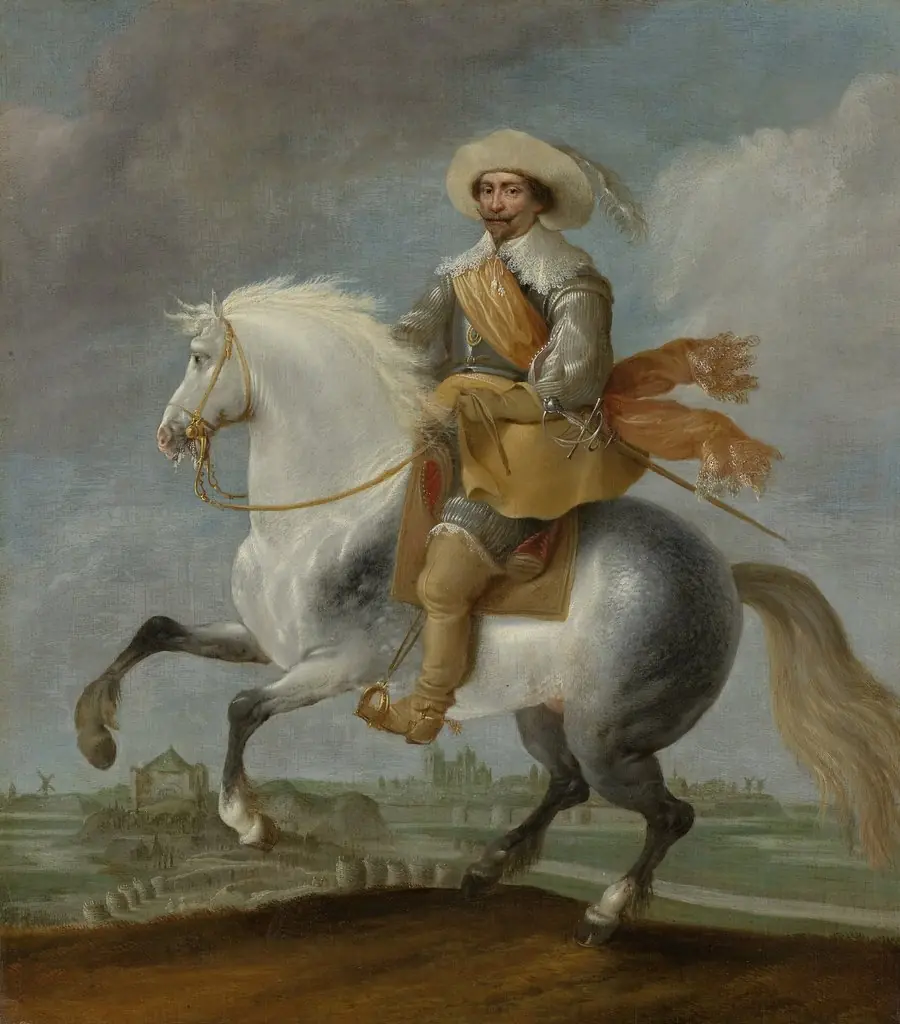
Prince Maurits astride the white warhorse presented to him after his victory at Nieuwpoort
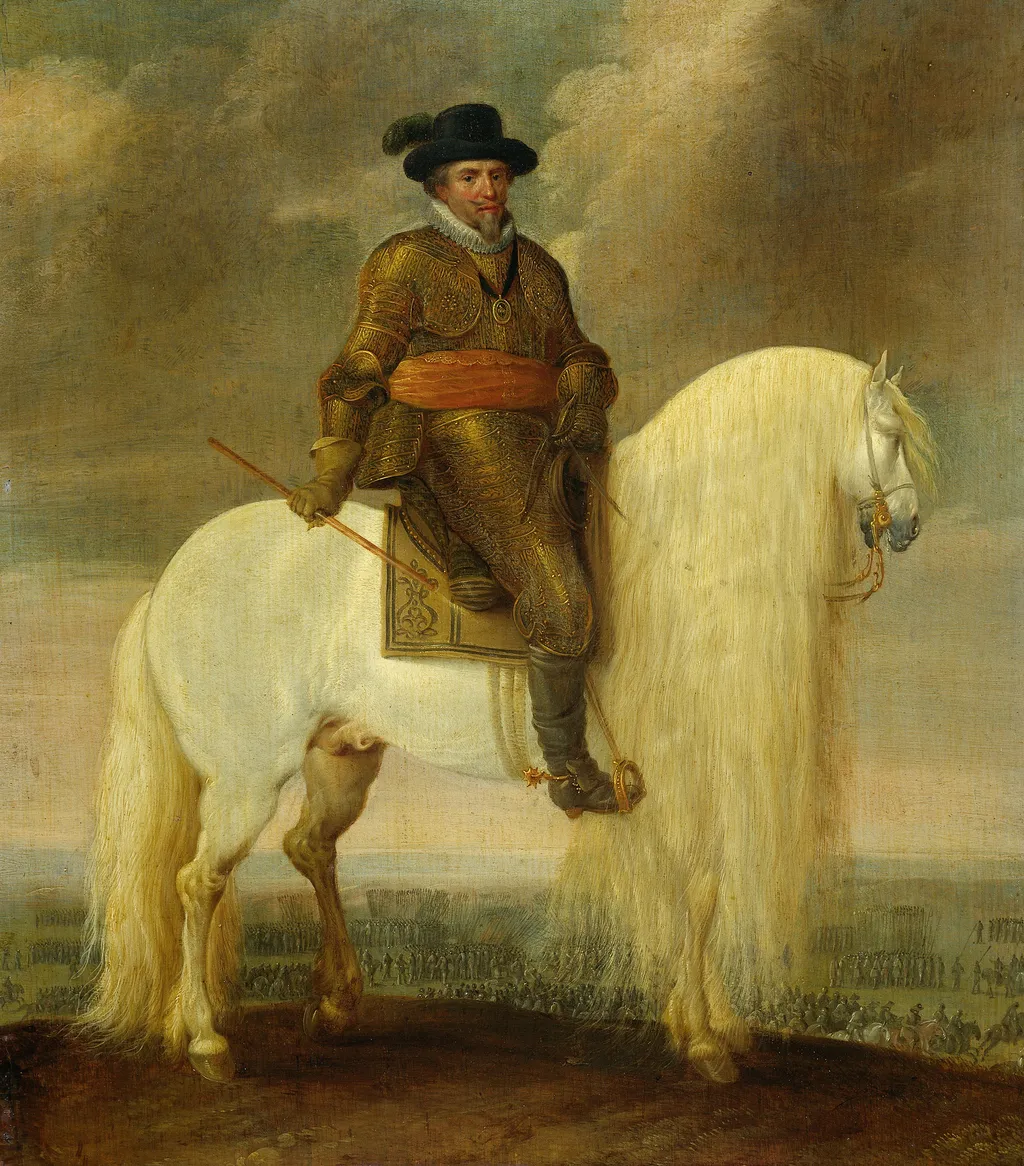
Prince Maurits astride the white warhorse presented to him after his victory at Nieuwpoort is an oil painting by the Dutch Golden Age artist Paulus van Hillegaert. It dates from 1633 and is held in the collection of the Rijksmuseum.
About this work
Overview
Created in 1633 by Paulus van Hillegaert the Elder, this oil painting records Prince Maurits on a white warhorse shortly after the Dutch triumph at Nieuwpoort. Executed during the Dutch Golden Age, the work is part of the Rijksmuseum’s collection and exemplifies the period’s interest in commemorating military success through equestrian portraiture.
Subject & Meaning
The canvas centers on the young prince, clad in ornate armor with gilded accents and a striking red sash, astride a powerful yet composed white horse. He holds a riding staff and gazes solemnly, while a black feathered hat crowns his head. The composition celebrates the victory, using the horse as a symbol of martial vigor and noble authority.
Technique & Style
Van Hillegaert employs a restrained palette of metallic golds, deep reds, and the luminous white of the horse’s coat, rendered with precise brushwork that emphasizes texture in armor and flesh. The background is a muted grassy plain dotted with distant birds, allowing the figure and mount to dominate the visual field in a balanced, almost documentary manner typical of early‑17th‑century Dutch portraiture.
History & Provenance
The painting was likely commissioned to honor Maurits’s role in the 1600 Battle of Nieuwpoort, a key engagement in the Eighty Years’ War. It entered the Rijksmuseum’s holdings as part of the museum’s effort to preserve Dutch Golden Age works, where it remains on display as a testament to the era’s political and artistic narratives.
Own this work as a print
Artist & collection
Artist
Paulus van Hillegaert (I) or Pauwels van Hillegaert (I) (1596–1640) was a Dutch painter and draughtsman, known mainly for his landscapes, military scenes and equestrian portraits.

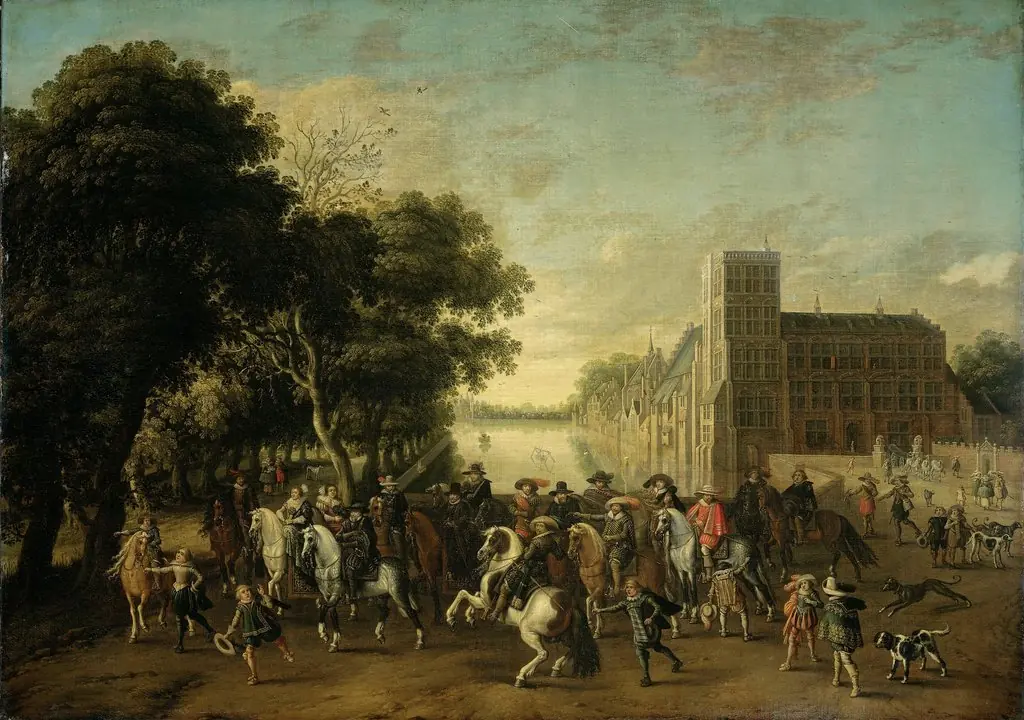 Prince Maurits, accompanied by Prince Frederik Hendrik, Frederick V of Bohemia and his wife Elizabeth Stuart, and others, on the Buitenhof, The Hague
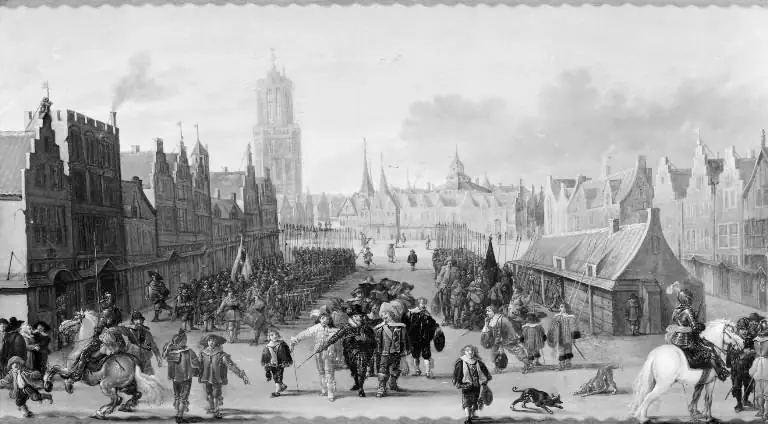 Disbanding of the Mercenary Troops on the Neude, Utrecht, July 31st, 1618
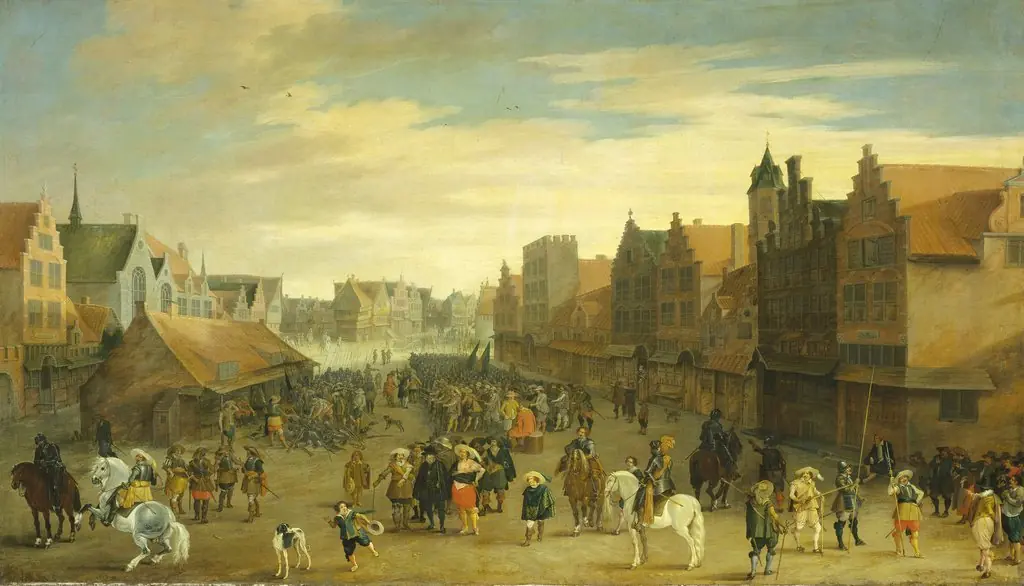 The disbanding of the 'waardgelders' (mercenaries in the pay of the town government) by Prince Maurits on the Neude, Utrecht, 31 July 1618
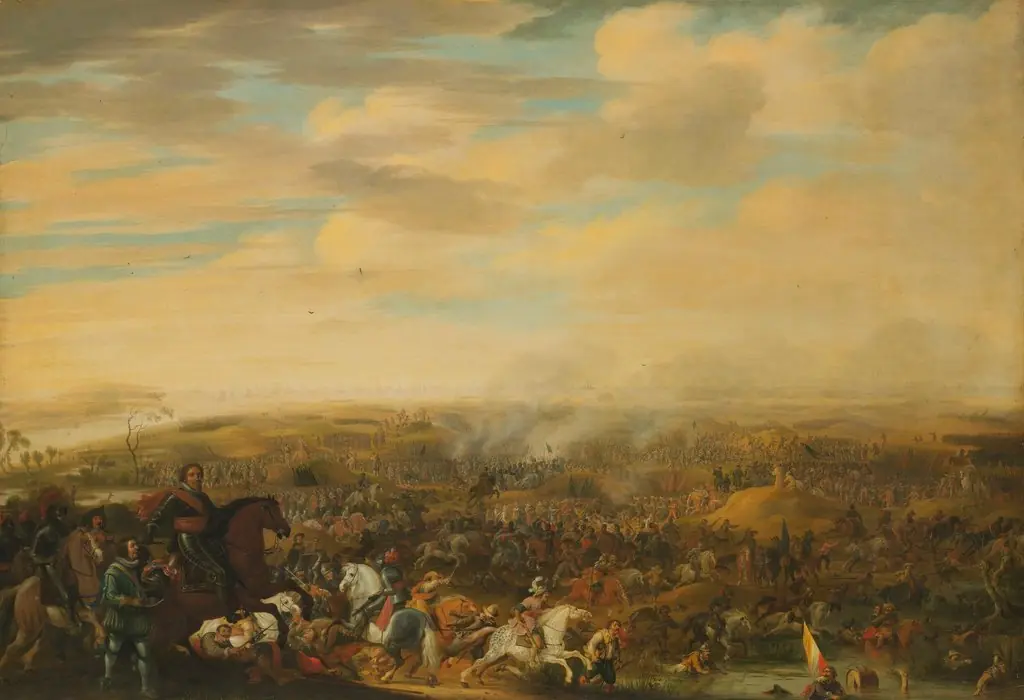 Prince Maurits at the Battle of Nieuwpoort, 2 July 1600
 Prince Frederik Hendrik on horseback outside the fortifications of 's-Hertogenbosch, 1629