Artwork
Untitled
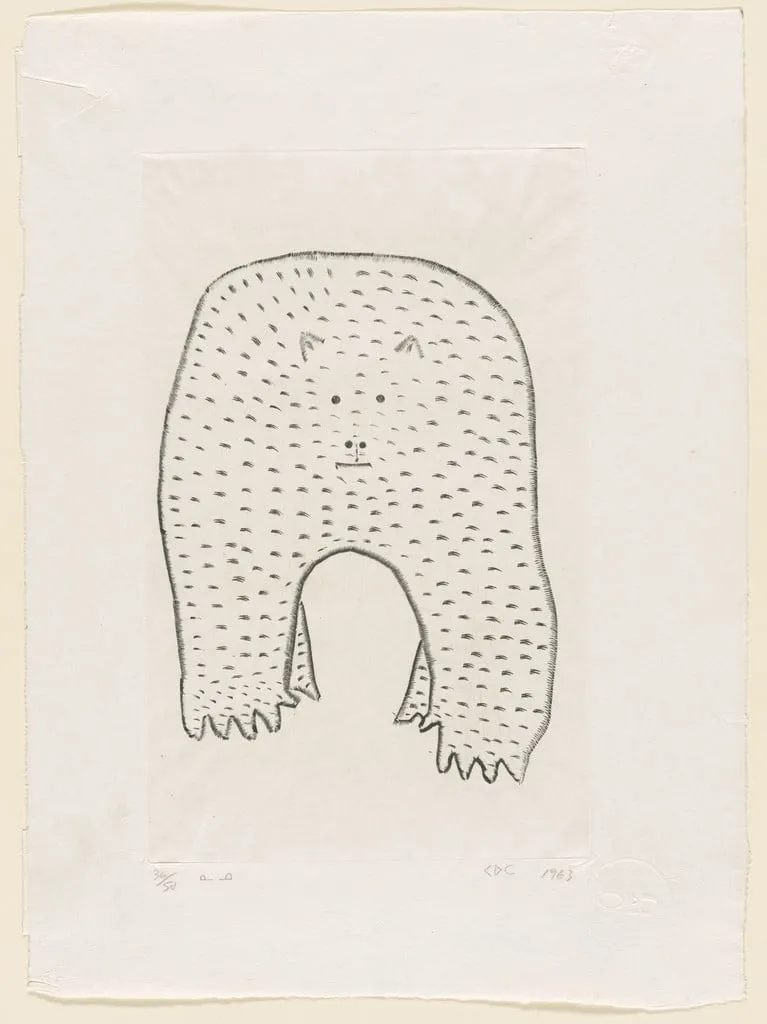
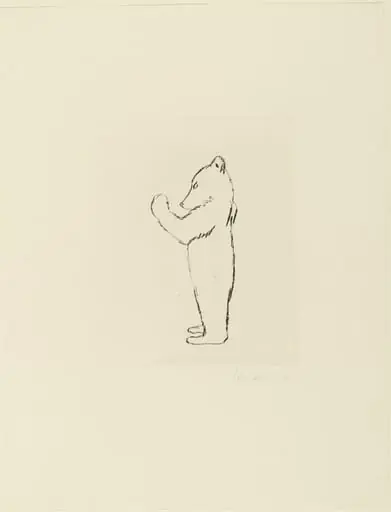
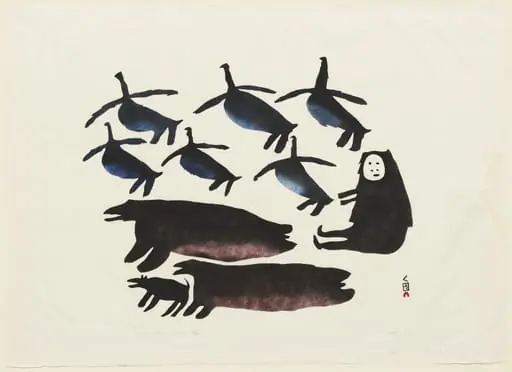
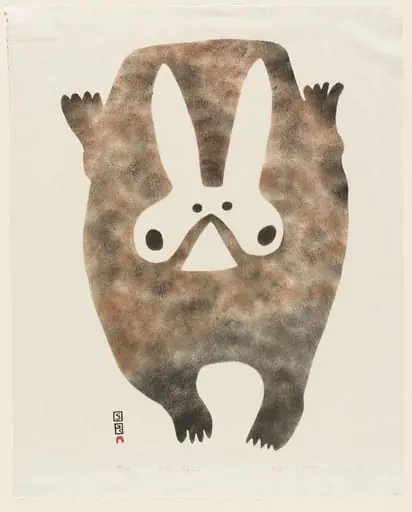
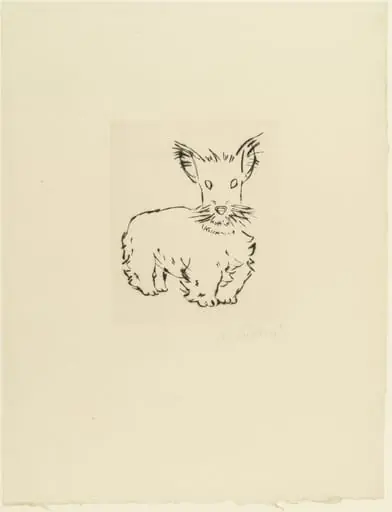
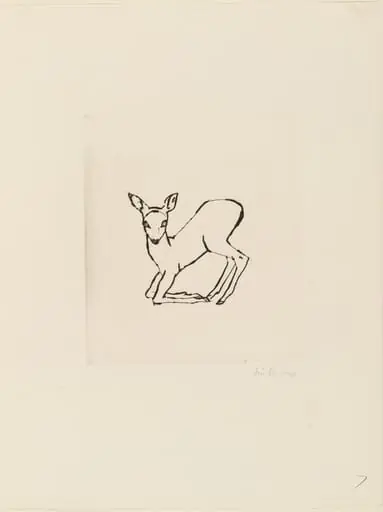
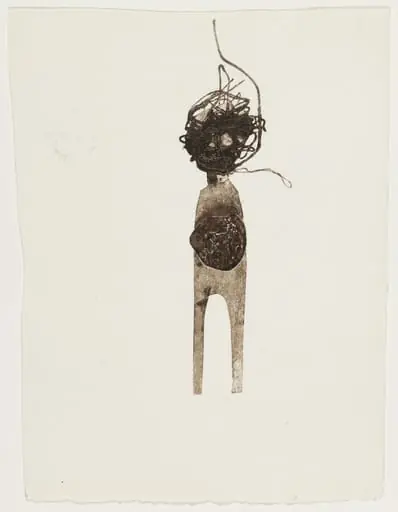
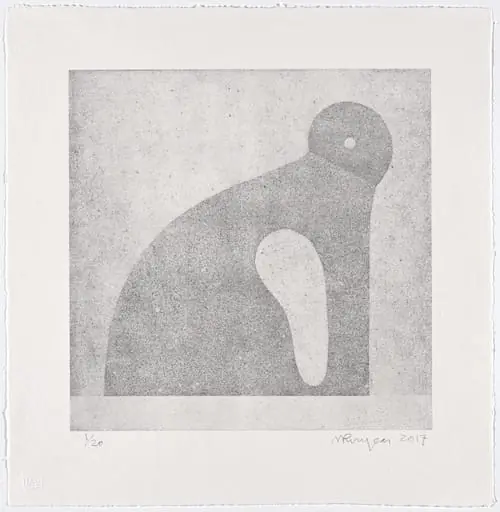
Untitled is an ink print by Pauta Saila. It dates from 1963 and is held in the collection of the Museum of Modern Art.
About this work
Overview
The technique of engraving—where ink is held in grooves carved into a plate—gives the image a stark, tactile quality.
Created in 1963, this engraving by Pauta Saila is part of The Museum of Modern Art’s drawings and prints collection. Executed in a small format, the work captures a solitary bear rendered through precise, incised lines. The technique of engraving—where ink is held in grooves carved into a plate—gives the image a stark, tactile quality. Saila’s approach emphasizes form through minimal detail, focusing on the animal’s presence rather than narrative.
Subject & Meaning
The bear appears alone, unadorned by landscape or context, suggesting a quiet autonomy. Saila did not treat the animal as a symbolic figure but as a tangible, grounded entity. Its stillness and solidity convey a sense of endurance, rooted in the artist’s intimate familiarity with Arctic wildlife. The image reflects observation rather than myth, honoring the bear as a lived presence in Inuit experience.
Technique & Style
Saila employed engraving, a method involving fine incisions into a hard surface to create lines that hold ink. The marks are deliberate and controlled, with varying depths producing contrast and texture. There is no shading or cross-hatching; form emerges through contour and weight. The composition is sparse, yet each line contributes to a sense of mass and stillness, reflecting a disciplined, minimalist aesthetic.
History & Provenance
The print was produced through the West Baffin Eskimo Co-operative in Cape Dorset, an artist-run collective that facilitated Inuit printmaking for broader audiences beginning in the 1950s. Saila was among the early artists supported by the cooperative, which provided materials and distribution channels. This work entered MoMA’s collection as part of its effort to document global print traditions beyond Western conventions.
Context
During the 1960s, Inuit artists in Cape Dorset were gaining recognition for their graphic works, blending traditional knowledge with new printmaking techniques. Saila’s focus on animals reflected a cultural continuity, where wildlife was not merely subject but part of daily life and spiritual awareness. His prints contributed to a broader shift in how Indigenous art was seen—not as folk art, but as contemporary visual expression.
Legacy
Saila’s bear images remain among the most recognized works from Cape Dorset. His restrained style influenced later generations of Inuit printmakers who valued clarity and emotional resonance over detail. This engraving exemplifies how personal observation, grounded in cultural context, can produce work of quiet authority. It continues to be studied for its formal precision and its role in expanding the scope of modern printmaking.
Artist & collection

Artist
Pauta Saila was an Inuk artist from Kilaparutua, Baffin Island, Canada who resided in Cape Dorset, Nunavut. His sister was artist Sharni Pootoogook.