Artwork
Untitled
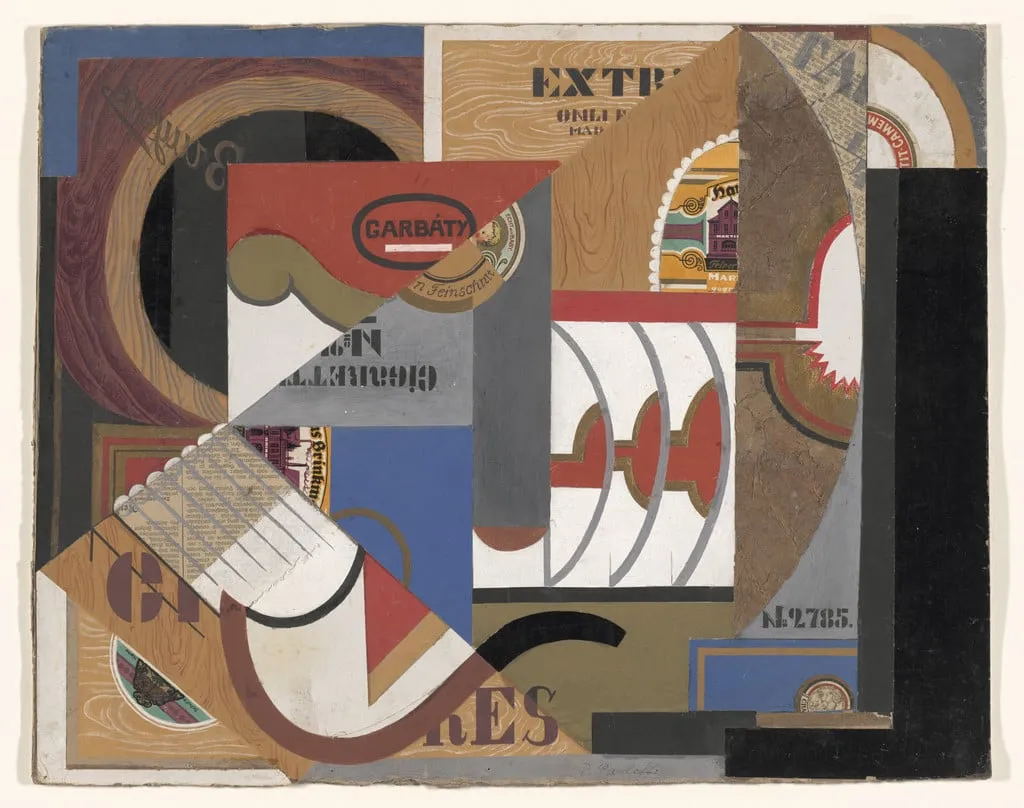
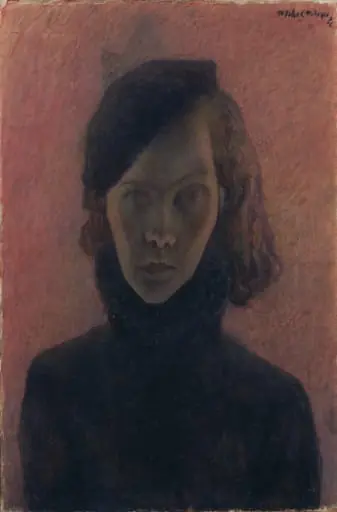
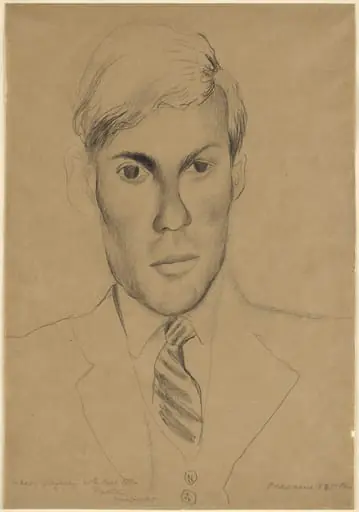
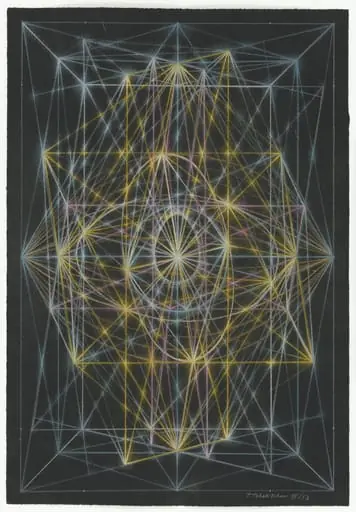
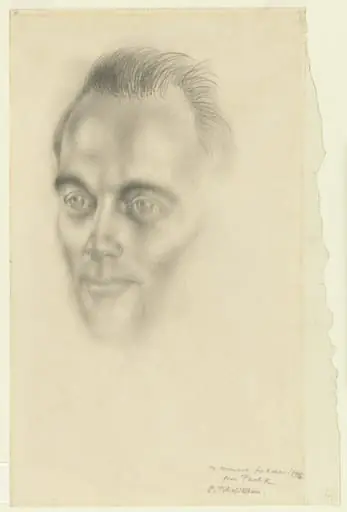
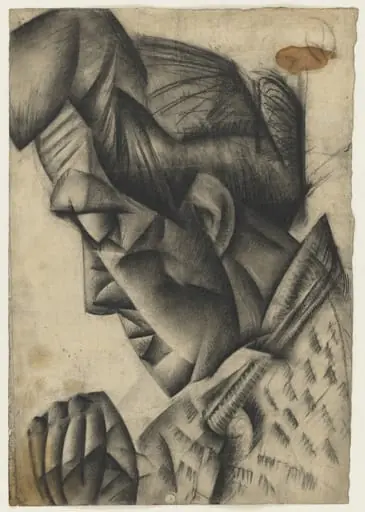
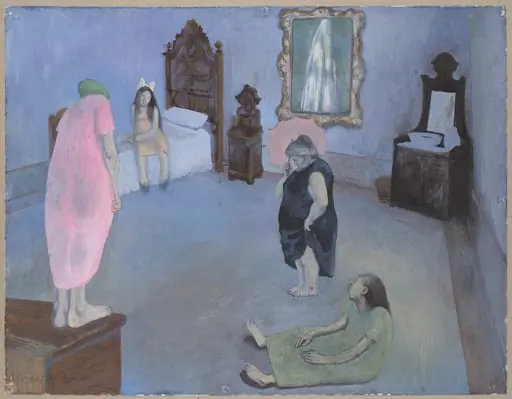
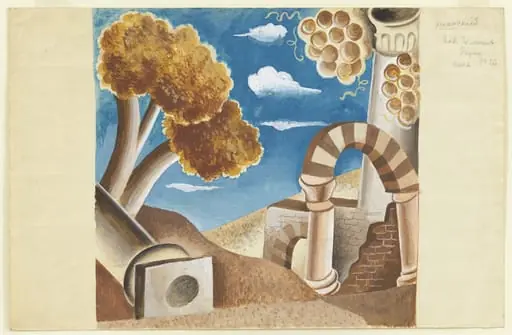
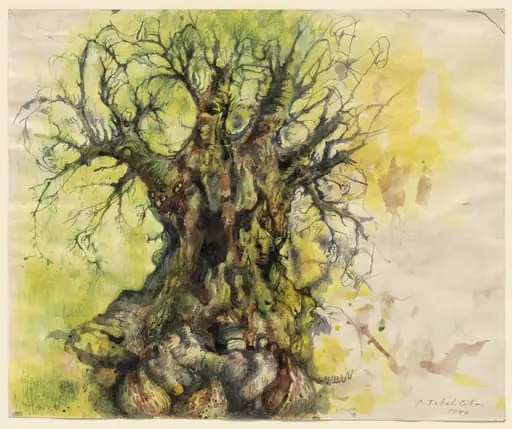
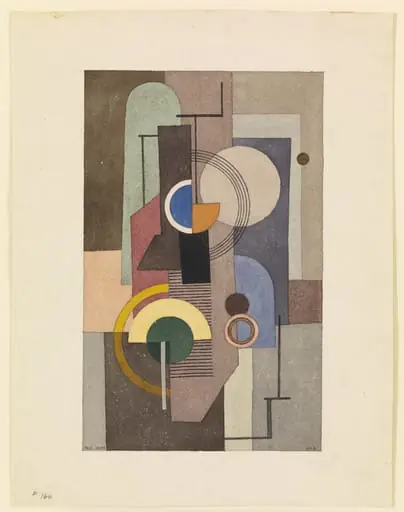
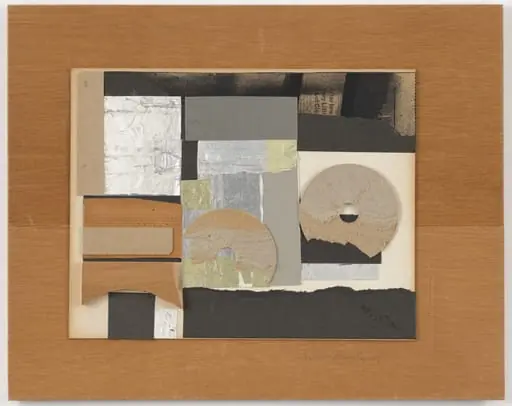
Untitled is a gouache drawing by Pavel Tchelitchew. It dates from 1922 and is held in the collection of the Museum of Modern Art.
About this work
Overview
Created around 1922, this untitled work by Pavel Tchelitchew is a mixed-media drawing on cardboard, combining cut paper, gouache, metallic paint, and pencil.
Created around 1922, this untitled work by Pavel Tchelitchew is a mixed-media drawing on cardboard, combining cut paper, gouache, metallic paint, and pencil. It reflects the artist’s early experimentation with abstraction and materiality during his formative years in Europe. The piece belongs to a period when Tchelitchew was moving beyond traditional painting toward assemblage and layered surfaces, aligning with broader avant-garde interests in collage and non-representational form.
Subject & Meaning
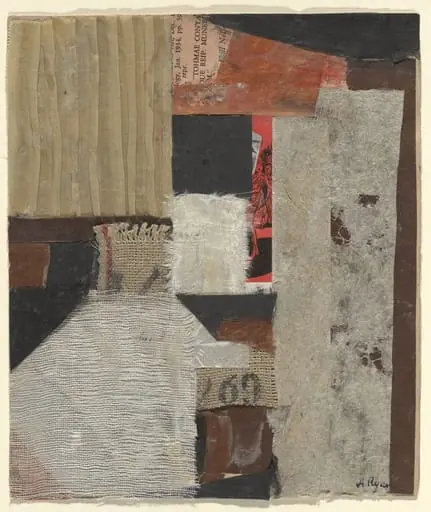
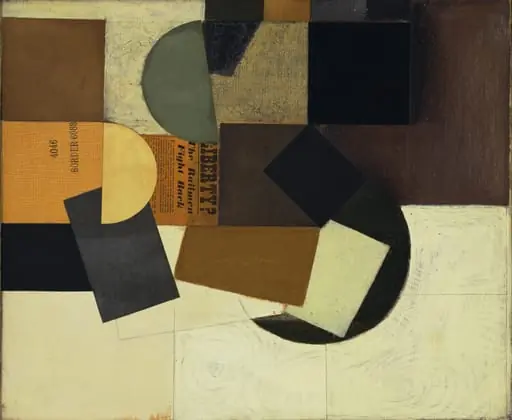
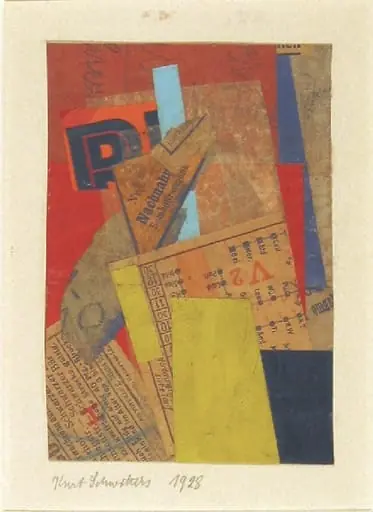
The composition avoids figurative representation, instead presenting an arrangement of abstract geometric forms—circles, squares, triangles—in muted and vibrant hues. Text fragments and patterned paper suggest influences from printed ephemera, yet no narrative or symbolic message is discernible. The work prioritizes visual rhythm and material contrast over meaning, reflecting a shift toward non-narrative abstraction common among artists exploring new modes of expression after World War I.
Technique & Style
Tchelitchew layered cut paper with opaque gouache and metallic paint to create tactile depth and luminous accents. Pencil lines guide the structure, while the metallic elements catch light differently depending on viewing angle, introducing subtle dynamism. The use of varied textures—smooth paint, rough paper, glossy foil—demonstrates his interest in sensory contrast. This technique aligns with Dadaist and Constructivist practices, emphasizing process and materiality over illusionistic representation.
History & Provenance
Made during Tchelitchew’s time in Europe before his move to the United States, the work dates from his early experimental phase. It entered the collection of The Museum of Modern Art in New York, where it remains part of its holdings of interwar European drawings. Its preservation reflects institutional recognition of Tchelitchew’s role in bridging Russian modernism with Western avant-garde movements of the 1920s.
Context
In the early 1920s, artists across Europe were redefining art through fragmentation and assemblage, responding to societal upheaval and new technologies. Tchelitchew’s use of found paper and industrial paints mirrors trends in Dada and Constructivism, while his interest in surface and light anticipates later Surrealist concerns. This work is one of many from his period of intense material exploration before he turned toward more figurative and theatrical projects.
Legacy
Though less known than his later theatrical designs, this early collage exemplifies Tchelitchew’s foundational engagement with abstraction and mixed media. It contributes to understanding the evolution of modern drawing beyond brush and ink, highlighting how artists integrated everyday materials into fine art. The work remains a quiet but significant marker of his transition from Russian modernism to international avant-garde practices.
Artist & collection

Artist
Pavel Fyodorovich Tchelitchew ( Che-LIT-chev; Russian: Па́вел Фёдорович Чели́щев) (3 October 1898 – 31 July 1957) was a Russian-born surrealist painter, set designer and costume designer.