Artwork
Untitled
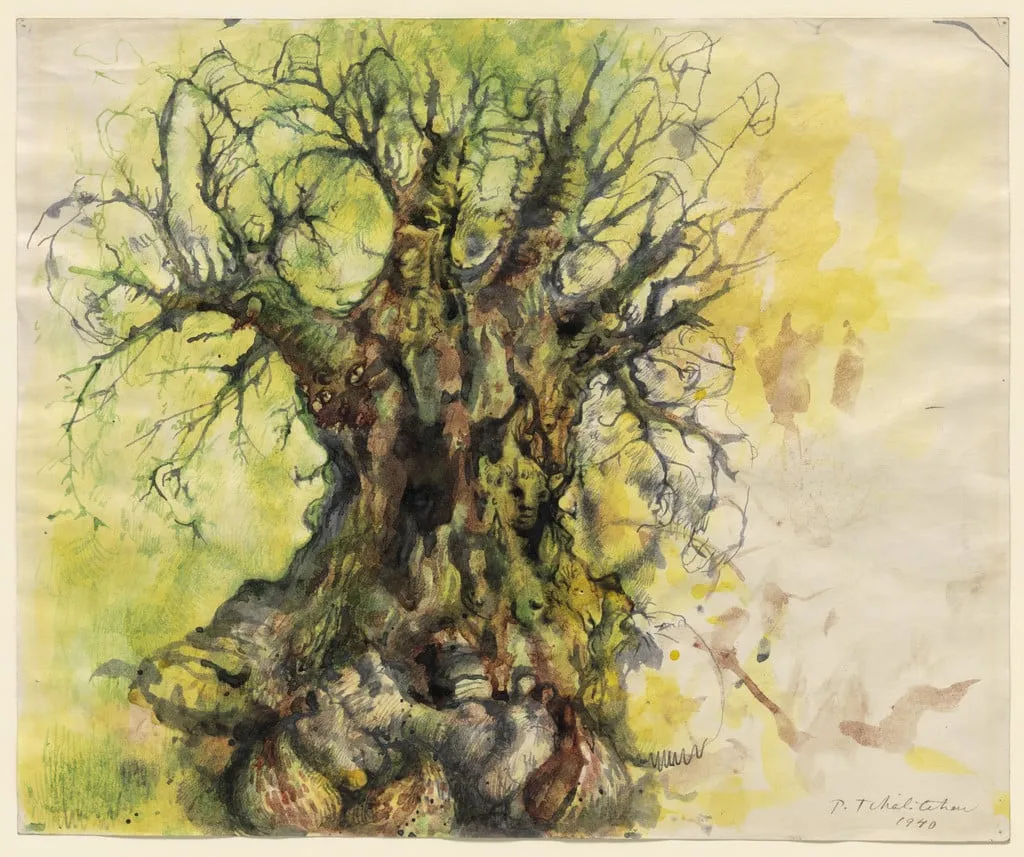
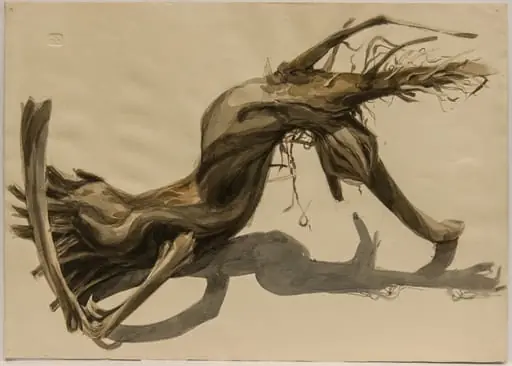
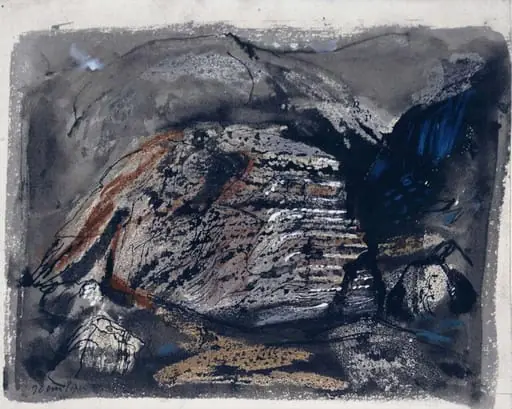
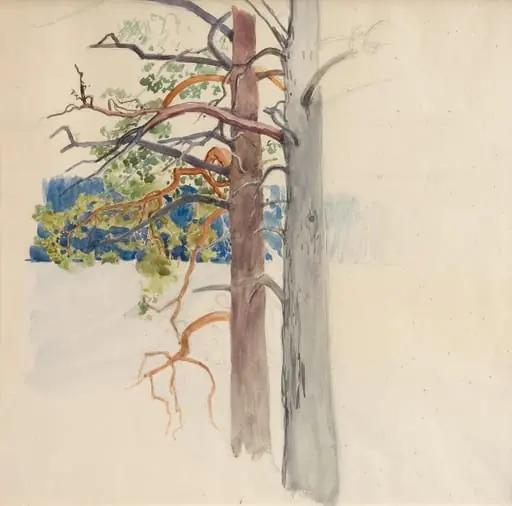
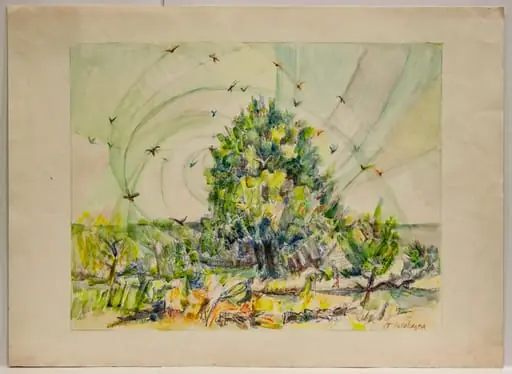
Untitled is a watercolor drawing by Pavel Tchelitchew. It dates from 1940 and is held in the collection of the Museum of Modern Art.
About this work
Overview
Created in 1940, this watercolor and ink drawing by Pavel Tchelitchew is part of The Museum of Modern Art’s collection. Though untitled, the work reflects the artist’s engagement with surrealist sensibilities through a restrained, naturalistic subject. Executed on paper, it combines delicate washes with precise ink lines, demonstrating Tchelitchew’s skill in balancing spontaneity with control.
Subject & Meaning
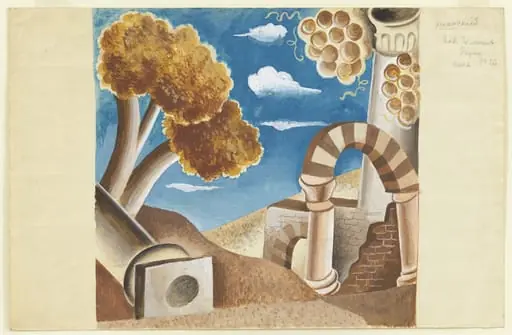
The tree, rendered in muted greens and browns with subtle highlights, appears rooted yet untethered, suggesting growth amid instability.
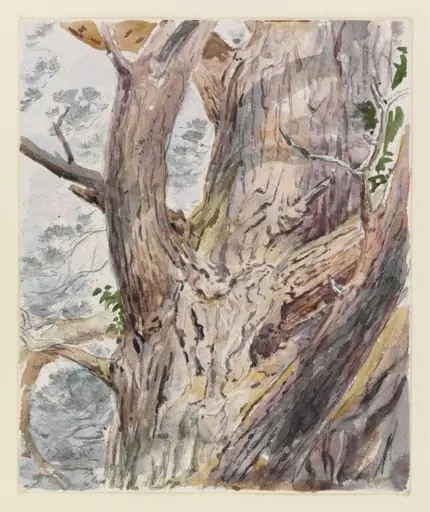
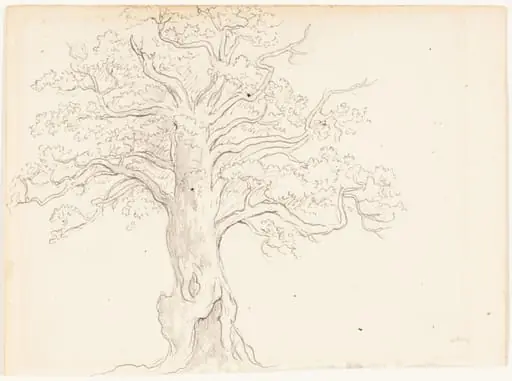
The drawing depicts a solitary tree emerging from a cluster of rocky forms, its branches extending in multiple directions. The tree, rendered in muted greens and browns with subtle highlights, appears rooted yet untethered, suggesting growth amid instability. The soft yellow background evokes ambient light without specifying a time or place, reinforcing an atmosphere of quiet ambiguity characteristic of Tchelitchew’s dreamlike imagery.
Technique & Style
Tchelitchew employed watercolor glazing to build layered tones, allowing underlying washes to show through and create depth. Ink outlines define the tree’s structure with clarity, contrasting the fluidity of the pigment. The technique merges precision with atmospheric softness, reflecting his theatrical training—where form and mood must coexist. The paper’s texture subtly influences the pigment’s spread, enhancing the organic feel of the composition.
History & Provenance
The work was completed during Tchelitchew’s time in the United States, following his emigration from Europe in the late 1930s. It entered The Museum of Modern Art’s collection shortly after its creation, likely acquired during a period when the institution was actively expanding its holdings of European modernists in exile. Its preservation reflects early institutional recognition of his contributions beyond stage design.
Context
In 1940, as war reshaped Europe, many artists in exile turned to introspective subjects. Tchelitchew’s focus on a solitary tree may reflect displacement and resilience, common themes among refugee creatives. While his large-scale paintings often featured complex figures, this intimate drawing reveals a quieter side of his practice—rooted in nature, yet infused with the psychological undercurrents of his time.
Legacy
This work exemplifies Tchelitchew’s ability to translate surrealist ideals into modest, personal formats. Though less known than his theatrical designs, such drawings reveal his mastery of medium and mood. Its presence in MoMA’s collection ensures its role as a quiet but significant example of how European modernism adapted in American contexts during the mid-20th century.
Artist & collection

Artist
Pavel Fyodorovich Tchelitchew ( Che-LIT-chev; Russian: Па́вел Фёдорович Чели́щев) (3 October 1898 – 31 July 1957) was a Russian-born surrealist painter, set designer and costume designer.