Artwork
Scarborough from the South
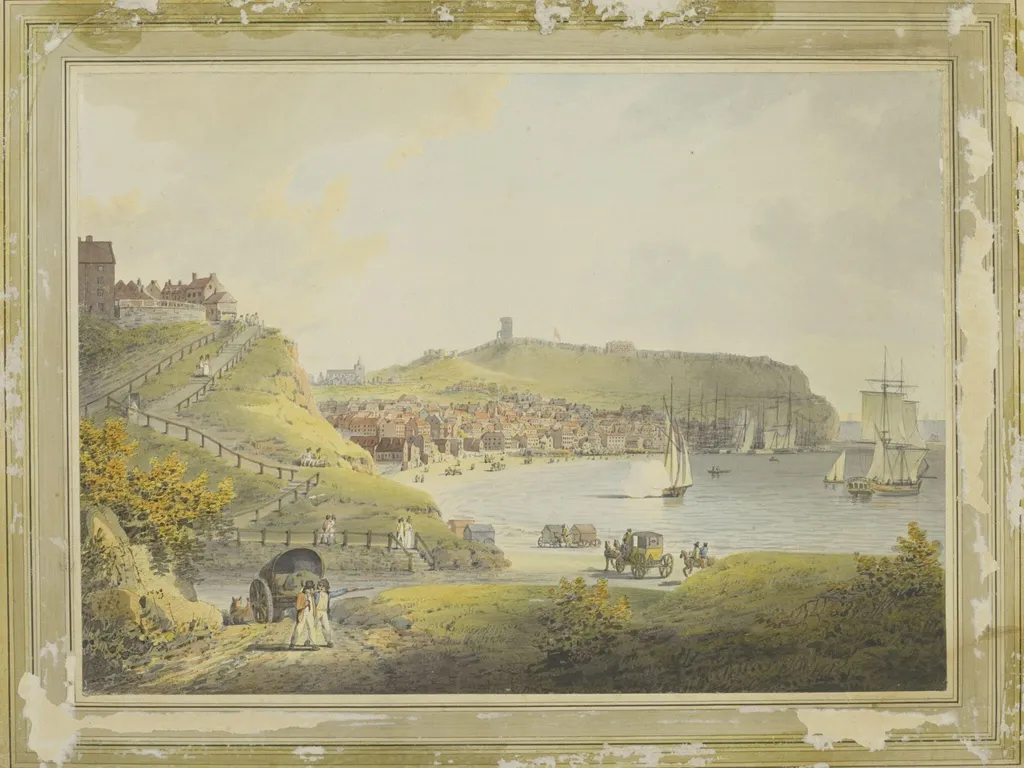
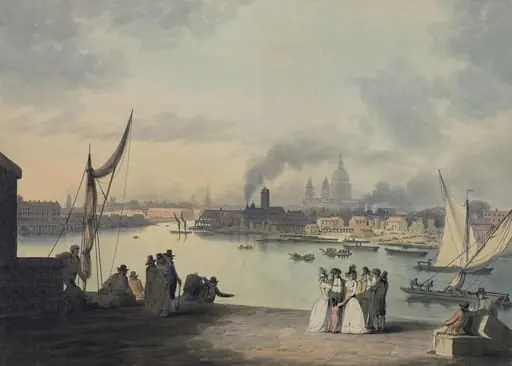
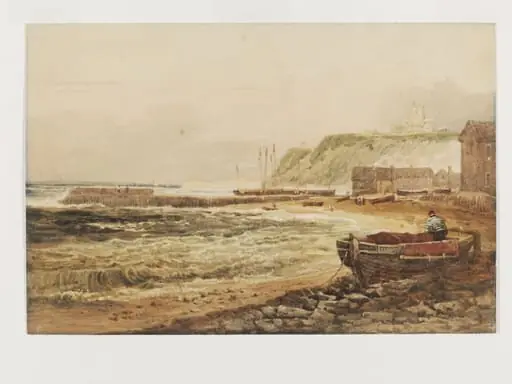
Scarborough from the South is a watercolor work on paper by the Neoclassicist artist William Payne. It dates from 1776 and is held in the collection of the Victoria and Albert Museum.
About this work
Overview
The composition emphasizes stillness and subtle detail, reflecting the artist’s interest in ordinary landscapes rather than monumental subjects.
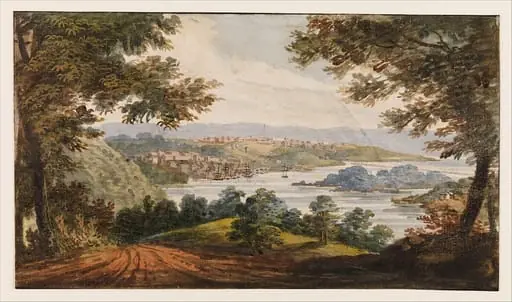
Painted in 1776, this watercolour by William Payne captures Scarborough from a southern vantage point. Executed in delicate washes, the work presents a quiet coastal scene without theatrical flourish. Payne’s signature appears on the piece, affirming authorship. The composition emphasizes stillness and subtle detail, reflecting the artist’s interest in ordinary landscapes rather than monumental subjects.
Subject & Meaning
The painting depicts a modest seaside settlement, with low houses clustered along the shore and a few boats resting on calm water. A winding path ascends a gentle hill, where figures move slowly—walking or pausing—suggesting quiet daily routines. There is no narrative drama; instead, the scene conveys a sense of tranquil, unremarkable life, valued for its calm authenticity rather than spectacle.
Technique & Style
Payne employed transparent watercolour washes to build soft, muted tones of pale yellow, green, and grey. The brushwork is light and controlled, avoiding sharp outlines in favor of blended edges that mimic atmospheric haze. The sky is rendered with minimal pigment, enhancing the sense of stillness. This restrained technique aligns with 18th-century topographical watercolour practices focused on observation over embellishment.
History & Provenance
Created in 1776, the work is one of several surviving watercolours by Payne documenting English coastal towns. Its early date places it within the formative years of British watercolour as a medium for landscape study. The painting’s provenance is not fully documented, but its preservation suggests it was held in private collections before entering institutional care.
Context
In the late 18th century, watercolour was gaining traction as a medium for amateur and professional artists seeking portable, intimate records of place. Payne’s work reflects this trend, aligning with a growing interest in local scenery and everyday environments. Unlike grand historical or romantic landscapes, his view of Scarborough represents a shift toward quiet, observational realism.
Legacy
Payne’s Scarborough view exemplifies the quiet dignity of British topographical watercolours from the period. While not widely known today, such works contributed to the development of landscape painting as a discipline grounded in direct observation. The piece remains a representative example of how ordinary places were rendered with care and restraint during the era’s artistic evolution.
Artist & collection