Artwork
A Ruined Abbey by a Waterfall
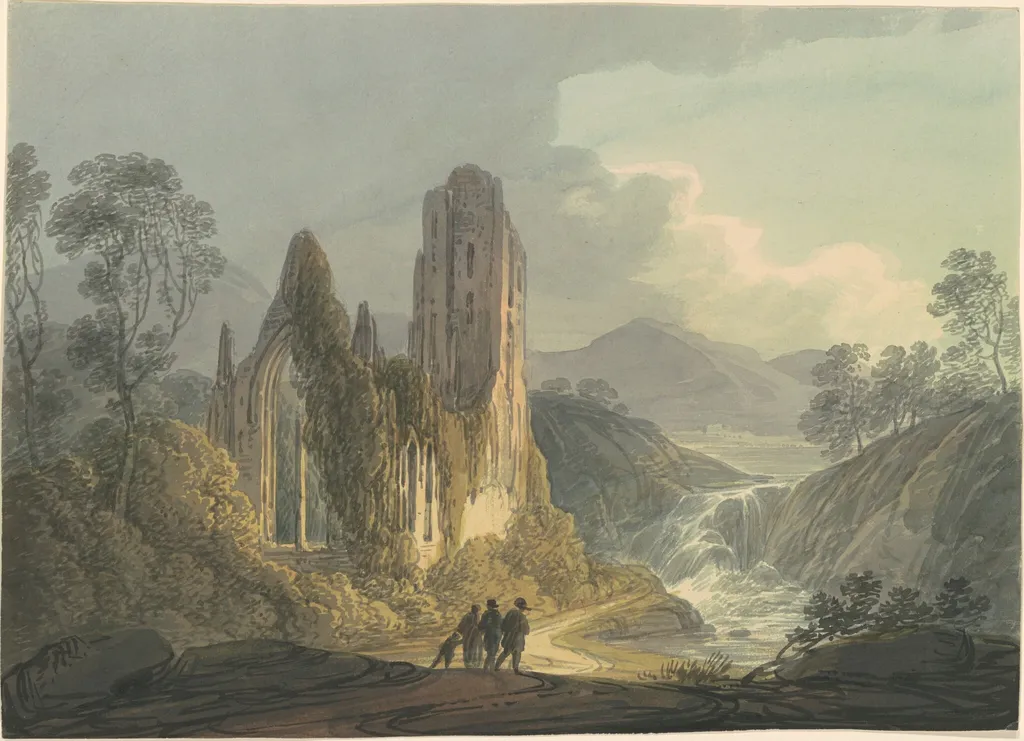
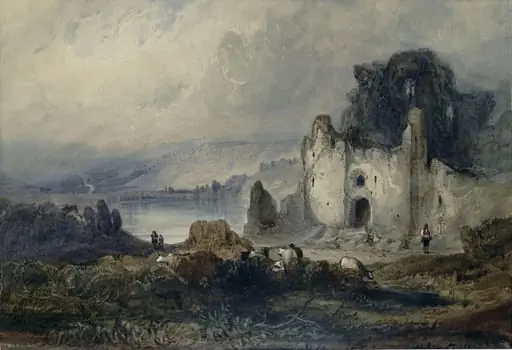
A Ruined Abbey by a Waterfall is a gouache drawing by the Romanticist artist William Payne. It dates from 1800 and is held in the collection of the National Gallery of Art.
About this work
Overview
William Payne’s drawing, titled A Ruined Abbey by a Waterfall, is a small-scale work executed in watercolor, gouache, and graphite on wove paper around the year 1800. The composition centers on a weathered stone abbey perched beside a cascading waterfall, framed by a gentle landscape of trees, hills, and a lightly clouded sky.
Subject & Meaning
The scene juxtaposes the decay of the abbey’s crumbling walls with the vitality of nature, as three diminutive figures traverse a winding path at the foot of the structure, their gaze directed upward toward the ruin. This arrangement suggests contemplation of the passage of time and the relationship between human constructs and the surrounding environment.
Technique & Style
Payne builds the image through successive thin washes, a glazing method that allows underlying tones to shine through, giving the wet rocks a luminous quality. Gouache adds opacity for highlights, while graphite outlines provide structural definition. The overall effect is a misty, atmospheric rendering that emphasizes light and depth.
History & Provenance
Created circa 1800, the work reflects Payne’s early 19th‑century interest in picturesque ruins and natural scenery. The piece has remained within private collections before entering its current institutional setting, though precise ownership records prior to the twentieth century are limited.
Artist & collection


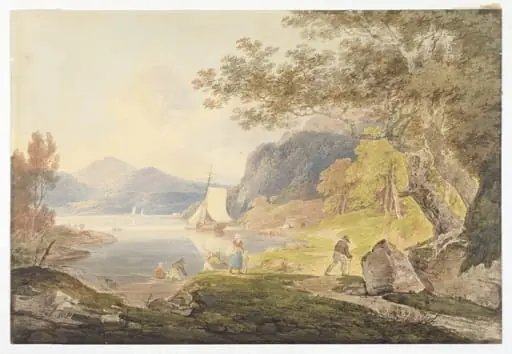
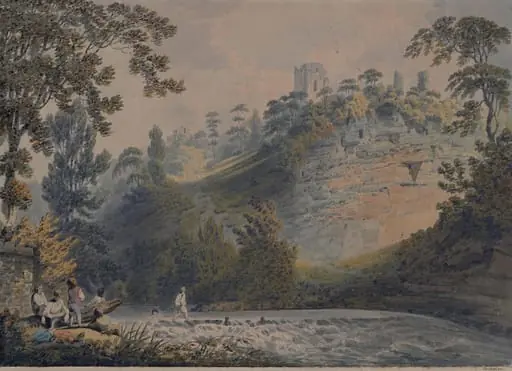 River Scene
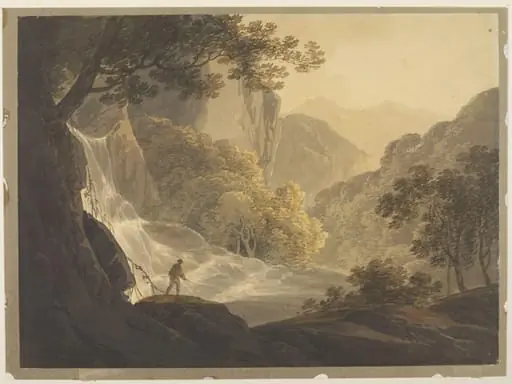 Waterfall
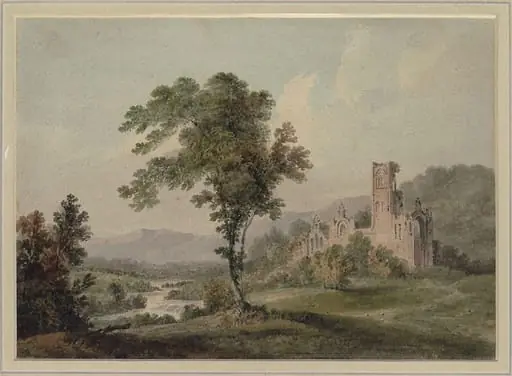 Kirkstall Abbey, Yorkshire
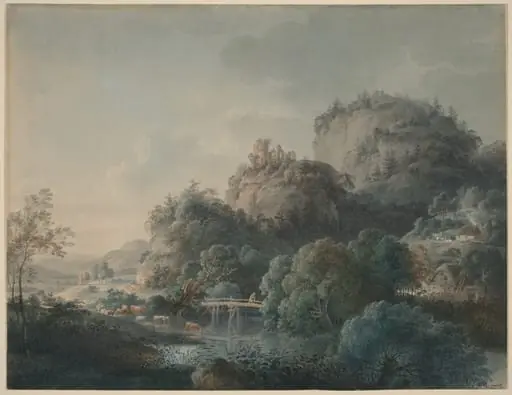 The Ruins of the Monastery of Oybin in the Zittau Mountains
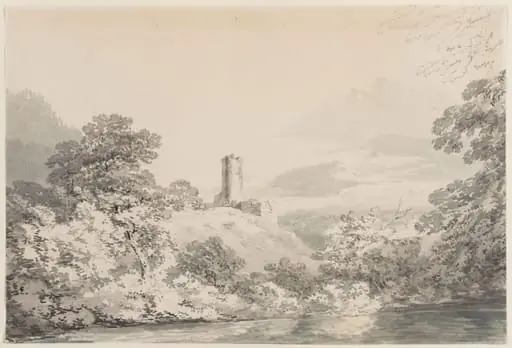 Landscape with tower on a rock
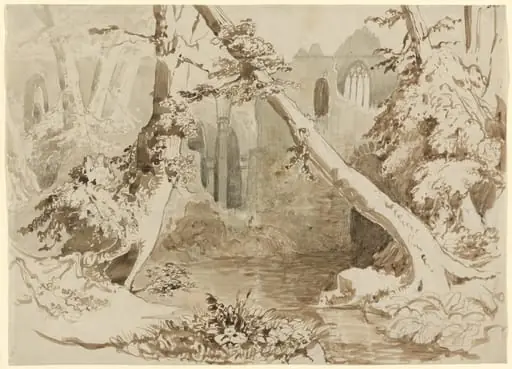 A Ruined Church in the Forest
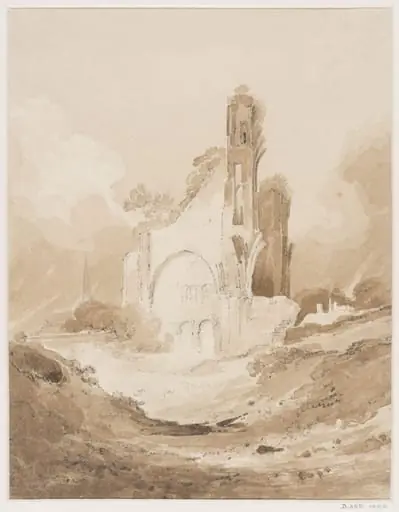 Wenlock Priory, Salop
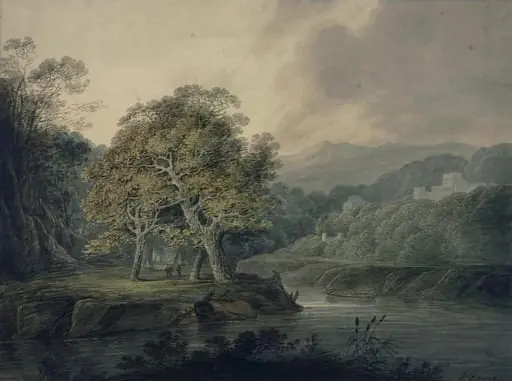 Landscape with river and mountains
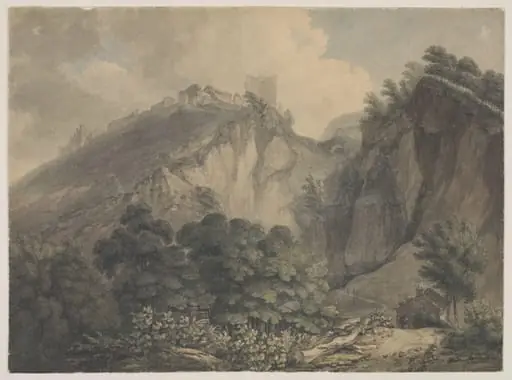 Study of Butterbur (Petasites vulgaris, Desf.) the largest leaf of any English plant
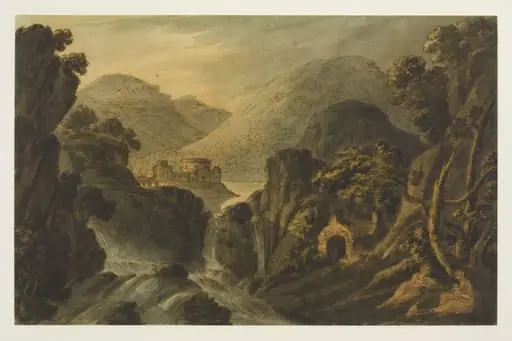 Classical landscape with cascade
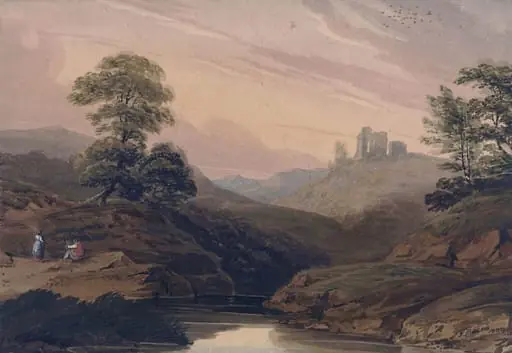 Mountainous Landscape with Stream and Ruin
 Ruined castle and lake