Artwork
Lepus Palustris
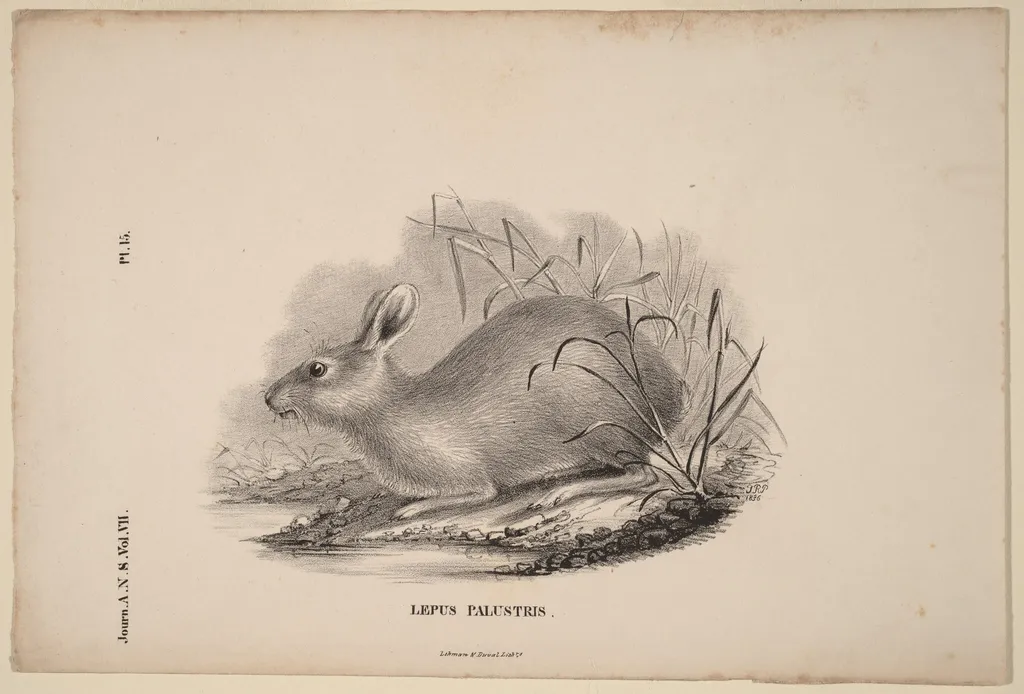
Lepus Palustris is an ink print by the Romanticist artist Titian Ramsay Peale. It dates from 1836 and is held in the collection of the National Gallery of Art.
About this work
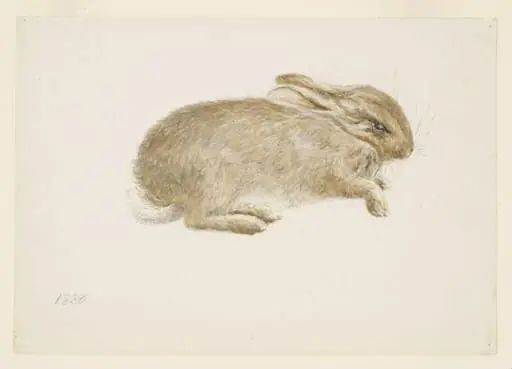
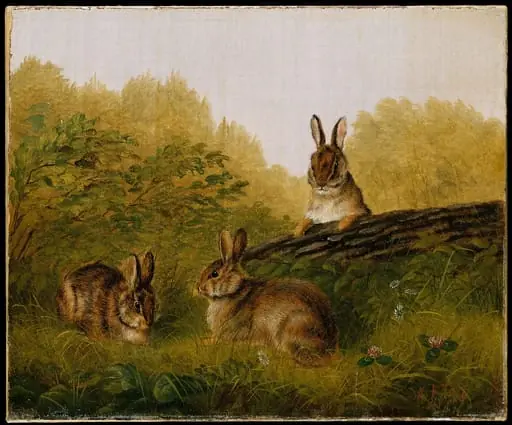
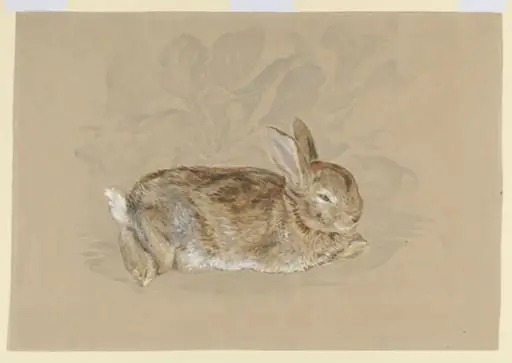
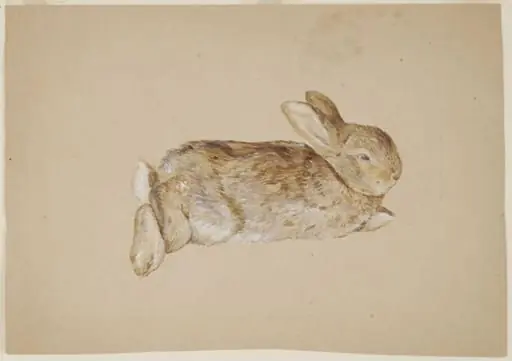
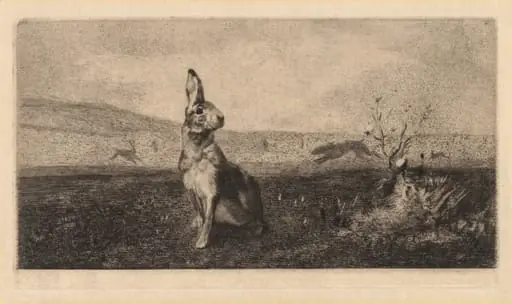
This painting shows a detailed image of a marsh rabbit.
The artist, Peale, Titian Ramsay, created this work in 1836. It's interesting that he was able to create such a detailed piece at a young age, and also that he used lithography to create the image.
You can learn more about the process he used by looking into the technique: lithography.
Overview
Lepus Palustris is a lithograph on wove paper created by Titian Ramsay Peale in 1836, depicting a detailed representation of a marsh rabbit.
Subject & Meaning
The subject of the work is a marsh rabbit, rendered in meticulous detail, suggesting an emphasis on natural history documentation.
Technique & Style
The piece showcases Peale's early mastery of lithography, a technique requiring stone engraving to transfer inked images onto paper, achieving remarkable precision at a relatively young age.
History & Provenance
Created in 1836 by Titian Ramsay Peale, specific provenance details (ownership history) are not provided in the available information.
Context
Part of a broader 19th-century interest in natural history illustration, Lepus Palustris reflects the era's scientific and artistic intersection.
Legacy
While specific legacy details of Lepus Palustris are not provided, it contributes to the broader recognition of Peale's contributions to natural history art and early lithographic techniques.
Artist & collection