Artwork
Arctic Hare
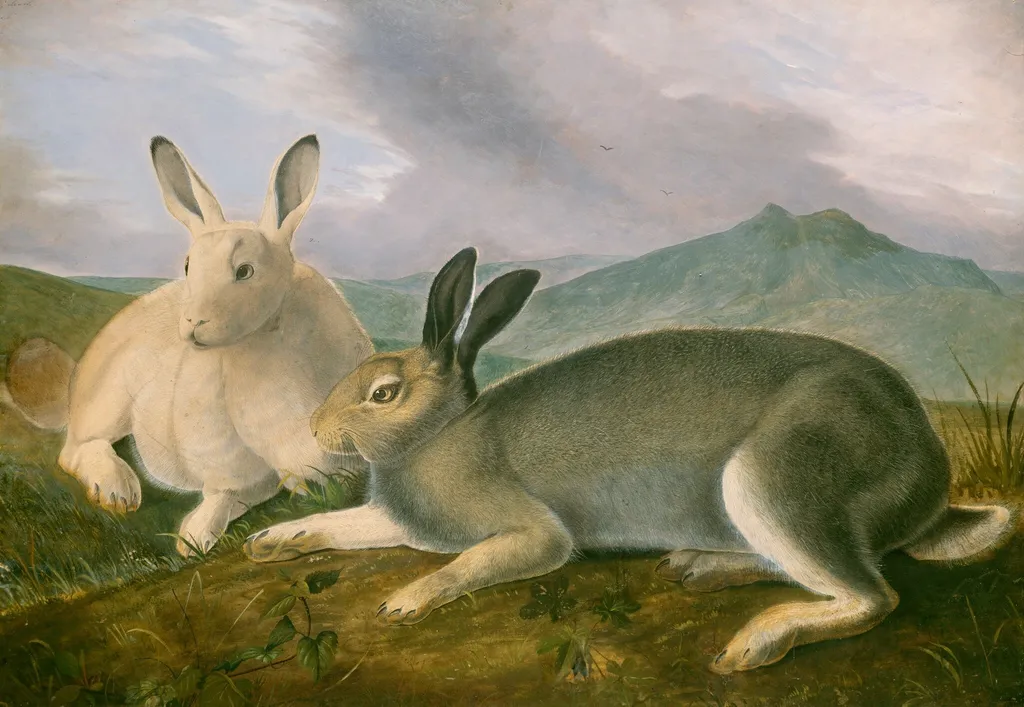
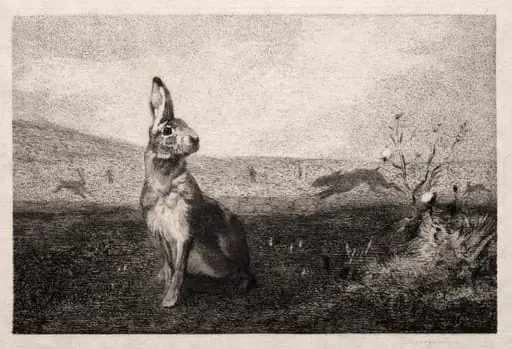
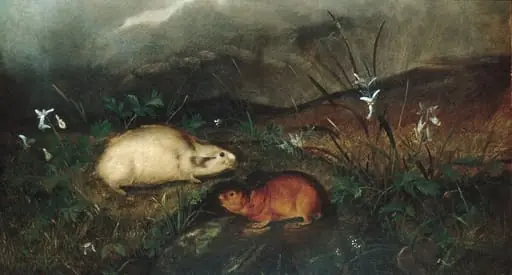
Arctic Hare is an ink drawing by the Romanticist artist John James Audubon. It dates from 1841 and is held in the collection of the National Gallery of Art.
About this work
Overview
Created circa 1841, *Arctic Hare* is a paper drawing by the French‑American naturalist John James Audubon. Combining pen, black ink, graphite, watercolor and oil, the work exemplifies Audubon’s practice of rendering North American wildlife with scientific precision. Though best known for his avian studies, this piece demonstrates his interest in mammals as well.
Subject & Meaning
The drawing depicts an Arctic hare, a species native to the tundra regions of North America. Audubon captures the animal’s characteristic white coat and elongated ears, emphasizing its adaptation to cold environments. The illustration serves both as a visual record for natural history and as a study of form and texture within a harsh landscape.
Technique & Style
Audubon employed a layered approach, beginning with pen and ink outlines, adding graphite shading for volume, then applying watercolor washes to suggest fur tones, and finishing with oil highlights for depth. This mixed‑media method allows fine detail in the hare’s anatomy while preserving a sense of immediacy typical of field sketches.
Context
*Arctic Hare* belongs to the broader corpus of Audubon’s work that extends beyond his celebrated *Birds of America* series. Produced during his extensive travels across the continent, the drawing reflects his commitment to documenting the full range of North American fauna, contributing to 19th‑century scientific illustration and natural history research.
Artist & collection

Artist
John James Audubon (born Jean-Jacques Rabin, April 26, 1785 – January 27, 1851) was a French-American artist, entrepreneur, naturalist, explorer, and ornithologist.