Artwork
Study for a Border Design
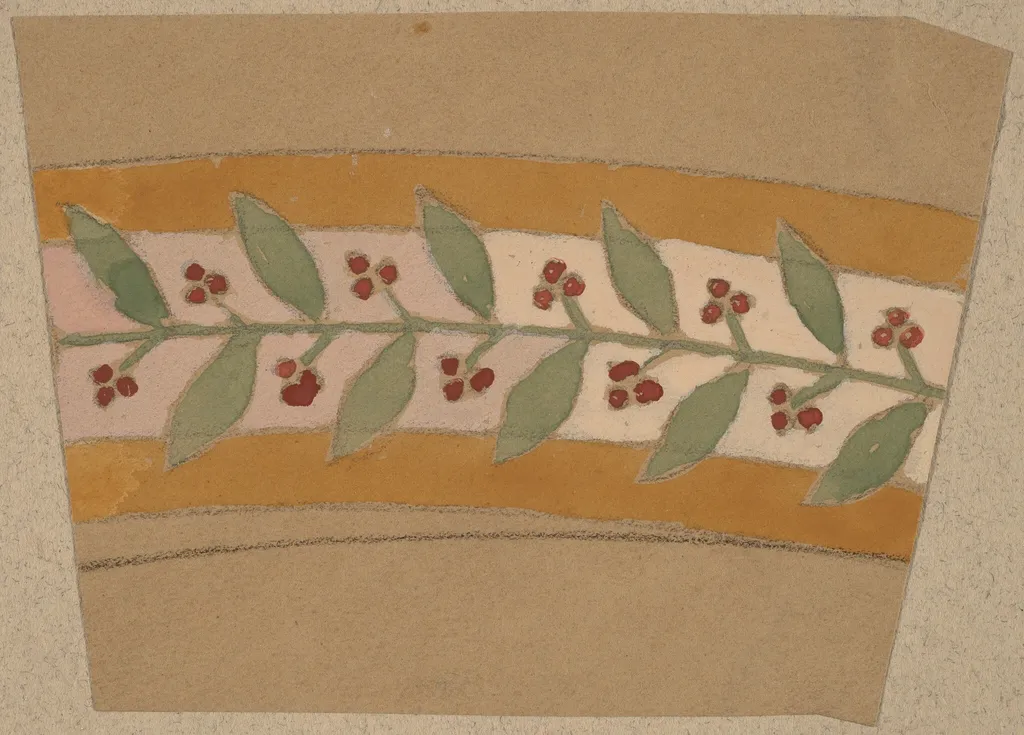
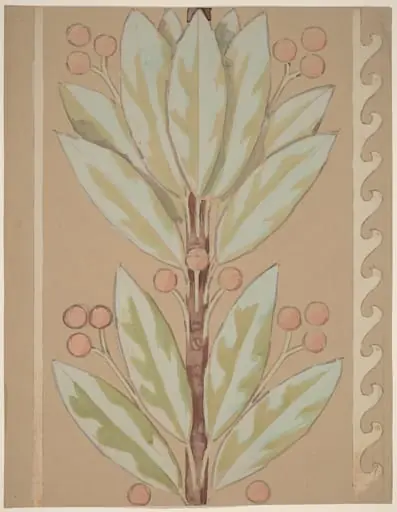
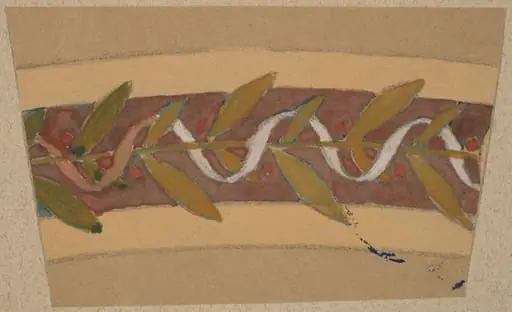
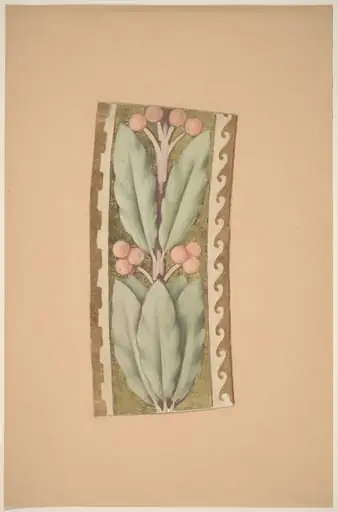
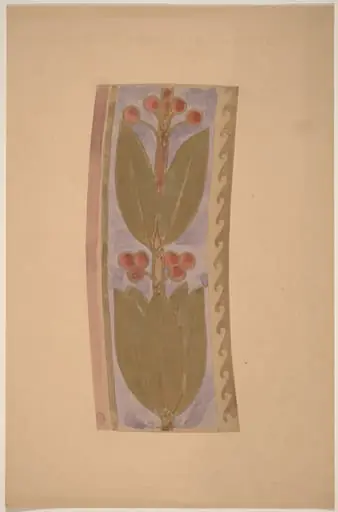
Study for a Border Design is a gouache drawing by the Impressionist artist Charles Sprague Pearce. It dates from 1894 and is held in the collection of the National Gallery of Art.
About this work
Overview
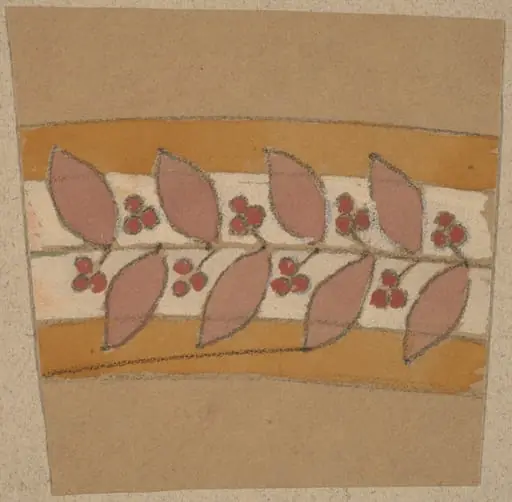
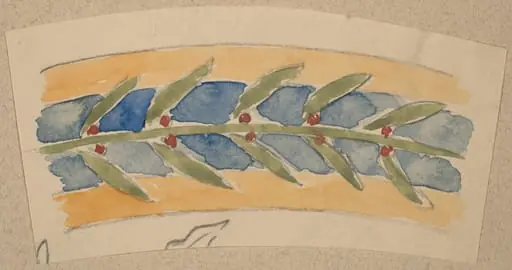
Charles Sprague Pearce’s 1894 gouache and graphite study presents a simplified botanical motif intended as a decorative border. Executed on tan wove paper, the composition features a single branch bearing green foliage and clusters of red berries, framed by two horizontal orange‑brown bands that delineate the design’s edges.
Subject & Meaning
The drawing isolates a natural element—a branch with leaves and fruit—to explore its potential as a repeating ornamental pattern. By reducing the subject to its essential shapes and colors, Pearce emphasizes the decorative qualities of the botanical form rather than a narrative or symbolic content.
Technique & Style
Pearce employed gouache for its opaque, flat color fields, applying bright greens, reds, and earth tones without gradation or modeling. Graphite outlines convey a loose, sketch‑like quality, suggesting a rapid preparatory approach. The lack of shading and the uniform application of pigment highlight the medium’s capacity for vivid, non‑modelled surfaces.
History & Provenance
Created in 1894, the study was likely produced as a preparatory piece for a larger decorative commission, a common practice among late‑19th‑century illustrators. The work remains documented as part of Pearce’s oeuvre, illustrating his engagement with design studies during this period.
Artist & collection

Artist
Charles Sprague Pearce (1851–1914) was an American artist, born in Boston.


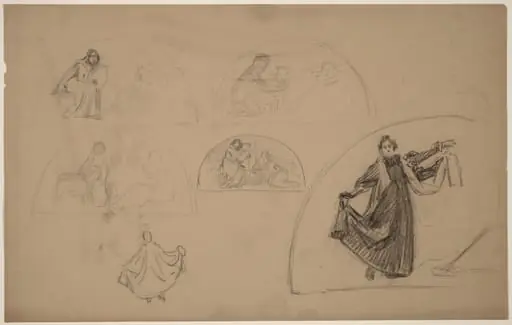
![Studies for a Lunette [recto], by Charles Sprague Pearce](https://artifactworldgallery.com/img/charles-sprague-pearce--studies-for-a-lunette-recto--07c43c96c8ad1d74-w320.webp)