Artwork
Study for a Border Design
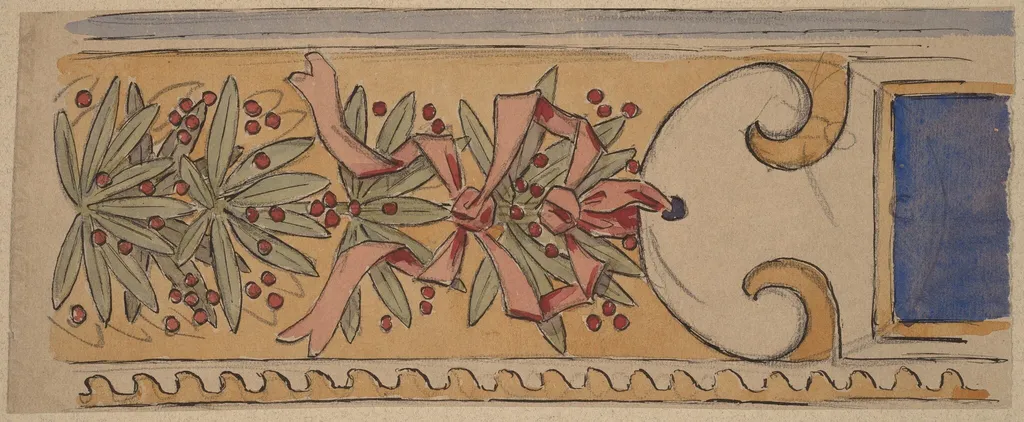
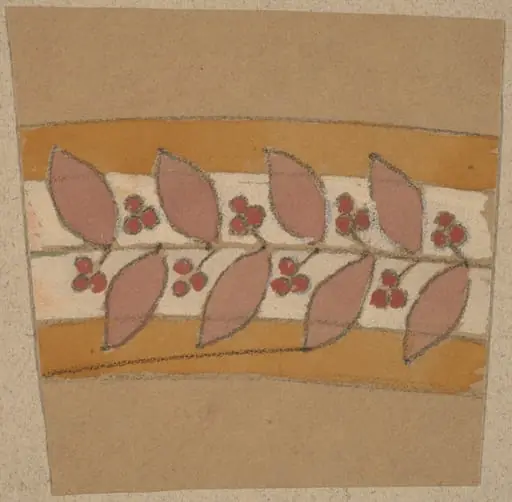
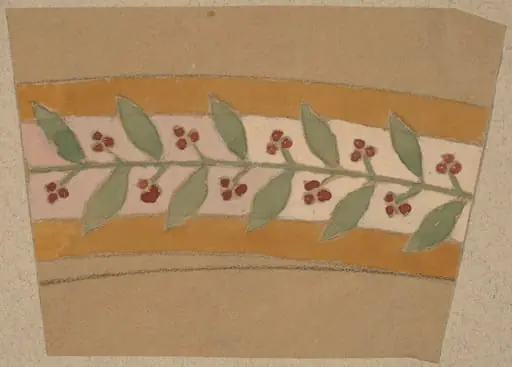
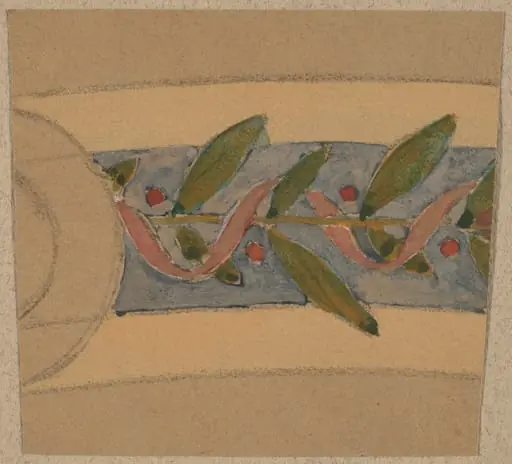
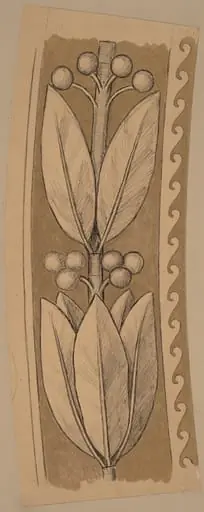
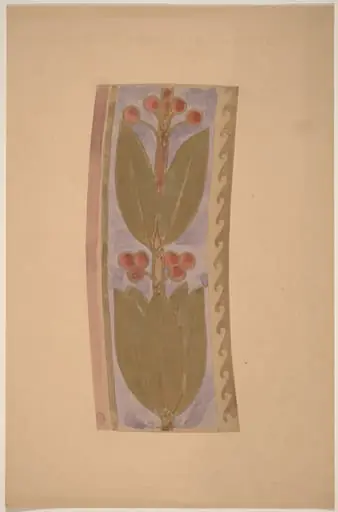
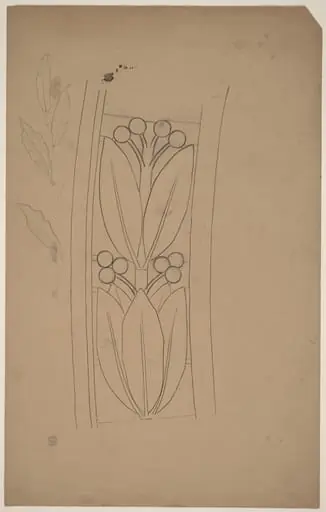
Study for a Border Design is an ink drawing by the Impressionist artist Charles Sprague Pearce. It dates from 1894 and is held in the collection of the National Gallery of Art.
About this work
Overview
The composition suggests an ornamental motif intended for architectural or textile application, emphasizing rhythm over naturalism.
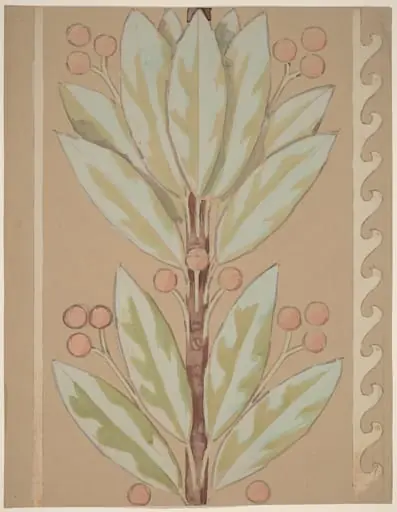
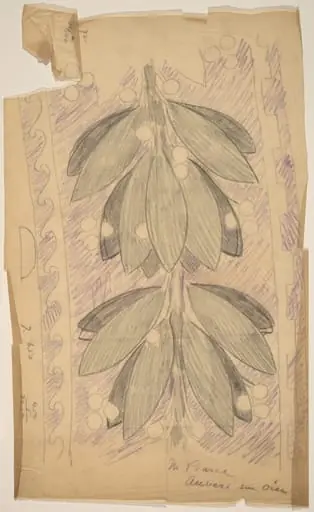
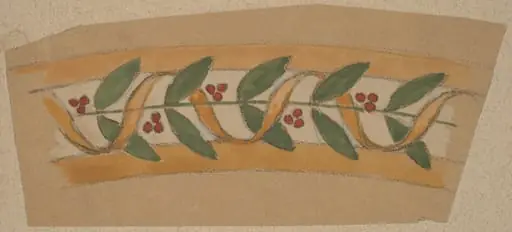
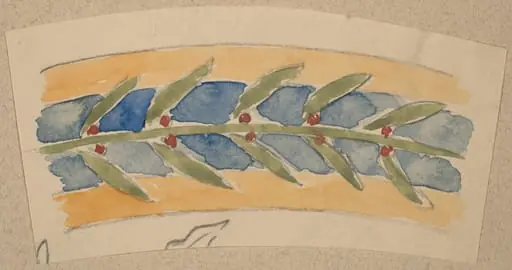
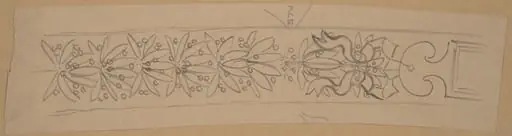
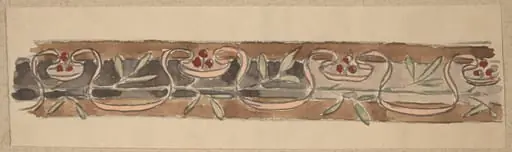
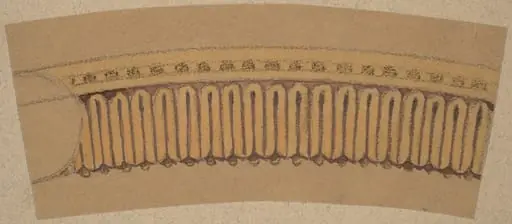
Created in 1894, this drawing by Charles Sprague Pearce is a preparatory study for a decorative border. Executed in gouache, pen and ink, and graphite on tan wove paper, it combines fluid washes with precise linear elements. The composition suggests an ornamental motif intended for architectural or textile application, emphasizing rhythm over naturalism. The soft palette and loose handling indicate a focus on form and pattern rather than detailed representation.
Subject & Meaning
The design features a horizontal band of stylized flowers with red berries, arranged in a repeating sequence. The forms are simplified, bordering on abstract, suggesting an interest in decorative tradition rather than botanical accuracy. A dark blue rectangular shape on the right may imply a structural frame, hinting at the intended context—perhaps a wall panel or textile edge. The motif evokes craftsmanship rooted in Arts and Crafts ideals, valuing harmony over realism.
Technique & Style
Pearce employed gouache for its opaque, matte quality, allowing layered tones of pink and green to sit lightly over the tan paper. Pen and ink defined contours with swift, economical strokes, while graphite added subtle tonal shifts. Areas remain deliberately sketchy, preserving the immediacy of the initial concept. The scalloped lower edge and flat background reinforce the work’s function as a pattern template, not a finished image.
History & Provenance
The drawing dates from the final decade of Pearce’s career, a period when he increasingly engaged with decorative arts. It likely originated from his work on interior design commissions or collaborations with artisans. Its survival as a standalone study suggests it was retained for reference or as an example of his design process. No public record of its early ownership is documented, but it entered institutional collections in the 20th century.
Context
Made during the height of the American Arts and Crafts movement, the piece reflects broader trends favoring handcrafted ornament over industrial mass production. Pearce, primarily known as a painter, turned toward design as many artists did at the time, responding to reformist ideals that elevated utility and aesthetic unity. This study aligns with contemporaneous work by designers like William Morris, who treated floral motifs as rhythmic, non-representational elements.
Legacy
Though not widely exhibited, this study exemplifies Pearce’s engagement with applied arts beyond easel painting. It contributes to understanding how fine artists contributed to decorative design in late 19th-century America. Its preservation offers insight into the iterative process behind ornamental work, bridging fine art and craft traditions. The drawing remains a quiet testament to the era’s pursuit of beauty in everyday surfaces.
Artist & collection

Artist
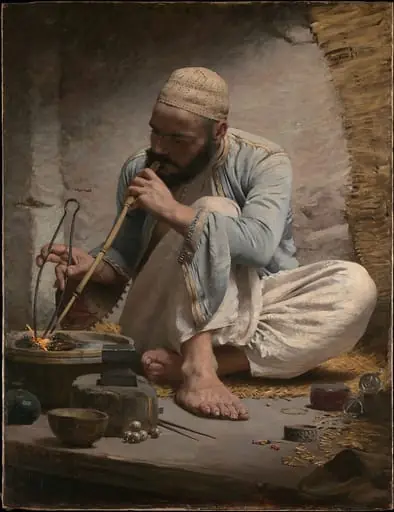
Charles Sprague Pearce (1851–1914) was an American artist, born in Boston.

![Studies for a Lunette [recto], by Charles Sprague Pearce](https://artifactworldgallery.com/img/charles-sprague-pearce--studies-for-a-lunette-recto--07c43c96c8ad1d74-w320.webp)