Artwork
Study for a Border Design
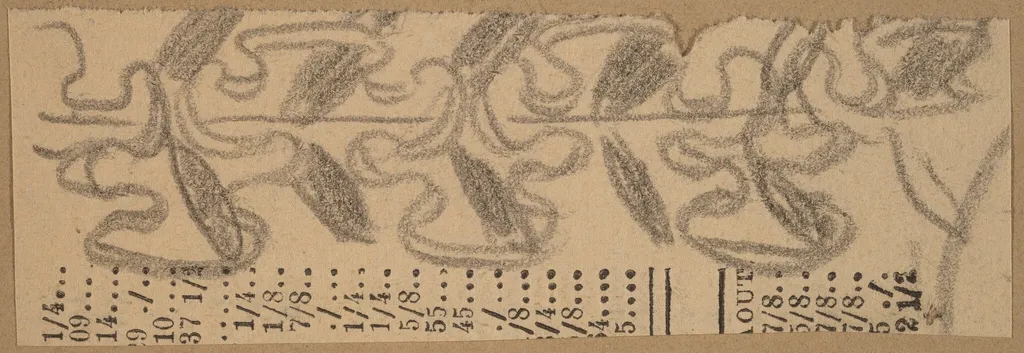
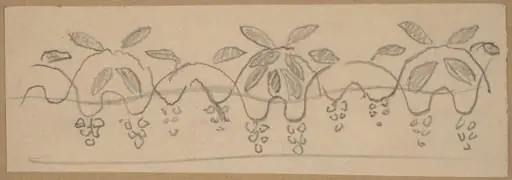
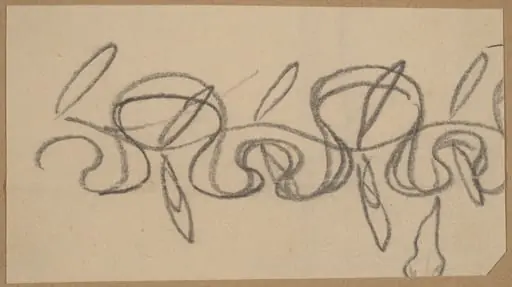
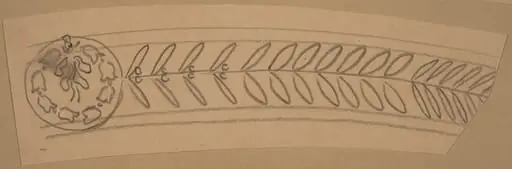
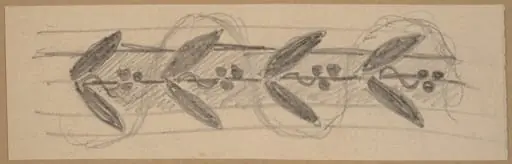
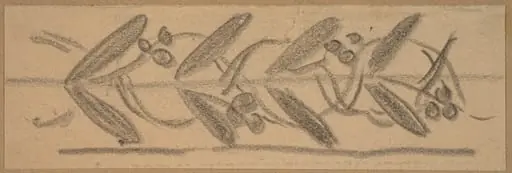
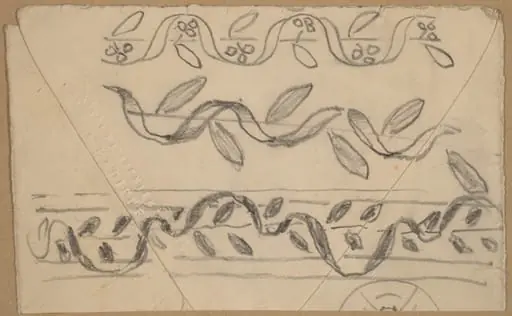
Study for a Border Design is a graphite drawing by the Impressionist artist Charles Sprague Pearce. It dates from 1894 and is held in the collection of the National Gallery of Art.
About this work
Overview
Created in 1894, this modest drawing by Charles Sprague Pearce serves as a preparatory study for a decorative border. Executed on a trimmed page of tan wove paper, the work consists of a repetitive sequence of undulating lines rendered in graphite, accompanied at the lower edge by a series of minute ink dots and numerals.
Subject & Meaning
The central motif consists of sinuous, wave‑like strokes that may evoke either flowing water or stylized vines, suggesting a rhythmic ornamental pattern intended for later application. The ancillary ink markings appear to function as a schematic guide, perhaps indicating spacing, repetition, or reference points for the final design.
Technique & Style
Pearce employed only graphite pencil for the primary line work, allowing a range of tonal values from faint to pronounced. The ink additions—tiny dots and numbers—contrast sharply with the graphite, providing a precise, utilitarian layer of annotation. The drawing’s simplicity reflects the artist’s focus on compositional planning rather than finished illustration.
History & Provenance
The piece originates from the late nineteenth‑century period when Pearce was active in decorative arts and illustration. The paper, cut from a bound volume, indicates the artist’s use of readily available material for sketching. Its survival as a separate study suggests it was retained, perhaps by the artist or a collector, as evidence of his design process.
Artist & collection

Artist
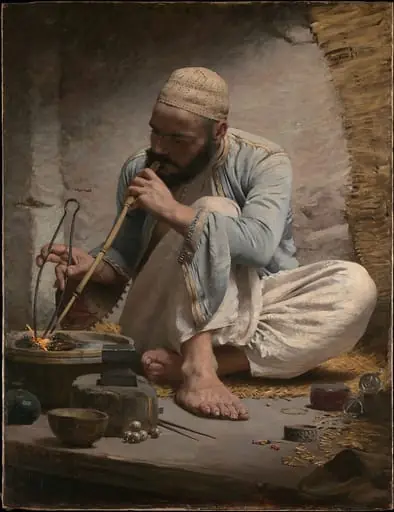
Charles Sprague Pearce (1851–1914) was an American artist, born in Boston.

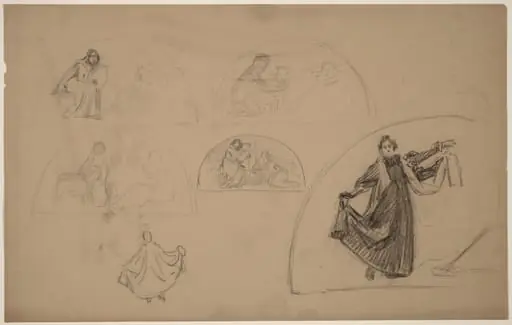
![Studies for a Lunette [recto], by Charles Sprague Pearce](https://artifactworldgallery.com/img/charles-sprague-pearce--studies-for-a-lunette-recto--07c43c96c8ad1d74-w320.webp)
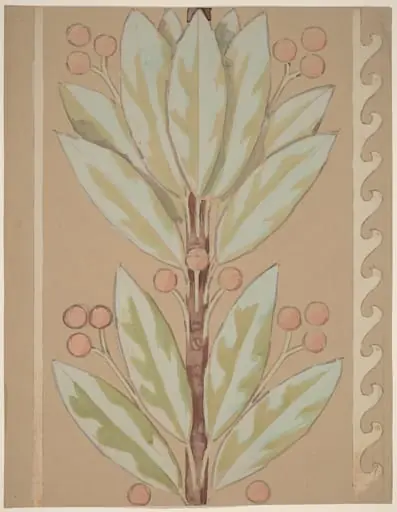
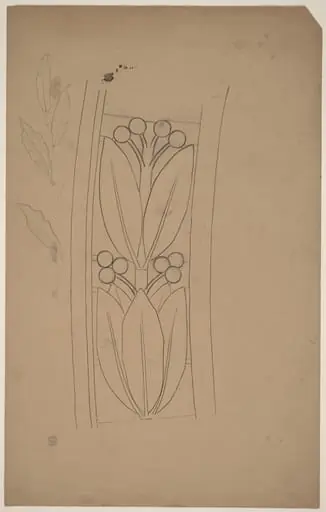
![Study for a Border Design [recto], by Charles Sprague Pearce](https://artifactworldgallery.com/img/charles-sprague-pearce--study-for-a-border-design-recto--d1721a9baf3d1e3d-w320.webp)