Artwork
Study for an Archway
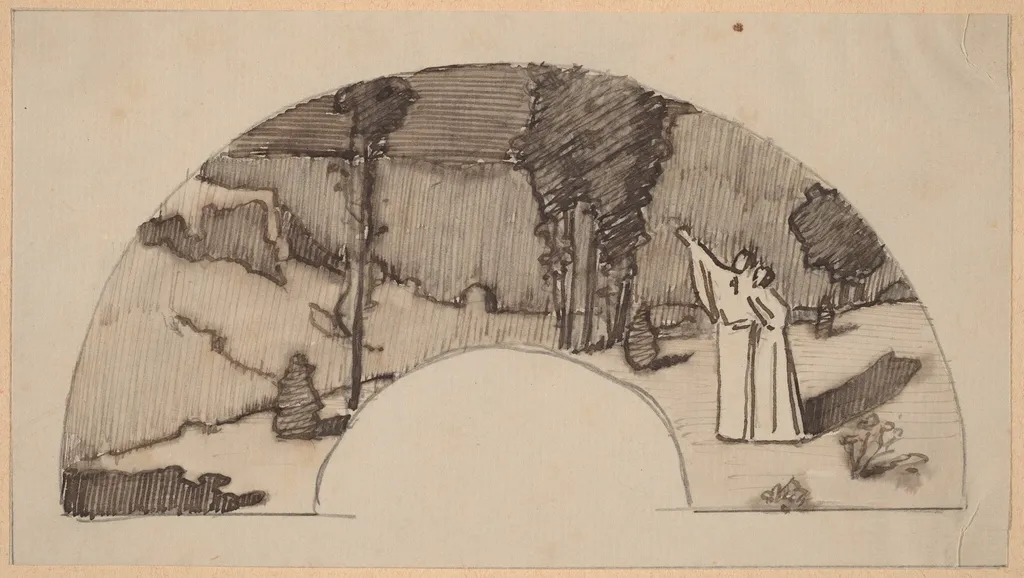
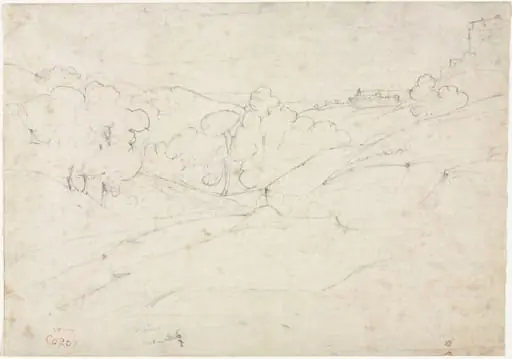
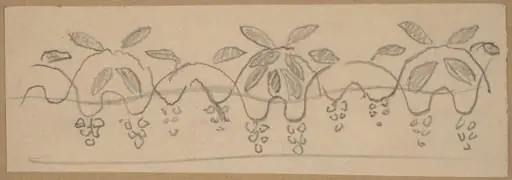
Study for an Archway is an ink drawing by the Impressionist artist Charles Sprague Pearce. It dates from 1894 and is held in the collection of the National Gallery of Art.
About this work
Overview
Executed in pen and brown ink with wash and graphite on tan laid paper, it captures the structural form with restrained precision.
Created in 1894 by Charles Sprague Pearce, this drawing serves as a preparatory study for an architectural archway. Executed in pen and brown ink with wash and graphite on tan laid paper, it captures the structural form with restrained precision. The medium’s subtlety allows for nuanced tonal variation, emphasizing the arch’s volume without overt detail, reflecting its function as a working sketch rather than a finished composition.
Subject & Meaning
The central subject is an architectural archway, rendered without context or figures, focusing purely on form and structure. The absence of surrounding elements directs attention to the arch’s geometry and mass, suggesting an interest in classical or monumental design. This study likely informed a larger project, possibly for a building or public space, where proportion and silhouette were critical to the final execution.
Technique & Style
Pearce employed cross-hatching in pen and ink to model the arch’s surfaces, building shadow and depth through layered lines. Brown wash softens transitions between light and dark, while graphite enhances texture along edges and recesses. The tan paper provides a mid-tone base, reducing the need for full shading and allowing the ink to define form with economy. The technique prioritizes clarity and structural logic over decorative flourish.
History & Provenance
The drawing originates from Pearce’s personal sketchbook or preparatory portfolio, created during his time in Europe or after his return to the United States. It was likely retained by the artist or his estate, later entering institutional collections. No public record of exhibition or sale prior to its current location is documented, indicating its role as an internal working tool rather than a public-facing work.
Context
In the late 19th century, American artists like Pearce often studied European architecture during extended stays abroad, bringing back sketches to inform domestic commissions. This drawing aligns with academic traditions of architectural study, where precise rendering of classical forms was essential. Pearce’s focus on the arch reflects broader interests in Beaux-Arts principles then shaping public buildings in the U.S.
Legacy
As a functional study, this work exemplifies the disciplined draftsmanship valued in academic art training of the period. Though not widely exhibited, it remains a representative example of how artists translated observational sketches into architectural designs. Its preservation underscores the importance of preparatory work in the creative process, offering insight into the quiet labor behind monumental structures.
Artist & collection

Artist
Charles Sprague Pearce (1851–1914) was an American artist, born in Boston.

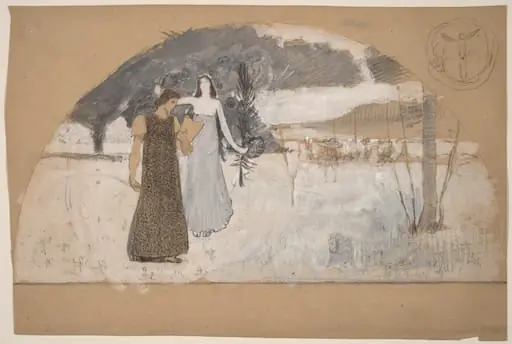
![Studies for a Lunette [recto], by Charles Sprague Pearce](https://artifactworldgallery.com/img/charles-sprague-pearce--studies-for-a-lunette-recto--07c43c96c8ad1d74-w320.webp)