Artwork
Carmosine (projet de programme)
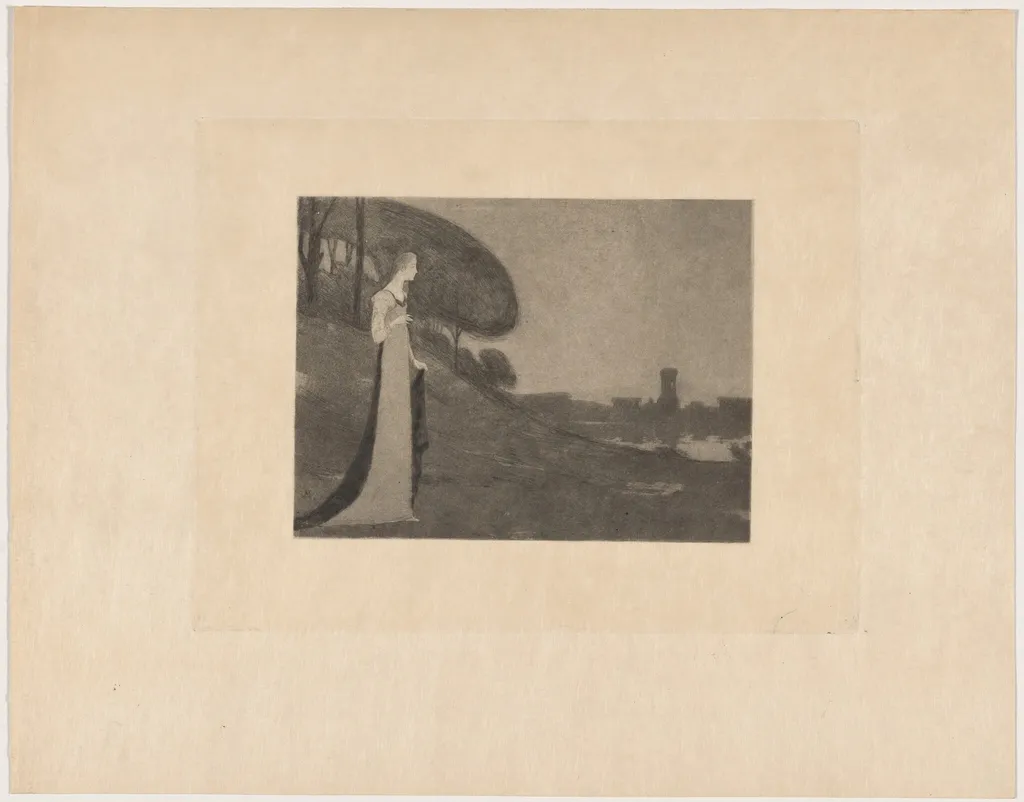
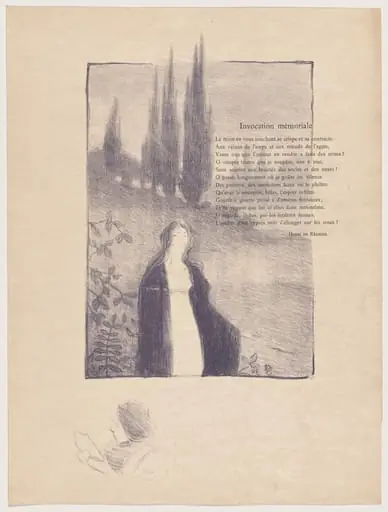
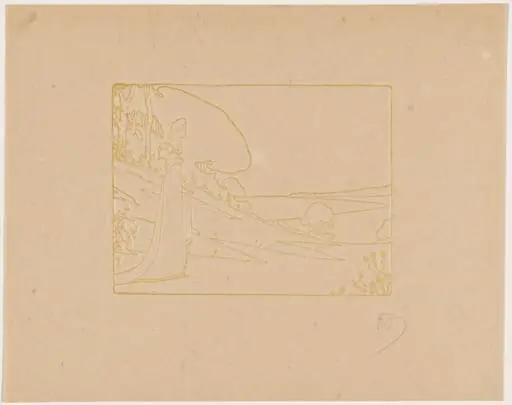
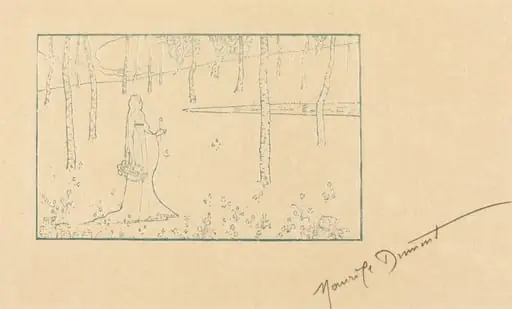
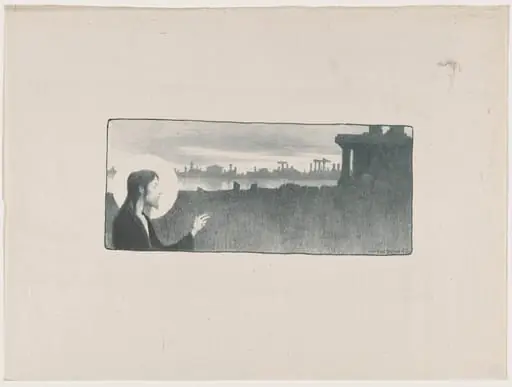
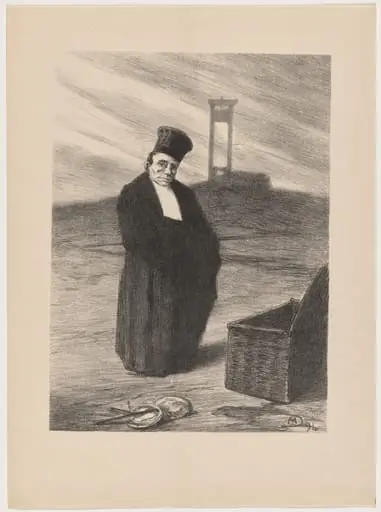
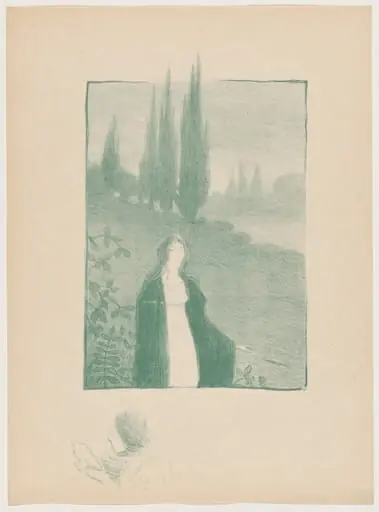
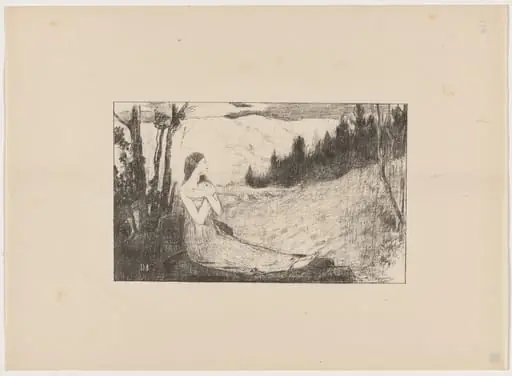
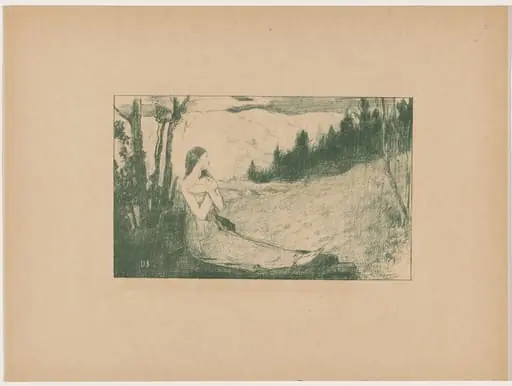
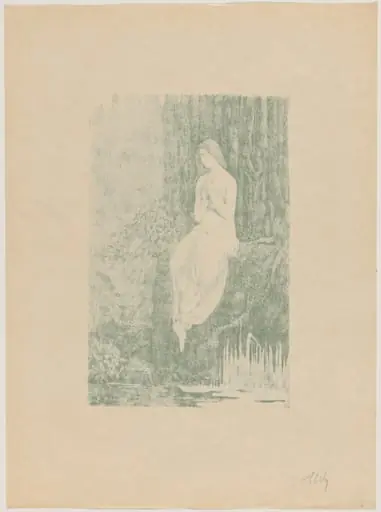
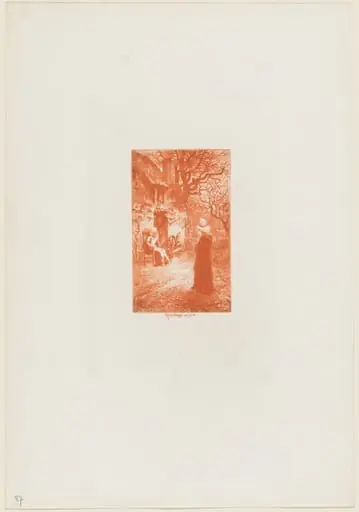
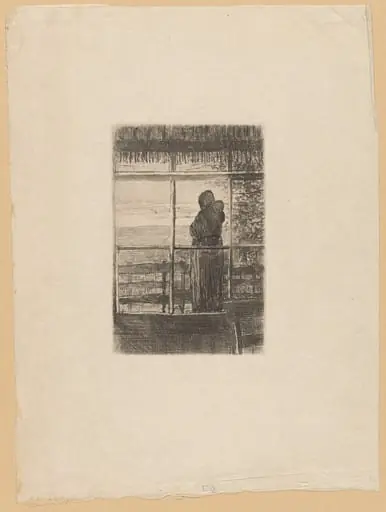
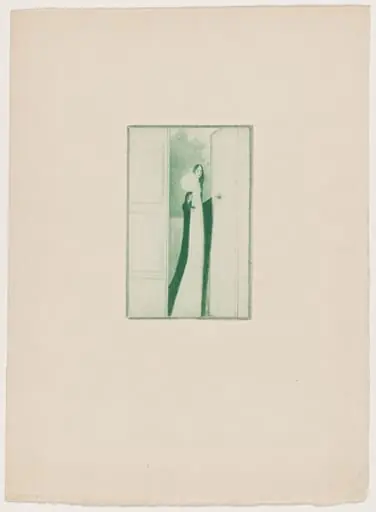
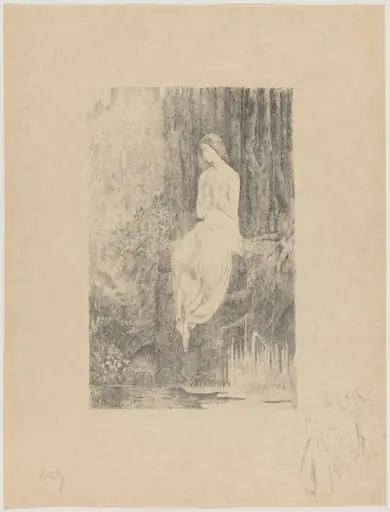
Carmosine (projet de programme) is an ink print by the Impressionist artist Maurice Dumont. It dates from 1895 and is held in the collection of the National Gallery of Art.
About this work
Overview
The work belongs to a series of experimental prints from the late 19th century that sought to move beyond sharp line work toward more nuanced tonal effects.
Carmosine (projet de programme), created in 1895 by Maurice Dumont, is a print made using etching and aquatint techniques on heavy Japan paper. The work belongs to a series of experimental prints from the late 19th century that sought to move beyond sharp line work toward more nuanced tonal effects. Its quiet composition and subdued palette reflect an interest in mood over narrative, characteristic of printmakers exploring atmospheric expression during this period.
Subject & Meaning
The image depicts a solitary female figure in a long garment, walking near a tree and a stretch of water, with a distant dark structure implied on the horizon. No clear story is presented; instead, the scene evokes introspection and solitude. The absence of detail in the figure and surroundings invites contemplation, aligning with Symbolist tendencies that favored emotional resonance over literal representation.
Technique & Style
Dumont combined etching for fine linear elements with aquatint to achieve soft gradations of gray. The result is a hazy, atmospheric effect where edges blur and light seems to dissolve into shadow. The use of Japan paper, known for its absorbency and delicate texture, enhanced the print’s muted tonality. This method allowed for a painterly quality uncommon in traditional line-based prints of the era.
History & Provenance
The work was produced in 1895 as part of Dumont’s exploration of printmaking as an independent art form, not merely a reproductive medium. It was likely circulated among artist circles and collectors interested in the revival of etching in France. While no public record of early ownership is widely documented, its survival in institutional collections suggests recognition within avant-garde print communities by the early 20th century.
Context
In the 1890s, French printmakers increasingly turned to etching and aquatint to rival the tonal richness of drawings and watercolors. Dumont’s work emerged alongside contemporaries like Whistler and Raffaelli, who rejected industrial precision in favor of poetic ambiguity. The quiet, introspective mood of Carmosine reflects broader cultural shifts toward subjectivity and the sublime in fin-de-siècle art.
Legacy
Carmosine exemplifies a transitional moment in printmaking, where technical innovation served emotional intent. Though Dumont is not widely known today, works like this contributed to the legitimization of etching as a vehicle for personal expression. Its influence can be seen in later 20th-century printmakers who prioritized atmosphere and texture over clarity and detail.
Artist & collection