Artwork
Study of a Figure from Behind [recto]
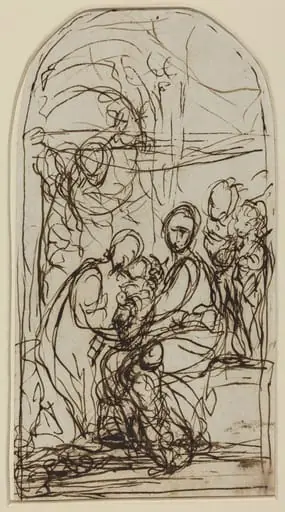
![Study of a Figure from Behind [recto], by Charles Sprague Pearce, chalk, 1894](https://artifactworldgallery.com/img/charles-sprague-pearce--study-of-a-figure-from-behind-recto--b085eec0e7956255-w1024.webp)
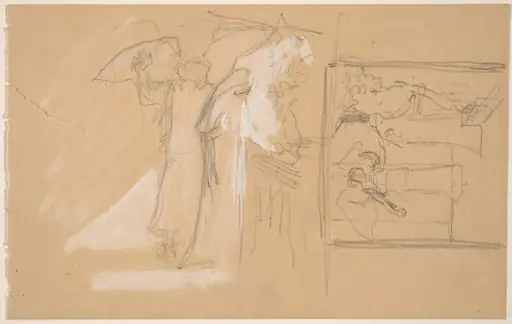
Study of a Figure from Behind [recto] is a chalk drawing by the Impressionist artist Charles Sprague Pearce. It dates from 1894 and is held in the collection of the National Gallery of Art.
About this work
Overview
Created in 1894 by Charles Sprague Pearce, this graphite and white chalk drawing on tan wove paper captures two human forms in a moment of quiet stillness.
Created in 1894 by Charles Sprague Pearce, this graphite and white chalk drawing on tan wove paper captures two human forms in a moment of quiet stillness. Rendered with minimal, fluid strokes, the composition suggests an informal study rather than a finished piece. The paper’s warm tone and sparse highlights contribute to a sense of immediacy, as if the artist recorded the scene directly from observation.
Subject & Meaning
The figures appear engaged in a ritual act: one kneels with arms extended, the other stands behind, holding a vertical object resembling a staff or cross. Their draped clothing and posture evoke religious devotion, though no specific narrative is defined. The ambiguity invites interpretation without imposing doctrine, reflecting a focus on human gesture over symbolic detail.
Technique & Style
Pearce employed light, rapid pencil lines to suggest form, with selective white highlights adding contrast and volume. The tan paper serves as a midtone, reducing the need for full shading. The loose handling and lack of fine detail indicate a working sketch, prioritizing movement and posture over precision. The technique aligns with academic life drawing practices of the period.
History & Provenance
The drawing originates from Pearce’s personal sketchbook or study sessions during his time in Europe, likely made during his years in Rome or Florence. It was preserved within his estate and later acquired by a public collection, where it remains as part of a broader archive of his preparatory works. No exhibition history is documented prior to its institutional acquisition.
Context
In the late 19th century, American artists trained in Europe often produced such studies to refine their understanding of anatomy and drapery. Pearce, influenced by academic traditions and Realist principles, used these sketches to capture authentic human presence. This work reflects a broader trend of artists valuing direct observation over idealized composition.
Legacy
Though not widely exhibited, the drawing contributes to understanding Pearce’s process as a figurative artist. It exemplifies how academic training emphasized transient moments and physical truth, influencing later generations who valued sketching as a vital discipline. Its modest scale and unfinished quality underscore its role as a tool of inquiry rather than a public statement.
Artist & collection

Artist
Charles Sprague Pearce (1851–1914) was an American artist, born in Boston.

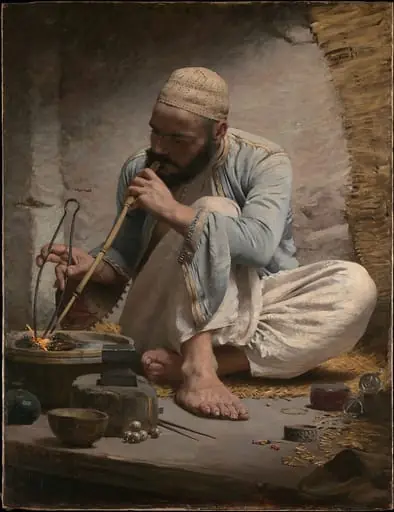
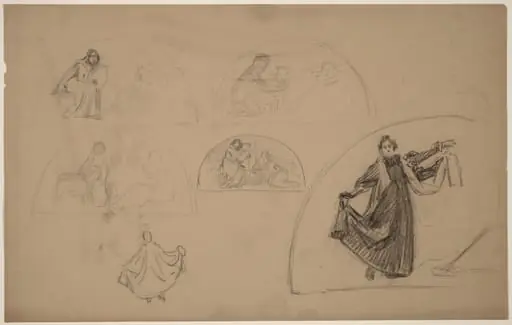
![Studies for a Lunette [recto], by Charles Sprague Pearce](https://artifactworldgallery.com/img/charles-sprague-pearce--studies-for-a-lunette-recto--07c43c96c8ad1d74-w320.webp)
![Presentation of the Virgin in the Temple [recto], by Antonio Zanchi](https://artifactworldgallery.com/img/antonio-zanchi--presentation-of-the-virgin-in-the-temple-recto--b60030c863fe5e3b-w320.webp)
![Figure Seated on the Ground [recto], by Paul Gauguin](https://artifactworldgallery.com/img/paul-gauguin--figure-seated-on-the-ground-recto--ce49e9c311169db0-w320.webp)