Artwork
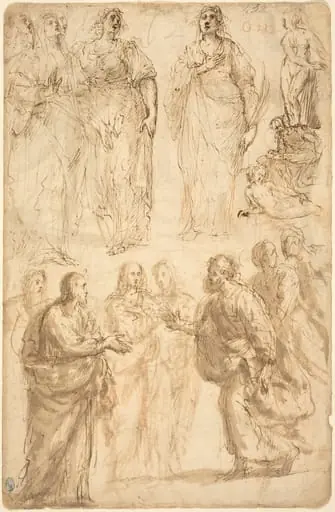
Presentation of the Virgin in the Temple [recto]
![Presentation of the Virgin in the Temple [recto], by Antonio Zanchi, chalk, 1700](https://artifactworldgallery.com/img/antonio-zanchi--presentation-of-the-virgin-in-the-temple-recto--b60030c863fe5e3b-w1024.webp)
Presentation of the Virgin in the Temple [recto] is a chalk drawing by the Baroque artist Antonio Zanchi. It dates from 1700 and is held in the collection of the National Gallery of Art.
About this work
Overview
The use of squared lines in black chalk suggests it was intended as a model for transfer or scaling, typical of studio practice in early 18th-century Venice.
Created around 1700 by Antonio Zanchi, this drawing is a preparatory study for a larger religious composition. Executed in pen and brown ink with brown wash over black chalk on laid paper, it demonstrates the artist’s reliance on traditional Venetian draftsmanship. The use of squared lines in black chalk suggests it was intended as a model for transfer or scaling, typical of studio practice in early 18th-century Venice.
Subject & Meaning
The scene depicts the Presentation of the Virgin Mary in the Temple, a biblical event in which the young Mary is offered to God by her parents. The central figure, standing on a raised platform, holds a length of cloth, symbolizing her consecration. Surrounding figures reach toward her, their gestures conveying reverence and communal participation, emphasizing the sacred nature of the moment through physical proximity and upward motion.
Technique & Style
Zanchi employed rapid, expressive lines and layered washes to model form and suggest volume. The black chalk underdrawing defines structure, while ink and wash create tonal contrasts that enhance spatial depth and emotional intensity. The loose handling of drapery and the dynamic arrangement of figures reflect a Baroque interest in movement and theatricality, prioritizing expressive energy over precise detail.
History & Provenance
The drawing originates from Zanchi’s workshop in Venice, where he was active from the 1660s until his death in 1722. As a painter and draftsman trained in the Venetian tradition, he produced numerous studies for altarpieces and fresco cycles. This sheet likely served as a working model for a commission, though its exact provenance prior to modern collection remains undocumented.
Context
In late 17th-century Venice, religious art remained central to civic and ecclesiastical life. Artists like Zanchi drew upon the legacy of Titian and Veronese, adapting their compositional richness to Baroque sensibilities. This drawing aligns with a broader trend of preparatory sketches that prioritized emotional impact and spatial dynamism, serving as vital links between concept and finished work in large-scale religious projects.
Legacy
Zanchi’s drawings, though less widely studied than those of his contemporaries, illustrate the continuity of Venetian draftsmanship into the early 18th century. This work exemplifies how studio practice preserved traditional methods while accommodating Baroque expressiveness. As a surviving example of preparatory work, it offers insight into the iterative process behind religious imagery in post-Renaissance Venice.
Artist & collection
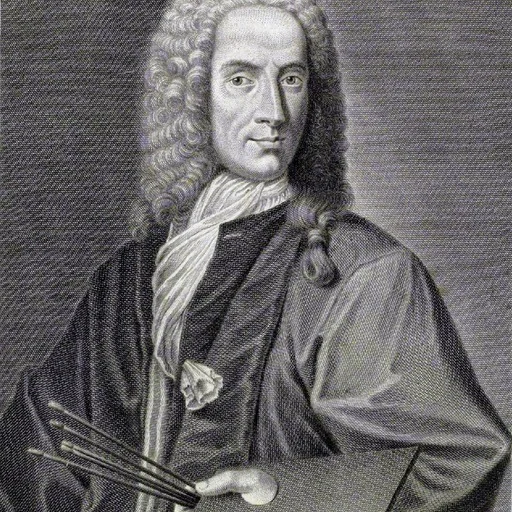
Artist
Antonio Zanchi (Italian pronunciation: ; 6 December 1631 – 12 April 1722) was an Italian painter of the Baroque, active mainly in Venice, but his prolific works can also be seen in Padova, Treviso, Rovigo, Verona,…

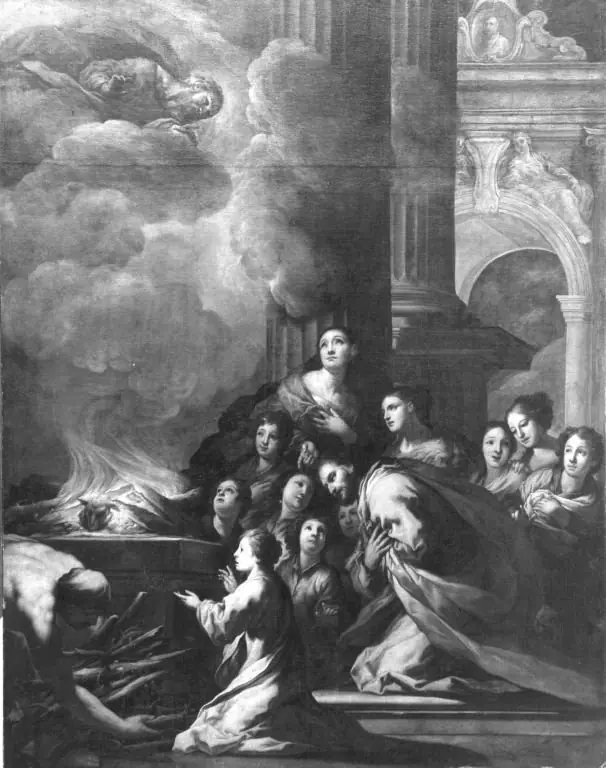
![Presentation of the Virgin in the Temple [verso], by Antonio Zanchi](https://artifactworldgallery.com/img/antonio-zanchi--presentation-of-the-virgin-in-the-temple-verso--450080eaf8685583-w320.webp)
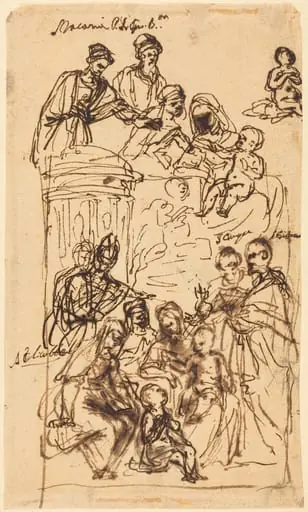 The Madonna and Child with Saints
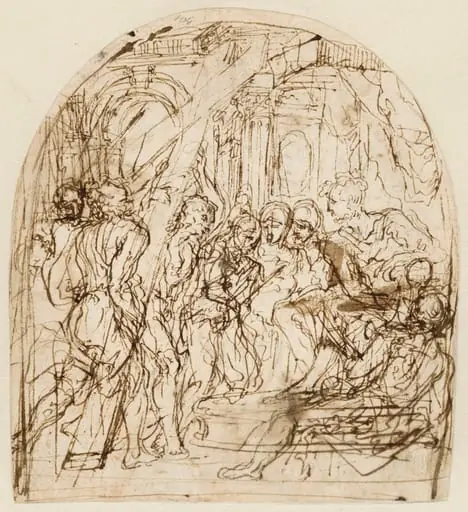 Christ Carrying the Cross
![The Ecstasy of Saint Francis [recto], by Sebastiano Ricci](https://artifactworldgallery.com/img/sebastiano-ricci--the-ecstasy-of-saint-francis-recto--5f53f9b59775e5dd-w320.webp) The Ecstasy of Saint Francis [recto]
The Ecstasy of Saint Francis [recto]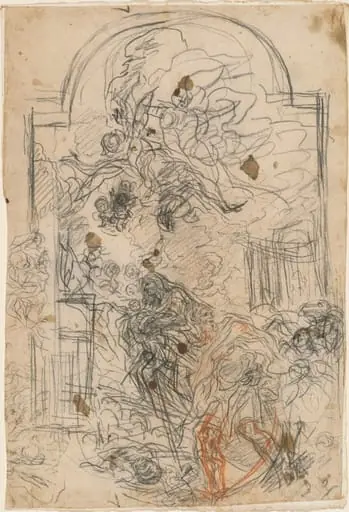 The Flight into Egypt
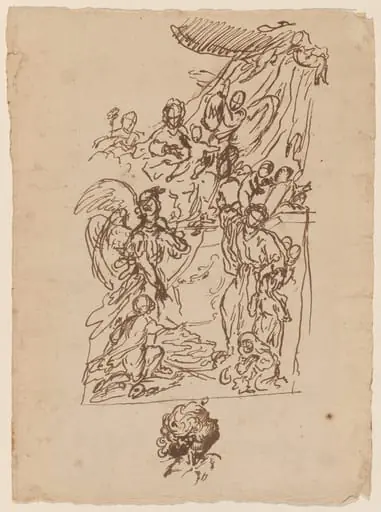 The Madonna and Child Seated on a Dais with Tobias and the Angel and a Saint Presenting Two Children
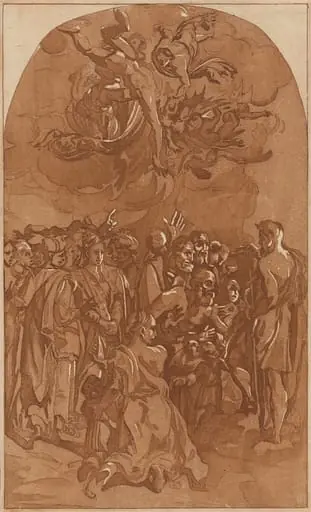 Saint John Preaching
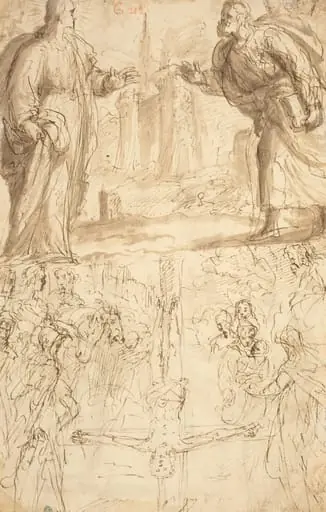 Crucifixion of Saint Peter
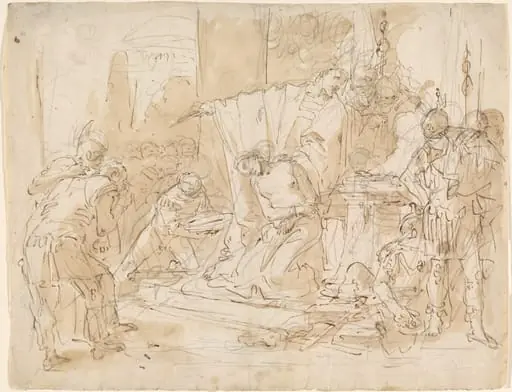 The Sacrifice of Iphigenia (recto) / Study of a Male Nude (verso)
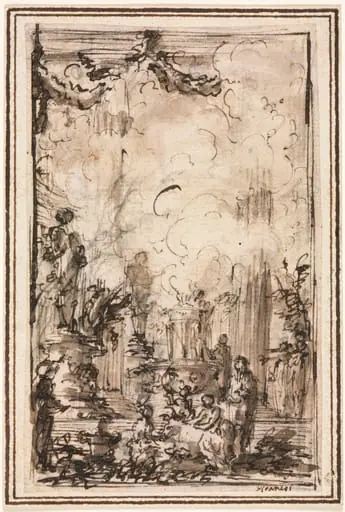 Sacrificial Offering in a Temple
 Scenes from the Life of Saint Peter
 Esther before Ahasuerus