Artwork
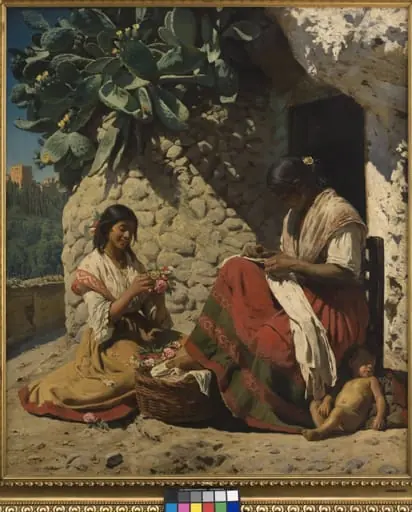
Two Gipsy Women Outside their Cottage. Spain
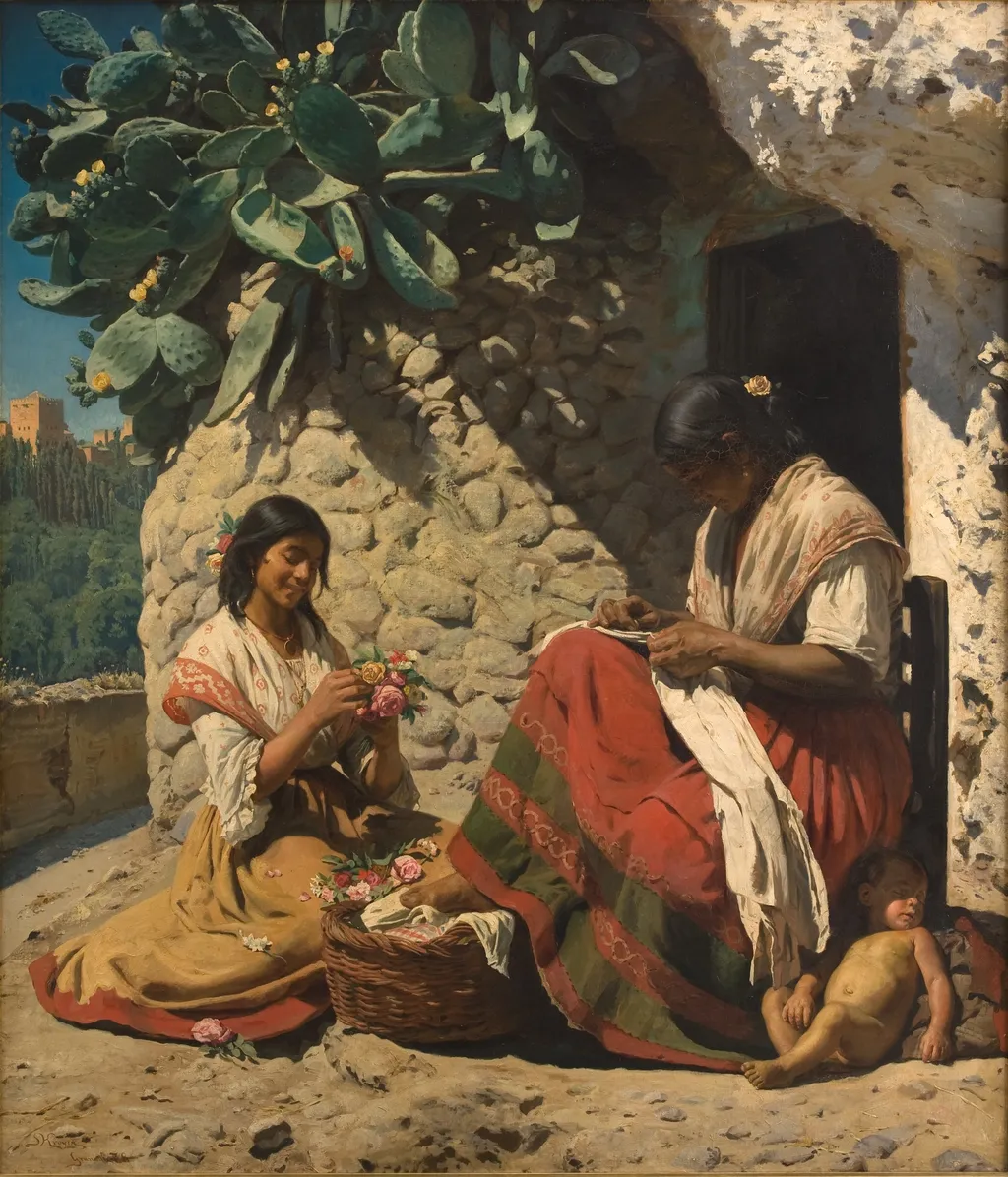
Two Gipsy Women Outside their Cottage. Spain is an oil painting by the Impressionist artist Peder Severin Krøyer. It dates from 1890 and is held in the collection of the Statens Museum for Kunst.
About this work
Overview
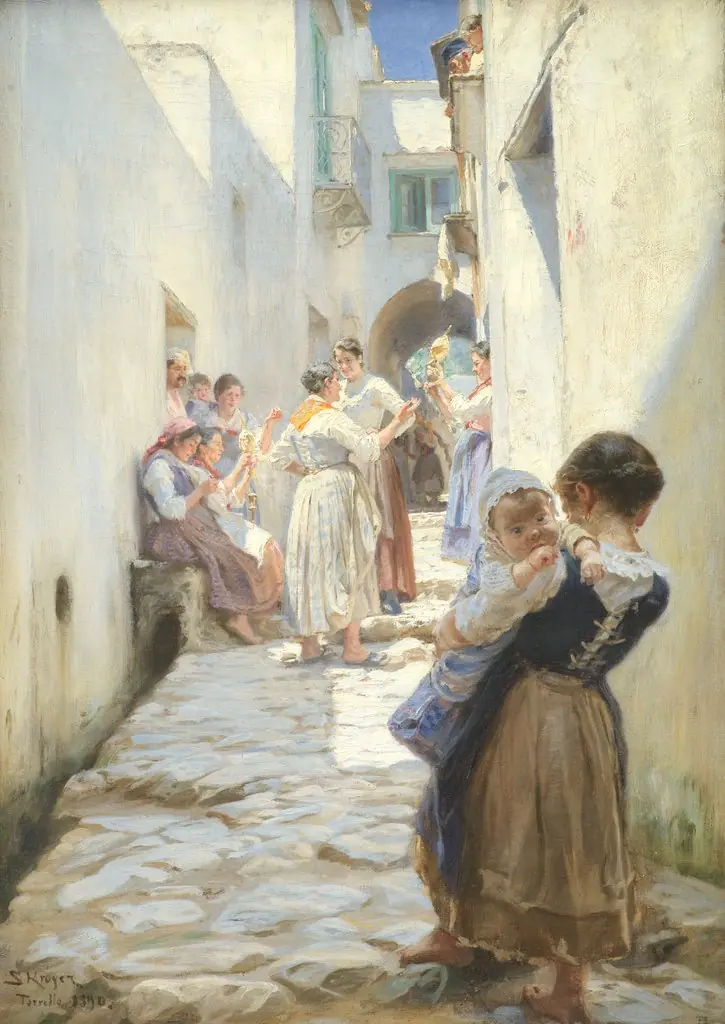
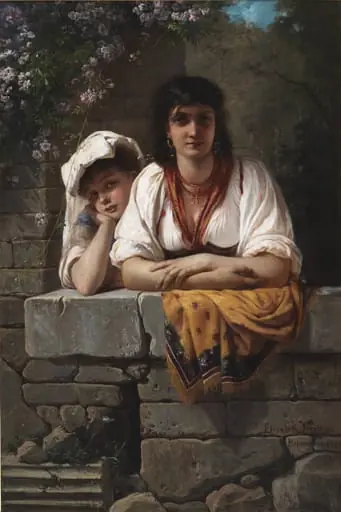
Peder Severin Krøyer’s 1890 oil painting, *Two Gipsy Women Outside Their Cottage*, presents a quiet domestic moment set against a rugged stone wall.
Peder Severin Krøyer’s 1890 oil painting, *Two Gipsy Women Outside Their Cottage*, presents a quiet domestic moment set against a rugged stone wall. The composition centers on two women, a baby, and a basket of flowers, with a distant town and a lone cactus visible in the background. The work belongs to the genre‑painting tradition and is part of the collection of Denmark’s Statens Museum for Kunst.
Subject & Meaning
The scene captures a modest gypsy household: one woman arranges a bouquet, the other tends a red cloth, while a infant rests nearby. The inclusion of everyday objects—a basket, flowers, and a cactus—suggests a blend of cultural specificity and universal themes of care, labor, and the intimacy of family life within a marginalised community.
Technique & Style
Krøyer employs a palette of bright, patterned fabrics that contrast with the muted stone, while the light accentuates the women’s faces and the blossoms. Notable impasto is evident on the cactus and the textured dresses, where thick applications of paint create tactile surface variations, enhancing the visual depth of the composition.
History & Provenance
Executed in 1890, the painting entered the holdings of the Statens Museum for Kunst, Denmark’s national gallery, where it remains on display. Its acquisition reflects the museum’s broader interest in 19th‑century European genre works and Krøyer’s reputation as a leading Scandinavian painter of the period.
Context
Created during a time when artists frequently explored exoticized depictions of itinerant peoples, the work aligns with contemporary European fascination with Romani life. Krøyer, known for his naturalistic approach, integrates this interest with his characteristic attention to light and atmosphere, situating the piece within both his oeuvre and the wider genre‑painting movement of the late 19th century.
Own this work as a print
Artist & collection