Artwork
Hamlet’s Vision
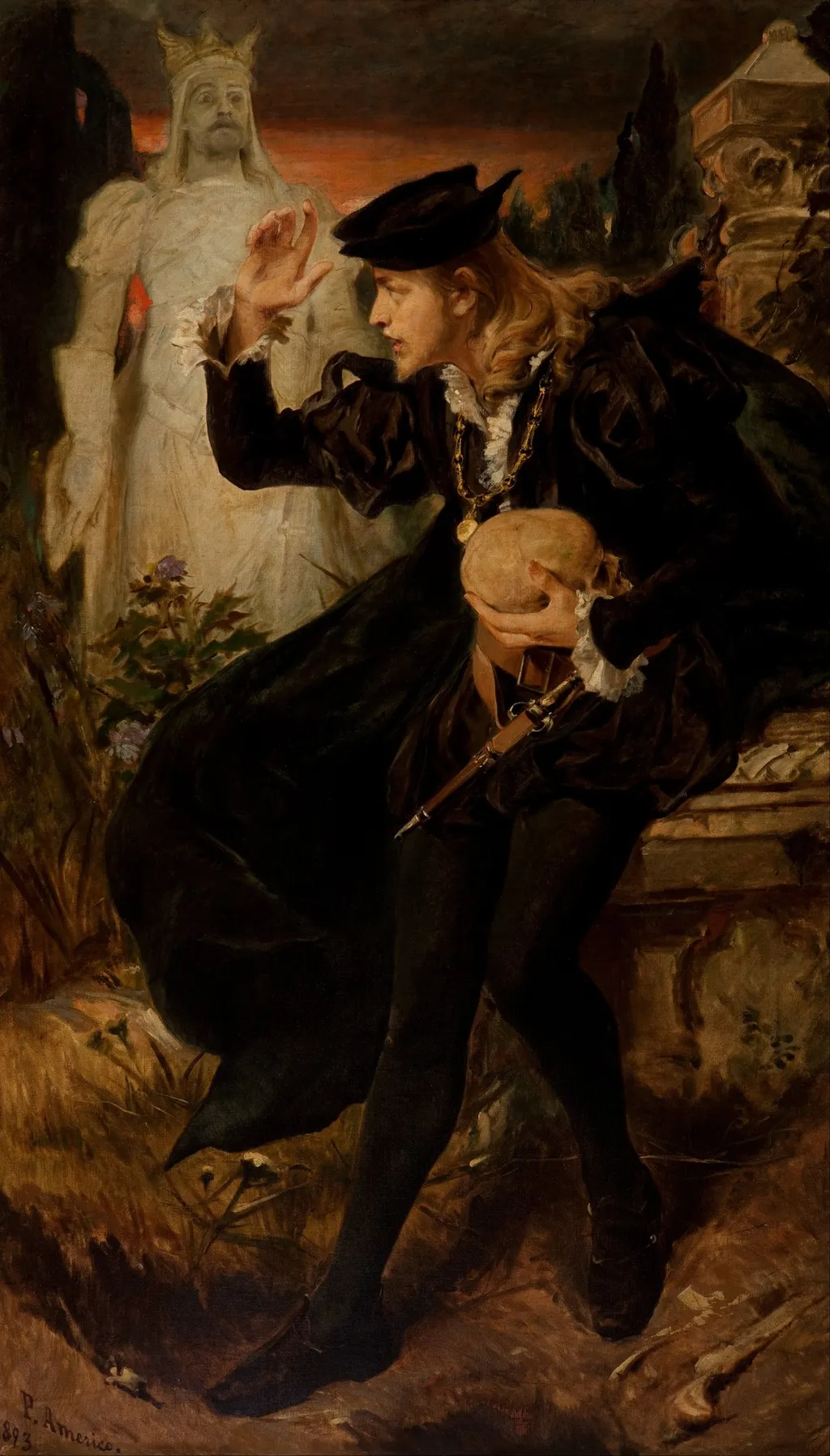
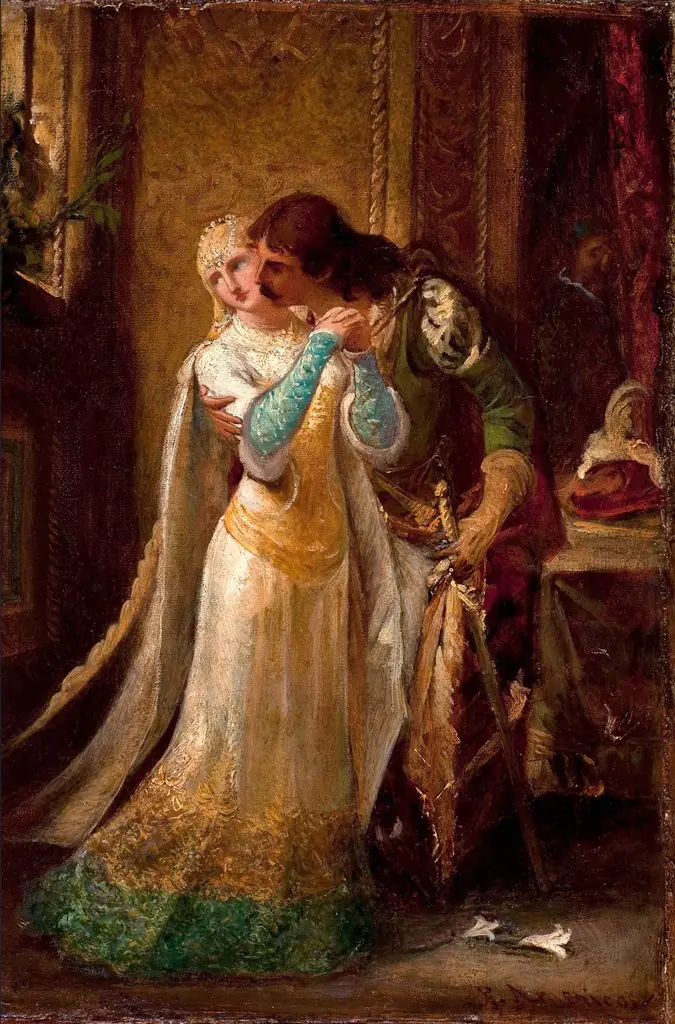
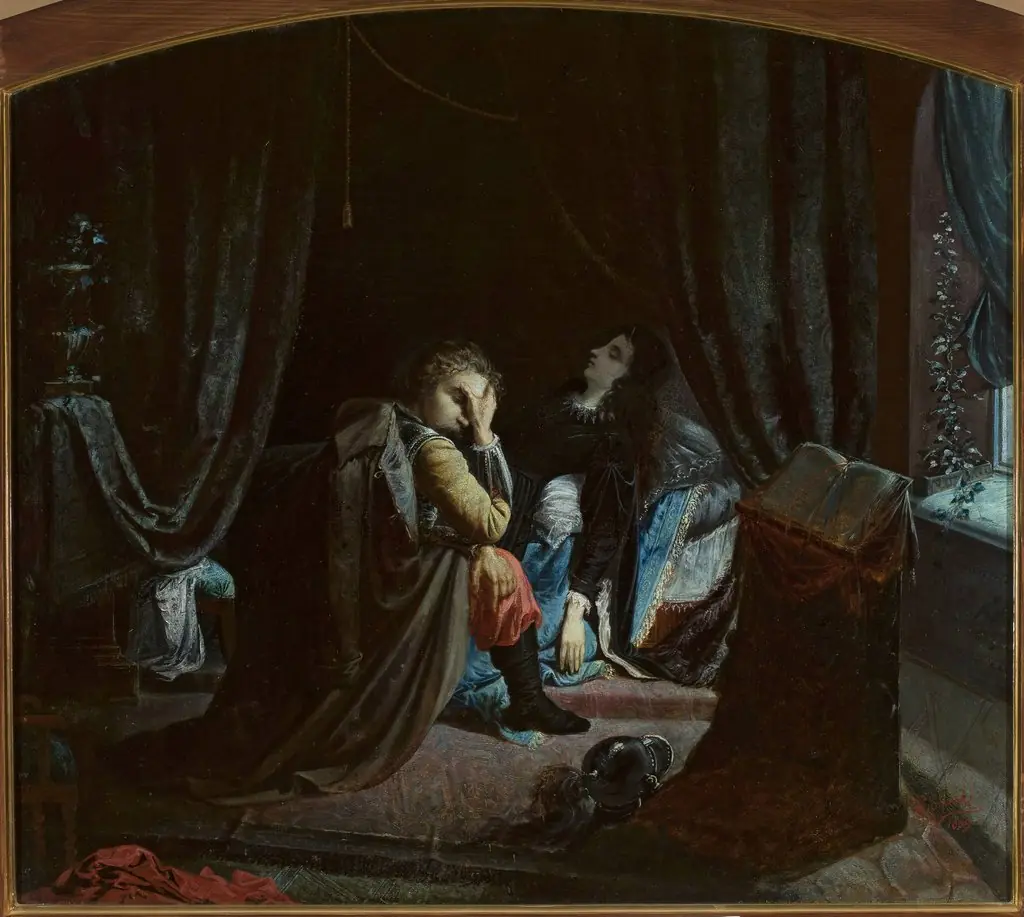
Hamlet’s Vision is an oil painting by the Post-Impressionist artist Pedro Américo. It dates from 1897 and is held in the collection of the Pinacoteca de São Paulo.
About this work
Overview
Hamlet’s Vision is an 1897 oil painting by Brazilian academic artist Pedro Américo. The work depicts a somber, contemplative scene inspired by Shakespeare’s Hamlet, characterized by strong chiaroscuro and post-impressionist elements.
Subject & Meaning
The painting portrays Prince Hamlet standing before a statue of a woman (likely representing Ophelia or a symbolic figure) in a dark, introspective setting. Hamlet contemplates a skull, his right hand raised in a gesture of melancholy or philosophical inquiry, evoking themes of mortality and reflection.
Technique & Style
Américo employed chiaroscuro to create depth and volume, juxtaposing harsh light and dark shadows. The post-impressionist approach is evident in the expressive, though restrained, brushwork and the emphasis on emotional atmosphere over detailed realism.
History & Provenance
Created in 1897, Hamlet’s Vision is part of the collection at the Pinacoteca do Estado de São Paulo, Brazil.
Context
While Américo is known for works of Brazilian national significance, Hamlet’s Vision demonstrates his engagement with universal literary themes and European art movements, reflecting the cultural exchange of his time.
Legacy
The painting serves as a notable example of late 19th-century Brazilian art engaging with European styles and themes, though its broader impact on the art historical canon is more nuanced and localized.
Artist & collection
Artist
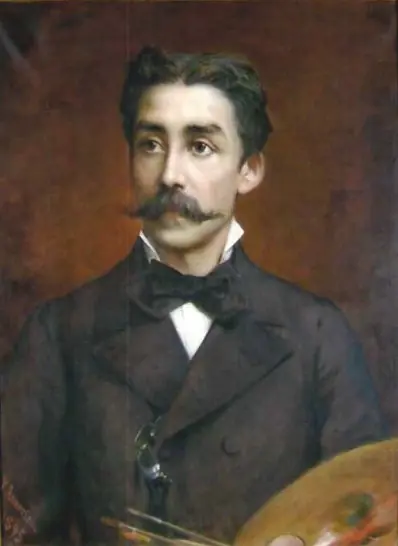
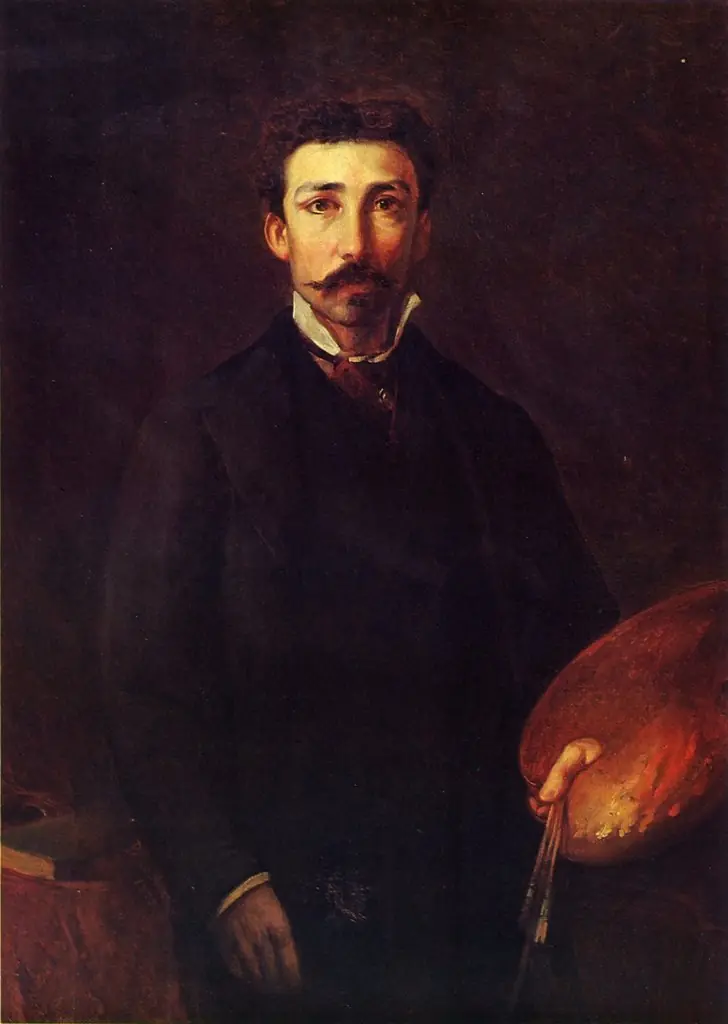
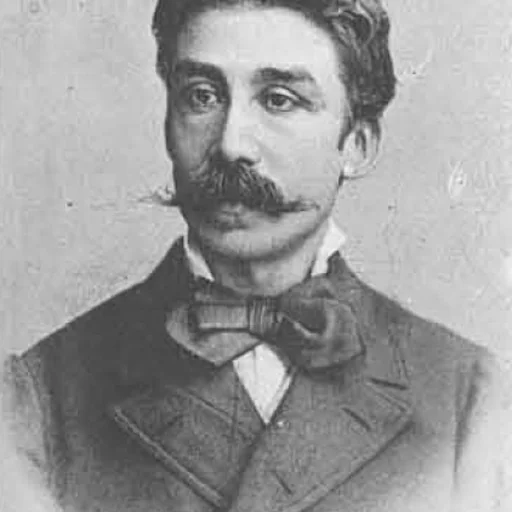
Pedro Américo de Figueiredo e Melo (29 April 1843 – 7 October 1905) was a Brazilian novelist, poet, scientist, art theorist, essayist, philosopher, politician and professor, but is best remembered as one of the most…